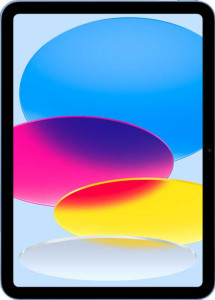
Apple iPad (2025)
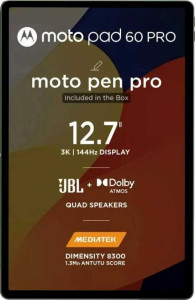
Motorola Moto Pad 60 Pro

Apple iPad (2025) Motorola Moto Pad 60 Pro

Overview

When choosing between the Apple iPad (2025) and the Motorola Moto Pad 60 Pro, buyers face two very different philosophies in tablet design. From display refresh rates and battery capacity to chipset performance and camera capabilities, these two tablets carve out distinct identities. Whether portability, raw performance, or multimedia experience tops your priority list, this head-to-head comparison will help you navigate the key battlegrounds before making your decision.

Common Features

  • Neither tablet includes a detachable keyboard.
  • Neither tablet includes a backlit keyboard.
  • Both tablets lack branded damage-resistant glass on their displays.
  • Both tablets feature a touch screen.
  • Neither tablet has a sapphire glass display.
  • Neither tablet uses an e-paper display.
  • Both tablets are built on a 4 nm semiconductor process.
  • Both tablets support 64-bit processing.
  • Both tablets use big.LITTLE technology.
  • Both tablets have integrated graphics.
  • Both tablets support the NX bit security feature.
  • Both tablets include TrustZone technology.
  • Both tablets use HMP (Heterogeneous Multi-Processing).
  • Both tablets have a front camera.
  • Both tablets feature a built-in HDR mode.
  • Both tablets support touch autofocus.
  • Both tablets use a CMOS sensor.
  • Neither tablet has a front-facing LED flash.
  • Neither tablet can shoot 360° panoramas.
  • Neither tablet has built-in optical image stabilization.
  • Both tablets support manual exposure.
  • Both tablets have stereo speakers.
  • Neither tablet has a 3.5 mm audio jack.
  • Neither tablet includes a radio.
  • Neither tablet supports wireless charging.
  • Both tablets have a battery level indicator.
  • Both tablets have a rechargeable battery.
  • Neither tablet has a removable battery.
  • Both tablets support on-device machine learning.
  • Both tablets have clipboard warnings.
  • Both tablets offer location privacy options.
  • Both tablets provide camera and microphone privacy options.
  • Both tablets can block app tracking.
  • Both tablets support split screen.
  • Both tablets have Live Text functionality.
  • Both tablets include notification permissions.
  • Both tablets use DDR5 memory.

Main Differences

  • Weight is 481 g on Apple iPad (2025) and 620 g on Motorola Moto Pad 60 Pro.
  • Thickness is 7 mm on Apple iPad (2025) and 6.9 mm on Motorola Moto Pad 60 Pro.
  • Width is 248.6 mm on Apple iPad (2025) and 291.8 mm on Motorola Moto Pad 60 Pro.
  • Height is 179.5 mm on Apple iPad (2025) and 189.1 mm on Motorola Moto Pad 60 Pro.
  • Volume is 312.37 cm³ on Apple iPad (2025) and 380.74 cm³ on Motorola Moto Pad 60 Pro.
  • A stylus is included with Motorola Moto Pad 60 Pro but not with Apple iPad (2025).
  • Water resistance is present on Motorola Moto Pad 60 Pro but Apple iPad (2025) has none.
  • Screen size is 10.9″ on Apple iPad (2025) and 12.7″ on Motorola Moto Pad 60 Pro.
  • Resolution is 2360 x 1640 px on Apple iPad (2025) and 2944 x 1840 px on Motorola Moto Pad 60 Pro.
  • Pixel density is 264 ppi on Apple iPad (2025) and 273 ppi on Motorola Moto Pad 60 Pro.
  • Refresh rate is 60 Hz on Apple iPad (2025) and 144 Hz on Motorola Moto Pad 60 Pro.
  • An anti-reflection coating is present on Motorola Moto Pad 60 Pro but not on Apple iPad (2025).
  • HDR10 support is available on Motorola Moto Pad 60 Pro but not on Apple iPad (2025).
  • Internal storage is 512 GB on Apple iPad (2025) and 256 GB on Motorola Moto Pad 60 Pro.
  • RAM is 6 GB on Apple iPad (2025) and 12 GB on Motorola Moto Pad 60 Pro.
  • The chipset is Apple A16 Bionic on Apple iPad (2025) and MediaTek Dimensity 8300 on Motorola Moto Pad 60 Pro.
  • The GPU is Apple A16 GPU on Apple iPad (2025) and Mali G615 MP6 on Motorola Moto Pad 60 Pro.
  • CPU speed is 2 x 3.46 & 4 x 2.02 GHz on Apple iPad (2025) and 1 x 3.35 & 3 x 3 & 4 x 2.2 GHz on Motorola Moto Pad 60 Pro.
  • Geekbench 6 multi-core score is 5684 on Apple iPad (2025) and 4610 on Motorola Moto Pad 60 Pro.
  • Geekbench 6 single-core score is 2321 on Apple iPad (2025) and 1485 on Motorola Moto Pad 60 Pro.
  • An external memory slot is available on Motorola Moto Pad 60 Pro but not on Apple iPad (2025).
  • L2 cache is 24 MB on Apple iPad (2025) and 1 MB on Motorola Moto Pad 60 Pro.
  • CPU thread count is 6 on Apple iPad (2025) and 8 on Motorola Moto Pad 60 Pro.
  • RAM speed is 6400 MHz on Apple iPad (2025) and 8533 MHz on Motorola Moto Pad 60 Pro.
  • Main camera resolution is 12 MP on Apple iPad (2025) and 13 MP on Motorola Moto Pad 60 Pro.
  • Front camera resolution is 12 MP on Apple iPad (2025) and 8 MP on Motorola Moto Pad 60 Pro.
  • A flash is available on Motorola Moto Pad 60 Pro but not on Apple iPad (2025).
  • In-camera panorama creation is supported on Apple iPad (2025) but not on Motorola Moto Pad 60 Pro.
  • Slow-motion video recording is supported on Apple iPad (2025) but not on Motorola Moto Pad 60 Pro.
  • A BSI sensor is present on Apple iPad (2025) but not on Motorola Moto Pad 60 Pro.
  • Manual white balance is available on Motorola Moto Pad 60 Pro but not on Apple iPad (2025).
  • Continuous autofocus during video recording is supported on Motorola Moto Pad 60 Pro but not on Apple iPad (2025).
  • Manual ISO control is available on Motorola Moto Pad 60 Pro but not on Apple iPad (2025).
  • A video light is present on Motorola Moto Pad 60 Pro but not on Apple iPad (2025).
  • A timelapse function is available on Apple iPad (2025) but not on Motorola Moto Pad 60 Pro.
  • A serial shot mode is supported on Apple iPad (2025) but not on Motorola Moto Pad 60 Pro.
  • Battery capacity is 8500 mAh on Apple iPad (2025) and 10200 mAh on Motorola Moto Pad 60 Pro.
  • Fast charging is supported on Motorola Moto Pad 60 Pro but not on Apple iPad (2025).
  • Wi-Fi 6E (802.11ax) support is present on Motorola Moto Pad 60 Pro but not on Apple iPad (2025).
  • Mail Privacy Protection is available on Apple iPad (2025) but not on Motorola Moto Pad 60 Pro.
  • Cross-site tracking blocking is available on Apple iPad (2025) but not on Motorola Moto Pad 60 Pro.
  • Quick Start is supported on Apple iPad (2025) but not on Motorola Moto Pad 60 Pro.
  • Theme customization is available on Motorola Moto Pad 60 Pro but not on Apple iPad (2025).
  • Wi-Fi password sharing is supported on Apple iPad (2025) but not on Motorola Moto Pad 60 Pro.
  • Playing games while downloading is possible on Motorola Moto Pad 60 Pro but not on Apple iPad (2025).
  • An extra dim display mode is available on Motorola Moto Pad 60 Pro but not on Apple iPad (2025).
  • App offloading is supported on Apple iPad (2025) but not on Motorola Moto Pad 60 Pro.
  • Focus modes are available on Apple iPad (2025) but not on Motorola Moto Pad 60 Pro.
  • Dynamic theming is available on Motorola Moto Pad 60 Pro but not on Apple iPad (2025).
  • A cellular module is present on Apple iPad (2025) but not on Motorola Moto Pad 60 Pro.
Specs Comparison
Apple iPad (2025)

Apple iPad (2025)

Motorola Moto Pad 60 Pro

Motorola Moto Pad 60 Pro

Design:
weight 481 g 620 g
thickness 7 mm 6.9 mm
width 248.6 mm 291.8 mm
height 179.5 mm 189.1 mm
volume 312.3659 cm³ 380.737722 cm³
Stylus included
Has a detachable keyboard
Has a backlit keyboard
water resistance None Water resistant

The most striking physical difference between these two tablets is weight. The Apple iPad (2025) comes in at 481 g, while the Motorola Moto Pad 60 Pro weighs a notably heavier 620 g — a difference of 139 g that becomes very real during extended handheld use, reading sessions, or one-handed browsing. The iPad is also physically smaller across every dimension, resulting in a volume of 312 cm³ versus the Moto Pad's 381 cm³, making it the more pocketable and travel-friendly option. Thickness is essentially identical at 7 mm and 6.9 mm respectively, so neither has an edge in terms of slimness.

Where the Moto Pad 60 Pro fights back is in two meaningful value-adds. First, it ships with a stylus included, which the iPad does not — a real-world cost and convenience advantage if note-taking or sketching is part of your workflow. Second, the Moto Pad carries water resistance, while the iPad offers none, making it the safer choice around liquids or in less controlled environments.

Overall, neither device has a clean sweep. The iPad holds a clear edge in portability and ergonomics due to its significantly lower weight and smaller footprint. The Moto Pad 60 Pro counters with a bundled stylus and water resistance — practical extras that add real utility. Your preference will depend on whether you prioritize comfortable, lightweight handling or out-of-the-box versatility and durability.

Display:
screen size 10.9" 12.7"
resolution 2360 x 1640 px 2944 x 1840 px
pixel density 264 ppi 273 ppi
Display type IPS, LCD LCD, IPS
refresh rate 60Hz 144Hz
has branded damage-resistant glass
has anti-reflection coating
supports HDR10
has a touch screen
Has sapphire glass display
Has an e-paper display

Both tablets use IPS LCD panels, so color science and viewing angle technology are on equal footing. The real separation begins with screen size and refresh rate. The Moto Pad 60 Pro offers a larger 12.7″ canvas versus the iPad's 10.9″, which translates to more usable space for multitasking, reading, and media consumption. More importantly, the Moto Pad's 144Hz refresh rate versus the iPad's 60Hz is a significant experiential gap — scrolling, animations, and stylus input all feel noticeably smoother at higher refresh rates, a difference that is immediately perceptible in daily use.

Pixel density is effectively a wash: 264 ppi on the iPad versus 273 ppi on the Moto Pad is a 3% difference that is invisible to the naked eye at normal viewing distances. However, the Moto Pad pulls ahead on two practical display quality features — it includes an anti-reflection coating and HDR10 support, neither of which the iPad offers. Anti-reflection meaningfully improves outdoor usability and reduces eye strain under bright lighting, while HDR10 ensures compatible streaming content renders with greater contrast and color depth.

On display specs alone, the Moto Pad 60 Pro holds a clear advantage. Its larger screen, dramatically higher refresh rate, anti-reflection coating, and HDR10 support combine to deliver a more capable and more comfortable viewing experience across nearly every use case. The iPad's display is competent but lacks the feature depth of its rival in this comparison.

Performance:
internal storage 512GB 256GB
RAM 6GB 12GB
Chipset (SoC) name Apple A16 Bionic MediaTek Dimensity 8300
GPU name Apple A16 GPU Mali G615 MP6
CPU speed 2 x 3.46 & 4 x 2.02 GHz 1 x 3.35 & 3 x 3 & 4 x 2.2 GHz
Geekbench 6 result (multi) 5684 4610
Geekbench 6 result (single) 2321 1485
has an external memory slot
semiconductor size 4 nm 4 nm
Supports 64-bit
Uses big.LITTLE technology
Has integrated graphics
GPU clock speed 1398 MHz 1400 MHz
L2 cache 24 MB 1 MB
Has NX bit
CPU threads 6 threads 8 threads
RAM speed 6400 MHz 8533 MHz
Has TrustZone
maximum memory amount 6GB 24GB
Uses HMP
maximum memory bandwidth 51.2 GB/s 68.2 GB/s
memory channels 2 4

Raw compute performance decisively favors the Apple iPad (2025). Its A16 Bionic chip scores 2321 in Geekbench 6 single-core versus the Moto Pad 60 Pro's 1485 — a 56% lead that reflects real-world responsiveness in everyday tasks like app launches, UI interactions, and single-threaded workloads. The multi-core gap is smaller but still meaningful: 5684 versus 4610. Single-core performance in particular is the metric most directly tied to how snappy a device feels in daily use, and the iPad's A16 is a generational class above the Dimensity 8300 in this regard. The iPad's 24 MB L2 cache versus just 1 MB on the Moto Pad further reinforces this advantage — larger cache reduces latency for frequently accessed data, benefiting both app performance and sustained workloads.

The Moto Pad 60 Pro counters with a stronger memory subsystem on paper. It carries 12 GB of RAM (versus 6 GB), a higher memory bandwidth of 68.2 GB/s, and four memory channels compared to two — specs that theoretically support heavier multitasking and GPU-bound tasks. It also accepts expandable storage, while the iPad is capped at its built-in 512 GB. In practice, however, the iPad's superior CPU efficiency and cache architecture tend to manage RAM more effectively, so raw RAM quantity does not straightforwardly translate to a better experience.

For performance, the iPad holds the clear edge. The A16 Bionic's benchmark lead — particularly in single-core — points to a faster, more responsive experience across productivity, creative, and everyday tasks. The Moto Pad's memory advantages are real but situational, and do not offset the CPU deficit in most tablet use cases.

Cameras:
megapixels (main camera) 12 MP 13 MP
megapixels (front camera) 12MP 8MP
has a flash
has a front camera
has a built-in HDR mode
can create panoramas in-camera
supports slow-motion video recording
has touch autofocus
has a BSI sensor
has manual white balance
has a CMOS sensor
has continuous autofocus when recording movies
Has a front-facing LED flash
has manual ISO
has a video light
Has timelapse function
Shoots 360° panorama
has a serial shot mode
has built-in optical image stabilization
has manual focus
has manual exposure
has manual shutter speed

Tablet cameras are rarely a primary purchase driver, but the differences here are meaningful enough to matter in specific scenarios. Main sensor resolution is essentially tied — 12 MP on the iPad versus 13 MP on the Moto Pad 60 Pro — so neither has a pixel-count advantage worth discussing. The more telling split is in shooting philosophy. The iPad leans toward an automated, point-and-shoot experience, while the Moto Pad offers manual ISO, manual white balance, and manual focus controls, giving users who want creative control over their shots meaningfully more flexibility. The Moto Pad also includes continuous autofocus during video recording and a video light, both of which benefit anyone capturing footage in motion or low-light conditions — features the iPad simply lacks.

The front camera story flips the script. The iPad's 12 MP selfie camera substantially outresolves the Moto Pad's 8 MP front shooter — a relevant gap for video calls, which are arguably the most common use case for a tablet's front camera. The iPad also brings a BSI sensor on the main camera, which improves light capture efficiency, and supports panorama and burst/serial shot modes that the Moto Pad omits. The Moto Pad counters with a rear flash, useful in dark environments where the iPad would capture nothing at all.

This category ends in a genuine split depending on use case. The Moto Pad 60 Pro has the edge for rear camera versatility and manual video control, while the iPad wins clearly on front camera quality — the more practically important camera for most tablet users. Neither device dominates outright, but users who prioritize video calls should favor the iPad, while those wanting more hands-on camera control will find the Moto Pad more accommodating.

Audio:
has stereo speakers
has a socket for a 3.5 mm audio jack
Has a radio

Audio hardware is an exact match across these two tablets. Both feature stereo speakers, omit a 3.5 mm headphone jack, and lack an FM radio — meaning wired headphone users will need a USB-C adapter regardless of which device they choose. Stereo speakers are the meaningful shared win here, ensuring that media playback and video calls produce a wider, more spatially convincing soundstage than a single mono driver would.

Based strictly on the provided specs, this category is a complete tie. There is no differentiator between the two products in audio hardware, and neither holds any advantage over the other.

Battery:
battery power 8500 mAh 10200 mAh
Supports fast charging
has wireless charging
has a battery level indicator
has a rechargeable battery
has a removable battery

Two differences define this category, and both favor the Motorola Moto Pad 60 Pro. Its 10,200 mAh battery holds a substantial 20% capacity advantage over the iPad's 8,500 mAh — a gap that, all else being equal, translates directly into longer time between charges. For a device used across a full day of streaming, browsing, or productivity work, that extra headroom is a practical comfort, especially during travel or away from a power source.

The charging side compounds the Moto Pad's lead. It supports fast charging, while the iPad does not — meaning that when the Moto Pad does need to be topped up, it gets back to usable levels faster. The iPad's absence of fast charging is a notable omission: a larger battery that charges slowly can still mean more downtime than a smaller battery that refills quickly. The Moto Pad avoids that trade-off entirely by offering both. Neither device supports wireless charging, so that is a shared limitation.

The Moto Pad 60 Pro holds a clear advantage in battery. Greater raw capacity combined with fast charging support makes it the stronger choice for users who prioritize endurance and minimal charging interruptions throughout the day.

Connectivity & Features:
release date March 2025 April 2025
Wi-Fi version Wi-Fi 6 (802.11ax), Wi-Fi 5 (802.11ac), Wi-Fi 4 (802.11n) Wi-Fi 4 (802.11n), Wi-Fi 6 (802.11ax), Wi-Fi 5 (802.11ac), Wi-Fi 6E (802.11ax)
has Mail Privacy Protection
has on-device machine learning
has clipboard warnings
has location privacy options
has camera/microphone privacy options
can block app tracking
blocks cross-site tracking
supports split screen
has Live Text
has notification permissions
has full-page screenshots
has Quick Start
has theme customization
has Wi-Fi password sharing
has PiP
Can play games while they download
has an extra dim mode
can offload apps
has focus modes
has media picker
has dynamic theming
has dark mode
has battery health check
Has USB Type-C
has a cellular module
has 5G support
is a multi-user system
gets direct OS updates
has GPS
has a child lock
has an HDMI output
has NFC
Has a fingerprint scanner
USB version 2 3.2
Supports widgets
Bluetooth version 5.3 5.3
has a gyroscope
Is free and open source
Has offline voice recognition
has a compass
supports Wi-Fi
Has sharing intents
Has customizable notifications
Uses 3D facial recognition
Has a barometer
has an accelerometer
has voice commands
Has an iris scanner
Has a built-in projector
supports Ethernet
Has an infrared sensor
Tracks the current position of a mobile device

Connectivity is where these two tablets diverge in ways that reflect genuinely different target audiences. The Apple iPad (2025) includes a cellular module with 5G support, a feature the Moto Pad 60 Pro entirely lacks — meaning the iPad can function independently of Wi-Fi wherever a mobile signal is available, while the Moto Pad is tethered to wireless networks. For users who travel frequently or work outside the home, this is a fundamental capability gap. The Moto Pad counters on the local connectivity front, however: it supports Wi-Fi 6E, which operates on the less congested 6 GHz band for faster and more reliable wireless speeds in dense environments, an upgrade the iPad misses. The Moto Pad's USB 3.2 port also significantly outpaces the iPad's USB 2, translating to dramatically faster wired data transfers — a meaningful advantage for users who move large files.

The software and ecosystem feature split is equally telling. The iPad delivers direct OS updates from Apple, ensuring timely access to new features and security patches — a reliable advantage the Moto Pad, which does not receive direct OS updates, cannot match. On privacy, the iPad adds Mail Privacy Protection and cross-site tracking blocking, offering a slightly more robust out-of-the-box privacy posture. The Moto Pad responds with multi-user support, dynamic theming, and an open-source foundation — making it better suited for shared households or users who want deeper system-level customization.

This category does not have a single winner — it hinges on priorities. The iPad holds the advantage for users who need cellular connectivity and value timely software support. The Moto Pad leads for those prioritizing faster local connectivity via Wi-Fi 6E, superior wired data transfer speeds, and shared-device flexibility. Power users who move large files will appreciate the Moto Pad's USB 3.2; road warriors and remote workers will find the iPad's 5G capability indispensable.
Miscellaneous:
DDR memory version 5 5

With only one data point available in this group, the comparison is straightforward: both the Apple iPad (2025) and the Motorola Moto Pad 60 Pro use DDR5 memory, the current mainstream standard that offers improved bandwidth and energy efficiency over its predecessor. This is a complete tie — neither device holds any advantage over the other based on the available data.

Comparison Summary & Verdict

After examining every spec, the Apple iPad (2025) and Motorola Moto Pad 60 Pro clearly serve different audiences. The iPad (2025) stands out with its superior Geekbench single and multi-core performance, lighter 481 g build, larger 512 GB internal storage, cellular connectivity, and a strong privacy-focused software ecosystem. It suits users who value raw processing power and portability. The Motorola Moto Pad 60 Pro, on the other hand, counters with a larger 12.7-inch 144 Hz display, a bigger 10200 mAh battery with fast charging, 12 GB of RAM, an included stylus, water resistance, and Wi-Fi 6E support — making it the stronger pick for users who prioritize media consumption and productivity features at their fingertips.

Apple iPad (2025)
Buy Apple iPad (2025) if...

Buy the Apple iPad (2025) if you prioritize superior processing performance, a lighter and more portable build, larger internal storage, cellular connectivity, and a privacy-rich software experience.

Motorola Moto Pad 60 Pro
Buy Motorola Moto Pad 60 Pro if...

Buy the Motorola Moto Pad 60 Pro if you want a larger high-refresh-rate display, a bigger battery with fast charging, more RAM, an included stylus, and water resistance for everyday versatility.