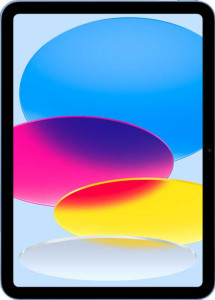
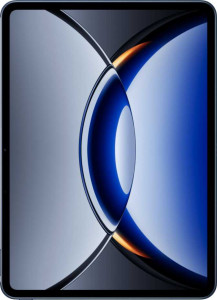
Raw benchmark numbers tell a clear story here. The OnePlus Pad 3, powered by the Snapdragon 8 Elite, scores 10,059 in Geekbench 6 multi-core and 3,234 single-core — roughly 77% higher multi-core and 39% higher single-core than the iPad's Apple A16 Bionic, which posts 5,684 and 2,321 respectively. The A16 remains a highly capable chip and its single-core performance is still competitive in real-world snappiness, but the Snapdragon 8 Elite's 8-thread CPU with peak clocks of 4.32 GHz gives the OnePlus a substantial lead in sustained, parallelized workloads like video editing, AI processing, and heavy multitasking.
The RAM gap is arguably just as significant. The OnePlus ships with 16 GB of RAM — nearly three times the iPad's 6 GB — and a maximum memory bandwidth of 85.1 GB/s versus 51.2 GB/s. In practice, more RAM means more apps stay loaded in the background, smoother multitasking across many open windows, and more headroom for memory-intensive tasks like large document editing or creative applications. Graphics performance follows a similar pattern: the Adreno 830's 1,536 shading units vastly outnumber the Apple GPU's 128, making the OnePlus a far more capable device for GPU-intensive workloads, despite the Apple GPU's higher clock speed of 1,398 MHz.
The iPad does hold a minor architectural edge in its larger 24 MB L2 cache versus the OnePlus's 12 MB, which can aid certain latency-sensitive tasks. Both offer matching 512 GB of internal storage with no expansion slot. Overall, the OnePlus Pad 3 commands a decisive performance advantage across CPU, GPU, RAM capacity, and memory bandwidth — making it the stronger choice for power users and demanding workloads.