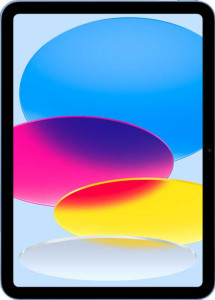
Two differences stand out immediately as high-impact for everyday use. First, the Oppo Pad 4 Pro supports Wi-Fi 7 (802.11be), a generation ahead of the iPad's Wi-Fi 6 ceiling — meaning faster throughput and lower latency on compatible routers, which matters for 4K streaming, large file transfers, and cloud-heavy workflows. Second, its USB 3.2 port offers dramatically faster wired data transfer than the iPad's USB 2, a meaningful gap for anyone moving large media files or connecting external storage. These are concrete, functional advantages rooted in hardware.
The iPad, however, recovers ground in connectivity breadth and privacy. It includes a cellular module with 5G support and GPS — both absent on the Oppo — making it the only option here for users who need internet access beyond Wi-Fi or location tracking without a phone nearby. On privacy, the iPad additionally offers Mail Privacy Protection and cross-site tracking blocking, features the Oppo lacks. The iPad also receives direct OS updates, whereas the Oppo does not, which has long-term security implications worth weighing. A built-in fingerprint scanner on the iPad further adds a convenient biometric unlock method the Oppo omits entirely.
The Oppo counters with multi-user support — useful in shared household or enterprise settings — and a richer software customization layer including dynamic theming. Overall, this group reflects fundamentally different priorities: the Apple iPad (2025) edges ahead for users who need cellular connectivity, location services, and strong privacy controls, while the Oppo Pad 4 Pro is the stronger choice for those on Wi-Fi-first setups who want faster wired transfer speeds and shared-device flexibility.