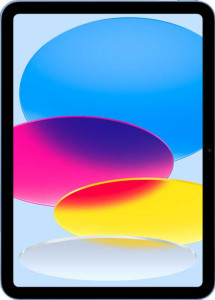
Wireless connectivity gives the Samsung Galaxy Tab S10 FE a notable hardware edge: it supports Wi-Fi 6E, which unlocks the 6GHz band for less congested, faster connections in environments with many competing devices — something the iPad (2025) tops out at Wi-Fi 6 without. Samsung also includes NFC, enabling contactless payments and device pairing, and supports both a physical SIM and an eSIM simultaneously, versus the iPad's eSIM-only cellular setup. For users who need SIM flexibility or frequently tap-to-pay, these are practical, day-to-day advantages.
The software and ecosystem features diverge sharply along platform lines. The Tab S10 FE is a multi-user system, allowing different people to maintain separate profiles on the same device — a significant advantage for shared or family-use scenarios. It also offers richer personalization through dynamic theming and full theme customization. The iPad (2025) counters with stronger privacy tooling, including cross-site tracking blocking and Mail Privacy Protection, plus direct OS updates from Apple — meaning faster, more predictable software support over the device's lifespan. The iPad also retains a gyroscope and compass, which the Tab S10 FE lacks, relevant for navigation and motion-sensitive applications.
This is the most feature-dense group, and it reflects two distinct ecosystems rather than one clear winner. The Tab S10 FE has the edge on connectivity hardware — Wi-Fi 6E, NFC, and dual SIM — plus multi-user support that broadens its appeal for shared use. The iPad (2025) leads on privacy protections, direct software updates, and sensor completeness. Which tablet wins here depends squarely on what the user values: connectivity flexibility and shareability favor Samsung, while privacy and long-term software reliability favor Apple.