Apple iPad (2025)
Samsung Galaxy Tab S10 FE Plus

Apple iPad (2025) Samsung Galaxy Tab S10 FE Plus

Overview

Welcome to our in-depth specification comparison between the Apple iPad (2025) and the Samsung Galaxy Tab S10 FE Plus. These two tablets take notably different approaches across key battlegrounds including performance and raw processing power, display size, battery capacity, and everyday usability features. Whether you are drawn to Apple's tightly optimized ecosystem or Samsung's feature-rich Android experience, this breakdown will help you understand exactly where each device stands before making your decision.

Common Features

  • Neither product includes a detachable keyboard.
  • Neither product includes a backlit keyboard.
  • Neither product has an anti-reflection coating on the display.
  • HDR10 support is not available on either product.
  • Both products have a touch screen.
  • Neither product features a sapphire glass display.
  • Neither product uses an e-paper display.
  • Both products are built on a 4 nm semiconductor process.
  • Both products support 64-bit computing.
  • Both products have integrated LTE connectivity.
  • Both products use big.LITTLE technology.
  • Both products have integrated graphics.
  • Both products use HMP (Heterogeneous Multi-Processing).
  • Both products share a maximum memory bandwidth of 51.2 GB/s.
  • Both products have a 12 MP front camera.
  • Neither product includes a flash.
  • Both products have a front camera.
  • Both products have a built-in HDR mode.
  • Both products support touch autofocus.
  • Both products use a CMOS sensor.
  • Neither product has a front-facing LED flash.
  • Both products have stereo speakers.
  • Neither product has a 3.5 mm audio jack.
  • Neither product has a radio.
  • Wireless charging is not available on either product.
  • Both products have a battery level indicator.
  • Both products have a rechargeable battery.
  • Neither product has a removable battery.
  • Both products support on-device machine learning.
  • Both products have clipboard warnings.
  • Both products offer location privacy options.
  • Both products offer camera and microphone privacy options.
  • Both products can block app tracking.
  • Both products support split screen.
  • Both products have Live Text functionality.
  • Both products have notification permissions.
  • Both products use DDR5 memory.

Main Differences

  • Weight is 481 g on Apple iPad (2025) and 668 g on Samsung Galaxy Tab S10 FE Plus.
  • Thickness is 7 mm on Apple iPad (2025) and 6 mm on Samsung Galaxy Tab S10 FE Plus.
  • Width is 248.6 mm on Apple iPad (2025) and 300.6 mm on Samsung Galaxy Tab S10 FE Plus.
  • Height is 179.5 mm on Apple iPad (2025) and 194.7 mm on Samsung Galaxy Tab S10 FE Plus.
  • Volume is 312.37 cm³ on Apple iPad (2025) and 351.16 cm³ on Samsung Galaxy Tab S10 FE Plus.
  • A stylus is included with Samsung Galaxy Tab S10 FE Plus but not with Apple iPad (2025).
  • Water resistance is present on Samsung Galaxy Tab S10 FE Plus (waterproof) but Apple iPad (2025) has none.
  • Screen size is 10.9″ on Apple iPad (2025) and 13.1″ on Samsung Galaxy Tab S10 FE Plus.
  • Resolution is 2360 x 1640 px on Apple iPad (2025) and 2880 x 1800 px on Samsung Galaxy Tab S10 FE Plus.
  • Pixel density is 264 ppi on Apple iPad (2025) and 259 ppi on Samsung Galaxy Tab S10 FE Plus.
  • Display type is IPS LCD on Apple iPad (2025) and LCD on Samsung Galaxy Tab S10 FE Plus.
  • Refresh rate is 60 Hz on Apple iPad (2025) and 90 Hz on Samsung Galaxy Tab S10 FE Plus.
  • Damage-resistant glass branding is present on Samsung Galaxy Tab S10 FE Plus but not on Apple iPad (2025).
  • Typical brightness is 500 nits on Apple iPad (2025) and 600 nits on Samsung Galaxy Tab S10 FE Plus.
  • Internal storage is 512 GB on Apple iPad (2025) and 256 GB on Samsung Galaxy Tab S10 FE Plus.
  • RAM is 6 GB on Apple iPad (2025) and 12 GB on Samsung Galaxy Tab S10 FE Plus.
  • The chipset is Apple A16 Bionic on Apple iPad (2025) and Samsung Exynos 1580 on Samsung Galaxy Tab S10 FE Plus.
  • The GPU is Apple A16 GPU on Apple iPad (2025) and Xclipse 530 on Samsung Galaxy Tab S10 FE Plus.
  • CPU speed is 2 x 3.46 & 4 x 2.02 GHz on Apple iPad (2025) and 1 x 2.9 & 3 x 2.6 & 4 x 1.95 GHz on Samsung Galaxy Tab S10 FE Plus.
  • Geekbench 6 multi-core score is 5684 on Apple iPad (2025) and 3893 on Samsung Galaxy Tab S10 FE Plus.
  • Geekbench 6 single-core score is 2321 on Apple iPad (2025) and 1360 on Samsung Galaxy Tab S10 FE Plus.
  • An external memory slot is available on Samsung Galaxy Tab S10 FE Plus but not on Apple iPad (2025).
  • GPU clock speed is 1398 MHz on Apple iPad (2025) and 1300 MHz on Samsung Galaxy Tab S10 FE Plus.
  • CPU thread count is 6 on Apple iPad (2025) and 8 on Samsung Galaxy Tab S10 FE Plus.
  • RAM speed is 6400 MHz on Apple iPad (2025) and 3200 MHz on Samsung Galaxy Tab S10 FE Plus.
  • Main camera resolution is 12 MP on Apple iPad (2025) and 13 MP on Samsung Galaxy Tab S10 FE Plus.
  • Main camera video recording goes up to 2160p at 60 fps on Apple iPad (2025) and 2160p at 30 fps on Samsung Galaxy Tab S10 FE Plus.
  • In-camera panorama creation is supported on Apple iPad (2025) but not on Samsung Galaxy Tab S10 FE Plus.
  • Slow-motion video recording is supported on Apple iPad (2025) but not on Samsung Galaxy Tab S10 FE Plus.
  • Manual white balance is available on Samsung Galaxy Tab S10 FE Plus but not on Apple iPad (2025).
  • Main camera aperture is f/1.8 on Apple iPad (2025) and f/2.0 on Samsung Galaxy Tab S10 FE Plus.
  • Continuous autofocus during video recording is available on Samsung Galaxy Tab S10 FE Plus but not on Apple iPad (2025).
  • Manual ISO control is available on Samsung Galaxy Tab S10 FE Plus but not on Apple iPad (2025).
  • Serial shot mode is available on Apple iPad (2025) but not on Samsung Galaxy Tab S10 FE Plus.
  • Manual focus is available on Samsung Galaxy Tab S10 FE Plus but not on Apple iPad (2025).
  • Number of microphones is 2 on Apple iPad (2025) and 3 on Samsung Galaxy Tab S10 FE Plus.
  • Battery capacity is 8500 mAh on Apple iPad (2025) and 10090 mAh on Samsung Galaxy Tab S10 FE Plus.
  • Fast charging is supported on Samsung Galaxy Tab S10 FE Plus but not on Apple iPad (2025).
  • Wi-Fi 6E (802.11ax) support is present on Samsung Galaxy Tab S10 FE Plus but not on Apple iPad (2025).
  • SIM card setup is 1 eSIM only on Apple iPad (2025) and 1 eSIM plus 1 physical SIM on Samsung Galaxy Tab S10 FE Plus.
  • Mail Privacy Protection is available on Apple iPad (2025) but not on Samsung Galaxy Tab S10 FE Plus.
  • Cross-site tracking blocking is available on Apple iPad (2025) but not on Samsung Galaxy Tab S10 FE Plus.
  • Quick Start is available on Apple iPad (2025) but not on Samsung Galaxy Tab S10 FE Plus.
  • Theme customization is available on Samsung Galaxy Tab S10 FE Plus but not on Apple iPad (2025).
  • Wi-Fi password sharing is available on Apple iPad (2025) but not on Samsung Galaxy Tab S10 FE Plus.
  • Playing games while they download is supported on Samsung Galaxy Tab S10 FE Plus but not on Apple iPad (2025).
  • An extra dim display mode is available on Samsung Galaxy Tab S10 FE Plus but not on Apple iPad (2025).
  • Focus modes are available on Apple iPad (2025) but not on Samsung Galaxy Tab S10 FE Plus.
  • Dynamic theming is available on Samsung Galaxy Tab S10 FE Plus but not on Apple iPad (2025).
  • Multi-user support is available on Samsung Galaxy Tab S10 FE Plus but not on Apple iPad (2025).
  • Multithreading is supported on Samsung Galaxy Tab S10 FE Plus but not on Apple iPad (2025).
Specs Comparison
Apple iPad (2025)

Apple iPad (2025)

Samsung Galaxy Tab S10 FE Plus

Samsung Galaxy Tab S10 FE Plus

Design:
weight 481 g 668 g
thickness 7 mm 6 mm
width 248.6 mm 300.6 mm
height 179.5 mm 194.7 mm
volume 312.3659 cm³ 351.16092 cm³
Stylus included
Has a detachable keyboard
Has a backlit keyboard
water resistance None Waterproof

The Apple iPad (2025) is the more compact and significantly lighter of the two, weighing just 481 g versus the Samsung Galaxy Tab S10 FE Plus at 668 g — a nearly 190 g difference that becomes very noticeable during extended one-handed use or long reading sessions. The iPad is also narrower and shorter, making it meaningfully easier to hold, slip into a bag, or use comfortably on the go. The Tab S10 FE Plus, by contrast, has a larger physical footprint, which may appeal to users who prioritize screen real estate over portability.

On thickness, the Tab S10 FE Plus edges ahead at 6 mm compared to the iPad's 7 mm, making it marginally slimmer — though in practice this single-millimeter gap is barely perceptible. A more meaningful design distinction is water resistance: the Tab S10 FE Plus is rated as waterproof, while the iPad offers no water resistance at all. This is a real-world advantage for users who use their tablet near pools, in kitchens, or in unpredictable outdoor conditions. Additionally, the Tab S10 FE Plus ships with a stylus included, adding immediate value for note-takers and creatives without an extra purchase, whereas the iPad ships with no stylus.

Overall, the iPad (2025) holds the edge in portability and everyday ergonomics thanks to its substantially lower weight and smaller form factor. However, the Tab S10 FE Plus counters with a more durable, waterproof build and a bundled stylus — making it the stronger choice for users who need rugged reliability and pen input out of the box. Neither includes a detachable or backlit keyboard, so that category is a tie.
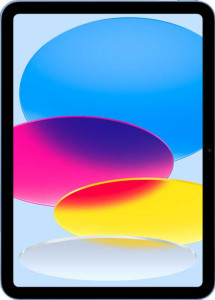

Display:
screen size 10.9" 13.1"
resolution 2360 x 1640 px 2880 x 1800 px
pixel density 264 ppi 259 ppi
Display type IPS, LCD LCD
refresh rate 60Hz 90Hz
has branded damage-resistant glass
has anti-reflection coating
supports HDR10
brightness (typical) 500 nits 600 nits
has a touch screen
Has sapphire glass display
Has an e-paper display

Screen size is where these two tablets diverge most dramatically. The Samsung Galaxy Tab S10 FE Plus sports a large 13.1″ panel, while the Apple iPad (2025) comes in at 10.9″ — a substantial difference that makes the Tab S10 FE Plus considerably better suited for media consumption, multitasking with split-screen apps, or creative work that benefits from more canvas space. Despite the larger screen, pixel density is nearly identical at 259 ppi versus the iPad's 264 ppi, meaning sharpness is essentially a wash in everyday use; neither panel will look noticeably crisper to the naked eye.

Where the Tab S10 FE Plus pulls further ahead is in refresh rate and brightness. Its 90Hz panel delivers visibly smoother scrolling and animations compared to the iPad's standard 60Hz, which is a tangible quality-of-life upgrade during web browsing or app navigation. The Tab also outputs 600 nits of typical brightness against the iPad's 500 nits, giving it a modest but real edge in well-lit indoor environments. Both are LCD panels, neither supports HDR10, and neither has an anti-reflection coating — so glare handling is a tie. The Tab S10 FE Plus does benefit from branded damage-resistant glass, adding a layer of durability the iPad lacks.

On balance, the Tab S10 FE Plus holds a clear display advantage: it offers a much larger screen, a smoother refresh rate, higher brightness, and better glass protection — all while maintaining near-identical pixel density. The iPad's display is perfectly competent, but it is outspecced in nearly every meaningful category here.

Performance:
internal storage 512GB 256GB
RAM 6GB 12GB
Chipset (SoC) name Apple A16 Bionic Samsung Exynos 1580
GPU name Apple A16 GPU Xclipse 530
CPU speed 2 x 3.46 & 4 x 2.02 GHz 1 x 2.9 & 3 x 2.6 & 4 x 1.95 GHz
Geekbench 6 result (multi) 5684 3893
Geekbench 6 result (single) 2321 1360
has an external memory slot
semiconductor size 4 nm 4 nm
Supports 64-bit
Has integrated LTE
Uses big.LITTLE technology
Has integrated graphics
GPU clock speed 1398 MHz 1300 MHz
CPU threads 6 threads 8 threads
RAM speed 6400 MHz 3200 MHz
maximum memory amount 6GB 12GB
Uses HMP
maximum memory bandwidth 51.2 GB/s 51.2 GB/s
memory channels 2 4
OpenGL ES version 3 3.2
shading units 128 256

Raw processing power strongly favors the Apple iPad (2025). Its Apple A16 Bionic chip scores 2321 single-core and 5684 multi-core on Geekbench 6, compared to the Samsung Exynos 1580 in the Tab S10 FE Plus, which posts 1360 single-core and 3893 multi-core. Single-core performance is especially telling for everyday responsiveness — app launches, UI snappiness, and general fluidity — and the iPad leads by a commanding 70% margin there. Both chips are built on a 4 nm process, so the difference comes down to Apple's silicon design advantage rather than manufacturing generation.

The Tab S10 FE Plus counters in memory configuration. It carries 12 GB of RAM at up to 3200 MHz versus the iPad's 6 GB at 6400 MHz — an interesting trade-off where the iPad has half the capacity but double the memory clock speed. In practice, the iPad's faster RAM helps sustain its CPU performance lead, while the Tab's larger RAM pool gives it a theoretical edge for heavy multitasking or keeping more apps active simultaneously. Storage tells the opposite story: the iPad is available with up to 512 GB of internal storage, while the Tab S10 FE Plus tops out at 256 GB internally — though the Tab partially compensates with a microSD expansion slot that the iPad lacks entirely.

On GPU, the Tab S10 FE Plus has more shading units (256 vs. 128) and a slightly newer OpenGL ES 3.2 implementation compared to the iPad's 3.0, suggesting broader raw GPU parallelism — yet the iPad's tightly integrated A16 GPU at 1398 MHz is architecturally more efficient. Overall, the iPad (2025) holds a decisive performance edge in CPU throughput and real-world responsiveness; the Tab S10 FE Plus offers more RAM and expandable storage, but cannot match the iPad's processing horsepower.

Cameras:
megapixels (main camera) 12 MP 13 MP
megapixels (front camera) 12MP 12MP
video recording (main camera) 2160 x 60 fps 2160 x 30 fps
has a flash
has a front camera
has a built-in HDR mode
can create panoramas in-camera
supports slow-motion video recording
has touch autofocus
has manual white balance
has a CMOS sensor
wide aperture (main camera) 1.8f 2f
has continuous autofocus when recording movies
Has a front-facing LED flash
has manual ISO
has a video light
Shoots 360° panorama
has a serial shot mode
has built-in optical image stabilization
has manual focus
has manual exposure
has manual shutter speed

Megapixel counts are nearly identical — 12 MP on the iPad versus 13 MP on the Tab S10 FE Plus — so resolution is effectively a tie. The more telling difference is aperture: the iPad's f/1.8 main lens lets in significantly more light than the Tab's f/2.0, which translates to a meaningful advantage in low-light photography where a wider aperture captures more detail with less noise. For video, the iPad pulls further ahead by supporting 4K at 60 fps, compared to the Tab S10 FE Plus which caps out at 4K at 30 fps — a real distinction for users who shoot smooth, high-motion footage.

The Tab S10 FE Plus, however, offers a richer manual control set. It supports manual ISO, manual white balance, and manual focus — none of which are available on the iPad — appealing to users who want granular control over their shots. It also features continuous autofocus during video recording, which the iPad lacks; this matters for keeping subjects sharp while filming without user intervention. The iPad counters with slow-motion video and in-camera panorama support, two capabilities the Tab S10 FE Plus does not offer at all.

Neither tablet is a primary camera device, but each suits a different type of user. The iPad (2025) is the stronger choice for casual video creators who want higher frame rates and better low-light stills. The Tab S10 FE Plus is better suited for those who prefer manual photographic control and need reliable continuous autofocus in video. On the most impactful specs — aperture and video frame rate — the iPad holds a narrow but practical edge for general use.

Audio:
has stereo speakers
has a socket for a 3.5 mm audio jack
number of microphones 2 3
Has a radio

Audio specs are nearly identical across these two tablets, with one minor distinction. Both feature stereo speakers and drop the 3.5 mm headphone jack, meaning wired audio requires an adapter on either device — a shared compromise that is now common across premium tablets. The only differentiator is microphone count: the Tab S10 FE Plus includes 3 microphones versus the iPad's 2, which can improve spatial audio capture, voice clarity in video calls, and noise cancellation in louder environments.

In practice, an extra microphone does not guarantee a dramatically better experience, but it provides more flexibility for beamforming algorithms to isolate voices and suppress background noise — useful for video conferencing or recording on the go. Neither tablet has a radio tuner, so that is a non-factor. Overall, the audio category is very closely matched, with the Samsung Galaxy Tab S10 FE Plus holding a slim edge thanks solely to its additional microphone.

Battery:
battery power 8500 mAh 10090 mAh
Supports fast charging
has wireless charging
has a battery level indicator
has a rechargeable battery
has a removable battery

Battery capacity gives the Samsung Galaxy Tab S10 FE Plus a clear numerical lead at 10090 mAh versus the iPad's 8500 mAh — a roughly 19% larger cell. That said, raw mAh figures do not tell the full story across different platforms, since a more power-efficient chip can stretch a smaller battery further. What the numbers do reliably indicate is that the Tab carries a meaningfully larger reserve, which is especially relevant given its larger, brighter display drawing more power.

The more decisive gap is charging. The Tab S10 FE Plus supports fast charging, allowing the battery to replenish significantly faster when plugged in — a genuine convenience advantage for users who need to top up quickly between uses. The Apple iPad (2025) does not support fast charging, meaning it will take longer to reach a full charge regardless of the adapter used. Neither tablet offers wireless charging, so that is a shared limitation. Both have non-removable, rechargeable batteries — standard for tablets in this category.

Overall, the Tab S10 FE Plus holds a clear battery advantage: it has a larger capacity and the added practicality of fast charging, while the iPad offers neither. Users who prioritize all-day endurance and quicker top-ups will find the Tab S10 FE Plus the more capable option in this category.

Connectivity & Features:
release date March 2025 April 2025
Wi-Fi version Wi-Fi 6 (802.11ax), Wi-Fi 5 (802.11ac), Wi-Fi 4 (802.11n) Wi-Fi 4 (802.11n), Wi-Fi 6 (802.11ax), Wi-Fi 5 (802.11ac), Wi-Fi 6E (802.11ax)
SIM cards 1 eSIM 1 eSIM, 1 SIM
has Mail Privacy Protection
has on-device machine learning
has clipboard warnings
has location privacy options
has camera/microphone privacy options
can block app tracking
blocks cross-site tracking
supports split screen
has Live Text
has notification permissions
has full-page screenshots
has Quick Start
has theme customization
has Wi-Fi password sharing
has PiP
Can play games while they download
has an extra dim mode
can offload apps
has focus modes
has media picker
has dynamic theming
has dark mode
has battery health check
Has USB Type-C
has a cellular module
has 5G support
is a multi-user system
gets direct OS updates
has a child lock
has an HDMI output
has NFC
Has a fingerprint scanner
USB version 2 2
Supports widgets
Bluetooth version 5.3 5.3
has a gyroscope
Is free and open source
Has offline voice recognition
has a compass
supports Wi-Fi
Has sharing intents
Has customizable notifications
Uses 3D facial recognition
has an accelerometer
has voice commands
Has an iris scanner
Has a built-in projector
supports Ethernet
Has an infrared sensor
Tracks the current position of a mobile device

Wireless connectivity gives the Samsung Galaxy Tab S10 FE Plus a tangible hardware edge in two areas. It supports Wi-Fi 6E, which adds access to the less congested 6 GHz band for faster, more stable connections in crowded environments — something the iPad (2025) misses, topping out at Wi-Fi 6. The Tab also includes NFC and supports a physical SIM alongside an eSIM, versus the iPad's eSIM-only setup, giving it more flexibility for contactless use cases and international travel with local SIM cards. Additionally, the Tab functions as a multi-user system, allowing separate profiles for different people — a meaningful advantage for shared household or classroom use that the iPad does not support.

The Apple iPad (2025) pushes back strongly on privacy and software. It offers Mail Privacy Protection, cross-site tracking blocking, and focus modes — none of which are present on the Tab — reflecting iOS's deeper system-level privacy architecture. Critically, the iPad also receives direct OS updates from Apple, meaning it gets new software features and security patches promptly; the Tab S10 FE Plus does not have this designation, meaning updates depend on Samsung's release schedule. On sensors, the iPad includes both a gyroscope and a compass, which the Tab lacks — relevant for AR applications and navigation accuracy.

This category reflects a genuine philosophical split rather than one product simply outspeccing the other. The Tab S10 FE Plus wins on hardware connectivity — Wi-Fi 6E, NFC, dual SIM, and multi-user support — while the iPad leads on privacy controls, sensor suite, and software update reliability. Users who prioritize network flexibility and device sharing will lean toward the Tab; those who value privacy features and timely updates will find the iPad the stronger platform.

Miscellaneous:
uses multithreading
DDR memory version 5 5

This group contains only two data points, and they tell a straightforward story. Both tablets use DDR5 memory, the current standard for high-bandwidth RAM — so that aspect is a complete tie. The only differentiator is multithreading: the Samsung Galaxy Tab S10 FE Plus supports it, while the Apple iPad (2025) does not. Multithreading allows a processor to handle multiple instruction streams simultaneously per core, which can improve throughput in parallelizable workloads like background processing or certain productivity tasks.

In practice, however, this single spec should not be read in isolation. The iPad's A16 Bionic has already demonstrated substantially higher Geekbench scores, suggesting that Apple's chip architecture delivers strong real-world performance through other design efficiencies rather than relying on multithreading. Based strictly on the data in this group, the Tab S10 FE Plus holds a nominal edge on multithreading support, while DDR5 memory is an even draw between the two.

Comparison Summary & Verdict

After examining every specification, both tablets have clear strengths that suit different types of users. The Apple iPad (2025) stands out with its significantly superior Geekbench 6 performance scores, lighter 481 g build, faster RAM speed, and a more private, ecosystem-integrated experience — making it the better pick for users who prioritize raw speed and portability. The Samsung Galaxy Tab S10 FE Plus, on the other hand, wins on versatility: it offers a larger 13.1-inch display, a bigger 10090 mAh battery with fast charging, an included stylus, waterproof build, 12 GB of RAM, expandable storage, and multi-user support, making it ideal for productivity-focused and creative users who want a feature-packed tablet with more flexibility.

Apple iPad (2025)
Buy Apple iPad (2025) if...

Buy the Apple iPad (2025) if you want the best raw processing performance in a lightweight, compact tablet and value a privacy-focused, seamlessly integrated ecosystem.

Samsung Galaxy Tab S10 FE Plus
Buy Samsung Galaxy Tab S10 FE Plus if...

Buy the Samsung Galaxy Tab S10 FE Plus if you want a larger display, longer battery life with fast charging, an included stylus, waterproofing, and expandable storage for a more versatile and feature-rich experience.