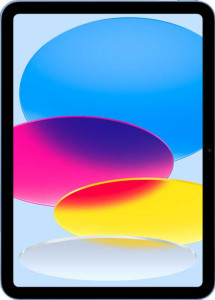
The most striking design difference between these two tablets is weight. The Apple iPad (2025) comes in at 481 g, while the Vivo iQOO Pad 5 Pro is notably heavier at 635 g — a difference of over 150 g. In practice, that gap is very noticeable during extended handheld use: reading, sketching, or browsing while lying down will feel considerably more comfortable on the iPad. The iQOO Pad 5 Pro also has a larger footprint (289.6 × 198.3 mm vs 248.6 × 179.5 mm), which reflects its bigger display panel and contributes to a higher overall volume. The one area where the iQOO counters is thickness: at 6.1 mm it is measurably slimmer than the iPad's 7 mm, giving it a sleeker profile on a desk or in a bag — though this advantage is largely offset by the extra width and weight when held.
On water resistance, the iQOO Pad 5 Pro holds a clear functional edge: it carries water resistance, while the iPad (2025) offers none. For users who work near liquids, use their tablet outdoors, or simply want peace of mind against accidental spills, this is a meaningful real-world differentiator. Both tablets ship without a stylus or keyboard in the box, so neither has an accessory advantage out of the packaging.
Overall, the iPad (2025) has the stronger design edge for portability and everyday ergonomics thanks to its significantly lighter weight and more compact dimensions. The iQOO Pad 5 Pro's slimmer profile and water resistance are genuine advantages, but they do not fully compensate for the extra mass most users will notice the moment they pick it up.