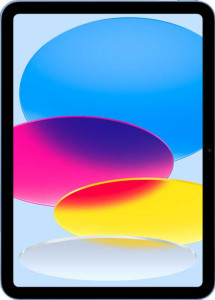
Apple iPad (2025)
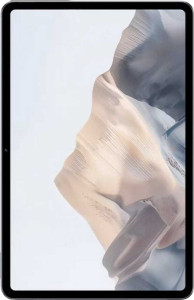
ZTE Nubia Pad Pro

Apple iPad (2025) ZTE Nubia Pad Pro

Overview

Welcome to our in-depth comparison of the Apple iPad (2025) and the ZTE Nubia Pad Pro — two 10.9-inch tablets that share a surprising amount of common ground yet diverge sharply in several key areas. From display refresh rates and RAM to battery capacity and camera capabilities, these two devices take notably different approaches to the tablet experience. Read on to see how they stack up across design, performance, and everyday usability.

Common Features

  • Neither product includes a stylus in the box.
  • Neither product has a detachable keyboard.
  • Neither product has a backlit keyboard.
  • Neither product offers water resistance.
  • Both products share the same screen size of 10.9″.
  • Neither product features branded damage-resistant glass.
  • Neither product supports HDR10.
  • Both products have a touch screen.
  • Neither product has a sapphire glass display.
  • Neither product has an e-paper display.
  • Neither product has an external memory slot.
  • Both products use a 4 nm semiconductor size.
  • Both products support 64-bit processing.
  • Both products have integrated LTE.
  • Both products use big.LITTLE technology.
  • Both products have integrated graphics.
  • Both products have TrustZone.
  • Both products use HMP.
  • Both products have a front camera.
  • Both products have a built-in HDR mode.
  • Both products have touch autofocus.
  • Both products use a CMOS sensor.
  • Neither product has a front-facing LED flash.
  • Neither product shoots 360° panoramas.
  • Neither product has built-in optical image stabilization.
  • Both products support manual exposure.
  • Both products have stereo speakers.
  • Neither product has a 3.5 mm audio jack.
  • Neither product has a radio.
  • Neither product supports wireless charging.
  • Both products have a battery level indicator.
  • Both products have a rechargeable battery.
  • Neither product has a removable battery.
  • Both products have on-device machine learning.
  • Both products have clipboard warnings.
  • Both products have location privacy options.
  • Both products have camera and microphone privacy options.
  • Both products can block app tracking.
  • Both products support split screen.
  • Both products have Live Text.
  • Both products have notification permissions.
  • Both products use DDR5 memory.

Main Differences

  • Weight is 481 g on Apple iPad (2025) and 523 g on ZTE Nubia Pad Pro.
  • Thickness is 7 mm on Apple iPad (2025) and 7.3 mm on ZTE Nubia Pad Pro.
  • Width is 248.6 mm on Apple iPad (2025) and 253.3 mm on ZTE Nubia Pad Pro.
  • Height is 179.5 mm on Apple iPad (2025) and 164.6 mm on ZTE Nubia Pad Pro.
  • Volume is 312.37 cm³ on Apple iPad (2025) and 304.36 cm³ on ZTE Nubia Pad Pro.
  • Resolution is 2360 x 1640 px on Apple iPad (2025) and 2880 x 1800 px on ZTE Nubia Pad Pro.
  • Pixel density is 264 ppi on Apple iPad (2025) and 312 ppi on ZTE Nubia Pad Pro.
  • Refresh rate is 60 Hz on Apple iPad (2025) and 144 Hz on ZTE Nubia Pad Pro.
  • Internal storage is 512 GB on Apple iPad (2025) and 1024 GB on ZTE Nubia Pad Pro.
  • RAM is 6 GB on Apple iPad (2025) and 16 GB on ZTE Nubia Pad Pro.
  • The chipset is Apple A16 Bionic on Apple iPad (2025) and Qualcomm Snapdragon 8 Gen 3 on ZTE Nubia Pad Pro.
  • The GPU is Apple A16 GPU on Apple iPad (2025) and Adreno 750 on ZTE Nubia Pad Pro.
  • Geekbench 6 multi-core result is 5684 on Apple iPad (2025) and 7325 on ZTE Nubia Pad Pro.
  • Geekbench 6 single-core result is 2321 on Apple iPad (2025) and 2213 on ZTE Nubia Pad Pro.
  • GPU clock speed is 1398 MHz on Apple iPad (2025) and 900 MHz on ZTE Nubia Pad Pro.
  • L2 cache is 24 MB on Apple iPad (2025) and 1 MB on ZTE Nubia Pad Pro.
  • CPU threads count is 6 on Apple iPad (2025) and 8 on ZTE Nubia Pad Pro.
  • RAM speed is 6400 MHz on Apple iPad (2025) and 4800 MHz on ZTE Nubia Pad Pro.
  • Maximum memory amount is 6 GB on Apple iPad (2025) and 24 GB on ZTE Nubia Pad Pro.
  • Main camera resolution is 12 MP on Apple iPad (2025) and 13 MP on ZTE Nubia Pad Pro.
  • Front camera resolution is 12 MP on Apple iPad (2025) and 20 MP on ZTE Nubia Pad Pro.
  • A flash is present on ZTE Nubia Pad Pro but not available on Apple iPad (2025).
  • In-camera panorama creation is supported on Apple iPad (2025) but not available on ZTE Nubia Pad Pro.
  • Slow-motion video recording is supported on Apple iPad (2025) but not available on ZTE Nubia Pad Pro.
  • A BSI sensor is present on Apple iPad (2025) but not on ZTE Nubia Pad Pro.
  • Manual white balance is available on ZTE Nubia Pad Pro but not on Apple iPad (2025).
  • Continuous autofocus during movie recording is available on ZTE Nubia Pad Pro but not on Apple iPad (2025).
  • Manual ISO control is available on ZTE Nubia Pad Pro but not on Apple iPad (2025).
  • A video light is present on ZTE Nubia Pad Pro but not on Apple iPad (2025).
  • Timelapse function is available on Apple iPad (2025) but not on ZTE Nubia Pad Pro.
  • Front camera aperture is f/2.4 on Apple iPad (2025) and f/2 on ZTE Nubia Pad Pro.
  • Battery capacity is 8500 mAh on Apple iPad (2025) and 10100 mAh on ZTE Nubia Pad Pro.
  • Fast charging is supported on ZTE Nubia Pad Pro but not available on Apple iPad (2025).
  • Mail Privacy Protection is available on Apple iPad (2025) but not on ZTE Nubia Pad Pro.
  • Cross-site tracking blocking is available on Apple iPad (2025) but not on ZTE Nubia Pad Pro.
  • Quick Start is available on Apple iPad (2025) but not on ZTE Nubia Pad Pro.
  • Theme customization is available on ZTE Nubia Pad Pro but not on Apple iPad (2025).
  • Wi-Fi password sharing is available on Apple iPad (2025) but not on ZTE Nubia Pad Pro.
  • Playing games while they download is supported on ZTE Nubia Pad Pro but not on Apple iPad (2025).
  • An extra dim mode is available on ZTE Nubia Pad Pro but not on Apple iPad (2025).
  • Focus modes are available on Apple iPad (2025) but not on ZTE Nubia Pad Pro.
  • A cellular module is present on Apple iPad (2025) but not on ZTE Nubia Pad Pro.
  • 5G support is available on Apple iPad (2025) but not on ZTE Nubia Pad Pro.
  • Multi-user system support is available on ZTE Nubia Pad Pro but not on Apple iPad (2025).
  • Dynamic theming is available on ZTE Nubia Pad Pro but not on Apple iPad (2025).
  • Multithreading is supported on ZTE Nubia Pad Pro but not on Apple iPad (2025).
Specs Comparison
Apple iPad (2025)

Apple iPad (2025)

ZTE Nubia Pad Pro

ZTE Nubia Pad Pro

Design:
weight 481 g 523 g
thickness 7 mm 7.3 mm
width 248.6 mm 253.3 mm
height 179.5 mm 164.6 mm
volume 312.3659 cm³ 304.360214 cm³
Stylus included
Has a detachable keyboard
Has a backlit keyboard
water resistance None None

Both tablets share a similarly slim profile, but there are meaningful differences in how they distribute their physical footprint. The Apple iPad (2025) is notably lighter at 481 g versus the Nubia Pad Pro's 523 g — a 42 g difference that is genuinely noticeable during extended handheld use, such as reading or media consumption. The iPad is also marginally thinner at 7 mm compared to 7.3 mm, giving it a slightly more premium, pocketable feel in a bag or sleeve.

The dimensional split is less straightforward: the iPad is taller (179.5 mm vs 164.6 mm) while the Nubia Pad Pro is wider (253.3 mm vs 248.6 mm), reflecting different aspect ratio choices that affect one-handed grip and landscape usability. Interestingly, despite being heavier, the Nubia Pad Pro has a marginally smaller total volume (304.4 cm³ vs 312.4 cm³), suggesting its mass is packed more densely — likely due to internal hardware differences rather than a design efficiency advantage.

On the accessories front, neither device includes a stylus or a detachable keyboard in the box, and neither offers any rated water resistance — so both stand equal on those dimensions. Overall, the Apple iPad (2025) holds a clear design edge in the most user-perceptible metrics: it is lighter and thinner, which translates directly to more comfortable prolonged use and a more refined physical presence.

Display:
screen size 10.9" 10.9"
resolution 2360 x 1640 px 2880 x 1800 px
pixel density 264 ppi 312 ppi
Display type IPS, LCD LCD, IPS
refresh rate 60Hz 144Hz
has branded damage-resistant glass
supports HDR10
has a touch screen
Has sapphire glass display
Has an e-paper display

At identical 10.9″ screen sizes and the same IPS LCD panel technology, these two tablets share a common foundation — but the Nubia Pad Pro pulls significantly ahead in raw display performance. Its 2880 x 1800 resolution versus the iPad's 2360 x 1640 translates to a pixel density of 312 ppi vs 264 ppi, a difference that is visible when reading small text or viewing detailed images up close. At typical tablet viewing distances the gap is subtle, but the Nubia's sharper panel gives it a measurable advantage for productivity and content creation tasks.

The more impactful differentiator, however, is refresh rate. The Nubia Pad Pro's 144Hz panel compared to the iPad's standard 60Hz means dramatically smoother scrolling, more fluid animations, and a noticeably more responsive feel during fast-paced gaming or even everyday navigation. This is more than a spec on paper — users who have experienced high-refresh displays consistently find it difficult to go back. For a tablet used heavily for media, gaming, or drawing, this gap is meaningful.

On the shared shortcomings, neither device features damage-resistant branded glass or HDR10 support, which levels the playing field somewhat at the premium end. Still, the ZTE Nubia Pad Pro holds a clear display advantage in this group, combining higher resolution with a significantly faster refresh rate — both of which have tangible real-world impact. The iPad's display is perfectly competent, but by the numbers it is the more conservative offering.

Performance:
internal storage 512GB 1024GB
RAM 6GB 16GB
Chipset (SoC) name Apple A16 Bionic Qualcomm Snapdragon 8 Gen 3
GPU name Apple A16 GPU Adreno 750
CPU speed 2 x 3.46 & 4 x 2.02 GHz 3 x 3.15 & 2 x 2.96 & 2 x 2.26 & 1 x 3.3 GHz
Geekbench 6 result (multi) 5684 7325
Geekbench 6 result (single) 2321 2213
has an external memory slot
semiconductor size 4 nm 4 nm
Supports 64-bit
Has integrated LTE
Uses big.LITTLE technology
Has integrated graphics
GPU clock speed 1398 MHz 900 MHz
L2 cache 24 MB 1 MB
CPU threads 6 threads 8 threads
RAM speed 6400 MHz 4800 MHz
Has TrustZone
maximum memory amount 6GB 24GB
Uses HMP
maximum memory bandwidth 51.2 GB/s 76.6 GB/s
memory channels 2 2
OpenGL ES version 3 3.2

The single-core Geekbench 6 scores tell a fascinating story: the Apple A16 Bionic edges out the Snapdragon 8 Gen 3 with a score of 2321 vs 2213, meaning the iPad actually delivers faster per-core execution — which is what drives responsiveness in everyday tasks like app launches, UI interactions, and single-threaded workloads. However, the Nubia Pad Pro flips the result in multi-core performance, scoring 7325 vs 5684, thanks to its 8-core CPU configuration versus the iPad's 6-core setup. This multi-core advantage benefits sustained workloads like video exports, complex document rendering, and multitasking under load.

Where the Nubia Pad Pro pulls decisively ahead is memory. Its 16 GB of RAM (expandable to 24 GB maximum) against the iPad's 6 GB is not a marginal gap — it is the difference between keeping dozens of apps and browser tabs active simultaneously versus experiencing more frequent reloads. The Nubia also doubles the storage at 1 TB versus 512 GB, and its memory bandwidth of 76.6 GB/s vs 51.2 GB/s means data moves between CPU and RAM considerably faster, which aids GPU-intensive and AI-related tasks. The iPad counters with a substantially larger L2 cache of 24 MB (versus just 1 MB) and faster RAM speed at 6400 MHz, which help sustain its strong single-threaded efficiency.

Declaring an overall winner here depends on the use case. For raw single-threaded snappiness and cache-driven efficiency, the Apple iPad (2025) holds its own impressively. But for multitasking headroom, sustained parallel workloads, and future-proofing with far greater memory capacity, the Nubia Pad Pro has a clear and substantial advantage — particularly for power users who push their tablet hard.

Cameras:
megapixels (main camera) 12 MP 13 MP
megapixels (front camera) 12MP 20MP
has a flash
has a front camera
has a built-in HDR mode
can create panoramas in-camera
supports slow-motion video recording
has touch autofocus
has a BSI sensor
has manual white balance
has a CMOS sensor
has continuous autofocus when recording movies
Has a front-facing LED flash
has manual ISO
has a video light
Has timelapse function
wide aperture (front camera) 2.4f 2f
Shoots 360° panorama
has a serial shot mode
has built-in optical image stabilization
has manual focus
has manual exposure
has manual shutter speed

Rear camera megapixels are nearly identical — 13 MP on the Nubia Pad Pro versus 12 MP on the iPad — so raw resolution is a non-factor here. The more meaningful split is in sensor technology: the iPad carries a BSI (back-side illuminated) sensor, which is designed to capture more light in low-light conditions by repositioning the sensor's circuitry. The Nubia does not list this feature, but compensates with a flash and a video light, giving it a practical tool for illuminating subjects in dark environments that the iPad entirely lacks.

The front cameras tell a starker story. The Nubia Pad Pro's 20 MP front camera with a wider f/2.0 aperture significantly outclasses the iPad's 12 MP front camera at f/2.4 — both in resolution for video calls and selfies, and in light intake given the lower aperture number. The Nubia also adds continuous autofocus during video recording and a more complete manual controls suite including manual ISO, white balance, and manual focus, making it a more capable option for users who want deliberate control over their shots. The iPad counters with panorama mode, slow-motion video, and serial shot mode — features the Nubia omits — pointing toward a more consumer-friendly, automated shooting experience.

Neither tablet is a serious photography tool, but their camera philosophies diverge clearly. The iPad leans into convenience features and sensor quality for casual capture, while the Nubia Pad Pro prioritizes a stronger front camera and manual control depth. For video calls and intentional shooting, the Nubia Pad Pro holds the edge; for quick, automated rear-camera use the iPad's BSI sensor and feature set remain competitive.

Audio:
has stereo speakers
has a socket for a 3.5 mm audio jack
Has a radio

The audio specifications for these two tablets are an exact match across every available data point. Both feature stereo speakers, omit a 3.5 mm headphone jack, and include no FM radio — leaving no basis for differentiation within the provided data.

The shared absence of a headphone jack is worth noting practically: wired audio requires a USB-C adapter on both devices, which adds a minor inconvenience for users who prefer traditional headphones. Stereo speakers on both tablets mean sound is spatially separated — an improvement over mono setups for media consumption, particularly in landscape orientation.

This group is a complete tie. Based strictly on the provided specs, neither the Apple iPad (2025) nor the Nubia Pad Pro holds any audio advantage over the other.

Battery:
battery power 8500 mAh 10100 mAh
Supports fast charging
has wireless charging
has a battery level indicator
has a rechargeable battery
has a removable battery

Capacity is the headline difference here: the Nubia Pad Pro packs a 10100 mAh battery against the iPad's 8500 mAh — a 1600 mAh gap that represents roughly 19% more stored energy. All else being equal, this translates to meaningfully longer usage between charges, which matters particularly for travel, long work sessions, or any scenario where access to a power outlet is limited.

Charging speed compounds the advantage further. The Nubia Pad Pro supports fast charging, while the Apple iPad (2025) does not — meaning not only does the Nubia start with a larger tank, it also refills faster. For users who do run the battery down, the iPad's slower charging rate adds friction that the Nubia avoids entirely. Neither device offers wireless charging, so both are limited to wired top-ups.

The Nubia Pad Pro holds a clear and double-edged battery advantage: greater capacity for longer endurance and fast charging support for quicker recovery. The iPad's battery is adequate for typical daily use, but by the numbers it is the less capable option in this category on both fronts.

Connectivity & Features:
release date March 2025 April 2025
has Mail Privacy Protection
has on-device machine learning
has clipboard warnings
has location privacy options
has camera/microphone privacy options
can block app tracking
blocks cross-site tracking
supports split screen
has Live Text
has notification permissions
has full-page screenshots
has Quick Start
has theme customization
has Wi-Fi password sharing
has PiP
Can play games while they download
has an extra dim mode
can offload apps
has focus modes
has media picker
has dynamic theming
has dark mode
has battery health check
Has USB Type-C
has a cellular module
has 5G support
is a multi-user system
gets direct OS updates
has GPS
has a child lock
has an HDMI output
has NFC
Has a fingerprint scanner
USB version 2 3.2
Supports widgets
has a gyroscope
Is free and open source
Has offline voice recognition
has a compass
supports Wi-Fi
Has sharing intents
Has customizable notifications
Uses 3D facial recognition
Has a barometer
has an accelerometer
has voice commands
Has an iris scanner
Has a built-in projector
supports Ethernet
Has an infrared sensor
Tracks the current position of a mobile device

Sensor coverage is one of the starkest divides in this group. The Apple iPad (2025) carries a full motion and navigation suite — GPS, gyroscope, compass, accelerometer, and barometer — while the Nubia Pad Pro lists none of these. In practice, this means the iPad can function as a standalone navigation device, support AR applications, and accurately track orientation and movement, whereas the Nubia is dependent on paired devices or Wi-Fi-based positioning for location-aware tasks. For fitness apps, augmented reality, or outdoor use, this gap is significant. Compounding this, the iPad includes a cellular module with 5G support; the Nubia is Wi-Fi only, tethering it to network availability in a way the iPad is not.

Privacy-conscious users will also find the iPad's feature set more comprehensive: it adds Mail Privacy Protection, cross-site tracking blocking, and Focus modes on top of the shared baseline of clipboard warnings and camera/microphone controls. The Nubia counters in the hardware connectivity department with a notably faster USB 3.2 port versus the iPad's USB 2.0 — a meaningful real-world difference for transferring large files or connecting high-bandwidth peripherals. The Nubia also supports multi-user accounts and receives no direct OS updates, while the iPad is a single-user device that does get direct updates — a trade-off between shared-device flexibility and long-term software reliability.

Taken together, the Apple iPad (2025) holds a clear overall advantage in this group. Its complete sensor array, built-in cellular connectivity, stronger privacy architecture, biometric security via fingerprint scanner, and guaranteed direct OS updates represent a broader and more robust feature set. The Nubia's USB 3.2 port and multi-user support are genuine wins, but they do not offset the iPad's lead across the higher-impact categories.
Miscellaneous:
uses multithreading
DDR memory version 5 5

This group offers only two data points, but one of them is worth examining. Both tablets use DDR5 memory, placing them on equal footing in terms of memory generation — DDR5 brings improved power efficiency and higher theoretical bandwidth compared to older standards, and neither device has an advantage here.

The single differentiator is multithreading support: the Nubia Pad Pro uses multithreading, while the Apple iPad (2025) does not. Multithreading allows individual CPU cores to handle multiple instruction threads simultaneously, which can improve throughput in parallel workloads such as background processing, complex app operations, and certain productivity tasks. The absence of multithreading on the iPad does not necessarily translate to a perceptible real-world slowdown for typical use — as seen in the Performance group, the iPad's single-core speed remains competitive — but it does represent a structural ceiling in theoretical parallel execution.

On the basis of the available data, the Nubia Pad Pro holds a narrow edge here solely due to its multithreading support. The shared DDR5 memory generation keeps both devices level on that front, making multithreading the only differentiator in an otherwise sparse category.

Comparison Summary & Verdict

After examining every specification, it is clear that both tablets serve distinct audiences. The Apple iPad (2025) stands out for users who value a tighter, more integrated ecosystem — offering 5G connectivity, superior single-core CPU performance, a higher GPU clock speed, and strong privacy features like Mail Privacy Protection and cross-site tracking blocking. It is the better pick for those who prioritize seamless iOS features and cellular flexibility. The ZTE Nubia Pad Pro, on the other hand, dominates in raw power metrics with its 16 GB of RAM, 144 Hz display refresh rate, larger 10100 mAh battery with fast charging, and a significantly higher multi-core benchmark score. It also offers more storage and a higher-resolution front camera, making it ideal for heavy multitaskers and media enthusiasts who want maximum hardware performance at this screen size.

Apple iPad (2025)
Buy Apple iPad (2025) if...

Buy the Apple iPad (2025) if you rely on 5G connectivity, value Apple ecosystem privacy features, and prefer a lighter device with strong single-core performance.

ZTE Nubia Pad Pro
Buy ZTE Nubia Pad Pro if...

Buy the ZTE Nubia Pad Pro if you need more RAM, a smoother 144 Hz display, a larger battery with fast charging, and greater internal storage for demanding workloads.