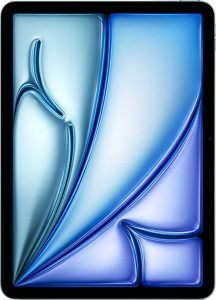
Apple iPad Air 11 (2025) Wi-Fi + Cellular 256GB
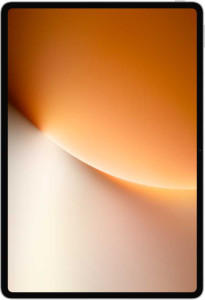
Honor MagicPad 3 Pro

Apple iPad Air 11 (2025) Wi-Fi + Cellular 256GB Honor MagicPad 3 Pro

Overview

Welcome to our in-depth specification comparison between the Apple iPad Air 11 (2025) Wi-Fi + Cellular 256GB and the Honor MagicPad 3 Pro. These two tablets take notably different approaches across key battlegrounds including display refresh rate and size, chipset architecture, battery capacity, and connectivity — making the choice between them far from straightforward. Read on as we break down every spec side by side to help you find the right fit.

Common Features

  • Neither product includes a stylus in the box.
  • Neither product has a detachable keyboard.
  • Neither product has a backlit keyboard.
  • Neither product offers water resistance.
  • Both products use an IPS LCD display type.
  • Neither product features branded damage-resistant glass.
  • Both products have a touchscreen.
  • Neither product has a sapphire glass display.
  • Neither product has an e-paper display.
  • Neither product has an external memory slot.
  • Both products are built on a 3 nm semiconductor process.
  • Both products support 64-bit processing.
  • Both products use big.LITTLE CPU technology.
  • Both products have integrated graphics.
  • Both products have 8 CPU threads.
  • Both products include TrustZone security technology.
  • Both products support a maximum of 24 GB of memory.
  • Both products have a front camera.
  • Both products support HDR mode.
  • Both products support touch autofocus.
  • Both products use a CMOS sensor.
  • Neither product has a front-facing LED flash.
  • Neither product can shoot 360° panoramas.
  • Neither product has built-in optical image stabilization.
  • Neither product has 3D photo or video recording capabilities.
  • Both products have stereo speakers.
  • Neither product has a 3.5 mm audio jack.
  • Neither product has a built-in radio.
  • Both products support fast charging.
  • Neither product supports wireless charging.
  • Both products have a battery level indicator.
  • Both products have a rechargeable, non-removable battery.
  • Both products support on-device machine learning.
  • Both products have clipboard warnings.
  • Both products offer location privacy options.
  • Both products offer camera and microphone privacy options.
  • Both products can block app tracking.
  • Both products support split-screen multitasking.
  • Both products have Live Text functionality.
  • Both products have notification permissions.
  • Both products use DDR5 memory.

Main Differences

  • Weight is 460 g on Apple iPad Air 11 (2025) Wi-Fi + Cellular 256GB and 595 g on Honor MagicPad 3 Pro.
  • Thickness is 6.1 mm on Apple iPad Air 11 (2025) Wi-Fi + Cellular 256GB and 5.8 mm on Honor MagicPad 3 Pro.
  • Width is 247.6 mm on Apple iPad Air 11 (2025) Wi-Fi + Cellular 256GB and 293.9 mm on Honor MagicPad 3 Pro.
  • Height is 178.5 mm on Apple iPad Air 11 (2025) Wi-Fi + Cellular 256GB and 201.4 mm on Honor MagicPad 3 Pro.
  • Volume is 269.60 cm³ on Apple iPad Air 11 (2025) Wi-Fi + Cellular 256GB and 343.31 cm³ on Honor MagicPad 3 Pro.
  • Tilt sensitivity support is present on Apple iPad Air 11 (2025) Wi-Fi + Cellular 256GB but not available on Honor MagicPad 3 Pro.
  • Screen size is 11″ on Apple iPad Air 11 (2025) Wi-Fi + Cellular 256GB and 13.3″ on Honor MagicPad 3 Pro.
  • Resolution is 2360 x 1640 px on Apple iPad Air 11 (2025) Wi-Fi + Cellular 256GB and 3200 x 2136 px on Honor MagicPad 3 Pro.
  • Pixel density is 264 ppi on Apple iPad Air 11 (2025) Wi-Fi + Cellular 256GB and 289 ppi on Honor MagicPad 3 Pro.
  • Refresh rate is 60 Hz on Apple iPad Air 11 (2025) Wi-Fi + Cellular 256GB and 165 Hz on Honor MagicPad 3 Pro.
  • Anti-reflection coating is present on Apple iPad Air 11 (2025) Wi-Fi + Cellular 256GB but not available on Honor MagicPad 3 Pro.
  • Internal storage is 256 GB on Apple iPad Air 11 (2025) Wi-Fi + Cellular 256GB and 512 GB on Honor MagicPad 3 Pro.
  • RAM is 8 GB on Apple iPad Air 11 (2025) Wi-Fi + Cellular 256GB and 16 GB on Honor MagicPad 3 Pro.
  • The chipset is Apple M3 on Apple iPad Air 11 (2025) Wi-Fi + Cellular 256GB and Qualcomm Snapdragon 8 Gen 3 on Honor MagicPad 3 Pro.
  • The GPU is Apple M3 GPU on Apple iPad Air 11 (2025) Wi-Fi + Cellular 256GB and Adreno 830 on Honor MagicPad 3 Pro.
  • CPU speed is 8 x 3.4 GHz on Apple iPad Air 11 (2025) Wi-Fi + Cellular 256GB and 2 x 4.6 GHz & 6 x 3.62 GHz on Honor MagicPad 3 Pro.
  • ECC memory support is present on Honor MagicPad 3 Pro but not available on Apple iPad Air 11 (2025) Wi-Fi + Cellular 256GB.
  • Thermal Design Power (TDP) is 20 W on Apple iPad Air 11 (2025) Wi-Fi + Cellular 256GB and 8.2 W on Honor MagicPad 3 Pro.
  • Maximum memory bandwidth is 100 GB/s on Apple iPad Air 11 (2025) Wi-Fi + Cellular 256GB and 85.1 GB/s on Honor MagicPad 3 Pro.
  • The main camera resolution is 12 MP on Apple iPad Air 11 (2025) Wi-Fi + Cellular 256GB and 13 & 2 MP on Honor MagicPad 3 Pro.
  • The front camera resolution is 12 MP on Apple iPad Air 11 (2025) Wi-Fi + Cellular 256GB and 9 MP on Honor MagicPad 3 Pro.
  • Main camera video recording goes up to 2160p at 60 fps on Apple iPad Air 11 (2025) Wi-Fi + Cellular 256GB and 2160p at 30 fps on Honor MagicPad 3 Pro.
  • A flash is present on Honor MagicPad 3 Pro but not available on Apple iPad Air 11 (2025) Wi-Fi + Cellular 256GB.
  • In-camera panorama creation is supported on Apple iPad Air 11 (2025) Wi-Fi + Cellular 256GB but not on Honor MagicPad 3 Pro.
  • Slow-motion video recording is supported on Apple iPad Air 11 (2025) Wi-Fi + Cellular 256GB but not on Honor MagicPad 3 Pro.
  • A BSI sensor is present on Apple iPad Air 11 (2025) Wi-Fi + Cellular 256GB but not on Honor MagicPad 3 Pro.
  • Manual white balance is available on Honor MagicPad 3 Pro but not on Apple iPad Air 11 (2025) Wi-Fi + Cellular 256GB.
  • Continuous autofocus during video recording is available on Honor MagicPad 3 Pro but not on Apple iPad Air 11 (2025) Wi-Fi + Cellular 256GB.
  • Manual ISO control is available on Honor MagicPad 3 Pro but not on Apple iPad Air 11 (2025) Wi-Fi + Cellular 256GB.
  • A video light is present on Honor MagicPad 3 Pro but not on Apple iPad Air 11 (2025) Wi-Fi + Cellular 256GB.
  • Timelapse functionality is available on Apple iPad Air 11 (2025) Wi-Fi + Cellular 256GB but not on Honor MagicPad 3 Pro.
  • Battery capacity is 7606 mAh on Apple iPad Air 11 (2025) Wi-Fi + Cellular 256GB and 12450 mAh on Honor MagicPad 3 Pro.
  • The maximum Wi-Fi version supported is Wi-Fi 6E on Apple iPad Air 11 (2025) Wi-Fi + Cellular 256GB and Wi-Fi 7 on Honor MagicPad 3 Pro.
  • Mail Privacy Protection is available on Apple iPad Air 11 (2025) Wi-Fi + Cellular 256GB but not on Honor MagicPad 3 Pro.
  • Cross-site tracking blocking is available on Apple iPad Air 11 (2025) Wi-Fi + Cellular 256GB but not on Honor MagicPad 3 Pro.
  • Quick Start is available on Apple iPad Air 11 (2025) Wi-Fi + Cellular 256GB but not on Honor MagicPad 3 Pro.
  • Theme customization is available on Honor MagicPad 3 Pro but not on Apple iPad Air 11 (2025) Wi-Fi + Cellular 256GB.
  • Wi-Fi password sharing is available on Apple iPad Air 11 (2025) Wi-Fi + Cellular 256GB but not on Honor MagicPad 3 Pro.
  • Playing games while they download is supported on Honor MagicPad 3 Pro but not on Apple iPad Air 11 (2025) Wi-Fi + Cellular 256GB.
  • An extra dim mode is available on Honor MagicPad 3 Pro but not on Apple iPad Air 11 (2025) Wi-Fi + Cellular 256GB.
  • Focus modes are available on Apple iPad Air 11 (2025) Wi-Fi + Cellular 256GB but not on Honor MagicPad 3 Pro.
  • Dynamic theming is available on Honor MagicPad 3 Pro but not on Apple iPad Air 11 (2025) Wi-Fi + Cellular 256GB.
  • A cellular module is present on Apple iPad Air 11 (2025) Wi-Fi + Cellular 256GB but not on Honor MagicPad 3 Pro.
  • 5G support is available on Apple iPad Air 11 (2025) Wi-Fi + Cellular 256GB but not on Honor MagicPad 3 Pro.
Specs Comparison
Apple iPad Air 11 (2025) Wi-Fi + Cellular 256GB

Apple iPad Air 11 (2025) Wi-Fi + Cellular 256GB

Honor MagicPad 3 Pro

Honor MagicPad 3 Pro

Design:
weight 460 g 595 g
thickness 6.1 mm 5.8 mm
width 247.6 mm 293.9 mm
height 178.5 mm 201.4 mm
volume 269.59926 cm³ 343.310468 cm³
Stylus included
Has a detachable keyboard
Has a backlit keyboard
water resistance None None
Has tilt sensitivity

The most immediately practical difference between these two tablets is weight. The iPad Air 11 (2025) comes in at 460 g, while the Honor MagicPad 3 Pro is noticeably heavier at 595 g — a difference of 135 g, roughly the weight of a large egg. Over extended sessions of reading, browsing, or video watching held in hand, that gap becomes tangible fatigue. The iPad Air is also the more compact device overall (247.6 × 178.5 mm vs 293.9 × 201.4 mm), translating to a significantly smaller footprint and a volume of ~270 cm³ versus ~343 cm³ for the MagicPad 3 Pro. For portability and one-handed use, the Apple tablet has a clear structural advantage.

The MagicPad 3 Pro does edge out the iPad Air on thinness5.8 mm vs 6.1 mm — but the 0.3 mm difference is imperceptible in everyday use and is entirely offset by the MagicPad's larger and heavier chassis. Neither device offers water resistance, and neither ships with a stylus or a detachable or backlit keyboard, so those categories are evenly matched.

One meaningful distinction is tilt sensitivity: the iPad Air supports it, the MagicPad 3 Pro does not. For users who plan to draw or annotate with a compatible stylus, tilt sensitivity enables more natural, pressure-nuanced strokes — a real creative workflow advantage. Overall, the iPad Air 11 (2025) holds the clear design edge: it is lighter, more pocketable, and adds tilt sensitivity, making it the more versatile and physically comfortable option of the two.

Display:
screen size 11" 13.3"
resolution 2360 x 1640 px 3200 x 2136 px
pixel density 264 ppi 289 ppi
Display type IPS, LCD IPS, LCD
refresh rate 60Hz 165Hz
has branded damage-resistant glass
has anti-reflection coating
has a touch screen
Has sapphire glass display
Has an e-paper display

Screen size is the first fork in the road: the iPad Air delivers an 11-inch panel, while the MagicPad 3 Pro stretches to 13.3 inches. That extra 2.3 inches is not merely cosmetic — it translates to roughly 46% more screen area, making the Honor noticeably more comfortable for split-screen multitasking, spreadsheet work, or media consumption. Both panels are IPS LCD, so color reproduction and viewing-angle characteristics are broadly comparable in technology terms.

Where the MagicPad 3 Pro pulls further ahead is in raw display performance. Its 3200 × 2136 resolution at 289 ppi edges past the iPad Air's 2360 × 1640 at 264 ppi — a modest sharpness advantage, but the bigger story is refresh rate. A 165Hz panel versus the iPad Air's 60Hz is a substantial gap: scrolling, animations, and stylus input all feel markedly smoother at higher refresh rates, and 165Hz is among the highest available on any tablet. For users sensitive to display fluidity, this difference is hard to ignore.

The iPad Air counters with one meaningful display protection feature: anti-reflection coating, which the MagicPad 3 Pro lacks. In bright ambient light or outdoor use, that coating reduces glare and maintains legibility in ways that raw resolution cannot compensate for. Neither device uses branded damage-resistant glass. On balance, the MagicPad 3 Pro holds the display edge for pure visual performance — larger canvas, higher refresh rate, and competitive pixel density — but the iPad Air's anti-reflection coating gives it a practical real-world usability advantage in varied lighting conditions.

Performance:
internal storage 256GB 512GB
RAM 8GB 16GB
Chipset (SoC) name Apple M3 Qualcomm Snapdragon 8 Gen 3
GPU name Apple M3 GPU Adreno 830
CPU speed 8 x 3.4 GHz 2 x 4.6 & 6 x 3.62 GHz
has an external memory slot
semiconductor size 3 nm 3 nm
Supports 64-bit
Uses big.LITTLE technology
Has integrated graphics
CPU threads 8 threads 8 threads
Supports ECC memory
Has TrustZone
maximum memory amount 24GB 24GB
supported displays 2 2
Thermal Design Power (TDP) 20W 8.2W
Uses HMP
maximum memory bandwidth 100 GB/s 85.1 GB/s

Both tablets are built on 3 nm silicon, representing the current leading edge of chip manufacturing — but the architectures diverge meaningfully. The iPad Air 11 (2025) runs Apple's M3 chip with a 100 GB/s memory bandwidth, versus the MagicPad 3 Pro's Snapdragon 8 Gen 3 at 85.1 GB/s. Higher memory bandwidth directly benefits tasks that move large amounts of data between the CPU, GPU, and RAM — think video editing, large image processing, or machine learning workloads. The M3 also carries a notably higher TDP of 20W compared to the Snapdragon's 8.2W, suggesting Apple's chip is tuned for peak computational throughput rather than power frugality.

On memory, the MagicPad 3 Pro ships with 16GB of RAM — double the iPad Air's 8GB — at the base configuration being compared here, and it also offers 512GB of internal storage versus 256GB. More RAM gives the Android tablet headroom to keep significantly more apps and browser tabs active simultaneously without reloading, which matters in heavy multitasking scenarios. The MagicPad 3 Pro also supports ECC memory, a feature the iPad Air lacks; ECC detects and corrects memory errors in real time, a capability more relevant to professional or enterprise workloads than casual use. Both devices cap out at the same 24GB maximum memory ceiling and support dual displays.

Drawing a clean winner here depends on the workload. The iPad Air's M3 leads on raw memory bandwidth — a strong indicator of sustained compute throughput — while the MagicPad 3 Pro counters with more RAM, more storage, ECC support, and a chip designed for greater power efficiency. For memory-intensive multitasking and storage headroom, the MagicPad 3 Pro has a practical edge at this configuration. For peak processing throughput in demanding single-application workloads, the M3-powered iPad Air holds its ground.

Cameras:
megapixels (main camera) 12 MP 13 & 2 MP
megapixels (front camera) 12MP 9MP
video recording (main camera) 2160 x 60 fps 2160 x 30 fps
has a flash
has a front camera
has a built-in HDR mode
can create panoramas in-camera
supports slow-motion video recording
has touch autofocus
has a BSI sensor
has manual white balance
has a CMOS sensor
has continuous autofocus when recording movies
Has a front-facing LED flash
has manual ISO
has a video light
Has timelapse function
wide aperture (front camera) 2.4f 2.2f
Shoots 360° panorama
has a serial shot mode
has built-in optical image stabilization
has 3D photo/video recording capabilities
Has a dual-tone LED flash
has manual focus
Has a RGB LED flash
has manual exposure
has manual shutter speed

Tablet cameras are rarely a primary purchase driver, but the differences here are worth unpacking. The iPad Air's rear camera is a single 12 MP shooter with a BSI sensor — back-side illumination improves light capture in low-light conditions — while the MagicPad 3 Pro pairs a 13 MP main lens with a secondary 2 MP sensor, and foregoes BSI. For video, the iPad Air records at 4K/60fps compared to the MagicPad 3 Pro's 4K/30fps ceiling, a meaningful gap for anyone capturing smooth motion or footage they plan to edit with slow-motion effects — which the MagicPad 3 Pro does not support at all, while the iPad Air does.

The MagicPad 3 Pro leans harder into manual camera controls: it offers manual white balance, manual ISO, and continuous autofocus during video recording — the last of which the iPad Air notably lacks. It also includes a flash and a video light, practical additions for document scanning or shooting in dim environments. The iPad Air counters with in-camera panorama, timelapse, and a serial shot mode, none of which the MagicPad 3 Pro supports. For front-facing cameras, the iPad Air's 12 MP sensor comfortably outresolves the MagicPad 3 Pro's 9 MP, which matters for video calls — arguably the most common camera use case on a tablet.

Neither tablet is a camera powerhouse, but they cater to different needs. The iPad Air 11 (2025) holds the edge in video quality — higher frame rate ceiling, slow-motion support, and a superior front camera for conferencing. The MagicPad 3 Pro is the better fit for users who want hands-on manual control and the convenience of a flash. On balance, the iPad Air's video capabilities and front camera advantage make it the stronger all-around camera package for typical tablet use cases.

Audio:
has stereo speakers
has a socket for a 3.5 mm audio jack
Has a radio

Audio is a clean draw between these two tablets. Both feature stereo speakers, omit a 3.5mm headphone jack, and include no radio — there is not a single differentiating data point in this category. Users who rely on wired headphones will need a USB-C adapter with either device, which is now standard practice at this tier.

Based strictly on the provided specs, this group is a complete tie. Neither tablet holds any audio advantage over the other.

Battery:
battery power 7606 mAh 12450 mAh
Supports fast charging
has wireless charging
has a battery level indicator
has a rechargeable battery
has a removable battery

Battery capacity is where the MagicPad 3 Pro makes its most unambiguous statement. Its 12,450 mAh cell dwarfs the iPad Air's 7,606 mAh — a gap of nearly 5,000 mAh, or roughly 64% more raw energy storage. All else being equal, a larger battery directly translates to more hours between charges. It is worth noting that the MagicPad 3 Pro's larger, higher-refresh-rate display will draw more power, so real-world endurance gains may be somewhat tempered — but the capacity lead is substantial enough that the Honor tablet almost certainly stays unplugged longer under comparable usage conditions.

Both devices support fast charging, which is the one area of parity here. Neither offers wireless charging, and neither has a removable battery — both standard trade-offs at this product tier. The shared fast charging support means that when either device does need topping up, the wait time is minimized, but the MagicPad 3 Pro will also take longer to fill from empty simply by virtue of its much larger cell.

The MagicPad 3 Pro holds a clear battery advantage in this category. The capacity difference is too large to be offset by display or chip efficiency considerations alone, making it the stronger choice for users who prioritize all-day or multi-day endurance without reaching for a charger.

Connectivity & Features:
release date March 2025 October 2025
Wi-Fi version Wi-Fi 6 (802.11ax), Wi-Fi 5 (802.11ac), Wi-Fi 4 (802.11n), Wi-Fi 6E (802.11ax) Wi-Fi 4 (802.11n), Wi-Fi 6 (802.11ax), Wi-Fi 5 (802.11ac), Wi-Fi 7 (802.11be)
has Mail Privacy Protection
has on-device machine learning
has clipboard warnings
has location privacy options
has camera/microphone privacy options
can block app tracking
blocks cross-site tracking
supports split screen
has Live Text
has notification permissions
has full-page screenshots
has Quick Start
has theme customization
has Wi-Fi password sharing
has PiP
Can play games while they download
has an extra dim mode
can offload apps
has focus modes
has media picker
has dynamic theming
has dark mode
has battery health check
Has USB Type-C
has a cellular module
has 5G support
is a multi-user system
gets direct OS updates
has GPS
has a child lock
has an HDMI output
has NFC
Has a fingerprint scanner
USB version 3.1 3.2
Supports widgets
Bluetooth version 5.3 6
has a gyroscope
Is free and open source
Has offline voice recognition
has a compass
supports Wi-Fi
Has sharing intents
Has customizable notifications
Uses 3D facial recognition
supports Galileo
Has a barometer
has an accelerometer
has voice commands
Has an iris scanner
Has a built-in projector
supports Ethernet
Has an infrared sensor
Tracks the current position of a mobile device

Wireless connectivity tells two different stories. The iPad Air 11 (2025) supports Wi-Fi 6E as its top-tier standard, while the MagicPad 3 Pro steps up to Wi-Fi 7 — the latest generation, offering higher theoretical throughput and better performance in congested network environments. The MagicPad 3 Pro also pulls ahead with Bluetooth 6.0 versus the iPad Air's Bluetooth 5.3 and a faster USB 3.2 port compared to USB 3.1. However, the iPad Air is the only one of the two with a cellular module and 5G support, a significant real-world advantage for users who need connectivity away from Wi-Fi — the MagicPad 3 Pro is Wi-Fi only.

Location and sensor capabilities diverge sharply. The iPad Air includes GPS, a compass, a barometer, and Galileo support, none of which are present on the MagicPad 3 Pro. For navigation, fitness tracking, or location-aware apps, this is a meaningful gap. The iPad Air also features a fingerprint scanner, which the MagicPad 3 Pro lacks entirely, leaving it without any biometric authentication based on the provided data. On the software side, the iPad Air benefits from direct OS updates and stronger privacy defaults — including mail privacy protection and cross-site tracking blocking — while the MagicPad 3 Pro counters with multi-user support, dynamic theming, and an extra dim mode, features the iPad Air omits.

This category has genuine trade-offs rather than a clean sweep. The MagicPad 3 Pro wins on cutting-edge wireless standards and local sharing versatility. But the iPad Air holds the broader functional edge: cellular connectivity, a richer sensor suite, biometric security, direct OS updates, and stronger privacy controls together represent a more complete and field-ready feature package for most users.
Miscellaneous:
DDR memory version 5 5

The sole data point in this group is memory generation, and it is identical across both devices: each runs LPDDR5 memory, the current standard for flagship tablets. LPDDR5 delivers high bandwidth and improved power efficiency over its predecessor, contributing to snappier app performance and better battery economy during memory-intensive tasks. With no differentiator present, this category is a complete tie — neither tablet holds any advantage here.

Comparison Summary & Verdict

After a thorough comparison, both tablets prove compelling but for distinct audiences. The Apple iPad Air 11 (2025) Wi-Fi + Cellular 256GB stands out with its lighter 460 g build, cellular and 5G connectivity, anti-reflection display coating, tilt-sensitive stylus support, and a stronger privacy feature set including Mail Privacy Protection and cross-site tracking blocking — making it ideal for professionals and mobile users on the go. The Honor MagicPad 3 Pro, on the other hand, dominates in raw screen experience with its larger 13.3-inch panel and blazing 165 Hz refresh rate, while also offering a significantly larger 12450 mAh battery, 16 GB of RAM, 512 GB of storage, Wi-Fi 7, and ECC memory support — a clear choice for power users, multimedia enthusiasts, and those who need maximum performance from a desktop-class tablet experience.

Apple iPad Air 11 (2025) Wi-Fi + Cellular 256GB
Buy Apple iPad Air 11 (2025) Wi-Fi + Cellular 256GB if...

Buy the Apple iPad Air 11 (2025) Wi-Fi + Cellular 256GB if you value a lighter, more portable tablet with built-in 5G cellular connectivity, stronger privacy features, and stylus tilt sensitivity for on-the-go productivity.

Honor MagicPad 3 Pro
Buy Honor MagicPad 3 Pro if...

Buy the Honor MagicPad 3 Pro if you want a larger 13.3-inch screen with a 165 Hz refresh rate, a much bigger battery, more RAM and storage, and Wi-Fi 7 support for a premium multimedia and power-user experience.