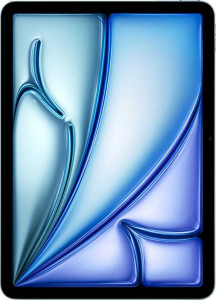
Apple iPad Air 11 (2025) Wi-Fi + Cellular
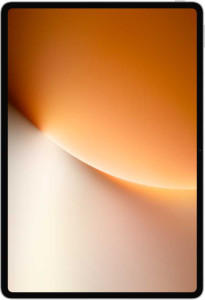
Honor MagicPad 3 Pro

Apple iPad Air 11 (2025) Wi-Fi + Cellular Honor MagicPad 3 Pro

Overview

Welcome to our in-depth spec comparison between the Apple iPad Air 11 (2025) Wi-Fi + Cellular and the Honor MagicPad 3 Pro. These two tablets take notably different approaches to the premium tablet experience, with key battlegrounds spanning display refresh rate and size, performance chipsets, camera capabilities, battery capacity, and connectivity options. Read on to see how every spec stacks up before making your decision.

Common Features

  • Neither product includes a stylus in the box.
  • Neither product has a detachable keyboard.
  • Neither product has a backlit keyboard.
  • Neither product offers water resistance.
  • Both products feature an IPS LCD display type.
  • Neither product has branded damage-resistant glass.
  • Both products have a touchscreen.
  • Neither product has a sapphire glass display.
  • Neither product has an e-paper display.
  • Neither product has an external memory slot.
  • Both products use a 3 nm semiconductor.
  • Both products support 64-bit processing.
  • Both products use big.LITTLE CPU technology.
  • Both products have integrated graphics.
  • Both products have 8 CPU threads.
  • Both products have TrustZone security.
  • Both products support a maximum of 24 GB of memory.
  • Both products have a front camera.
  • Both products have a built-in HDR mode.
  • Both products have touch autofocus.
  • Both products use a CMOS sensor.
  • Neither product has a front-facing LED flash.
  • Neither product can shoot 360° panoramas.
  • Neither product has built-in optical image stabilization.
  • Neither product has 3D photo/video recording capabilities.
  • Both products have stereo speakers.
  • Neither product has a 3.5 mm audio jack.
  • Neither product has a radio.
  • Both products support fast charging.
  • Neither product supports wireless charging.
  • Both products have a battery level indicator.
  • Both products have a rechargeable battery.
  • Neither product has a removable battery.
  • Both products have on-device machine learning.
  • Both products have clipboard warnings.
  • Both products have location privacy options.
  • Both products have camera and microphone privacy options.
  • Both products can block app tracking.
  • Both products support split screen.
  • Both products have Live Text.
  • Both products have notification permissions.
  • Both products use DDR5 memory.

Main Differences

  • Weight is 460 g on Apple iPad Air 11 (2025) Wi-Fi + Cellular and 595 g on Honor MagicPad 3 Pro.
  • Thickness is 6.1 mm on Apple iPad Air 11 (2025) Wi-Fi + Cellular and 5.8 mm on Honor MagicPad 3 Pro.
  • Width is 247.6 mm on Apple iPad Air 11 (2025) Wi-Fi + Cellular and 293.9 mm on Honor MagicPad 3 Pro.
  • Height is 178.5 mm on Apple iPad Air 11 (2025) Wi-Fi + Cellular and 201.4 mm on Honor MagicPad 3 Pro.
  • Volume is 269.6 cm³ on Apple iPad Air 11 (2025) Wi-Fi + Cellular and 343.3 cm³ on Honor MagicPad 3 Pro.
  • Tilt sensitivity is supported on Apple iPad Air 11 (2025) Wi-Fi + Cellular but not available on Honor MagicPad 3 Pro.
  • Screen size is 11″ on Apple iPad Air 11 (2025) Wi-Fi + Cellular and 13.3″ on Honor MagicPad 3 Pro.
  • Resolution is 2360 x 1640 px on Apple iPad Air 11 (2025) Wi-Fi + Cellular and 3200 x 2136 px on Honor MagicPad 3 Pro.
  • Pixel density is 264 ppi on Apple iPad Air 11 (2025) Wi-Fi + Cellular and 289 ppi on Honor MagicPad 3 Pro.
  • Refresh rate is 60 Hz on Apple iPad Air 11 (2025) Wi-Fi + Cellular and 165 Hz on Honor MagicPad 3 Pro.
  • Anti-reflection coating is present on Apple iPad Air 11 (2025) Wi-Fi + Cellular but not available on Honor MagicPad 3 Pro.
  • Internal storage is 1024 GB on Apple iPad Air 11 (2025) Wi-Fi + Cellular and 512 GB on Honor MagicPad 3 Pro.
  • RAM is 8 GB on Apple iPad Air 11 (2025) Wi-Fi + Cellular and 16 GB on Honor MagicPad 3 Pro.
  • The chipset is Apple M3 on Apple iPad Air 11 (2025) Wi-Fi + Cellular and Qualcomm Snapdragon 8 Gen 3 on Honor MagicPad 3 Pro.
  • The GPU is Apple M3 GPU on Apple iPad Air 11 (2025) Wi-Fi + Cellular and Adreno 830 on Honor MagicPad 3 Pro.
  • CPU speed is 8 x 3.4 GHz on Apple iPad Air 11 (2025) Wi-Fi + Cellular and 2 x 4.6 GHz & 6 x 3.62 GHz on Honor MagicPad 3 Pro.
  • ECC memory support is not available on Apple iPad Air 11 (2025) Wi-Fi + Cellular but is present on Honor MagicPad 3 Pro.
  • Thermal Design Power (TDP) is 20 W on Apple iPad Air 11 (2025) Wi-Fi + Cellular and 8.2 W on Honor MagicPad 3 Pro.
  • Maximum memory bandwidth is 100 GB/s on Apple iPad Air 11 (2025) Wi-Fi + Cellular and 85.1 GB/s on Honor MagicPad 3 Pro.
  • Main camera resolution is 12 MP on Apple iPad Air 11 (2025) Wi-Fi + Cellular and 13 & 2 MP on Honor MagicPad 3 Pro.
  • Front camera resolution is 12 MP on Apple iPad Air 11 (2025) Wi-Fi + Cellular and 9 MP on Honor MagicPad 3 Pro.
  • Main camera video recording goes up to 2160p at 60 fps on Apple iPad Air 11 (2025) Wi-Fi + Cellular and 2160p at 30 fps on Honor MagicPad 3 Pro.
  • A flash is present on Honor MagicPad 3 Pro but not available on Apple iPad Air 11 (2025) Wi-Fi + Cellular.
  • In-camera panorama creation is supported on Apple iPad Air 11 (2025) Wi-Fi + Cellular but not available on Honor MagicPad 3 Pro.
  • Slow-motion video recording is supported on Apple iPad Air 11 (2025) Wi-Fi + Cellular but not available on Honor MagicPad 3 Pro.
  • A BSI sensor is present on Apple iPad Air 11 (2025) Wi-Fi + Cellular but not available on Honor MagicPad 3 Pro.
  • Manual white balance is available on Honor MagicPad 3 Pro but not on Apple iPad Air 11 (2025) Wi-Fi + Cellular.
  • Continuous autofocus during video recording is available on Honor MagicPad 3 Pro but not on Apple iPad Air 11 (2025) Wi-Fi + Cellular.
  • Manual ISO control is available on Honor MagicPad 3 Pro but not on Apple iPad Air 11 (2025) Wi-Fi + Cellular.
  • A video light is present on Honor MagicPad 3 Pro but not available on Apple iPad Air 11 (2025) Wi-Fi + Cellular.
  • A timelapse function is available on Apple iPad Air 11 (2025) Wi-Fi + Cellular but not on Honor MagicPad 3 Pro.
  • Battery capacity is 7606 mAh on Apple iPad Air 11 (2025) Wi-Fi + Cellular and 12450 mAh on Honor MagicPad 3 Pro.
  • Wi-Fi 7 (802.11be) support is present on Honor MagicPad 3 Pro but not available on Apple iPad Air 11 (2025) Wi-Fi + Cellular, which instead supports Wi-Fi 6E (802.11ax).
  • Mail Privacy Protection is available on Apple iPad Air 11 (2025) Wi-Fi + Cellular but not on Honor MagicPad 3 Pro.
  • Cross-site tracking blocking is available on Apple iPad Air 11 (2025) Wi-Fi + Cellular but not on Honor MagicPad 3 Pro.
  • Quick Start is available on Apple iPad Air 11 (2025) Wi-Fi + Cellular but not on Honor MagicPad 3 Pro.
  • Theme customization is available on Honor MagicPad 3 Pro but not on Apple iPad Air 11 (2025) Wi-Fi + Cellular.
  • Wi-Fi password sharing is available on Apple iPad Air 11 (2025) Wi-Fi + Cellular but not on Honor MagicPad 3 Pro.
  • Playing games while they download is supported on Honor MagicPad 3 Pro but not on Apple iPad Air 11 (2025) Wi-Fi + Cellular.
  • An extra dim display mode is available on Honor MagicPad 3 Pro but not on Apple iPad Air 11 (2025) Wi-Fi + Cellular.
  • Focus modes are available on Apple iPad Air 11 (2025) Wi-Fi + Cellular but not on Honor MagicPad 3 Pro.
  • Dynamic theming is available on Honor MagicPad 3 Pro but not on Apple iPad Air 11 (2025) Wi-Fi + Cellular.
  • A cellular module is present on Apple iPad Air 11 (2025) Wi-Fi + Cellular but not available on Honor MagicPad 3 Pro.
  • 5G support is available on Apple iPad Air 11 (2025) Wi-Fi + Cellular but not on Honor MagicPad 3 Pro.
Specs Comparison
Apple iPad Air 11 (2025) Wi-Fi + Cellular

Apple iPad Air 11 (2025) Wi-Fi + Cellular

Honor MagicPad 3 Pro

Honor MagicPad 3 Pro

Design:
weight 460 g 595 g
thickness 6.1 mm 5.8 mm
width 247.6 mm 293.9 mm
height 178.5 mm 201.4 mm
volume 269.59926 cm³ 343.310468 cm³
Stylus included
Has a detachable keyboard
Has a backlit keyboard
water resistance None None
Has tilt sensitivity

The most immediately impactful difference in this group is weight. The Apple iPad Air 11 (2025) comes in at 460 g, while the Honor MagicPad 3 Pro weighs a notably heavier 595 g — a 135 g gap that is very perceptible during extended handheld use, whether reading, sketching, or video calling. Paired with its smaller footprint (247.6 × 178.5 mm versus 293.9 × 201.4 mm), the iPad Air is the more manageable device for one-handed or on-the-go use. The MagicPad 3 Pro's larger physical size does mean more screen real estate, but that comes at a portability cost.

On thickness, the gap nearly reverses: the MagicPad 3 Pro is marginally slimmer at 5.8 mm versus the iPad Air's 6.1 mm. In practice, 0.3 mm is imperceptible in daily handling, so this is not a meaningful differentiator. Neither device offers water resistance or includes a stylus or keyboard in the box, so those criteria are evenly matched and should not influence a decision between the two.

The one functional differentiator within this group is tilt sensitivity, which the iPad Air supports and the MagicPad 3 Pro does not. For users who draw or annotate with a compatible stylus, tilt sensitivity enables shading and brush-angle effects that are simply unavailable on the MagicPad 3 Pro — a meaningful creative advantage. Overall, the iPad Air 11 (2025) holds a clear design edge for portability and creative input, while the MagicPad 3 Pro's only physical advantage — a fractionally thinner profile — is too marginal to offset the weight and functionality differences.

Display:
screen size 11" 13.3"
resolution 2360 x 1640 px 3200 x 2136 px
pixel density 264 ppi 289 ppi
Display type IPS, LCD IPS, LCD
refresh rate 60Hz 165Hz
has branded damage-resistant glass
has anti-reflection coating
has a touch screen
Has sapphire glass display
Has an e-paper display

Screen size sets the stage here: the Honor MagicPad 3 Pro sports a larger 13.3″ panel versus the 11″ on the iPad Air 11 (2025), making it better suited for split-screen multitasking, content consumption, and document work where more on-screen space genuinely reduces scrolling and zooming. The MagicPad 3 Pro also edges ahead on pixel density — 289 ppi versus 264 ppi — meaning slightly crisper text and fine detail, though both figures are close enough that the difference will be subtle in everyday use rather than stark.

Where the MagicPad 3 Pro pulls ahead more decisively is refresh rate. Its 165Hz panel delivers noticeably smoother scrolling, animations, and stylus response compared to the iPad Air's standard 60Hz. For users who value fluid UI interactions or use the tablet for gaming, this is a tangible daily advantage. Both devices use IPS LCD panels, so contrast and viewing-angle characteristics are broadly comparable, and neither offers damage-resistant glass branding.

The one area where the iPad Air reclaims ground is anti-reflection coating, which it has and the MagicPad 3 Pro lacks. In bright or mixed-lighting environments — outdoors, near windows, under office lighting — this coating meaningfully reduces glare and eyestrain, which matters for long reading or work sessions. Overall, the MagicPad 3 Pro holds the display edge on size, sharpness, and especially refresh rate, but users who frequently work in brightly lit settings may find the iPad Air's anti-reflection coating a practical counterbalance.

Performance:
internal storage 1024GB 512GB
RAM 8GB 16GB
Chipset (SoC) name Apple M3 Qualcomm Snapdragon 8 Gen 3
GPU name Apple M3 GPU Adreno 830
CPU speed 8 x 3.4 GHz 2 x 4.6 & 6 x 3.62 GHz
has an external memory slot
semiconductor size 3 nm 3 nm
Supports 64-bit
Uses big.LITTLE technology
Has integrated graphics
CPU threads 8 threads 8 threads
Supports ECC memory
Has TrustZone
maximum memory amount 24GB 24GB
supported displays 2 2
Thermal Design Power (TDP) 20W 8.2W
Uses HMP
maximum memory bandwidth 100 GB/s 85.1 GB/s

Both tablets are built on 3 nm chips, but the silicon philosophies diverge sharply. The Apple iPad Air 11 (2025) runs on the Apple M3, a chip designed around sustained high-throughput workloads, and this shows in its 100 GB/s memory bandwidth — meaningfully ahead of the MagicPad 3 Pro's 85.1 GB/s. Higher memory bandwidth translates directly to faster data movement between the CPU, GPU, and RAM, which benefits tasks like video editing, large file rendering, and graphics-intensive applications. The iPad Air also ships with up to 1024 GB of internal storage versus the MagicPad 3 Pro's 512 GB maximum, a significant advantage for users who store large media libraries or professional project files locally.

Flip the comparison to RAM and thermal efficiency, and the Honor MagicPad 3 Pro asserts itself. Its 16 GB of RAM versus the iPad Air's 8 GB means more apps and browser tabs can remain active in memory simultaneously — a real benefit for heavy multitaskers. The MagicPad 3 Pro also supports ECC memory, which adds error-correction for data integrity, useful in professional or computational contexts. Perhaps most striking is its 8.2W TDP compared to the iPad Air's 20W TDP: the Snapdragon 8 Gen 3 draws far less power under load, which directly implies better thermal management and likely longer battery endurance during sustained tasks.

Taken together, this is a genuine trade-off rather than a clear sweep. The iPad Air holds the edge in raw throughput and storage ceiling, making it the stronger choice for compute-heavy creative work. The MagicPad 3 Pro counters with more RAM and significantly lower power consumption, favoring multitasking endurance and all-day productivity. The deciding factor comes down to use case: burst performance and storage favor the iPad Air, while efficiency and memory headroom favor the MagicPad 3 Pro.

Cameras:
megapixels (main camera) 12 MP 13 & 2 MP
megapixels (front camera) 12MP 9MP
video recording (main camera) 2160 x 60 fps 2160 x 30 fps
has a flash
has a front camera
has a built-in HDR mode
can create panoramas in-camera
supports slow-motion video recording
has touch autofocus
has a BSI sensor
has manual white balance
has a CMOS sensor
has continuous autofocus when recording movies
Has a front-facing LED flash
has manual ISO
has a video light
Has timelapse function
wide aperture (front camera) 2.4f 2.2f
Shoots 360° panorama
has a serial shot mode
has built-in optical image stabilization
has 3D photo/video recording capabilities
Has a dual-tone LED flash
has manual focus
Has a RGB LED flash
has manual exposure
has manual shutter speed

Neither tablet is engineered around its cameras, but the two take noticeably different approaches. The Apple iPad Air 11 (2025) leads on video capability, recording at 4K 60fps versus the Honor MagicPad 3 Pro's 4K 30fps ceiling — a meaningful difference for anyone capturing smooth motion or footage intended for editing. The iPad Air also benefits from a BSI sensor, which improves light capture efficiency, and it supports slow-motion recording and in-camera panoramas, features the MagicPad 3 Pro omits entirely. For front-facing calls and selfies, the iPad Air's 12 MP shooter outresolves the MagicPad 3 Pro's 9 MP sensor, though the MagicPad 3 Pro counters with a marginally wider f/2.2 aperture versus f/2.4, admitting slightly more light.

The MagicPad 3 Pro makes a case for manual control enthusiasts. It offers manual ISO and manual white balance — both absent on the iPad Air — giving users finer creative control over exposure and color in deliberate shooting scenarios. It also includes continuous autofocus during video recording and a video light, practical additions for close-up or low-light video use. Its dual rear camera setup (13 MP + 2 MP) suggests a depth or macro lens alongside the main sensor, though the iPad Air's single 12 MP main camera with HDR and its superior video specs keep it competitive for general use.

On balance, the iPad Air holds a clear edge for video quality and front camera resolution, which are the most common tablet camera use cases. The MagicPad 3 Pro's advantages — manual controls, a video light, and continuous autofocus — appeal to a more deliberate, hands-on shooting style but don't offset the iPad Air's video frame rate and sensor advantages for most users.

Audio:
has stereo speakers
has a socket for a 3.5 mm audio jack
Has a radio

Audio is a clean draw between these two tablets. Both the Apple iPad Air 11 (2025) and the Honor MagicPad 3 Pro feature stereo speakers, lack a 3.5 mm headphone jack, and include no radio — leaving no differentiator within the provided data. Users who prefer wired headphones will need a USB-C adapter on either device.

Based strictly on the available specs, neither product holds an advantage in this category. Any real-world differences in speaker loudness, tuning, or audio quality fall outside the provided data and cannot be assessed here.

Battery:
battery power 7606 mAh 12450 mAh
Supports fast charging
has wireless charging
has a battery level indicator
has a rechargeable battery
has a removable battery

Battery capacity is where the Honor MagicPad 3 Pro establishes its most lopsided advantage in this comparison. Its 12,450 mAh battery dwarfs the Apple iPad Air 11 (2025)'s 7,606 mAh — a gap of nearly 4,850 mAh, or roughly 64% more capacity. Raw mAh is not the sole determinant of real-world battery life (screen size, resolution, and chip efficiency all factor in), but a difference of this magnitude strongly suggests the MagicPad 3 Pro can sustain longer usage sessions between charges, all else being equal.

It is worth noting that the iPad Air's Apple M3 chip carries a 20W TDP versus the Snapdragon 8 Gen 3's more efficient profile (as established in the Performance group), which means the iPad Air draws more power under load. Combined with its smaller battery, users engaged in demanding tasks may find themselves reaching for a charger sooner on the iPad Air. Both devices support fast charging and share the same structural limitations — no wireless charging, no removable battery — so the charging ecosystem is evenly matched in feature terms.

The MagicPad 3 Pro holds a clear and significant battery advantage by capacity. For users who prioritize all-day or multi-day endurance — travellers, students, or anyone away from an outlet for extended periods — the MagicPad 3 Pro's substantially larger battery is a compelling practical differentiator in this category.

Connectivity & Features:
release date March 2025 October 2025
Wi-Fi version Wi-Fi 6 (802.11ax), Wi-Fi 5 (802.11ac), Wi-Fi 4 (802.11n), Wi-Fi 6E (802.11ax) Wi-Fi 4 (802.11n), Wi-Fi 6 (802.11ax), Wi-Fi 5 (802.11ac), Wi-Fi 7 (802.11be)
has Mail Privacy Protection
has on-device machine learning
has clipboard warnings
has location privacy options
has camera/microphone privacy options
can block app tracking
blocks cross-site tracking
supports split screen
has Live Text
has notification permissions
has full-page screenshots
has Quick Start
has theme customization
has Wi-Fi password sharing
has PiP
Can play games while they download
has an extra dim mode
can offload apps
has focus modes
has media picker
has dynamic theming
has dark mode
has battery health check
Has USB Type-C
has a cellular module
has 5G support
is a multi-user system
gets direct OS updates
has GPS
has a child lock
has an HDMI output
has NFC
Has a fingerprint scanner
USB version 3.1 3.2
Supports widgets
Bluetooth version 5.3 6
has a gyroscope
Is free and open source
Has offline voice recognition
has a compass
supports Wi-Fi
Has sharing intents
Has customizable notifications
Uses 3D facial recognition
supports Galileo
Has a barometer
has an accelerometer
has voice commands
Has an iris scanner
Has a built-in projector
supports Ethernet
Has an infrared sensor
Tracks the current position of a mobile device

Wireless connectivity tells an interesting split story. The Honor MagicPad 3 Pro supports Wi-Fi 7 and Bluetooth 6.0, both a generation ahead of the iPad Air's Wi-Fi 6E and Bluetooth 5.3. Wi-Fi 7 delivers higher theoretical throughput and lower latency on compatible routers, while Bluetooth 6.0 improves connection stability and precision. The MagicPad 3 Pro also edges ahead on USB 3.2 versus the iPad Air's USB 3.1, offering faster wired data transfers. However, the Apple iPad Air 11 (2025) counters with a built-in cellular module and 5G support — a fundamental connectivity advantage the MagicPad 3 Pro lacks entirely, making the iPad Air the only option here for users who need internet access away from Wi-Fi.

Location and sensor capabilities also diverge sharply. The iPad Air includes GPS, a compass, a barometer, and Galileo support, none of which are present on the MagicPad 3 Pro. For navigation, fitness, or any location-aware application, this is a meaningful gap. On security, the iPad Air offers a fingerprint scanner while the MagicPad 3 Pro has none, which affects biometric unlock convenience. Privacy features also lean toward the iPad Air, which adds mail privacy protection and cross-site tracking blocking on top of the shared privacy controls both devices carry.

The MagicPad 3 Pro does claim some practical advantages: multi-user support makes it better suited for shared household or institutional use, and its theme customization and dynamic theming offer more personalization. It also receives an open-source OS designation, which may matter to certain users. Overall though, the iPad Air holds the broader connectivity and features edge, primarily through its cellular and 5G capability, richer sensor suite, fingerprint security, and stronger privacy controls — differences that affect daily utility far more than the MagicPad 3 Pro's generational wireless upgrades.
Miscellaneous:
DDR memory version 5 5

The only data point in this group is shared: both the Apple iPad Air 11 (2025) and the Honor MagicPad 3 Pro use DDR5 memory. DDR5 brings higher bandwidth and improved power efficiency compared to its predecessor, but since both devices operate on the same generation, this spec yields no differentiation between them.

This category is a complete tie. Based strictly on the provided data, neither product holds any advantage here.

Comparison Summary & Verdict

After examining every specification, it is clear that these two tablets serve distinct audiences. The Apple iPad Air 11 (2025) Wi-Fi + Cellular stands out for its lighter, more portable build, built-in 5G cellular connectivity, anti-reflection display coating, and a mature privacy-focused ecosystem with features like Mail Privacy Protection and cross-site tracking blocking. It is the stronger pick for users who value mobility and seamless on-the-go connectivity. The Honor MagicPad 3 Pro, on the other hand, wins on sheer screen real estate with its 13.3-inch panel, a blazing 165 Hz refresh rate, a much larger 12450 mAh battery, 16 GB of RAM, and Wi-Fi 7 support, making it ideal for users who prioritize an immersive multimedia experience and sustained performance at a desk or home environment.

Apple iPad Air 11 (2025) Wi-Fi + Cellular
Buy Apple iPad Air 11 (2025) Wi-Fi + Cellular if...

Buy the Apple iPad Air 11 (2025) Wi-Fi + Cellular if you want a lighter, more portable tablet with built-in 5G cellular connectivity and a strong privacy-focused ecosystem.

Honor MagicPad 3 Pro
Buy Honor MagicPad 3 Pro if...

Buy the Honor MagicPad 3 Pro if you prioritize a large 13.3-inch screen with a 165 Hz refresh rate, a bigger 12450 mAh battery, and 16 GB of RAM for demanding multitasking.