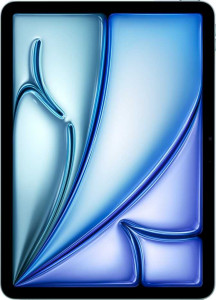
Both tablets are built on a 3 nm process and share the same 8-thread CPU and big.LITTLE architecture, but the silicon underneath could not be more different. The iPad Air 11 runs on Apple's M3 chip with a uniform 8 × 3.4 GHz core configuration, while the Xiaomi Pad Mini uses the MediaTek Dimensity 9400 Plus, deploying a more heterogeneous layout: one prime core at 3.73 GHz, four performance cores at 3.3 GHz, and three efficiency cores at 2.4 GHz. The Dimensity's prime-core advantage gives it a higher single-thread ceiling on paper, though sustained workloads depend heavily on thermal management — a trade-off that the M3's tightly integrated design has historically handled very efficiently.
Memory bandwidth tells a revealing story: the M3 delivers 100 GB/s versus 85.3 GB/s on the Dimensity 9400 Plus. This roughly 17% bandwidth advantage benefits GPU-intensive tasks, machine learning workloads, and any scenario where the processor needs to move large amounts of data quickly — video editing, computational photography, or complex app multitasking. Interestingly, the Xiaomi edges ahead on installed RAM with 12 GB versus 8 GB, though both share the same 24 GB maximum memory ceiling. More RAM can help sustain more apps in the background simultaneously without reload, giving the Pad Mini a slight multitasking headroom advantage at the OS level.
On storage, the iPad Air 11 offers up to 1024 GB internally compared to 512 GB on the Xiaomi, and neither device accepts external memory cards. Overall, this is a genuinely competitive matchup — the iPad Air 11 holds an edge in memory bandwidth and raw architectural efficiency, while the Xiaomi Pad Mini counters with more RAM and a higher peak clock speed. The M3's integration advantages give the iPad Air a slight overall performance edge, particularly for sustained and GPU-heavy workloads.