Apple iPad Air 13 (2025) Wi-Fi
Xiaomi Pad 8 Pro

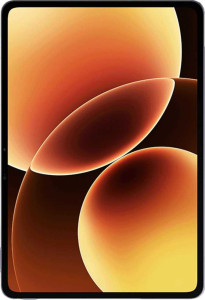
Apple iPad Air 13 (2025) Wi-Fi Xiaomi Pad 8 Pro

Overview

Welcome to our in-depth spec comparison between the Apple iPad Air 13 (2025) Wi-Fi and the Xiaomi Pad 8 Pro. These two tablets take notably different approaches to the premium tablet experience, with key battlegrounds spanning display size and refresh rate, chipset architecture, camera versatility, and software ecosystems. Read on to see how every specification stacks up before making your decision.

Common Features

  • Neither product includes a stylus in the box.
  • Neither product has a detachable keyboard.
  • Neither product has a backlit keyboard.
  • Neither product offers water resistance.
  • Both products have a touchscreen display.
  • Neither product has a sapphire glass display.
  • Neither product supports HDR10+.
  • Neither product has an e-paper display.
  • Neither product has an external memory slot.
  • Both products use a 3 nm semiconductor process.
  • Both products support 64-bit computing.
  • Both products use big.LITTLE CPU technology.
  • Both products have integrated graphics.
  • Both products have 8 CPU threads.
  • Both products have TrustZone security.
  • Both products support a maximum of 24 GB of memory.
  • Both products use DDR5 memory.
  • Both products can record main camera video at 2160p 60 fps.
  • Both products have a front camera.
  • Both products have a built-in HDR photo mode.
  • Both products can create panoramas in-camera.
  • Both products have touch autofocus.
  • Both products use a CMOS sensor.
  • Both products have a main camera wide aperture of 1.8f.
  • Neither product has a front-facing LED flash.
  • Both products have stereo speakers.
  • Neither product has a 3.5 mm audio jack.
  • Neither product has a radio.
  • Both products support fast charging.
  • Neither product supports wireless charging.
  • Both products have a battery level indicator.
  • Both products have a rechargeable, non-removable battery.
  • Both products have on-device machine learning.
  • Both products have clipboard warnings.
  • Both products have location privacy options.
  • Both products have camera and microphone privacy options.
  • Both products can block app tracking.
  • Both products support split screen.
  • Both products have Live Text functionality.
  • Both products have notification permissions.

Main Differences

  • Weight is 616 g on Apple iPad Air 13 (2025) Wi-Fi and 494 g on Xiaomi Pad 8 Pro.
  • Thickness is 6.1 mm on Apple iPad Air 13 (2025) Wi-Fi and 5.8 mm on Xiaomi Pad 8 Pro.
  • Width is 280.6 mm on Apple iPad Air 13 (2025) Wi-Fi and 251.2 mm on Xiaomi Pad 8 Pro.
  • Height is 214.9 mm on Apple iPad Air 13 (2025) Wi-Fi and 173.4 mm on Xiaomi Pad 8 Pro.
  • Volume is 367.84 cm³ on Apple iPad Air 13 (2025) Wi-Fi and 252.64 cm³ on Xiaomi Pad 8 Pro.
  • Tilt sensitivity is supported on Apple iPad Air 13 (2025) Wi-Fi but not available on Xiaomi Pad 8 Pro.
  • Screen size is 13″ on Apple iPad Air 13 (2025) Wi-Fi and 11.2″ on Xiaomi Pad 8 Pro.
  • Resolution is 2048 x 2732 px on Apple iPad Air 13 (2025) Wi-Fi and 3200 x 2136 px on Xiaomi Pad 8 Pro.
  • Pixel density is 264 ppi on Apple iPad Air 13 (2025) Wi-Fi and 344 ppi on Xiaomi Pad 8 Pro.
  • Refresh rate is 60 Hz on Apple iPad Air 13 (2025) Wi-Fi and 144 Hz on Xiaomi Pad 8 Pro.
  • Branded damage-resistant glass is present on Xiaomi Pad 8 Pro but not on Apple iPad Air 13 (2025) Wi-Fi.
  • Anti-reflection coating is present on Apple iPad Air 13 (2025) Wi-Fi but not on Xiaomi Pad 8 Pro.
  • Internal storage is 1024 GB on Apple iPad Air 13 (2025) Wi-Fi and 512 GB on Xiaomi Pad 8 Pro.
  • RAM is 8 GB on Apple iPad Air 13 (2025) Wi-Fi and 16 GB on Xiaomi Pad 8 Pro.
  • The chipset is Apple M3 on Apple iPad Air 13 (2025) Wi-Fi and Qualcomm Snapdragon 8 Elite on Xiaomi Pad 8 Pro.
  • The GPU is Apple M3 GPU on Apple iPad Air 13 (2025) Wi-Fi and Adreno 830 on Xiaomi Pad 8 Pro.
  • CPU speed is 4 x 3.2 & 4 x 2 GHz on Apple iPad Air 13 (2025) Wi-Fi and 2 x 4.32 & 6 x 3.53 GHz on Xiaomi Pad 8 Pro.
  • ECC memory support is present on Xiaomi Pad 8 Pro but not available on Apple iPad Air 13 (2025) Wi-Fi.
  • Thermal Design Power (TDP) is 20 W on Apple iPad Air 13 (2025) Wi-Fi and 8.2 W on Xiaomi Pad 8 Pro.
  • Maximum memory bandwidth is 100 GB/s on Apple iPad Air 13 (2025) Wi-Fi and 85.1 GB/s on Xiaomi Pad 8 Pro.
  • Main camera resolution is 12 MP on Apple iPad Air 13 (2025) Wi-Fi and 50 MP on Xiaomi Pad 8 Pro.
  • Front camera resolution is 12 MP on Apple iPad Air 13 (2025) Wi-Fi and 32 MP on Xiaomi Pad 8 Pro.
  • A flash is present on Xiaomi Pad 8 Pro but not available on Apple iPad Air 13 (2025) Wi-Fi.
  • Slow-motion video recording is supported on Apple iPad Air 13 (2025) Wi-Fi but not on Xiaomi Pad 8 Pro.
  • A BSI sensor is present on Apple iPad Air 13 (2025) Wi-Fi but not on Xiaomi Pad 8 Pro.
  • Manual white balance is available on Xiaomi Pad 8 Pro but not on Apple iPad Air 13 (2025) Wi-Fi.
  • Continuous autofocus during video recording is available on Xiaomi Pad 8 Pro but not on Apple iPad Air 13 (2025) Wi-Fi.
  • Manual ISO control is available on Xiaomi Pad 8 Pro but not on Apple iPad Air 13 (2025) Wi-Fi.
  • A video light is present on Xiaomi Pad 8 Pro but not on Apple iPad Air 13 (2025) Wi-Fi.
  • Timelapse function is available on Apple iPad Air 13 (2025) Wi-Fi but not on Xiaomi Pad 8 Pro.
  • Front camera wide aperture is 2.4f on Apple iPad Air 13 (2025) Wi-Fi and 2.2f on Xiaomi Pad 8 Pro.
  • Manual shutter speed control is available on Apple iPad Air 13 (2025) Wi-Fi but not on Xiaomi Pad 8 Pro.
  • Battery power is 9705 mAh on Apple iPad Air 13 (2025) Wi-Fi and 9200 mAh on Xiaomi Pad 8 Pro.
  • Wi-Fi 7 (802.11be) support is present on Xiaomi Pad 8 Pro but not on Apple iPad Air 13 (2025) Wi-Fi, which supports up to Wi-Fi 6E.
  • Mail Privacy Protection is available on Apple iPad Air 13 (2025) Wi-Fi but not on Xiaomi Pad 8 Pro.
  • Cross-site tracking blocking is available on Apple iPad Air 13 (2025) Wi-Fi but not on Xiaomi Pad 8 Pro.
  • Quick Start is available on Apple iPad Air 13 (2025) Wi-Fi but not on Xiaomi Pad 8 Pro.
  • Theme customization is available on Xiaomi Pad 8 Pro but not on Apple iPad Air 13 (2025) Wi-Fi.
  • Wi-Fi password sharing is available on Apple iPad Air 13 (2025) Wi-Fi but not on Xiaomi Pad 8 Pro.
  • Playing games while they download is supported on Xiaomi Pad 8 Pro but not on Apple iPad Air 13 (2025) Wi-Fi.
  • An extra dim mode is available on Xiaomi Pad 8 Pro but not on Apple iPad Air 13 (2025) Wi-Fi.
  • Focus modes are available on Apple iPad Air 13 (2025) Wi-Fi but not on Xiaomi Pad 8 Pro.
  • Dynamic theming is available on Xiaomi Pad 8 Pro but not on Apple iPad Air 13 (2025) Wi-Fi.
  • 5G support is present on Apple iPad Air 13 (2025) Wi-Fi but not on Xiaomi Pad 8 Pro.
  • Multi-user system support is available on Xiaomi Pad 8 Pro but not on Apple iPad Air 13 (2025) Wi-Fi.
Specs Comparison
Apple iPad Air 13 (2025) Wi-Fi

Apple iPad Air 13 (2025) Wi-Fi

Xiaomi Pad 8 Pro

Xiaomi Pad 8 Pro

Design:
weight 616 g 494 g
thickness 6.1 mm 5.8 mm
width 280.6 mm 251.2 mm
height 214.9 mm 173.4 mm
volume 367.835734 cm³ 252.636864 cm³
Stylus included
Has a detachable keyboard
Has a backlit keyboard
water resistance None None
Has tilt sensitivity

The most defining physical difference between these two tablets is sheer size. The iPad Air 13 (2025) Wi-Fi is a large-format device with dimensions of 280.6 × 214.9 mm and a volume of roughly 368 cm³, making it well-suited for productivity tasks, content creation, and media consumption on a bigger canvas. The Xiaomi Pad 8 Pro, at 251.2 × 173.4 mm and approximately 253 cm³ in volume, is a noticeably more compact device — closer in footprint to a standard letter-size notebook. This size gap is not subtle; the iPad Air 13 occupies about 45% more volume, which directly affects portability and one-handed usability.

Weight compounds this distinction. The iPad Air 13 tips the scale at 616 g, while the Xiaomi Pad 8 Pro comes in at a significantly lighter 494 g — a difference of 122 g. In real-world use, that gap becomes noticeable during extended handheld sessions like reading or video calls. On thickness, both are remarkably slim — 6.1 mm vs 5.8 mm — making this a near-tie and a non-factor in day-to-day handling. Neither device offers water resistance, and neither ships with a stylus or keyboard accessory.

One meaningful functional differentiator is tilt sensitivity, which the iPad Air 13 supports and the Xiaomi Pad 8 Pro does not. For users who plan to use a compatible stylus for drawing or note-taking, this gives the Apple tablet a tangible creative advantage. Overall, the Xiaomi Pad 8 Pro has a clear edge in portability and weight, making it the better pick for users who prioritize one-handed comfort and on-the-go use. The iPad Air 13, however, trades that compactness for a larger working surface and tilt-sensitive stylus support — a worthwhile trade-off for power users and creatives.

Display:
screen size 13" 11.2"
resolution 2048 x 2732 px 3200 x 2136 px
pixel density 264 ppi 344 ppi
Display type IPS, LCD LCD, IPS
refresh rate 60Hz 144Hz
has branded damage-resistant glass
has anti-reflection coating
has a touch screen
Has sapphire glass display
supports HDR10+
Has an e-paper display

Screen size is the most immediate dividing line here: the iPad Air 13 (2025) offers a spacious 13-inch panel versus the Xiaomi Pad 8 Pro's 11.2-inch display. Despite its larger canvas, however, the iPad Air 13 actually delivers a lower pixel density — 264 ppi compared to the Xiaomi's 344 ppi. In practice, that 80 ppi gap is visible up close; text and fine details appear noticeably crisper on the Xiaomi, particularly during reading or precision stylus work. Both panels are IPS LCD technology, so color rendering and viewing angles are broadly comparable at the panel-type level.

Where the Xiaomi Pad 8 Pro pulls ahead most decisively is refresh rate. Its 144Hz panel versus the iPad Air 13's standard 60Hz translates to dramatically smoother scrolling, more fluid animations, and a tangible responsiveness advantage in gaming or fast-moving content. For everyday productivity the difference is subtle, but once you have used a high-refresh display it is hard to go back — and 144Hz is an unusually high ceiling even among Android tablets. The iPad Air 13 counters with an anti-reflection coating, which meaningfully reduces glare in bright or mixed-lighting environments — a practical advantage the Xiaomi lacks. The Xiaomi, in turn, ships with branded damage-resistant glass, offering better drop and scratch protection out of the box.

On balance, neither display is strictly superior across the board, but the trade-offs skew in different directions depending on use case. The Xiaomi Pad 8 Pro holds a clear technical edge in sharpness and refresh rate, making it the stronger choice for media consumption, gaming, and detail-oriented work. The iPad Air 13 compensates with its much larger viewing area and superior outdoor usability via its anti-reflection coating — advantages that matter most for productivity and extended reading sessions in variable lighting.

Performance:
internal storage 1024GB 512GB
RAM 8GB 16GB
Chipset (SoC) name Apple M3 Qualcomm Snapdragon 8 Elite
GPU name Apple M3 GPU Adreno 830
CPU speed 4 x 3.2 & 4 x 2 GHz 2 x 4.32 & 6 x 3.53 GHz
has an external memory slot
semiconductor size 3 nm 3 nm
Supports 64-bit
Uses big.LITTLE technology
Has integrated graphics
CPU threads 8 threads 8 threads
Supports ECC memory
Has TrustZone
maximum memory amount 24GB 24GB
supported displays 2 2
Thermal Design Power (TDP) 20W 8.2W
Uses HMP
maximum memory bandwidth 100 GB/s 85.1 GB/s

Both tablets are built on cutting-edge 3nm silicon, but the underlying architectures tell very different stories. The iPad Air 13 (2025) runs Apple's M3 chip, which brings a memory bandwidth advantage of 100 GB/s versus the Xiaomi Pad 8 Pro's 85.1 GB/s on the Snapdragon 8 Elite. Higher memory bandwidth directly benefits GPU-intensive workloads, large file editing, and machine learning tasks — areas where the M3 has a tangible throughput edge. The Xiaomi counters with a higher base RAM allocation of 16GB versus 8GB on the iPad Air 13, which matters for aggressive multitasking and keeping more apps resident in memory simultaneously. That said, both chips share an identical 24GB maximum memory ceiling and 8-thread CPU configuration, so their theoretical upper limits are aligned.

Thermal Design Power is a striking differentiator that often goes overlooked. The M3 in the iPad Air 13 carries a TDP of 20W, more than double the Snapdragon 8 Elite's 8.2W. This means the Apple chip is architected to draw significantly more power at peak — a trade-off that can yield higher sustained performance bursts but also generates more heat and puts greater pressure on battery life under load. The Xiaomi's lower TDP suggests a more thermally conservative design, which in a slim tablet chassis can translate to more consistent performance over longer sessions without throttling. Additionally, the Xiaomi supports ECC memory, a feature absent on the iPad Air 13; while rarely critical for consumer use, it adds a layer of data integrity that benefits professional or compute-heavy applications.

Storage is a lopsided win for the iPad Air 13, which tops out at 1TB compared to the Xiaomi's 512GB maximum — a meaningful gap for users storing large video libraries, RAW photo archives, or professional project files. Neither device offers expandable storage, making the ceiling final. Overall, the performance picture is genuinely competitive: the iPad Air 13 holds an edge in raw memory throughput and maximum storage capacity, while the Xiaomi Pad 8 Pro offers more RAM at base configuration, lower thermal output, and ECC support. The better fit depends heavily on whether the user prioritizes peak compute headroom or efficient, sustained everyday performance.

Cameras:
megapixels (main camera) 12 MP 50 MP
megapixels (front camera) 12MP 32MP
video recording (main camera) 2160 x 60 fps 2160 x 60 fps
has a flash
has a front camera
has a built-in HDR mode
can create panoramas in-camera
supports slow-motion video recording
has touch autofocus
has a BSI sensor
has manual white balance
has a CMOS sensor
wide aperture (main camera) 1.8f 1.8f
has continuous autofocus when recording movies
Has a front-facing LED flash
has manual ISO
has a video light
Has timelapse function
wide aperture (front camera) 2.4f 2.2f
Shoots 360° panorama
has built-in optical image stabilization
has 3D photo/video recording capabilities
Has a dual-tone LED flash
has manual focus
Has a RGB LED flash
has manual exposure
has manual shutter speed

Tablet cameras are rarely the primary reason anyone buys a device, but the gap here is wide enough to matter. The Xiaomi Pad 8 Pro sports a 50MP main camera and a 32MP front camera, compared to 12MP on both sensors for the iPad Air 13 (2025). Raw megapixel counts do not tell the whole story, but at this scale the difference represents a genuine resolution advantage for the Xiaomi — particularly useful for document scanning, detailed close-up shots, or video calling where front-camera sharpness is directly visible to the other party. Both devices share an identical f/1.8 main aperture and max out at the same 4K 60fps video ceiling, so peak video quality potential is nominally equal.

The feature sets diverge in ways that reflect different priorities. The Xiaomi brings a flash, a video light, continuous autofocus during video recording, and a fuller manual control suite including manual ISO and manual white balance — a more complete toolkit for users who want to shoot deliberately. The iPad Air 13 counters with a BSI sensor, which improves light capture efficiency, slow-motion video support, and timelapse — capabilities the Xiaomi lacks entirely. Manual shutter speed control is also exclusive to the iPad Air 13, rounding out a different but partially overlapping set of manual options.

Neither tablet includes optical image stabilization, which limits handheld video quality on both. On balance, the Xiaomi Pad 8 Pro holds a clear overall camera advantage, driven by its significantly higher sensor resolution on both cameras, richer flash and lighting options, and continuous autofocus during recording — all of which add up to more versatility in real shooting scenarios. The iPad Air 13's BSI sensor and slow-motion capability are meaningful offsets, but they do not fully close the gap for users who genuinely rely on their tablet's camera.

Audio:
has stereo speakers
has a socket for a 3.5 mm audio jack
Has a radio

Audio is a clean draw between these two tablets. Both the iPad Air 13 (2025) and the Xiaomi Pad 8 Pro feature stereo speakers, omit a 3.5mm headphone jack, and lack an FM radio — making their spec sheets identical across every available data point in this category. Stereo speakers are a meaningful baseline for tablet media consumption, providing directional sound that noticeably improves the experience of watching videos or gaming compared to a single mono driver. The absence of a headphone jack on both devices means wired audio requires a USB-C adapter or a switch to Bluetooth headphones.

Based strictly on the provided specifications, these two products are fully tied in audio. There is no differentiator here that favors either device, and the choice between them should rest entirely on the other specification groups.

Battery:
battery power 9705 mAh 9200 mAh
Supports fast charging
has wireless charging
has a battery level indicator
has a rechargeable battery
has a removable battery

Battery capacity is close but not identical: the iPad Air 13 (2025) carries a 9705 mAh cell versus the Xiaomi Pad 8 Pro's 9200 mAh — a difference of roughly 5%. On paper, that gap slightly favors the iPad Air 13 in raw energy storage, though real-world endurance depends heavily on factors like screen size, brightness, and chip efficiency rather than capacity alone. Given that the iPad Air 13 also carries a notably higher TDP chip and a larger display, the larger battery can be understood partly as compensation for greater power demands rather than a pure longevity advantage.

Beyond capacity, the two tablets are effectively identical in this category. Both support fast charging, neither offers wireless charging, and both use sealed, non-removable cells — all of which are standard expectations at this tier. The absence of wireless charging on both is a minor limitation for users embedded in wireless charging ecosystems, but it is a shared constraint rather than a differentiator.

Overall, battery specs result in a near-tie, with a very slim nominal edge to the iPad Air 13 on capacity. The 505 mAh difference is too small to meaningfully separate the two devices on this spec alone, and neither offers a feature the other lacks. Users prioritizing all-day battery life should weigh this category alongside each device's power consumption profile from the performance group rather than treating capacity figures in isolation.

Connectivity & Features:
release date March 2025 September 2025
Wi-Fi version Wi-Fi 6 (802.11ax), Wi-Fi 5 (802.11ac), Wi-Fi 4 (802.11n), Wi-Fi 6E (802.11ax) Wi-Fi 4 (802.11n), Wi-Fi 6 (802.11ax), Wi-Fi 5 (802.11ac), Wi-Fi 7 (802.11be)
has Mail Privacy Protection
has on-device machine learning
has clipboard warnings
has location privacy options
has camera/microphone privacy options
can block app tracking
blocks cross-site tracking
supports split screen
has Live Text
has notification permissions
has full-page screenshots
has Quick Start
has theme customization
has Wi-Fi password sharing
has PiP
Can play games while they download
has an extra dim mode
can offload apps
has focus modes
has media picker
has dynamic theming
has dark mode
has battery health check
Has USB Type-C
has a cellular module
has 5G support
is a multi-user system
gets direct OS updates
has GPS
has a child lock
has an HDMI output
has NFC
Has a fingerprint scanner
USB version 3.1 3.2
Supports widgets
Bluetooth version 5.3 5.4
has a gyroscope
Is free and open source
Has offline voice recognition
has a compass
supports Wi-Fi
Has sharing intents
Has customizable notifications
Uses 3D facial recognition
supports Galileo
Has a barometer
has an accelerometer
has voice commands
Has an iris scanner
Has a built-in projector
supports Ethernet
Has an infrared sensor
Tracks the current position of a mobile device

Wireless connectivity is where the Xiaomi Pad 8 Pro earns a meaningful headline win: it supports Wi-Fi 7 (802.11be), the latest generation standard, while the iPad Air 13 (2025) tops out at Wi-Fi 6E. Wi-Fi 7 delivers higher theoretical throughput and lower latency on compatible routers — an advantage that becomes tangible in congested network environments or when transferring large files. The Xiaomi also edges ahead on USB 3.2 versus USB 3.1 on the iPad Air 13, offering a slightly higher ceiling for wired data transfer speeds, and carries a marginally newer Bluetooth 5.4 versus 5.3 — a difference too small to notice in practice.

Security and privacy features diverge notably. The iPad Air 13 includes a fingerprint scanner, which the Xiaomi lacks entirely — a convenience gap that affects every unlock and authentication interaction. On the privacy side, Apple's tablet adds Mail Privacy Protection, cross-site tracking blocking, and Wi-Fi password sharing, building out a more comprehensive privacy layer. The iPad Air 13 also supports 5G (relevant if a cellular model is ever considered) and receives direct OS updates, ensuring timely security patches — a structural advantage the Xiaomi, which does not get direct OS updates, cannot match. Conversely, the Xiaomi supports multi-user accounts, making it far more practical in shared household or institutional settings where separate profiles matter.

Feature-for-feature, each device holds genuine advantages in distinct areas. The Xiaomi Pad 8 Pro wins on cutting-edge wireless standards, multi-user support, and UI customization depth including dynamic theming. The iPad Air 13 counters with a fingerprint scanner, a stronger privacy ecosystem, direct OS updates, and a barometer for environmental sensing. For users who prioritize security, long-term software support, and seamless personal authentication, the iPad Air 13 holds the edge. For those who value the latest wireless performance and shared-device flexibility, the Xiaomi is the stronger pick.

Miscellaneous:
DDR memory version 5 5

The only data point available for this group is memory generation, and it is identical on both devices: each runs LPDDR5 RAM. This is the current high-performance standard for mobile and tablet silicon, offering improved bandwidth and power efficiency compared to the previous LPDDR4X generation. Its presence on both tablets confirms that neither has a memory architecture disadvantage at the hardware level — a detail already consistent with the performance data examined earlier.

This group results in a complete tie. With a single shared specification and no differentiating data points available, there is no basis to favor either the iPad Air 13 (2025) or the Xiaomi Pad 8 Pro here. Purchasing decisions should be driven by the other specification groups.

Comparison Summary & Verdict

After examining all the evidence, the Apple iPad Air 13 (2025) Wi-Fi stands out for users who value a larger 13-inch display, Apple’s mature privacy ecosystem, tilt-sensitive stylus support, and the raw memory bandwidth of the Apple M3 chip. It is the stronger pick for creative professionals and those deeply invested in the Apple ecosystem. The Xiaomi Pad 8 Pro, on the other hand, wins on portability with its lighter and more compact build, a sharper display with a fluid 144Hz refresh rate, a more capable 50MP camera system, Wi-Fi 7 connectivity, and multi-user support — making it the better choice for media enthusiasts, photographers, and shared-household users who want cutting-edge display and connectivity performance in a slimmer package.

Apple iPad Air 13 (2025) Wi-Fi
Buy Apple iPad Air 13 (2025) Wi-Fi if...

Buy the Apple iPad Air 13 (2025) Wi-Fi if you want a larger screen experience with Apple M3 performance, stylus tilt sensitivity, and a comprehensive privacy-focused ecosystem with features like Mail Privacy Protection and cross-site tracking blocking.

Xiaomi Pad 8 Pro
Buy Xiaomi Pad 8 Pro if...

Buy the Xiaomi Pad 8 Pro if you prioritize a lighter and more portable build, a high-refresh-rate 144Hz display with greater pixel density, a more versatile 50MP camera, Wi-Fi 7 support, and multi-user functionality.