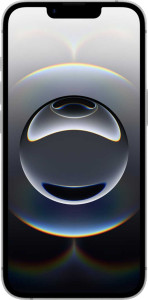
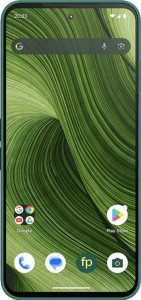
The shared connectivity foundation is solid on both sides — 5G, NFC, USB-C, Wi-Fi 6, Bluetooth, GPS, and the full sensor suite (gyroscope, accelerometer, barometer, compass) are all present on each device. But the meaningful differences emerge quickly. The Fairphone 6 supports Wi-Fi 6E, which extends Wi-Fi 6 into the 6 GHz band for less congestion and higher throughput in dense environments, while the iPhone 16e tops out at Wi-Fi 6. The Fairphone 6 also has a marginally newer Bluetooth 5.4 versus 5.3 on the iPhone 16e — a small but forward-looking difference. Its external memory slot is another practical advantage, allowing storage expansion that the iPhone 16e, with no such slot, cannot offer.
The iPhone 16e counters with two safety-oriented features absent from the Fairphone 6: emergency SOS via satellite and crash detection. The former allows distress signals to be sent from areas with no cellular coverage — a potentially life-saving capability for travelers or outdoor users — while crash detection can automatically alert emergency services after a severe collision. These are not everyday features, but their value in critical moments is hard to overstate. The iPhone 16e also uses 3D facial recognition for biometric authentication, whereas the Fairphone 6 relies on a fingerprint scanner — a more conventional but widely trusted method. Neither approach is objectively superior; preference is largely situational.
One spec worth flagging is cellular download speed: the iPhone 16e lists a maximum of 10,000 Mbits/s compared to 2,900 Mbits/s on the Fairphone 6, suggesting a more advanced modem with higher theoretical peak throughput. Overall, this category is genuinely competitive but leans toward the iPhone 16e, primarily because the satellite SOS and crash detection features represent unique, high-stakes capabilities the Fairphone 6 simply does not offer.