Apple iPhone 16e
Motorola Edge (2025)

Apple iPhone 16e Motorola Edge (2025)

Overview

When comparing the Apple iPhone 16e and the Motorola Edge (2025), two very different design philosophies come into focus. Both phones share a solid foundation — OLED displays, 8GB of RAM, 5G connectivity, and wireless charging — yet they diverge sharply when it comes to display quality, battery performance, chipset power, and camera versatility. Whether you prioritize a compact and powerful experience or a feature-rich, larger screen device, this comparison will help you find the right fit.

Common Features

  • Both the Apple iPhone 16e and Motorola Edge (2025) are waterproof.
  • Neither the Apple iPhone 16e nor the Motorola Edge (2025) has a rugged build.
  • Neither the Apple iPhone 16e nor the Motorola Edge (2025) can be folded.
  • Both the Apple iPhone 16e and Motorola Edge (2025) feature an OLED/AMOLED display.
  • Both the Apple iPhone 16e and Motorola Edge (2025) support Dolby Vision.
  • Neither the Apple iPhone 16e nor the Motorola Edge (2025) has a secondary screen.
  • Both the Apple iPhone 16e and Motorola Edge (2025) have a touch screen.
  • Both the Apple iPhone 16e and Motorola Edge (2025) come with 8GB of RAM.
  • Both the Apple iPhone 16e and Motorola Edge (2025) have integrated LTE.
  • Both the Apple iPhone 16e and Motorola Edge (2025) use DDR5 memory.
  • Both the Apple iPhone 16e and Motorola Edge (2025) have built-in optical image stabilization.
  • Both the Apple iPhone 16e and Motorola Edge (2025) have a CMOS sensor.
  • Both the Apple iPhone 16e and Motorola Edge (2025) support continuous autofocus when recording movies.
  • Both the Apple iPhone 16e and Motorola Edge (2025) have phase-detection autofocus for photos.
  • Both the Apple iPhone 16e and Motorola Edge (2025) support slow-motion video recording.
  • Both the Apple iPhone 16e and Motorola Edge (2025) have a built-in HDR mode.
  • Both the Apple iPhone 16e and Motorola Edge (2025) support manual exposure.
  • Both the Apple iPhone 16e and Motorola Edge (2025) have wireless charging.
  • Both the Apple iPhone 16e and Motorola Edge (2025) support fast charging.
  • Neither the Apple iPhone 16e nor the Motorola Edge (2025) has reverse wireless charging.
  • Neither the Apple iPhone 16e nor the Motorola Edge (2025) comes with a charger in the box.
  • Neither the Apple iPhone 16e nor the Motorola Edge (2025) has a removable battery.
  • Both the Apple iPhone 16e and Motorola Edge (2025) have stereo speakers.
  • Neither the Apple iPhone 16e nor the Motorola Edge (2025) has a 3.5mm audio jack.
  • Both the Apple iPhone 16e and Motorola Edge (2025) have 5G support.
  • Neither the Apple iPhone 16e nor the Motorola Edge (2025) has an external memory slot.
  • Both the Apple iPhone 16e and Motorola Edge (2025) have USB Type-C.
  • Both the Apple iPhone 16e and Motorola Edge (2025) have NFC.
  • Both the Apple iPhone 16e and Motorola Edge (2025) have a gyroscope.
  • Both the Apple iPhone 16e and Motorola Edge (2025) have dark mode.
  • Both the Apple iPhone 16e and Motorola Edge (2025) have camera and microphone privacy options.
  • Both the Apple iPhone 16e and Motorola Edge (2025) can block app tracking.

Main Differences

  • Weight is 167 g on Apple iPhone 16e and 181 g on Motorola Edge (2025).
  • Thickness is 7.8 mm on Apple iPhone 16e and 8 mm on Motorola Edge (2025).
  • Height is 146.7 mm on Apple iPhone 16e and 161.2 mm on Motorola Edge (2025).
  • IP rating is IP68 on Apple iPhone 16e and IP69 on Motorola Edge (2025).
  • Screen size is 6.1″ on Apple iPhone 16e and 6.7″ on Motorola Edge (2025).
  • Refresh rate is 60Hz on Apple iPhone 16e and 120Hz on Motorola Edge (2025).
  • Typical brightness is 800 nits on Apple iPhone 16e and 1700 nits on Motorola Edge (2025).
  • HDR10 support is present on Apple iPhone 16e but not available on Motorola Edge (2025).
  • HDR10+ support is present on Motorola Edge (2025) but not available on Apple iPhone 16e.
  • Always-On Display is available on Motorola Edge (2025) but not on Apple iPhone 16e.
  • Damage-resistant glass branding is present on Motorola Edge (2025) but not on Apple iPhone 16e.
  • Internal storage is 512GB on Apple iPhone 16e and 256GB on Motorola Edge (2025).
  • The chipset is Apple A18 on Apple iPhone 16e and MediaTek Dimensity 7400 on Motorola Edge (2025).
  • Semiconductor size is 3 nm on Apple iPhone 16e and 4 nm on Motorola Edge (2025).
  • Maximum memory bandwidth is 78.8 GB/s on Apple iPhone 16e and 25.6 GB/s on Motorola Edge (2025).
  • Main camera resolution is 48 MP on Apple iPhone 16e and 50 & 50 & 10 MP on Motorola Edge (2025).
  • A multi-lens main camera is present on Motorola Edge (2025) but not on Apple iPhone 16e.
  • Front camera resolution is 12MP on Apple iPhone 16e and 50MP on Motorola Edge (2025).
  • Main camera video recording goes up to 2160x60 fps on Apple iPhone 16e and 2160x30 fps on Motorola Edge (2025).
  • Optical zoom is 2x on Apple iPhone 16e and 3x on Motorola Edge (2025).
  • Manual shutter speed is supported on Apple iPhone 16e but not on Motorola Edge (2025).
  • Dolby Vision recording is supported on Apple iPhone 16e but not on Motorola Edge (2025).
  • Battery capacity is 3961 mAh on Apple iPhone 16e and 5200 mAh on Motorola Edge (2025).
  • Charging speed is 27W on Apple iPhone 16e and 68W on Motorola Edge (2025).
  • Wireless charging speed is 7.5W on Apple iPhone 16e and 15W on Motorola Edge (2025).
  • Wi-Fi 6E support is present on Motorola Edge (2025) but not available on Apple iPhone 16e.
  • A fingerprint scanner is present on Motorola Edge (2025) but not on Apple iPhone 16e.
  • Emergency SOS via satellite is available on Apple iPhone 16e but not on Motorola Edge (2025).
  • Crash detection is available on Apple iPhone 16e but not on Motorola Edge (2025).
  • 3D facial recognition is available on Apple iPhone 16e but not on Motorola Edge (2025).
  • Mail Privacy Protection is available on Apple iPhone 16e but not on Motorola Edge (2025).
  • Cross-site tracking blocking is present on Apple iPhone 16e but not on Motorola Edge (2025).
  • Split screen support is available on Motorola Edge (2025) but not on Apple iPhone 16e.
  • Direct OS updates are provided on Apple iPhone 16e but not on Motorola Edge (2025).
  • A curved display is featured on Motorola Edge (2025) but not on Apple iPhone 16e.
Specs Comparison
Apple iPhone 16e

Apple iPhone 16e

Motorola Edge (2025)

Motorola Edge (2025)

Design:
water resistance Waterproof Waterproof
weight 167 g 181 g
thickness 7.8 mm 8 mm
width 71.5 mm 73.1 mm
height 146.7 mm 161.2 mm
volume 81.81459 cm³ 94.26976 cm³
Ingress Protection (IP) rating IP68 IP69
has a rugged build
can be folded

Both phones are rated Waterproof and share a conventional, non-folding slab design with no rugged certification. However, the key differentiator in water protection is the IP rating: the Motorola Edge (2025) carries an IP69 rating, while the Apple iPhone 16e is rated IP68. In practical terms, IP68 means the device can withstand sustained submersion in water, which covers the vast majority of everyday accidents. IP69, however, adds resistance to high-pressure, high-temperature water jets — a meaningful extra layer of durability for users in industrial or outdoor environments where splashing alone isn't the only concern.

From a physical standpoint, the two phones sit in noticeably different size classes. The iPhone 16e is the more compact device at 146.7 × 71.5 × 7.8 mm and 167 g, while the Motorola Edge (2025) measures 161.2 × 73.1 × 8 mm and weighs 181 g — that's roughly 14 grams heavier and a significantly taller footprint, reflected in its larger total volume of 94.27 cm³ versus 81.81 cm³. The real-world implication is that the iPhone 16e will feel meaningfully more pocketable and easier to operate one-handed, while the Edge's larger frame typically accommodates a bigger display and battery.

In terms of design, neither phone offers a rugged build, so neither is engineered for truly harsh environments beyond water. The iPhone 16e has a clear edge in compactness and ergonomics, making it the better pick for users who prioritize a lighter, easier-to-handle device. The Motorola Edge (2025) counters with a superior IP69 rating, giving it a meaningful advantage in water resistance for users who need that extra protection.

Display:
Display type OLED/AMOLED OLED/AMOLED
screen size 6.1" 6.7"
pixel density 460 ppi 444 ppi
resolution 1170 x 2532 px 1220 x 2712 px
refresh rate 60Hz 120Hz
brightness (typical) 800 nits 1700 nits
has branded damage-resistant glass
supports HDR10
supports HDR10+
Always-On Display
supports Dolby Vision
Has a secondary screen
has a touch screen

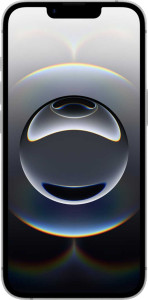
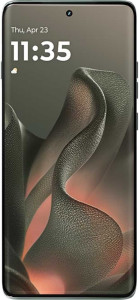
Both phones use OLED/AMOLED panels and support Dolby Vision, so the baseline display quality is strong on either device. The differences, however, are substantial. The Motorola Edge (2025) sports a larger 6.7″ screen versus the iPhone 16e's 6.1″, and more critically, a 120Hz refresh rate compared to the iPhone 16e's 60Hz. That gap is immediately perceptible in day-to-day use — scrolling, animations, and gaming all feel noticeably smoother at 120Hz, and once experienced, 60Hz can feel comparatively sluggish.

The brightness difference is equally striking. The Motorola Edge (2025) delivers 1700 nits of typical brightness against the iPhone 16e's 800 nits, making the Edge far more legible under direct sunlight. Pixel density is close enough to be a non-issue in practice — 460 ppi on the iPhone 16e versus 444 ppi on the Edge — both are sharp well beyond what the human eye can distinguish at normal viewing distances. The Edge also adds an Always-On Display and branded damage-resistant glass, two practical conveniences the iPhone 16e lacks. The iPhone 16e counters with Dolby Vision support (shared with the Edge) but not HDR10+, while the Edge drops HDR10 in favor of HDR10+, the more capable standard for dynamic metadata.

On display, the Motorola Edge (2025) holds a clear overall advantage — its higher refresh rate, dramatically higher brightness, Always-On Display, and screen protection glass combine to form a considerably more versatile and refined viewing experience. The iPhone 16e's display is by no means poor, but it is outclassed on nearly every meaningful metric in this comparison.
Performance:
internal storage 512GB 256GB
RAM 8GB 8GB
Chipset (SoC) name Apple A18 MediaTek Dimensity 7400
GPU name Apple A18 GPU Mali G615 MC2
CPU speed 2 x 4.05 & 4 x 2.42 GHz 4 x 2.6 & 4 x 2 GHz
GPU clock speed 1398 MHz 1047 MHz
Has integrated LTE
RAM speed 4800 MHz 6400 MHz
semiconductor size 3 nm 4 nm
Supports 64-bit
Has integrated graphics
Uses big.LITTLE technology
CPU threads 6 threads 8 threads
Uses HMP
maximum memory bandwidth 78.8 GB/s 25.6 GB/s
maximum memory amount 8GB 16GB
number of transistors 15200 million 6200 million
DDR memory version 5 5

The chipset gap here is one of the widest in this entire comparison. The iPhone 16e runs on Apple's A18, a 3 nm chip packing 15,200 million transistors, while the Motorola Edge (2025) uses the MediaTek Dimensity 7400, a 4 nm mid-range chip with 6,200 million transistors. A smaller process node generally means greater power efficiency and more transistors per unit area, and the A18's transistor count is more than double that of the Dimensity 7400 — a strong architectural indicator of raw computational headroom. The iPhone 16e's GPU clock speed of 1398 MHz versus the Edge's 1047 MHz further reinforces this gap, pointing to a notably stronger graphics pipeline for gaming and GPU-accelerated tasks.

Where the Motorola Edge (2025) pushes back is in memory configuration. It offers up to 16 GB of RAM — double the iPhone 16e's 8 GB ceiling — and a faster RAM speed of 6400 MHz compared to 4800 MHz. More RAM can help with aggressive multitasking and keeping more apps alive in the background. However, the iPhone 16e's memory bandwidth of 78.8 GB/s dwarfs the Edge's 25.6 GB/s, meaning the A18 can move data between the processor and memory far more rapidly — a critical advantage in compute-intensive workloads where throughput matters more than raw capacity. Storage also favors the iPhone 16e, which tops out at 512 GB versus the Edge's 256 GB.

The Apple iPhone 16e wins this category decisively. The A18 chip's generational advantage in process technology, transistor density, GPU performance, and memory bandwidth translates into a significantly faster real-world experience for demanding tasks. The Motorola Edge (2025)'s higher RAM ceiling is a practical perk for multitaskers, but it does not offset the fundamental gap in processing power.

Cameras:
megapixels (main camera) 48 MP 50 & 50 & 10 MP
wide aperture (main camera) 1.6f 1.8 & 2 & 2f
Has a dual-lens (or multi-lens) main camera
megapixels (front camera) 12MP 50MP
has built-in optical image stabilization
video recording (main camera) 2160 x 60 fps 2160 x 30 fps
Has a dual-tone LED flash
number of flash LEDs 2 1
has a BSI sensor
has a CMOS sensor
has continuous autofocus when recording movies
Has phase-detection autofocus for photos
supports slow-motion video recording
has a built-in HDR mode
has manual exposure
has a flash
optical zoom 2x 3x
has manual ISO
has a serial shot mode
has manual focus
has a front camera
Has laser autofocus
Shoots 360° panorama
has manual white balance
shoots raw
has touch autofocus
has manual shutter speed
can create panoramas in-camera
wide aperture (front camera) 1.9f 1.9f
Has timelapse function
Has a front-facing LED flash
has a dual-lens (or multi-lens) front camera
supports HDR10 recording
supports Dolby Vision recording
has a front-facing camera under the display
Has a RGB LED flash
has 3D photo/video recording capabilities

Camera hardware versatility clearly favors the Motorola Edge (2025). It fields a triple rear camera system — a 50 MP main, 50 MP secondary, and 10 MP tertiary lens — versus the iPhone 16e's single 48 MP main camera. More practically, the Edge offers 3x optical zoom compared to the iPhone 16e's 2x, meaning the Edge can reach further subjects while retaining optical-quality detail. The Edge's main aperture of f/1.8 is slightly narrower than the iPhone 16e's f/1.6, which gives the iPhone a marginal light-gathering advantage on its primary sensor — useful in low-light scenarios. The selfie camera gap is equally notable: the Edge packs a 50 MP front camera against the iPhone 16e's 12 MP, a significant resolution advantage for those who prioritize self-portraits or video calls.

For video, the iPhone 16e pulls ahead in recording capability. It supports 4K at 60 fps, while the Motorola Edge (2025) tops out at 4K at 30 fps — a meaningful difference for anyone shooting smooth, cinematic footage or action content. The iPhone 16e also supports Dolby Vision recording and HDR10 recording, neither of which the Edge offers, making its video output more compatible with high-end playback pipelines. The iPhone 16e additionally retains manual shutter speed control, which the Edge lacks — a small but genuine advantage for photography enthusiasts who want granular control.

This category is genuinely split by use case. The Motorola Edge (2025) holds the advantage in hardware versatility — more lenses, greater zoom reach, and a far higher-resolution selfie camera. The iPhone 16e counters with superior video capabilities, including higher frame rate 4K, Dolby Vision recording, and a wider main aperture. Users who shoot a lot of video or care about low-light stills will lean toward the iPhone 16e; those who want flexibility across zoom ranges and a better front camera will find the Edge more compelling.

Operating system:
has clipboard warnings
has location privacy options
has camera/microphone privacy options
has Mail Privacy Protection
has theme customization
can block app tracking
blocks cross-site tracking
has on-device machine learning
has notification permissions
has media picker
Can play games while they download
has dark mode
has Wi-Fi password sharing
has battery health check
has an extra dim mode
has focus modes
has dynamic theming
can offload apps
Has customizable notifications
has Live Text
has full-page screenshots
supports split screen
gets direct OS updates
has PiP
Can be used as a PC
Has sharing intents
has a child lock
Supports widgets
Is free and open source
Has offline voice recognition
has voice commands
Tracks the current position of a mobile device
is a multi-user system
has Quick Start

The two operating systems diverge most sharply on privacy and update delivery. The iPhone 16e's iOS brings Mail Privacy Protection, cross-site tracking blocking, and direct OS updates — meaning Apple pushes updates straight to the device without carrier or manufacturer delays. The Motorola Edge (2025), running Android, does not receive direct OS updates, so the timeliness of security patches and new features depends on Motorola's release schedule. For privacy-focused users, iOS's layered tracking protections are a tangible advantage; the Edge blocks app tracking but lacks the additional cross-site and mail-level shields iOS provides.

On the flip side, the Motorola Edge (2025) offers meaningfully more flexibility in day-to-day use. It supports split-screen multitasking, dynamic theming, theme customization, a multi-user system, and an extra dim mode — none of which the iPhone 16e provides. Split-screen is a practical productivity feature for power users, and multi-user support makes the device shareable in household or work contexts. The Edge is also based on an open-source OS, which carries broader implications for developer accessibility and ecosystem openness. The iPhone 16e counters with Focus Modes for notification management and Wi-Fi password sharing, two quality-of-life features absent on the Edge.

This category is a genuine draw that comes down to priorities. The iPhone 16e leads on privacy depth and update reliability, making it the stronger choice for users who value security and consistency. The Motorola Edge (2025) wins on OS flexibility and customization, offering more tools for multitasking and personalization. Neither phone dominates outright — the right choice depends entirely on whether the user prioritizes a controlled, privacy-first environment or an open, feature-flexible one.

Battery:
battery power 3961 mAh 5200 mAh
has wireless charging
Supports fast charging
charging speed 27W 68W
wireless charging speed 7.5W 15W
has reverse wireless charging
comes with a charger
has a removable battery
has a battery level indicator
has a rechargeable battery

Battery capacity is one of the most clear-cut advantages in this comparison. The Motorola Edge (2025) houses a 5200 mAh cell versus the iPhone 16e's 3961 mAh — a difference of over 1,200 mAh, which in practical terms typically translates to several additional hours of screen-on time before needing a charge. Raw capacity comparisons across platforms are not always apples-to-apples due to software and hardware efficiency differences, but a gap this large is difficult to fully offset.

Charging tells a similar story. The Motorola Edge (2025) supports 68W wired fast charging, more than double the iPhone 16e's 27W, meaning the Edge can go from low battery to a usable level in a fraction of the time. Wireless charging also favors the Edge at 15W versus the iPhone 16e's 7.5W. Neither phone includes a charger in the box and neither supports reverse wireless charging, so those factors are a wash. The faster replenishment rate of the Edge is especially valuable for users with unpredictable schedules who need quick top-ups throughout the day.

The Motorola Edge (2025) wins this category convincingly — it carries a substantially larger battery and recharges it at a far higher speed, both wired and wirelessly. For users where battery endurance and charging convenience are priorities, the Edge holds a meaningful real-world advantage over the iPhone 16e.

Audio:
has a socket for a 3.5 mm audio jack
has stereo speakers
has aptX
has LDAC
has aptX HD
has aptX Adaptive
has aptX Lossless
Has a radio
number of microphones 2 2

Across every audio spec provided, the Apple iPhone 16e and Motorola Edge (2025) are identical. Both feature stereo speakers, a dual-microphone setup, no 3.5 mm headphone jack, no FM radio, and no support for any high-resolution Bluetooth audio codec — including aptX, aptX HD, aptX Adaptive, aptX Lossless, or LDAC. Users who rely on wired headphones will need an adapter or wireless alternatives on either device.

The absence of advanced Bluetooth audio codecs on both phones means neither can take advantage of lossless or high-fidelity wireless audio streaming to compatible headphones. Stereo speakers are a baseline expectation at this tier and ensure serviceable media consumption, while the dual-microphone array on each supports standard noise reduction for calls and voice recording. Neither phone offers a hardware advantage for audiophiles.

This category is a complete tie — the spec sets are point-for-point identical, and no advantage can be attributed to either device based on the provided data alone. Audio hardware should not be a differentiating factor in a purchase decision between these two phones.

Connectivity & Features:
release date February 2025 May 2025
has 5G support
Wi-Fi version Wi-Fi 4 (802.11n), Wi-Fi 5 (802.11ac), Wi-Fi 6 (802.11ax) Wi-Fi 4 (802.11n), Wi-Fi 5 (802.11ac), Wi-Fi 6 (802.11ax), Wi-Fi 6E (802.11ax)
SIM cards 1 SIM, 1 eSIM 2 SIM
has an external memory slot
Has USB Type-C
has NFC
Has a fingerprint scanner
has emergency SOS via satellite
has crash detection
is DLNA-certified
has a gyroscope
supports ANT+
Has a heart rate monitor
has GPS
has a compass
supports Wi-Fi
Has an infrared sensor
has an accelerometer
has a cellular module
Has a barometer
has an HDMI output
Uses 3D facial recognition
Has an iris scanner
Stylus included
supports Galileo
Has motion tracking
Has optical tracking
Has a built-in projector

Shared ground between these two phones is extensive — both support 5G, Wi-Fi 6, NFC, USB-C, GPS with Galileo, and an identical sensor suite including gyroscope, accelerometer, barometer, and compass. The meaningful divergences, however, are worth unpacking. The Motorola Edge (2025) adds Wi-Fi 6E support, which unlocks the 6 GHz band for faster speeds and less congestion in dense environments — a genuine advantage for users in apartments or offices with many competing devices. It also supports dual physical SIM cards, useful for travelers or those juggling personal and work lines, whereas the iPhone 16e offers only a single physical SIM alongside an eSIM.

Security and safety features split in opposite directions. The iPhone 16e offers 3D facial recognition for biometric authentication — a more sophisticated unlock method — while the Motorola Edge (2025) relies on a fingerprint scanner, which is faster in many everyday scenarios and works regardless of lighting conditions or face coverings. More critically, the iPhone 16e includes emergency SOS via satellite and crash detection, two safety-oriented features the Edge entirely lacks. These are not everyday conveniences — they are potentially life-saving capabilities in situations where cellular coverage is unavailable or after a serious accident.

This category does not have a single clear winner, as it hinges on individual needs. The Motorola Edge (2025) holds the connectivity edge with Wi-Fi 6E and dual physical SIM flexibility. The iPhone 16e counters with meaningfully superior safety features — satellite SOS and crash detection are high-value differentiators that no connectivity spec on the Edge can directly offset. Users who travel to remote areas or prioritize emergency preparedness will find the iPhone 16e's additions hard to overlook.

Miscellaneous:
has a video light
Has sapphire glass display
Has a curved display
Has an e-paper display

With only four data points in this group, the specs are sparse — and three of the four are identical between the two phones. Both have a video light, neither uses sapphire glass, and neither has an e-paper display. The sole differentiator is that the Motorola Edge (2025) features a curved display, while the iPhone 16e has a flat one.

A curved screen is largely an aesthetic and ergonomic choice. It can lend a premium, sleek look and make the device feel narrower in hand by softening the transition from screen to frame. The trade-off is that curved edges can be slightly more prone to accidental touches at the sides and may complicate screen protector application. Neither design is objectively superior — it comes down to personal preference.

Given how limited the data is here, this category is effectively a near-tie. The curved display on the Motorola Edge (2025) is the only distinguishing factor, and whether it counts as an advantage depends entirely on the user's aesthetic preference rather than any functional performance metric.

Comparison Summary & Verdict

After examining every major spec, it is clear that each phone targets a distinct type of user. The Apple iPhone 16e stands out for its class-leading Apple A18 chipset, superior memory bandwidth, larger 512GB internal storage, and exclusive features like emergency SOS via satellite, crash detection, and Dolby Vision recording — making it the stronger pick for power users deep in the Apple ecosystem. On the other hand, the Motorola Edge (2025) impresses with its 5200 mAh battery, blazing 68W fast charging, 120Hz display with 1700 nits brightness, versatile triple-camera system with a 50MP front camera, and a more open Android experience with split-screen and multi-user support. Choose the iPhone 16e if raw performance and iOS exclusives matter most; choose the Motorola Edge (2025) if battery life, display size, and Android flexibility are your top priorities.

Apple iPhone 16e
Buy Apple iPhone 16e if...

Buy the Apple iPhone 16e if you want top-tier chipset performance, a larger 512GB storage option, and exclusive features like Dolby Vision recording, crash detection, and emergency SOS via satellite within the iOS ecosystem.

Motorola Edge (2025)
Buy Motorola Edge (2025) if...

Buy the Motorola Edge (2025) if you prioritize a long-lasting 5200 mAh battery with 68W fast charging, a bright 120Hz display, a versatile triple-camera setup, and the flexibility of Android with split-screen and multi-user support.