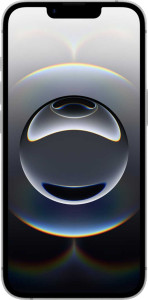
Apple iPhone 16e
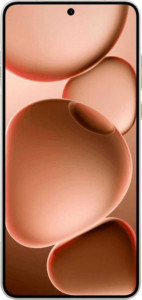
Oppo Find X8s

Apple iPhone 16e Oppo Find X8s

Overview

When comparing the Apple iPhone 16e and the Oppo Find X8s, two compelling mid-to-premium smartphones emerge with very different philosophies. Both share an IP68 waterproof rating, OLED displays, and 5G connectivity, yet they diverge sharply across performance benchmarks, camera versatility, battery capacity, and operating system experience. Read on to discover how these two devices stack up across every major specification category.

Common Features

  • Both phones are waterproof with an IP68 ingress protection rating.
  • Neither phone has a rugged build.
  • Neither phone can be folded.
  • Both phones feature an OLED/AMOLED display.
  • Both phones have a pixel density of 460 ppi.
  • HDR10 support is available on both phones.
  • Always-On Display is not available on either phone.
  • Neither phone has a secondary screen.
  • Both phones have a touchscreen.
  • Both phones have integrated LTE.
  • Both phones use a 3 nm semiconductor.
  • Both phones support 64-bit processing.
  • Both phones have integrated graphics.
  • Both phones use big.LITTLE technology and HMP.
  • Both phones use DDR5 memory.
  • Both phones have built-in optical image stabilization.
  • Both main cameras support 4K video recording at 60 fps.
  • Both phones have two flash LEDs.
  • Both phones have a CMOS sensor.
  • Both phones support continuous autofocus when recording movies.
  • Both phones support phase-detection autofocus for photos.
  • Both phones support slow-motion video recording.
  • Both operating systems include clipboard warnings, location privacy options, camera and microphone privacy options, the ability to block app tracking, on-device machine learning, notification permissions, a media picker, and dark mode.
  • Both phones support wireless charging.
  • Both phones support fast charging.
  • Neither phone supports reverse wireless charging.
  • Neither phone has a removable battery.
  • Both phones have a battery level indicator.
  • Neither phone has a 3.5 mm audio jack.
  • Both phones have stereo speakers.
  • Neither phone supports LDAC, aptX Adaptive, or aptX Lossless.
  • Neither phone has a radio.
  • Both phones support 5G.
  • Neither phone has an external memory slot.
  • Both phones have USB Type-C with USB 2.0.
  • Both phones have NFC.
  • Both phones are not DLNA-certified.
  • Both phones have a gyroscope.
  • Neither phone has a sapphire glass display.
  • Neither phone has a curved display.
  • Neither phone has an e-paper display.
  • Both phones have a video light.

Main Differences

  • Weight is 167 g on Apple iPhone 16e and 179 g on Oppo Find X8s.
  • Thickness is 7.8 mm on Apple iPhone 16e and 7.7 mm on Oppo Find X8s.
  • Width is 71.5 mm on Apple iPhone 16e and 71.8 mm on Oppo Find X8s.
  • Height is 146.7 mm on Apple iPhone 16e and 150.6 mm on Oppo Find X8s.
  • Screen size is 6.1″ on Apple iPhone 16e and 6.32″ on Oppo Find X8s.
  • Resolution is 1170 x 2532 px on Apple iPhone 16e and 1216 x 2640 px on Oppo Find X8s.
  • Refresh rate is 60Hz on Apple iPhone 16e and 120Hz on Oppo Find X8s.
  • Typical brightness is 800 nits on Apple iPhone 16e and 1600 nits on Oppo Find X8s.
  • Damage-resistant branded glass is present on Oppo Find X8s but not on Apple iPhone 16e.
  • HDR10+ support is available on Oppo Find X8s but not on Apple iPhone 16e.
  • Dolby Vision display support is available on Apple iPhone 16e but not on Oppo Find X8s.
  • Internal storage is 512 GB on Apple iPhone 16e and 1024 GB on Oppo Find X8s.
  • RAM is 8 GB on Apple iPhone 16e and 16 GB on Oppo Find X8s.
  • AnTuTu benchmark score is 1,577,129 on Apple iPhone 16e and 2,880,558 on Oppo Find X8s.
  • The chipset is Apple A18 on Apple iPhone 16e and MediaTek Dimensity 9400 Plus on Oppo Find X8s.
  • Geekbench 6 multi-core score is 7,560 on Apple iPhone 16e and 8,969 on Oppo Find X8s.
  • Geekbench 6 single-core score is 2,989 on Apple iPhone 16e and 2,874 on Oppo Find X8s.
  • RAM speed is 4800 MHz on Apple iPhone 16e and 10,667 MHz on Oppo Find X8s.
  • Maximum memory bandwidth is 78.8 GB/s on Apple iPhone 16e and 85.3 GB/s on Oppo Find X8s.
  • Main camera resolution is 48 MP on Apple iPhone 16e and 50 & 50 & 50 MP on Oppo Find X8s.
  • A multi-lens main camera is present on Oppo Find X8s but not on Apple iPhone 16e.
  • Front camera resolution is 12 MP on Apple iPhone 16e and 32 MP on Oppo Find X8s.
  • Optical zoom is 2x on Apple iPhone 16e and 3.5x on Oppo Find X8s.
  • RAW photo shooting is supported on Oppo Find X8s but not on Apple iPhone 16e.
  • Manual shutter speed is available on Apple iPhone 16e but not on Oppo Find X8s.
  • Dual-tone LED flash is present on Apple iPhone 16e but not on Oppo Find X8s.
  • Dolby Vision video recording is supported on Apple iPhone 16e but not on Oppo Find X8s.
  • HDR10 video recording is supported on Apple iPhone 16e but not on Oppo Find X8s.
  • Mail Privacy Protection is available on Apple iPhone 16e but not on Oppo Find X8s.
  • Theme customization is available on Oppo Find X8s but not on Apple iPhone 16e.
  • Cross-site tracking blocking is present on Apple iPhone 16e but not on Oppo Find X8s.
  • Playing games while downloading is supported on Oppo Find X8s but not on Apple iPhone 16e.
  • Wi-Fi password sharing is available on Apple iPhone 16e but not on Oppo Find X8s.
  • An extra dim mode is available on Oppo Find X8s but not on Apple iPhone 16e.
  • Focus modes are available on Apple iPhone 16e but not on Oppo Find X8s.
  • Split-screen support is present on Oppo Find X8s but not on Apple iPhone 16e.
  • Direct OS updates are available on Apple iPhone 16e but not on Oppo Find X8s.
  • The operating system is free and open source on Oppo Find X8s but not on Apple iPhone 16e.
  • Multi-user support is available on Oppo Find X8s but not on Apple iPhone 16e.
  • Battery capacity is 3961 mAh on Apple iPhone 16e and 5700 mAh on Oppo Find X8s.
  • Wired charging speed is 27W on Apple iPhone 16e and 80W on Oppo Find X8s.
  • Wireless charging speed is 7.5W on Apple iPhone 16e and 50W on Oppo Find X8s.
  • aptX support is present on Oppo Find X8s but not on Apple iPhone 16e.
  • aptX HD support is present on Oppo Find X8s but not on Apple iPhone 16e.
  • Wi-Fi 7 (802.11be) support is present on Oppo Find X8s but not on Apple iPhone 16e.
  • SIM card support is 1 SIM and 1 eSIM on Apple iPhone 16e and dual physical SIM on Oppo Find X8s.
  • Bluetooth version is 5.3 on Apple iPhone 16e and 5.4 on Oppo Find X8s.
  • Maximum download speed is 10,000 Mbits/s on Apple iPhone 16e and 7,300 Mbits/s on Oppo Find X8s.
  • A fingerprint scanner is present on Oppo Find X8s but not on Apple iPhone 16e.
  • Emergency SOS via satellite is available on Apple iPhone 16e but not on Oppo Find X8s.
  • Crash detection is available on Apple iPhone 16e but not on Oppo Find X8s.
  • An infrared sensor is present on Oppo Find X8s but not on Apple iPhone 16e.
  • A barometer is present on Apple iPhone 16e but not on Oppo Find X8s.
  • 3D facial recognition is available on Apple iPhone 16e but not on Oppo Find X8s.
Specs Comparison
Apple iPhone 16e

Apple iPhone 16e

Oppo Find X8s

Oppo Find X8s

Design:
water resistance Waterproof Waterproof
weight 167 g 179 g
thickness 7.8 mm 7.7 mm
width 71.5 mm 71.8 mm
height 146.7 mm 150.6 mm
volume 81.81459 cm³ 83.260716 cm³
Ingress Protection (IP) rating IP68 IP68
has a rugged build
can be folded

Both the Apple iPhone 16e and the Oppo Find X8s share a strong foundation in terms of durability, each carrying an IP68 waterproof rating. In practical terms, this means both phones can withstand submersion in water under controlled conditions, and neither requires any special rugged reinforcement to achieve it — both are standard, non-ruggedized designs. For most users, this puts them on equal footing for everyday water exposure such as rain or accidental splashes.

Where the two diverge more meaningfully is in their physical footprint. The iPhone 16e is noticeably the more compact device: at 146.7 mm tall and 167 g, it is 3.9 mm shorter and 12 g lighter than the Find X8s. While a 12-gram difference may sound negligible on paper, it is consistently perceptible during prolonged one-handed use or when the phone sits in a pocket for hours. The smaller overall volume of the iPhone 16e (81.8 cm³ vs 83.3 cm³) reinforces that it is the more pocketable of the two. The Find X8s, by contrast, is marginally thinner at 7.7 mm versus 7.8 mm — a difference so slim it is virtually imperceptible in hand.

On balance, the iPhone 16e holds a clear design edge for users who prioritize a lighter, more compact form factor. The Oppo Find X8s counters with a very slightly slimmer profile, but this advantage is negligible. Waterproofing is a draw, with both offering the same IP68 protection level.

Display:
Display type OLED/AMOLED OLED/AMOLED
screen size 6.1" 6.32"
pixel density 460 ppi 460 ppi
resolution 1170 x 2532 px 1216 x 2640 px
refresh rate 60Hz 120Hz
brightness (typical) 800 nits 1600 nits
has branded damage-resistant glass
supports HDR10
supports HDR10+
Always-On Display
supports Dolby Vision
Has a secondary screen
has a touch screen

Both phones use OLED/AMOLED panels and arrive at an identical 460 ppi pixel density, meaning sharpness is a wash despite their differing resolutions and screen sizes. The more consequential gap is in refresh rate: the Find X8s runs at 120Hz versus the iPhone 16e's 60Hz, which translates directly into visibly smoother scrolling, more fluid animations, and a generally more responsive feel during everyday use. For users who spend significant time browsing, gaming, or navigating social media feeds, this is one of the most tangible day-to-day differences between the two devices.

Brightness is another area where the gap is hard to ignore. The Find X8s delivers 1600 nits of typical brightness — double the iPhone 16e's 800 nits. In practice, this means the Find X8s will remain far more legible under direct sunlight, an advantage that matters considerably for outdoor use. The Find X8s also includes branded damage-resistant glass and supports HDR10+, while the iPhone 16e counters with Dolby Vision support — a premium HDR format well-suited for streaming compatible content. These HDR trade-offs largely come down to ecosystem preference, but the lack of any screen protection on the iPhone 16e is a more concrete disadvantage.

The Oppo Find X8s holds a clear display advantage here. Its combination of double the refresh rate and double the brightness makes it the stronger panel for both everyday usability and outdoor visibility, and its damage-resistant glass adds a layer of practical durability the iPhone 16e does not offer.

Performance:
internal storage 512GB 1024GB
RAM 8GB 16GB
AnTuTu benchmark score 1577129 2880558
Chipset (SoC) name Apple A18 MediaTek Dimensity 9400 Plus
GPU name Apple A18 GPU Immortalis G925
CPU speed 2 x 4.05 & 4 x 2.42 GHz 1 x 3.73 & 4 x 3.3 & 3 x 2.4 GHz
Geekbench 6 result (multi) 7560 8969
Geekbench 6 result (single) 2989 2874
GPU clock speed 1398 MHz 1300 MHz
Has integrated LTE
RAM speed 4800 MHz 10667 MHz
semiconductor size 3 nm 3 nm
Supports 64-bit
Has integrated graphics
Uses big.LITTLE technology
CPU threads 6 threads 8 threads
Uses HMP
maximum memory bandwidth 78.8 GB/s 85.3 GB/s
Supports ECC memory
maximum memory amount 8GB 24GB
uses multithreading
DDR memory version 5 5

The single-core story favors the Apple iPhone 16e: its A18 chip scores 2989 in Geekbench 6 single-core, edging out the Find X8s's 2874. Since most everyday tasks — launching apps, UI responsiveness, typing — are governed by single-threaded performance, the iPhone 16e holds its own in moment-to-moment feel. The Find X8s, however, pulls ahead in every other dimension. Its Dimensity 9400 Plus chip posts a multi-core score of 8969 versus 7560, and its AnTuTu result of 2,880,558 dwarfs the iPhone 16e's 1,577,129 — a gap that reflects a meaningfully stronger sustained throughput under demanding workloads like video rendering, AI processing, or heavy multitasking.

The memory configuration amplifies this divide further. The Find X8s ships with 16GB of RAM running at 10,667 MHz, compared to the iPhone 16e's 8GB at 4,800 MHz. More RAM at higher speed means the Find X8s can keep far more apps active in the background without reloading, and its 85.3 GB/s memory bandwidth versus 78.8 GB/s gives it a broader data pipeline for compute-intensive tasks. Storage headroom also differs sharply: 1TB on the Find X8s versus 512GB on the iPhone 16e.

The Oppo Find X8s takes a clear performance edge overall. The iPhone 16e's single-core advantage keeps it highly responsive for typical use, but the Find X8s outpaces it decisively in multi-threaded workloads, raw benchmark throughput, RAM capacity, and memory speed — making it the stronger choice for power-intensive tasks and long-term multitasking.

Cameras:
megapixels (main camera) 48 MP 50 & 50 & 50 MP
wide aperture (main camera) 1.6f 1.8 & 2.8 & 2f
Has a dual-lens (or multi-lens) main camera
megapixels (front camera) 12MP 32MP
has built-in optical image stabilization
video recording (main camera) 2160 x 60 fps 2160 x 60 fps
Has a dual-tone LED flash
number of flash LEDs 2 2
has a BSI sensor
has a CMOS sensor
has continuous autofocus when recording movies
Has phase-detection autofocus for photos
supports slow-motion video recording
has a built-in HDR mode
has manual exposure
has a flash
optical zoom 2x 3.5x
has manual ISO
has a serial shot mode
has manual focus
has a front camera
Has laser autofocus
Shoots 360° panorama
has manual white balance
shoots raw
has touch autofocus
has manual shutter speed
can create panoramas in-camera
wide aperture (front camera) 1.9f 2.4f
Has timelapse function
Has a front-facing LED flash
has a dual-lens (or multi-lens) front camera
supports HDR10 recording
supports Dolby Vision recording
has a front-facing camera under the display
Has a RGB LED flash
has 3D photo/video recording capabilities

The most structural difference in camera hardware is straightforward: the Oppo Find X8s fields a triple-lens rear system (three 50 MP sensors with different focal lengths and apertures), while the iPhone 16e relies on a single 48 MP main camera. This matters most for versatility — the Find X8s can natively switch between wide, ultrawide, and telephoto perspectives, and its 3.5x optical zoom outreaches the iPhone 16e's 2x, meaning more distant subjects can be captured with less digital degradation. For travel, events, or any scenario requiring compositional flexibility, the triple-camera setup is a tangible hardware advantage.

Beyond lens count, a few capability gaps are worth noting. The Find X8s supports RAW shooting, which gives photographers the uncompressed image data needed for serious post-processing — the iPhone 16e does not. The iPhone 16e, on the other hand, supports Dolby Vision recording and HDR10 video, offering a richer video color pipeline that the Find X8s lacks entirely. The iPhone 16e also retains manual shutter speed control, absent on the Find X8s. For selfies, the Find X8s steps up to a 32 MP front camera versus 12 MP on the iPhone 16e, though its front aperture of f/2.4 is narrower than the iPhone 16e's f/1.9, meaning less light capture in that lens.

On camera hardware, the Find X8s holds the broader advantage — its triple-lens system, higher optical zoom, and RAW support make it the more capable still-photography platform. The iPhone 16e carves out a meaningful niche for video creators through its Dolby Vision and HDR10 recording support, but in overall camera versatility, the Find X8s leads.
Operating system:
has clipboard warnings
has location privacy options
has camera/microphone privacy options
has Mail Privacy Protection
has theme customization
can block app tracking
blocks cross-site tracking
has on-device machine learning
has notification permissions
has media picker
Can play games while they download
has dark mode
has Wi-Fi password sharing
has battery health check
has an extra dim mode
has focus modes
has dynamic theming
can offload apps
Has customizable notifications
has Live Text
has full-page screenshots
supports split screen
gets direct OS updates
has PiP
Can be used as a PC
Has sharing intents
has a child lock
Supports widgets
Is free and open source
Has offline voice recognition
has voice commands
Tracks the current position of a mobile device
is a multi-user system
has Quick Start

The two platforms diverge most sharply on their philosophical approaches to software. The iPhone 16e receives direct OS updates from Apple, meaning security patches and new features arrive immediately without waiting on a manufacturer or carrier — a meaningful long-term reliability advantage. The Find X8s does not get direct updates, but it runs on an open-source OS and supports multi-user accounts and split-screen multitasking, features iOS simply does not offer. For shared-device households or users who genuinely multitask between two apps simultaneously, those are practical capabilities the iPhone 16e cannot match.

Privacy controls split interestingly between the two. The iPhone 16e offers Mail Privacy Protection, cross-site tracking blocking, and Wi-Fi password sharing — a tighter, more integrated privacy layer. The Find X8s counters with theme customization, dynamic theming, and an extra dim mode, leaning more toward personalization than privacy hardening. The iPhone 16e also includes Focus Modes for managing attention and notifications across contexts, which the Find X8s lacks, while the Find X8s supports playing games during downloads — a minor but occasionally convenient convenience.

This category is genuinely split by user priorities rather than one platform being objectively ahead. The iPhone 16e has a clear edge for privacy and update reliability, while the Find X8s offers more flexibility through multitasking, multi-user support, and personalization. Users who value security and ecosystem consistency will lean toward the iPhone 16e; those who want a more open, customizable experience will find the Find X8s better suited.

Battery:
battery power 3961 mAh 5700 mAh
has wireless charging
Supports fast charging
charging speed 27W 80W
wireless charging speed 7.5W 50W
has reverse wireless charging
has a removable battery
has a battery level indicator
has a rechargeable battery

Raw capacity tells a clear story here: the Oppo Find X8s packs a 5700 mAh battery against the iPhone 16e's 3961 mAh — a difference of nearly 1740 mAh, or roughly 44% more energy storage. All else being equal, a larger battery directly extends the time between charges, making the Find X8s the stronger candidate for heavy users, long travel days, or anyone who regularly pushes through a full day without access to a charger.

The charging speed gap is equally pronounced. The Find X8s supports 80W wired fast charging, compared to the iPhone 16e's 27W — meaning the Find X8s can replenish its much larger battery in a fraction of the time it takes the iPhone 16e to top up its smaller one. Wireless charging follows the same pattern: 50W on the Find X8s versus just 7.5W on the iPhone 16e. For users who rely on wireless pads as their primary charging method, the iPhone 16e's 7.5W cap makes wireless charging a slow overnight process rather than a practical quick-charge option.

The Find X8s wins this category decisively. It carries significantly more battery capacity, charges wired nearly three times as fast, and offers wireless charging speeds that are genuinely usable for top-ups throughout the day. The iPhone 16e has no meaningful advantage in this group.

Audio:
has a socket for a 3.5 mm audio jack
has stereo speakers
has aptX
has LDAC
has aptX HD
has aptX Adaptive
has aptX Lossless
Has a radio

At the speaker level, these two phones are evenly matched: both drop the 3.5mm headphone jack and both offer stereo speakers, so wired audio purists and speaker listeners get the same experience on either device. The meaningful differentiation only emerges when pairing wireless headphones.

The Oppo Find X8s supports aptX and aptX HD, which are higher-quality Bluetooth audio codecs that transmit more audio data per second than standard SBC. In practice, aptX HD in particular can deliver near-lossless audio quality to compatible wireless headphones — a genuine advantage for listeners who own qualifying headphones and care about audio fidelity over Bluetooth. The iPhone 16e supports neither, meaning it is limited to more compressed Bluetooth audio codecs when used with non-Apple wireless headphones.

The Find X8s has a clear edge for wireless audio quality, specifically for users with aptX or aptX HD-compatible headphones. For casual listeners or those using the built-in speakers, both phones are equivalent. Neither device supports LDAC or a headphone jack, so audiophiles with high-end wired setups will find both equally limiting.

Connectivity & Features:
release date February 2025 April 2025
has 5G support
Wi-Fi version Wi-Fi 4 (802.11n), Wi-Fi 5 (802.11ac), Wi-Fi 6 (802.11ax) Wi-Fi 4 (802.11n), Wi-Fi 6 (802.11ax), Wi-Fi 5 (802.11ac), Wi-Fi 7 (802.11be)
SIM cards 1 SIM, 1 eSIM 2 SIM
Bluetooth version 5.3 5.4
has an external memory slot
Has USB Type-C
USB version 2 2
has NFC
download speed 10000 MBits/s 7300 MBits/s
Has a fingerprint scanner
has emergency SOS via satellite
has crash detection
is DLNA-certified
has a gyroscope
supports ANT+
Has a heart rate monitor
has GPS
has a compass
supports Wi-Fi
Has an infrared sensor
has an accelerometer
has a cellular module
Has a barometer
has an HDMI output
Uses 3D facial recognition
Has an iris scanner
Stylus included
supports Galileo
Has motion tracking
Has optical tracking
Has a built-in projector

Wireless connectivity is where these two pull in different directions. The Oppo Find X8s supports Wi-Fi 7, the latest standard offering significantly higher throughput and lower latency on compatible routers, while the iPhone 16e tops out at Wi-Fi 6. The Find X8s also edges ahead with Bluetooth 5.4 versus 5.3 — a minor version gap with negligible real-world impact. Notably, the iPhone 16e posts a higher theoretical 5G download speed of 10,000 Mbps against the Find X8s's 7,300 Mbps, though both figures far exceed what real-world networks currently deliver. The Find X8s also accommodates dual physical SIMs, useful for travelers or users managing separate personal and work numbers, while the iPhone 16e offers only one physical SIM alongside an eSIM.

Each phone holds exclusive features that serve distinct user needs. The iPhone 16e brings emergency SOS via satellite, crash detection, 3D facial recognition, and a barometer — a cluster of safety and environmental sensing tools with clear real-world value. The Find X8s counters with a physical fingerprint scanner and an infrared sensor, the latter enabling the phone to function as a universal remote for IR-controlled devices — a niche but genuinely useful feature for some users.

This category is closely contested, with each device offering meaningfully different strengths. The iPhone 16e holds an edge for safety-focused users thanks to satellite SOS and crash detection, while the Find X8s leads on wireless modernity with Wi-Fi 7 and dual-SIM flexibility. Neither dominates outright — the right choice depends on which exclusive features align with how the user actually lives.

Miscellaneous:
has a video light
Has sapphire glass display
Has a curved display
Has an e-paper display

Across every spec in this group, the Apple iPhone 16e and Oppo Find X8s are identical — both have a video light, neither uses sapphire glass, neither has a curved or e-paper display. There are no differentiators here to analyze.

This is a complete tie. The miscellaneous specs provided offer no basis for preferring one device over the other.

Comparison Summary & Verdict

After a thorough comparison, the Apple iPhone 16e and Oppo Find X8s each shine in distinct areas. The iPhone 16e appeals to users who value a lighter, more compact design, Dolby Vision recording, seamless direct OS updates, safety features like emergency SOS via satellite and crash detection, and the tight privacy controls of iOS including Mail Privacy Protection and cross-site tracking blocking. The Oppo Find X8s, on the other hand, is the stronger choice for power users who demand a larger battery with 80W fast charging, a versatile triple-camera system with 3.5x optical zoom, a smoother 120Hz display at 1600 nits, significantly more RAM and storage, and a more customizable Android experience with split-screen multitasking. Choose the iPhone 16e for its ecosystem and safety features; choose the Oppo Find X8s for raw hardware performance and flexibility.

Apple iPhone 16e
Buy Apple iPhone 16e if...

Buy the Apple iPhone 16e if you prioritize a lighter and more compact build, iOS privacy and safety features like emergency SOS via satellite and crash detection, and seamless direct OS updates.

Oppo Find X8s
Buy Oppo Find X8s if...

Buy the Oppo Find X8s if you want a larger battery with significantly faster 80W wired and 50W wireless charging, a versatile triple-camera setup with greater optical zoom, more RAM and storage, and a high-brightness 120Hz display.