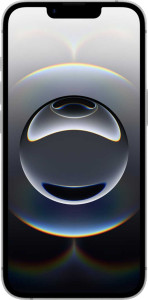
Apple iPhone 16e
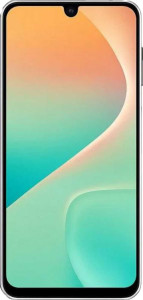
Samsung Galaxy F36 5G

Apple iPhone 16e Samsung Galaxy F36 5G

Overview

Welcome to our in-depth spec comparison between the Apple iPhone 16e and the Samsung Galaxy F36 5G. These two 5G smartphones take very different approaches to what a modern phone should be. From raw processing performance and camera versatility to battery capacity and display experience, there is plenty to weigh up before making a decision. Read on as we break down every key specification side by side to help you find the best fit for your needs.

Common Features

  • Neither product has a rugged build.
  • Neither product can be folded.
  • Both products feature an OLED/AMOLED display type.
  • Neither product has branded damage-resistant glass.
  • HDR10+ support is not available on either product.
  • Neither product has a secondary screen.
  • Both products have a touch screen.
  • Both products have integrated LTE.
  • Both products support 64-bit processing.
  • Both products have integrated graphics.
  • Both products use big.LITTLE technology.
  • Both products support a maximum memory amount of 8GB.
  • Both products have built-in optical image stabilization.
  • Both products have a CMOS sensor.
  • Both products support continuous autofocus when recording movies.
  • Both products have phase-detection autofocus for photos.
  • Both products support slow-motion video recording.
  • Both products have a built-in HDR mode.
  • Both products support manual exposure.
  • Both products have clipboard warnings.
  • Both products have location privacy options.
  • Both products have camera and microphone privacy options.
  • Both products can block app tracking.
  • Both products have on-device machine learning.
  • Both products have notification permissions.
  • Both products have a media picker.
  • Both products have dark mode.
  • Both products support fast charging.
  • Reverse wireless charging is not available on either product.
  • Neither product has a removable battery.
  • Both products have a battery level indicator.
  • Both products have a rechargeable battery.
  • Neither product has a 3.5mm audio jack.
  • Both products have stereo speakers.
  • aptX support is not available on either product.
  • LDAC support is not available on either product.
  • Neither product has a radio.
  • Both products support 5G.
  • Both products have Bluetooth version 5.3.
  • Both products have USB Type-C.
  • Both products use USB version 2.
  • Both products have NFC.
  • Neither product is DLNA-certified.
  • Both products have a gyroscope.
  • Both products support the same Wi-Fi versions: Wi-Fi 4, Wi-Fi 5, and Wi-Fi 6.
  • Both products have a video light.
  • Neither product has a sapphire glass display.
  • Neither product has a curved display.
  • Neither product has an e-paper display.

Main Differences

  • Water resistance is waterproof on Apple iPhone 16e but not present on Samsung Galaxy F36 5G.
  • Weight is 167g on Apple iPhone 16e and 197g on Samsung Galaxy F36 5G.
  • Thickness is 7.8mm on Apple iPhone 16e and 7.7mm on Samsung Galaxy F36 5G.
  • Width is 71.5mm on Apple iPhone 16e and 77.9mm on Samsung Galaxy F36 5G.
  • Height is 146.7mm on Apple iPhone 16e and 164.4mm on Samsung Galaxy F36 5G.
  • Volume is 81.81 cm³ on Apple iPhone 16e and 98.61 cm³ on Samsung Galaxy F36 5G.
  • Screen size is 6.1″ on Apple iPhone 16e and 6.7″ on Samsung Galaxy F36 5G.
  • Pixel density is 460 ppi on Apple iPhone 16e and 385 ppi on Samsung Galaxy F36 5G.
  • Resolution is 1170 x 2532 px on Apple iPhone 16e and 1080 x 2340 px on Samsung Galaxy F36 5G.
  • Refresh rate is 60Hz on Apple iPhone 16e and 120Hz on Samsung Galaxy F36 5G.
  • Typical brightness is 800 nits on Apple iPhone 16e and 1200 nits on Samsung Galaxy F36 5G.
  • HDR10 support is present on Apple iPhone 16e but not available on Samsung Galaxy F36 5G.
  • Always-On Display is available on Samsung Galaxy F36 5G but not on Apple iPhone 16e.
  • Dolby Vision support is present on Apple iPhone 16e but not available on Samsung Galaxy F36 5G.
  • Internal storage is 512GB on Apple iPhone 16e and 128GB on Samsung Galaxy F36 5G.
  • RAM is 8GB on Apple iPhone 16e and 6GB on Samsung Galaxy F36 5G.
  • The chipset is Apple A18 on Apple iPhone 16e and Samsung Exynos 1380 on Samsung Galaxy F36 5G.
  • Geekbench 6 multi-core score is 7560 on Apple iPhone 16e and 2758 on Samsung Galaxy F36 5G.
  • Geekbench 6 single-core score is 2989 on Apple iPhone 16e and 1007 on Samsung Galaxy F36 5G.
  • GPU clock speed is 1398 MHz on Apple iPhone 16e and 950 MHz on Samsung Galaxy F36 5G.
  • RAM speed is 4800 MHz on Apple iPhone 16e and 3200 MHz on Samsung Galaxy F36 5G.
  • Semiconductor size is 3nm on Apple iPhone 16e and 5nm on Samsung Galaxy F36 5G.
  • Maximum memory bandwidth is 78.8 GB/s on Apple iPhone 16e and 51.2 GB/s on Samsung Galaxy F36 5G.
  • Main camera resolution is 48MP on Apple iPhone 16e and 50, 8, and 2MP on Samsung Galaxy F36 5G.
  • Main camera wide aperture is f/1.6 on Apple iPhone 16e and f/1.8, f/2.2, and f/2.4 on Samsung Galaxy F36 5G.
  • A multi-lens main camera is present on Samsung Galaxy F36 5G but not on Apple iPhone 16e.
  • Video recording on the main camera supports 2160p at 60fps on Apple iPhone 16e and 2160p at 30fps on Samsung Galaxy F36 5G.
  • A dual-tone LED flash is present on Apple iPhone 16e but not on Samsung Galaxy F36 5G.
  • Optical zoom is 2x on Apple iPhone 16e and not available on Samsung Galaxy F36 5G.
  • Manual shutter speed is supported on Apple iPhone 16e but not on Samsung Galaxy F36 5G.
  • HDR10 video recording is supported on Apple iPhone 16e but not on Samsung Galaxy F36 5G.
  • Dolby Vision video recording is supported on Apple iPhone 16e but not on Samsung Galaxy F36 5G.
  • Mail Privacy Protection is present on Apple iPhone 16e but not on Samsung Galaxy F36 5G.
  • Theme customization is available on Samsung Galaxy F36 5G but not on Apple iPhone 16e.
  • Cross-site tracking blocking is present on Apple iPhone 16e but not on Samsung Galaxy F36 5G.
  • Playing games while downloading is supported on Samsung Galaxy F36 5G but not on Apple iPhone 16e.
  • Wi-Fi password sharing is available on Apple iPhone 16e but not on Samsung Galaxy F36 5G.
  • An extra dim mode is available on Samsung Galaxy F36 5G but not on Apple iPhone 16e.
  • Focus modes are available on Apple iPhone 16e but not on Samsung Galaxy F36 5G.
  • Dynamic theming is available on Samsung Galaxy F36 5G but not on Apple iPhone 16e.
  • Split screen is supported on Samsung Galaxy F36 5G but not on Apple iPhone 16e.
  • Direct OS updates are available on Apple iPhone 16e but not on Samsung Galaxy F36 5G.
  • The operating system is free and open source on Samsung Galaxy F36 5G but not on Apple iPhone 16e.
  • Multi-user support is available on Samsung Galaxy F36 5G but not on Apple iPhone 16e.
  • Battery capacity is 3961 mAh on Apple iPhone 16e and 5000 mAh on Samsung Galaxy F36 5G.
  • Wireless charging is supported on Apple iPhone 16e but not on Samsung Galaxy F36 5G.
  • Charging speed is 27W on Apple iPhone 16e and 25W on Samsung Galaxy F36 5G.
  • A charger is included in the box with Samsung Galaxy F36 5G but not with Apple iPhone 16e.
  • SIM configuration is 1 SIM plus 1 eSIM on Apple iPhone 16e and 2 physical SIMs on Samsung Galaxy F36 5G.
  • An external memory slot is available on Samsung Galaxy F36 5G but not on Apple iPhone 16e.
  • Download speed is 10000 Mbits/s on Apple iPhone 16e and 3790 Mbits/s on Samsung Galaxy F36 5G.
  • Upload speed is 3500 Mbits/s on Apple iPhone 16e and 1280 Mbits/s on Samsung Galaxy F36 5G.
  • A fingerprint scanner is present on Samsung Galaxy F36 5G but not on Apple iPhone 16e.
  • Emergency SOS via satellite is available on Apple iPhone 16e but not on Samsung Galaxy F36 5G.
  • Crash detection is available on Apple iPhone 16e but not on Samsung Galaxy F36 5G.
  • A barometer is present on Apple iPhone 16e but not on Samsung Galaxy F36 5G.
  • 3D facial recognition is used on Apple iPhone 16e but not on Samsung Galaxy F36 5G.
  • Optical tracking is present on Apple iPhone 16e but not on Samsung Galaxy F36 5G.
Specs Comparison
Apple iPhone 16e

Apple iPhone 16e

Samsung Galaxy F36 5G

Samsung Galaxy F36 5G

Design:
water resistance Waterproof None
weight 167 g 197 g
thickness 7.8 mm 7.7 mm
width 71.5 mm 77.9 mm
height 146.7 mm 164.4 mm
volume 81.81459 cm³ 98.612052 cm³
has a rugged build
can be folded

The most consequential difference in this group is water resistance: the iPhone 16e is waterproof, while the Galaxy F36 5G has no rated water resistance at all. In practice, this means the iPhone can survive rain, splashes, or accidental drops in water, whereas the F36 5G offers no such protection — a meaningful real-world advantage for the Apple device, especially for users who are active outdoors or prone to accidents near liquids.

Form factor tells an equally clear story. The iPhone 16e is a noticeably more compact device, with a height of 146.7 mm and width of 71.5 mm versus the F36 5G's 164.4 mm height and 77.9 mm width. Combined with a 30 g lighter weight (167 g vs 197 g) and a significantly smaller overall volume (81.8 cm³ vs 98.6 cm³), the iPhone sits in a noticeably more pocketable, one-hand-friendly form factor. The F36 5G's larger footprint may suit users who prefer a bigger screen area, but it comes at the cost of bulk and heft.

Thickness is the one area where the two phones are essentially tied — 7.8 mm vs 7.7 mm is an imperceptible difference. Neither device has a rugged build or a foldable form factor. Overall, the iPhone 16e holds a clear design advantage in this group: it is more compact, lighter, and crucially the only one of the two that offers water protection.

Display:
Display type OLED/AMOLED OLED/AMOLED
screen size 6.1" 6.7"
pixel density 460 ppi 385 ppi
resolution 1170 x 2532 px 1080 x 2340 px
refresh rate 60Hz 120Hz
brightness (typical) 800 nits 1200 nits
has branded damage-resistant glass
supports HDR10
supports HDR10+
Always-On Display
supports Dolby Vision
Has a secondary screen
has a touch screen

Both phones use OLED/AMOLED panels, so the baseline display quality — deep blacks, vivid colors, strong contrast — is shared. The dividing lines emerge quickly, though. The Galaxy F36 5G runs at 120Hz versus the iPhone 16e's 60Hz, a difference that is immediately perceptible in everyday use: scrolling, animations, and gaming all feel noticeably smoother on the F36 5G. Paired with a larger 6.7″ screen (vs 6.1″) and higher typical brightness of 1200 nits (vs 800 nits), the F36 5G delivers a more immersive and readable display, especially in direct sunlight.

The iPhone 16e counters on sharpness. Its 460 ppi pixel density is meaningfully higher than the F36 5G's 385 ppi, meaning text and fine detail render crisply — though at normal viewing distances both are comfortably sharp. The iPhone also supports Dolby Vision, which offers a richer HDR experience for compatible streaming content compared to the F36 5G, which supports neither HDR10 nor Dolby Vision. However, the F36 5G includes an Always-On Display — a practical convenience for glancing at time and notifications without waking the screen fully — which the iPhone 16e lacks entirely.

Weighing the trade-offs, the Galaxy F36 5G holds the display edge for most users: the higher refresh rate, greater brightness, larger screen, and Always-On Display add up to a more feature-rich panel for everyday media consumption and usability. The iPhone 16e's advantages in pixel density and Dolby Vision matter most to users who prioritize sharpness and premium HDR content, but those are narrower use cases.
Performance:
internal storage 512GB 128GB
RAM 8GB 6GB
Chipset (SoC) name Apple A18 Samsung Exynos 1380
GPU name Apple A18 GPU Mali G68 MP5
CPU speed 2 x 4.05 & 4 x 2.42 GHz 4 x 2.4 & 4 x 2 GHz
Geekbench 6 result (multi) 7560 2758
Geekbench 6 result (single) 2989 1007
GPU clock speed 1398 MHz 950 MHz
Has integrated LTE
RAM speed 4800 MHz 3200 MHz
semiconductor size 3 nm 5 nm
Supports 64-bit
Has integrated graphics
Uses big.LITTLE technology
CPU threads 6 threads 8 threads
Has NX bit
Uses HMP
Has TrustZone
maximum memory bandwidth 78.8 GB/s 51.2 GB/s
maximum memory amount 8GB 8GB
uses multithreading
DDR memory version 5 5

The performance gap between these two devices is substantial and data-driven. The iPhone 16e's Apple A18 chip, built on a 3 nm process, scores 2989 single-core and 7560 multi-core on Geekbench 6. The Galaxy F36 5G's Exynos 1380, fabbed on a 5 nm node, returns 1007 single-core and 2758 multi-core. Single-core performance is the most direct measure of how snappy an app or task feels in isolation — the iPhone 16e is nearly three times faster here, which translates to noticeably faster app launches, smoother UI responsiveness, and quicker on-device AI processing.

The silicon advantage extends to graphics and memory. The A18's GPU clocks at 1398 MHz versus the Mali G68 MP5's 950 MHz, making a tangible difference in GPU-intensive tasks like gaming and video rendering. Memory bandwidth tells a similar story: 78.8 GB/s on the iPhone 16e versus 51.2 GB/s on the F36 5G, meaning the A18 can feed its cores with data far more rapidly, reducing bottlenecks under heavy workloads. The iPhone 16e also ships with up to 512 GB of internal storage, a massive advantage over the F36 5G's 128 GB ceiling for users with large media libraries or who prefer not to rely on cloud storage.

The iPhone 16e wins this category decisively across every measurable performance dimension — raw CPU throughput, GPU power, memory bandwidth, and storage capacity. The F36 5G is a capable everyday performer, but it is in a different performance class entirely. Users who run demanding apps, games, or future-proof longevity are looking at a clear hierarchy here.

Cameras:
megapixels (main camera) 48 MP 50 & 8 & 2 MP
wide aperture (main camera) 1.6f 1.8 & 2.2 & 2.4f
Has a dual-lens (or multi-lens) main camera
megapixels (front camera) 12MP 13MP
has built-in optical image stabilization
video recording (main camera) 2160 x 60 fps 2160 x 30 fps
Has a dual-tone LED flash
number of flash LEDs 2 1
has a BSI sensor
has a CMOS sensor
has continuous autofocus when recording movies
Has phase-detection autofocus for photos
supports slow-motion video recording
has a built-in HDR mode
has manual exposure
has a flash
optical zoom 2x 0x
has manual ISO
has a serial shot mode
has manual focus
has a front camera
Has laser autofocus
Shoots 360° panorama
has manual white balance
shoots raw
has touch autofocus
has manual shutter speed
can create panoramas in-camera
wide aperture (front camera) 1.9f 2.2f
Has timelapse function
Has a front-facing LED flash
has a dual-lens (or multi-lens) front camera
supports HDR10 recording
supports Dolby Vision recording
has a front-facing camera under the display
Has a RGB LED flash
has 3D photo/video recording capabilities

Camera system philosophy differs sharply here. The Galaxy F36 5G opts for a triple-lens rear setup (50 MP + 8 MP + 2 MP), offering hardware versatility — an ultrawide and a depth sensor alongside the main camera. The iPhone 16e keeps it to a single 48 MP lens, but compensates with a notably wider f/1.6 aperture versus the F36 5G's f/1.8 main lens. A wider aperture lets in more light, which matters most in low-light conditions where the difference between sharp and blurry, or bright and murky, is decided at the hardware level. The iPhone also offers 2x optical zoom, while the F36 5G lists no optical zoom at all — meaning any zoom on the F36 5G is digital and therefore degrades image quality.

Video is another area where the iPhone 16e pulls ahead. It captures at 4K 60fps compared to the F36 5G's 4K 30fps ceiling, which makes a real difference for smooth motion in action shots or footage meant for editing. The iPhone additionally supports both Dolby Vision and HDR10 recording, producing richer, more color-accurate video for compatible displays and editing workflows. The F36 5G supports neither. The iPhone 16e also includes manual shutter speed control, which the F36 5G lacks — a meaningful tool for photographers who want creative control over motion blur or long exposures.

The iPhone 16e holds a clear camera advantage in the specs that affect real-world output quality most directly: wider aperture, optical zoom, higher-framerate 4K video, and professional HDR recording formats. The F36 5G's multi-lens system gives it more compositional flexibility, but that breadth is offset by the iPhone's depth in light capture, zoom capability, and video fidelity.

Operating system:
has clipboard warnings
has location privacy options
has camera/microphone privacy options
has Mail Privacy Protection
has theme customization
can block app tracking
blocks cross-site tracking
has on-device machine learning
has notification permissions
has media picker
Can play games while they download
has dark mode
has Wi-Fi password sharing
has battery health check
has an extra dim mode
has focus modes
has dynamic theming
can offload apps
Has customizable notifications
has Live Text
has full-page screenshots
supports split screen
gets direct OS updates
has PiP
Can be used as a PC
Has sharing intents
has a child lock
Supports widgets
Is free and open source
Has offline voice recognition
has voice commands
Tracks the current position of a mobile device
is a multi-user system
has Quick Start

Privacy and security handling diverges meaningfully between these two. The iPhone 16e adds Mail Privacy Protection and cross-site tracking blocking on top of the standard camera, microphone, and location controls both phones share — layers that reduce passive data collection without any user configuration. The F36 5G does not offer either. On the flip side, Android's open nature means the F36 5G is a multi-user system that supports split-screen multitasking, neither of which the iPhone 16e provides. For shared devices or productivity-focused users who work across two apps simultaneously, these are practical gaps in the iPhone's feature set.

Update delivery is a structural difference worth highlighting. The iPhone 16e gets direct OS updates from Apple, meaning security patches and new features arrive promptly and consistently. The F36 5G does not receive direct OS updates, relying instead on Samsung's own release schedule — which historically means delays. For users who care about staying current on security fixes or new capabilities, this is a long-term ownership consideration. The iPhone 16e also includes Focus Modes for granular notification and distraction management, while the F36 5G lacks this feature entirely.

The F36 5G counters with dynamic theming, theme customization, an extra dim mode, and the ability to play games while they download — conveniences that reflect Android's flexibility. Overall, the two OSes trade blows: the iPhone 16e leads on privacy depth and update reliability, while the F36 5G offers more personalization and multitasking flexibility. For users who prioritize security and consistency, the iPhone 16e has the edge; for those who value customization and productivity features like split-screen, the F36 5G is the more capable platform.

Battery:
battery power 3961 mAh 5000 mAh
has wireless charging
Supports fast charging
charging speed 27W 25W
has reverse wireless charging
comes with a charger
has a removable battery
has a battery level indicator
has a rechargeable battery

Raw capacity favors the Galaxy F36 5G decisively: its 5000 mAh battery holds roughly 1040 mAh more than the iPhone 16e's 3961 mAh cell. All else being equal, a larger battery means more time between charges — a tangible day-to-day advantage for heavy users or those far from a power outlet. That said, real-world battery life depends on software efficiency and screen-on time as much as raw capacity, and those factors fall outside what this data covers.

Charging capabilities flip the dynamic somewhat. The iPhone 16e supports wireless charging, which the F36 5G entirely lacks — a genuine convenience for users with Qi-compatible pads at home or work, eliminating cable dependency for routine top-ups. Wired fast charging is close to a tie: 27W on the iPhone 16e versus 25W on the F36 5G, a difference too marginal to matter in practice. One practical note: the F36 5G comes with a charger in the box, while the iPhone 16e does not — a small but real out-of-pocket consideration for buyers who don't already own a compatible adapter.

On balance, the Galaxy F36 5G has the battery edge thanks to its substantially larger capacity, which is the single biggest driver of endurance. The iPhone 16e's wireless charging support is a meaningful convenience advantage, but it does not offset the gap in total energy stored. Users who prioritize all-day or multi-day battery life will find the F36 5G the more reliable choice on this spec group alone.

Audio:
has a socket for a 3.5 mm audio jack
has stereo speakers
has aptX
has LDAC
has aptX HD
has aptX Adaptive
has aptX Lossless
Has a radio

Audio is the rare category where these two phones are in complete lockstep. Both feature stereo speakers and both drop the 3.5 mm headphone jack, meaning wired audio requires an adapter or USB-C headphones on either device. Neither supports any high-resolution Bluetooth codec — no aptX, aptX HD, LDAC, or any variant — so wireless audio quality is capped at standard Bluetooth transmission on both. Neither includes an FM radio either.

This is a complete tie. There is no differentiator in the provided specs that gives either phone an advantage in audio hardware. Users who care deeply about wireless audio fidelity — particularly those with high-end Bluetooth headphones that support lossless or high-res codecs — will find both phones equally limited on paper.

Connectivity & Features:
release date February 2025 July 2025
has 5G support
Wi-Fi version Wi-Fi 4 (802.11n), Wi-Fi 5 (802.11ac), Wi-Fi 6 (802.11ax) Wi-Fi 4 (802.11n), Wi-Fi 6 (802.11ax), Wi-Fi 5 (802.11ac)
SIM cards 1 SIM, 1 eSIM 2 SIM
Bluetooth version 5.3 5.3
has an external memory slot
Has USB Type-C
USB version 2 2
has NFC
download speed 10000 MBits/s 3790 MBits/s
upload speed 3500 MBits/s 1280 MBits/s
Has a fingerprint scanner
has emergency SOS via satellite
has crash detection
is DLNA-certified
has a gyroscope
supports ANT+
Has a heart rate monitor
has GPS
has a compass
supports Wi-Fi
Has an infrared sensor
has an accelerometer
has a cellular module
Has a barometer
has an HDMI output
Uses 3D facial recognition
Has an iris scanner
Stylus included
supports Galileo
Has motion tracking
Has optical tracking
Has a built-in projector

Cellular and wireless fundamentals are closely matched — both support 5G, share the same Wi-Fi 6 standard, run Bluetooth 5.3, and include NFC. Where they diverge sharply is download speed: the iPhone 16e supports up to 10,000 Mbits/s versus the F36 5G's 3,790 Mbits/s, indicating a more advanced 5G modem that can take fuller advantage of next-generation network infrastructure. On SIM flexibility, the F36 5G accommodates two physical SIMs, while the iPhone 16e offers one physical SIM plus one eSIM — a distinction that matters for users who travel internationally or maintain separate work and personal lines. The F36 5G also includes a microSD card slot for expandable storage, which the iPhone 16e omits entirely.

Safety and biometrics split along platform lines. The iPhone 16e brings emergency SOS via satellite and crash detection — features with genuine life-safety implications in remote areas or emergencies — neither of which is present on the F36 5G. For biometric unlocking, the F36 5G uses a fingerprint scanner, while the iPhone 16e relies on 3D facial recognition instead. The iPhone 16e also includes a barometer, useful for altitude tracking and environmental sensing, which the F36 5G lacks.

This category has no single winner — the advantage depends entirely on what matters to the user. The iPhone 16e leads on safety features, modem speed, and sensors; the F36 5G leads on dual-SIM flexibility and expandable storage. Power users and travelers with dual-SIM needs or storage constraints will lean toward the F36 5G, while those who value emergency connectivity and a more advanced modem will find the iPhone 16e better equipped.

Miscellaneous:
has a video light
Has sapphire glass display
Has a curved display
Has an e-paper display

Every spec in this group is identical across both devices. Both include a video light, and neither features sapphire glass, a curved display, or an e-paper display. This is a complete tie — the provided data offers no differentiator between the two phones here.

Comparison Summary & Verdict

After examining every specification, a clear picture emerges for each device. The Apple iPhone 16e is the stronger choice for users who demand top-tier performance, thanks to its Apple A18 chip with Geekbench 6 multi-core scores more than double those of its rival, a sharper 460 ppi display, superior camera features including 2x optical zoom and Dolby Vision recording, waterproofing, wireless charging, and faster data speeds. The Samsung Galaxy F36 5G, on the other hand, appeals to users who want a larger 6.7-inch 120Hz screen with an Always-On Display, a bigger 5000 mAh battery, a multi-lens rear camera system, a fingerprint scanner, expandable storage, a bundled charger, and a more customizable Android experience with split-screen multitasking. Your ideal pick ultimately comes down to whether you prioritize raw power and ecosystem polish or a feature-rich, versatile daily driver at a likely lower price point.

Apple iPhone 16e
Buy Apple iPhone 16e if...

Buy the Apple iPhone 16e if you prioritize class-leading performance, a sharper display, advanced camera features like optical zoom and Dolby Vision recording, waterproofing, and wireless charging.

Samsung Galaxy F36 5G
Buy Samsung Galaxy F36 5G if...

Buy the Samsung Galaxy F36 5G if you want a larger 120Hz screen, a longer-lasting 5000 mAh battery, a versatile multi-lens camera, expandable storage, and a more customizable Android experience with a charger included in the box.