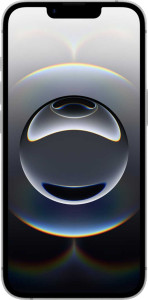
Raw performance is where the gap between these two phones becomes nearly impossible to overstate. The iPhone 16e is powered by Apple's A18 chip, built on a cutting-edge 3 nm process, and scores an extraordinary 1,577,129 on AnTuTu — nearly four times the Ulefone Armor X32 Pro's 406,669. The Geekbench 6 single-core result tells the same story: 2,989 versus 782. Single-core speed is particularly meaningful because most everyday tasks — app launches, UI responsiveness, photo processing — rely on it heavily. In practice, the iPhone 16e will feel dramatically snappier in virtually every interaction.
Memory bandwidth amplifies this advantage further. The iPhone 16e's 78.8 GB/s bandwidth dwarfs the Ulefone's 17.07 GB/s, meaning the A18 can feed its cores with data far faster — critical for computational photography, machine learning tasks, and fluid multitasking. The iPhone also uses DDR5 memory running at 4800 MHz, compared to the Ulefone's DDR4 at 2133 MHz, reinforcing that architectural lead. The Ulefone's MediaTek Dimensity 6300 on a 6 nm node is a competent mid-range chip for routine use, but it is operating in a fundamentally different performance tier.
The iPhone 16e wins this category decisively and without meaningful contest. Its A18 chip delivers flagship-level performance that will remain capable for years, while the Dimensity 6300 is suited for light to moderate everyday tasks. The only storage-related footnote worth flagging: the Ulefone supports up to 12 GB of RAM versus the iPhone's fixed 8 GB, but given the vast CPU and bandwidth deficit, this does not shift the overall conclusion.