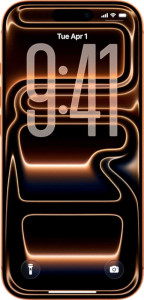
Apple iPhone 17 Pro Max
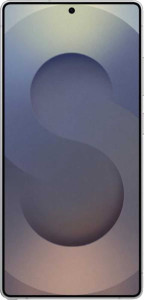
Samsung Galaxy S25 Ultra

Apple iPhone 17 Pro Max Samsung Galaxy S25 Ultra

Overview

When it comes to choosing between the Apple iPhone 17 Pro Max and the Samsung Galaxy S25 Ultra, the decision is anything but simple. Both flagship smartphones share a premium 6.9″ OLED display, 12GB of RAM, and a 3nm chip, yet they diverge sharply in areas like camera system design, display brightness, battery endurance, and software ecosystems. This in-depth comparison breaks down every key specification to help you find the right fit.

Common Features

  • Both phones are waterproof with an IP68 ingress protection rating.
  • Neither phone has a rugged build.
  • The operating temperature range is the same on both, from 0°C to 35°C.
  • Neither phone can be folded.
  • Both feature a 6.9″ OLED/AMOLED display.
  • Both support a 120Hz refresh rate.
  • HDR10 support is available on both phones.
  • Always-On Display is available on both phones.
  • Neither phone has a secondary screen.
  • Both phones have a touchscreen.
  • Both phones come with 12GB of RAM.
  • Both phones have integrated LTE and are built on a 3nm semiconductor process.
  • Both phones support 64-bit processing and include integrated graphics.
  • Both cameras feature built-in optical image stabilization and phase-detection autofocus.
  • Both phones have a dual-tone LED flash with 2 LEDs.
  • Both phones include BSI and CMOS sensors and support continuous autofocus during video recording.
  • Both operating systems include clipboard warnings, location privacy options, camera and microphone privacy controls, app tracking blocking, and cross-site tracking prevention.
  • Both phones support wireless charging and fast charging, but neither comes with a charger in the box.
  • Neither phone has a removable battery, and both include a battery level indicator.
  • Both phones lack a 3.5mm audio jack but feature stereo speakers and 3 microphones.
  • Both phones support 5G, NFC, USB Type-C with USB 3.2, and Wi-Fi 7.
  • Neither phone has an external memory slot or DLNA certification.
  • Both phones support download speeds of 10000 Mbits/s and upload speeds of 3500 Mbits/s.
  • Neither phone has sapphire glass, a curved display, or an e-paper display.
  • Both phones include a video light.

Main Differences

  • Weight is 233g on Apple iPhone 17 Pro Max and 218g on Samsung Galaxy S25 Ultra.
  • Thickness is 8.75mm on Apple iPhone 17 Pro Max and 8.2mm on Samsung Galaxy S25 Ultra.
  • Volume is 111.52cm³ on Apple iPhone 17 Pro Max and 103.59cm³ on Samsung Galaxy S25 Ultra.
  • Pixel density is 460 ppi on Apple iPhone 17 Pro Max and 498 ppi on Samsung Galaxy S25 Ultra.
  • Resolution is 1320 x 2868 px on Apple iPhone 17 Pro Max and 1440 x 3120 px on Samsung Galaxy S25 Ultra.
  • Touch sampling rate is 120Hz on Apple iPhone 17 Pro Max and 240Hz on Samsung Galaxy S25 Ultra.
  • Typical brightness is 1000 nits on Apple iPhone 17 Pro Max and 2600 nits on Samsung Galaxy S25 Ultra.
  • Damage-resistant glass branding is present on Samsung Galaxy S25 Ultra but not on Apple iPhone 17 Pro Max.
  • HDR10+ support is present on Samsung Galaxy S25 Ultra but not available on Apple iPhone 17 Pro Max.
  • Dolby Vision support is present on Apple iPhone 17 Pro Max but not available on Samsung Galaxy S25 Ultra.
  • Contrast ratio is 2,000,000:1 on Apple iPhone 17 Pro Max and 3,000,000:1 on Samsung Galaxy S25 Ultra.
  • The chipset is Apple A19 Pro on Apple iPhone 17 Pro Max and Qualcomm Snapdragon 8 Elite on Samsung Galaxy S25 Ultra.
  • AnTuTu benchmark score is 2,885,786 on Apple iPhone 17 Pro Max and 2,207,809 on Samsung Galaxy S25 Ultra.
  • Geekbench 6 single-core score is 3933 on Apple iPhone 17 Pro Max and 3057 on Samsung Galaxy S25 Ultra.
  • Geekbench 6 multi-core score is 10,223 on Apple iPhone 17 Pro Max and 9,846 on Samsung Galaxy S25 Ultra.
  • Maximum internal storage is 2048GB on Apple iPhone 17 Pro Max and 1024GB on Samsung Galaxy S25 Ultra.
  • Main camera megapixels are 48 & 48 & 48 MP on Apple iPhone 17 Pro Max and 200 & 50 & 50 & 10 MP on Samsung Galaxy S25 Ultra.
  • Optical zoom is 8x on Apple iPhone 17 Pro Max and 5x on Samsung Galaxy S25 Ultra.
  • Front camera resolution is 18MP on Apple iPhone 17 Pro Max and 12MP on Samsung Galaxy S25 Ultra.
  • Video recording goes up to 2160p at 120fps on Apple iPhone 17 Pro Max and up to 4320p at 30fps on Samsung Galaxy S25 Ultra.
  • Dolby Vision video recording is supported on Apple iPhone 17 Pro Max but not on Samsung Galaxy S25 Ultra.
  • Mail Privacy Protection is available on Apple iPhone 17 Pro Max but not on Samsung Galaxy S25 Ultra.
  • Theme customization and dynamic theming are available on Samsung Galaxy S25 Ultra but not on Apple iPhone 17 Pro Max.
  • Split-screen multitasking is supported on Samsung Galaxy S25 Ultra but not on Apple iPhone 17 Pro Max.
  • Direct OS updates are available on Apple iPhone 17 Pro Max but not on Samsung Galaxy S25 Ultra.
  • The ability to be used as a PC is present on Samsung Galaxy S25 Ultra but not on Apple iPhone 17 Pro Max.
  • Multi-user system support is available on Samsung Galaxy S25 Ultra but not on Apple iPhone 17 Pro Max.
  • Battery capacity is 5088 mAh on Apple iPhone 17 Pro Max and 5000 mAh on Samsung Galaxy S25 Ultra.
  • Wired charging speed is 40W on Apple iPhone 17 Pro Max and 45W on Samsung Galaxy S25 Ultra.
  • Wireless charging speed is 30W on Apple iPhone 17 Pro Max and 15W on Samsung Galaxy S25 Ultra.
  • Reverse wireless charging is available on Samsung Galaxy S25 Ultra but not on Apple iPhone 17 Pro Max.
  • Battery life is rated at 39 hours on Apple iPhone 17 Pro Max and 31 hours on Samsung Galaxy S25 Ultra.
  • LDAC, aptX, and aptX HD audio codec support are present on Samsung Galaxy S25 Ultra but not on Apple iPhone 17 Pro Max.
  • Bluetooth version is 6 on Apple iPhone 17 Pro Max and 5.4 on Samsung Galaxy S25 Ultra.
  • A fingerprint scanner is present on Samsung Galaxy S25 Ultra but not on Apple iPhone 17 Pro Max.
  • 3D facial recognition is available on Apple iPhone 17 Pro Max but not on Samsung Galaxy S25 Ultra.
  • Emergency SOS via satellite is supported on Apple iPhone 17 Pro Max but not on Samsung Galaxy S25 Ultra.
  • Crash detection is available on Apple iPhone 17 Pro Max but not on Samsung Galaxy S25 Ultra.
  • An infrared sensor is present on Apple iPhone 17 Pro Max but not on Samsung Galaxy S25 Ultra.
  • SIM configuration is 1 SIM and 1 eSIM on Apple iPhone 17 Pro Max and 2 SIM and 2 eSIM on Samsung Galaxy S25 Ultra.
  • A stylus is included with Samsung Galaxy S25 Ultra but not with Apple iPhone 17 Pro Max.
Specs Comparison
Apple iPhone 17 Pro Max

Apple iPhone 17 Pro Max

Samsung Galaxy S25 Ultra

Samsung Galaxy S25 Ultra

Design:
water resistance Waterproof Waterproof
weight 233 g 218 g
thickness 8.75 mm 8.2 mm
width 78 mm 77.6 mm
height 163.4 mm 162.8 mm
volume 111.5205 cm³ 103.592896 cm³
Ingress Protection (IP) rating IP68 IP68
has a rugged build
lowest potential operating temperature 0 °C 0 °C
maximum operating temperature 35 °C 35 °C
can be folded

Both the iPhone 17 Pro Max and the Galaxy S25 Ultra share the same foundational design credentials: an IP68 waterproof rating, identical operating temperature ranges, and non-folding, non-rugged form factors. For most buyers, this means neither has a meaningful edge in durability or environmental protection — they are effectively tied on those fronts.

Where Samsung gains a real-world advantage is in physical footprint. The S25 Ultra is noticeably lighter at 218 g versus 233 g for the iPhone — a 15 g difference that is genuinely perceptible during extended one-handed use or long calls. It is also slimmer at 8.2 mm compared to 8.75 mm, and its overall volume is roughly 7.9 cm³ smaller (103.6 cm³ vs 111.5 cm³). Despite their near-identical height and width, this combination of reduced thickness and lower mass gives the S25 Ultra a meaningfully more pocket-friendly and ergonomic feel.

In summary, the Galaxy S25 Ultra holds a clear design edge: it packs its large-screen experience into a lighter and thinner chassis. For users who prioritize comfort over long sessions or simply prefer a svelte profile, the S25 Ultra wins this category. The iPhone 17 Pro Max matches it on protection ratings but cannot close the gap on bulk and weight.

Display:
Display type OLED/AMOLED OLED/AMOLED
screen size 6.9" 6.9"
pixel density 460 ppi 498 ppi
resolution 1320 x 2868 px 1440 x 3120 px
refresh rate 120Hz 120Hz
touch sampling rate 120Hz 240Hz
brightness (typical) 1000 nits 2600 nits
has branded damage-resistant glass
supports HDR10
supports HDR10+
Always-On Display
supports Dolby Vision
contrast ratio 2000000:1 3000000:1
Has a secondary screen
has a touch screen

On the surface, these two displays look nearly identical: both are 6.9″ OLED/AMOLED panels running at 120Hz with Always-On Display support. But dig into the numbers and the Galaxy S25 Ultra pulls ahead on nearly every measurable display quality metric. Its 1440 x 3120 px resolution yields a pixel density of 498 ppi, versus 460 ppi at 1320 x 2868 px on the iPhone 17 Pro Max — a difference that translates to visibly crisper text and finer detail, particularly noticeable when reading small print or viewing high-resolution photos up close.

The brightness and contrast gap is even more striking. The S25 Ultra's typical brightness of 2600 nits dwarfs the iPhone's 1000 nits, meaning Samsung's screen will remain far more legible under harsh direct sunlight. The contrast ratio advantage — 3,000,000:1 versus 2,000,000:1 — further deepens blacks and enhances perceived vibrancy. The S25 Ultra also wins on touch responsiveness with a 240Hz touch sampling rate (double the iPhone's 120Hz), which benefits fast-paced gaming and precise stylus input by reducing perceived input lag. Samsung additionally covers both HDR10+ and HDR10, while Apple counters with Dolby Vision instead of HDR10+ — a trade-off that matters mainly based on which streaming ecosystem a user prefers. The S25 Ultra also features branded damage-resistant glass, which the iPhone 17 Pro Max data does not confirm.

The Galaxy S25 Ultra holds a clear display advantage. Its lead in sharpness, peak brightness, contrast, and touch responsiveness is not marginal — these are meaningful, real-world differences for media consumption, outdoor use, and interactive tasks. The iPhone 17 Pro Max offers a strong OLED experience with Dolby Vision support, but on raw display specifications alone, Samsung sets the higher bar here.

Performance:
internal storage 2048GB 1024GB
RAM 12GB 12GB
AnTuTu benchmark score 2885786 2207809
Chipset (SoC) name Apple A19 Pro Qualcomm Snapdragon 8 Elite
GPU name Apple A18 GPU Adreno 830
CPU speed 2 x 4.26 & 4 x 2.51 GHz 2 x 4.47 & 6 x 3.53 GHz
Geekbench 6 result (multi) 10223 9846
Geekbench 6 result (single) 3933 3057
GPU clock speed 1490 MHz 1200 MHz
Has integrated LTE
RAM speed 4800 MHz 5300 MHz
semiconductor size 3 nm 3 nm
Supports 64-bit
Has integrated graphics
Uses big.LITTLE technology
CPU threads 6 threads 8 threads
Uses HMP
Has TrustZone
maximum memory bandwidth 78.8 GB/s 85.1 GB/s
L2 cache 16 MB 12 MB
Supports ECC memory
maximum memory amount 12GB 24GB
uses multithreading
Thermal Design Power (TDP) 10W 8.2W
DDR memory version 5 5
shading units 128 1536

Raw CPU performance is where the Apple A19 Pro makes its dominance unmistakable. The iPhone 17 Pro Max scores 3933 in Geekbench 6 single-core — a 28% lead over the S25 Ultra's 3057 — and edges ahead in multi-core as well (10223 vs 9846). The AnTuTu gap is even wider: 2,885,786 versus 2,207,809, a roughly 31% advantage. For single-threaded workloads like app launches, UI responsiveness, and per-core-intensive tasks, Apple's chip is in a different league. The iPhone also ships with up to 2048 GB of internal storage, double the S25 Ultra's 1024 GB ceiling — a meaningful differentiator for power users.

Flip to the GPU and memory architecture, however, and the picture shifts. The Adreno 830 in the S25 Ultra carries a staggering 1536 shading units compared to just 128 on Apple's GPU — a difference that reflects fundamentally different architectural approaches and points to far greater parallel GPU compute capacity on Samsung's side, relevant for GPU-accelerated AI workloads and compute tasks. The S25 Ultra also edges ahead on memory bandwidth (85.1 GB/s vs 78.8 GB/s), supports up to 24 GB of addressable RAM versus the iPhone's 12 GB cap, and uniquely offers ECC memory support — a feature that improves data integrity under sustained computational loads. Its lower TDP of 8.2W versus the iPhone's 10W further suggests it achieves its performance with less thermal output.

The iPhone 17 Pro Max holds the edge in CPU-centric performance, which governs the majority of everyday smartphone tasks. But the S25 Ultra counters with a compelling memory architecture, superior GPU parallelism on paper, and greater thermal efficiency — making it the stronger candidate for sustained GPU and AI-compute workloads. Users who prioritize snappy app performance and top benchmark scores lean Apple; those running memory-intensive or GPU-parallel workloads will find the S25 Ultra's architecture more capable.

Cameras:
megapixels (main camera) 48 & 48 & 48 MP 200 & 50 & 50 & 10 MP
wide aperture (main camera) 1.78 & 2.2 & 2.8f 1.7 & 3.4 & 1.9 & 2.4f
Has a dual-lens (or multi-lens) main camera
megapixels (front camera) 18MP 12MP
has built-in optical image stabilization
video recording (main camera) 2160 x 120 fps 4320 x 30 fps
Has a dual-tone LED flash
number of flash LEDs 2 2
has a BSI sensor
has a CMOS sensor
has continuous autofocus when recording movies
Has phase-detection autofocus for photos
supports slow-motion video recording
has a built-in HDR mode
has manual exposure
has a flash
optical zoom 8x 5x
has manual ISO
has a serial shot mode
has manual focus
pixel size (main camera) 1.22 & 0.7 & 2.8 µm 0.6 & 0.7 & 0.7 & 1.12 µm
has a front camera
Has laser autofocus
Shoots 360° panorama
has manual white balance
shoots raw
has touch autofocus
has manual shutter speed
can create panoramas in-camera
wide aperture (front camera) 1.9f 2.2f
Has timelapse function
minimum focal length 13 mm 24 mm
maximum focal length 120 mm 111 mm
Has a front-facing LED flash
has a dual-lens (or multi-lens) front camera
supports HDR10 recording
supports Dolby Vision recording
has a front-facing camera under the display
Has a RGB LED flash
has 3D photo/video recording capabilities

The camera systems here reflect two genuinely different philosophies. Samsung arms the Galaxy S25 Ultra with a quad-camera array headlined by a 200 MP primary sensor — an enormous resolution advantage that enables aggressive computational cropping and exceptional detail retention in well-lit scenes. The iPhone 17 Pro Max counters with a more uniform triple 48 MP setup, but its main sensor's larger pixel size of 1.22 µm (versus Samsung's 0.6 µm) means each pixel captures significantly more light — a tangible advantage in low-light and night photography where pixel size matters more than raw megapixel count.

Zoom and video tell contrasting stories. The iPhone pulls ahead decisively on optical zoom, reaching 8x versus the S25 Ultra's 5x, and covers a wider field with a minimum focal length of 13 mm compared to Samsung's 24 mm — making it more versatile at both ends of the zoom range. For video, the S25 Ultra reaches 8K (4320p) at 30fps, while the iPhone tops out at 4K (2160p) but at up to 120fps — a trade-off between maximum resolution and ultra-smooth slow-motion. The iPhone also adds Dolby Vision recording, which the S25 Ultra lacks, giving it an edge for professional-grade video color grading workflows. Selfie shooters get a stronger front camera on the iPhone too — 18 MP at f/1.9 versus Samsung's 12 MP at f/2.2.

This category is genuinely split by use case, but on balance the iPhone 17 Pro Max holds a slight overall camera edge — its superior zoom range, brighter main sensor pixels, wider ultra-wide coverage, higher-framerate video, and Dolby Vision support give it more versatility across more scenarios. The S25 Ultra's 200 MP sensor is a powerful tool for detail-obsessed photographers and 8K video shooters, but its narrower zoom and smaller pixels represent real trade-offs.

Operating system:
has clipboard warnings
has location privacy options
has camera/microphone privacy options
has Mail Privacy Protection
has theme customization
can block app tracking
blocks cross-site tracking
has on-device machine learning
has notification permissions
has media picker
Can play games while they download
has dark mode
has Wi-Fi password sharing
has battery health check
has an extra dim mode
has focus modes
has dynamic theming
can offload apps
Has customizable notifications
has Live Text
has full-page screenshots
supports split screen
gets direct OS updates
has PiP
Can be used as a PC
Has sharing intents
has a child lock
Supports widgets
Is free and open source
Has offline voice recognition
has voice commands
Tracks the current position of a mobile device
is a multi-user system
has Quick Start

At the core level, both operating systems are well-equipped: shared features like dark mode, focus modes, PiP, widgets, offline voice recognition, clipboard warnings, and granular camera/microphone privacy controls mean neither platform feels lacking for everyday use. The meaningful differences emerge in flexibility and openness. The Galaxy S25 Ultra supports split-screen multitasking, functions as a PC substitute, and operates as a multi-user system — capabilities the iPhone 17 Pro Max entirely lacks. For professionals, shared-device households, or users who want a single device to replace a laptop, these are not minor omissions.

Samsung's platform also wins on personalization depth. Dynamic theming, theme customization, and an extra dim mode give Android users far more control over the look, feel, and accessibility of their interface. The ability to play games while they download is a small but appreciated quality-of-life feature absent on iOS. The iPhone counters with Mail Privacy Protection — a meaningful privacy tool that masks email open-tracking and IP addresses — and critically, it receives direct OS updates without carrier or manufacturer delays, which translates to faster access to security patches and new features. The S25 Ultra does not guarantee this.

The Galaxy S25 Ultra holds a clear OS advantage by the weight of features: its support for split-screen, PC mode, multi-user access, deeper customization, and its open-source foundation give it substantially more versatility and adaptability. The iPhone 17 Pro Max makes a focused counter with stronger update reliability and Mail Privacy Protection — priorities that matter most to users within Apple's privacy-first ecosystem — but in raw OS capability breadth, Samsung leads.
Battery:
battery power 5088 mAh 5000 mAh
has wireless charging
Supports fast charging
charging speed 40W 45W
wireless charging speed 30W 15W
has reverse wireless charging
comes with a charger
has a removable battery
has a battery level indicator
Battery life 39 hours 31 hours
has a rechargeable battery

Battery capacity is essentially a wash — 5088 mAh on the iPhone 17 Pro Max versus 5000 mAh on the Galaxy S25 Ultra is too close to matter in isolation. What makes the iPhone's battery story compelling is its rated battery life of 39 hours, a substantial lead over the S25 Ultra's 31 hours. That 8-hour gap suggests Apple's tighter hardware-software integration allows the A19 Pro to extract meaningfully more runtime from a nearly identical cell — a real-world advantage for heavy users and travelers who want to go longer between charges.

Charging tells a more divided story. The S25 Ultra's 45W wired charging edges out the iPhone's 40W, so Samsung replenishes faster when plugged in. However, the iPhone flips the advantage wirelessly, offering 30W wireless charging compared to just 15W on the S25 Ultra — double the speed, which meaningfully narrows the gap between wired and wireless top-ups for users on a Qi or MagSafe pad. The S25 Ultra adds reverse wireless charging, a feature the iPhone lacks entirely, enabling it to top up accessories like earbuds or a smartwatch directly from the phone's back.

Overall, the iPhone 17 Pro Max wins the battery category. Its commanding lead in rated battery life is the single most important metric here for most users, and its superior wireless charging speed reinforces the advantage for those who prefer cable-free charging. The S25 Ultra counters with faster wired speeds and the unique convenience of reverse wireless charging, but these do not offset the endurance gap.

Audio:
has a socket for a 3.5 mm audio jack
has stereo speakers
has aptX
has LDAC
has aptX HD
has aptX Adaptive
has aptX Lossless
Has a radio
number of microphones 3 3

Strip away the differences and the shared foundation is identical: both phones drop the 3.5mm headphone jack, offer stereo speakers, and pack 3 microphones for voice capture and noise suppression. For casual listeners using the built-in speakers, the experience on paper is equivalent.

Where the Galaxy S25 Ultra separates itself is in wireless audio codec support. It carries aptX, aptX HD, and LDAC — three codecs the iPhone 17 Pro Max lacks entirely. This matters specifically for users with high-quality Bluetooth headphones or speakers: aptX and aptX HD reduce latency and improve audio fidelity over standard SBC, while LDAC — Sony's high-resolution wireless codec — transmits up to three times more audio data than conventional Bluetooth, bringing wireless listening noticeably closer to wired quality. The iPhone offers none of these, meaning it is limited to standard Bluetooth audio transmission regardless of how premium the connected headphones are.

The Galaxy S25 Ultra wins the audio category, and it is not particularly close for anyone who invests in quality wireless audio gear. The iPhone 17 Pro Max is not deficient for mainstream use, but its absence of any high-fidelity Bluetooth codec support is a meaningful limitation that audiophiles and enthusiast listeners will feel directly.

Connectivity & Features:
release date September 2025 January 2025
has 5G support
Wi-Fi version Wi-Fi 6 (802.11ax), Wi-Fi 5 (802.11ac), Wi-Fi 4 (802.11n), Wi-Fi 6E (802.11ax), Wi-Fi 7 (802.11be) Wi-Fi 4 (802.11n), Wi-Fi 6 (802.11ax), Wi-Fi 5 (802.11ac), Wi-Fi 7 (802.11be), Wi-Fi 6E (802.11ax)
SIM cards 1 SIM, 1 eSIM 2 SIM, 2 eSIM
Bluetooth version 6 5.4
has an external memory slot
Has USB Type-C
USB version 3.2 3.2
has NFC
download speed 10000 MBits/s 10000 MBits/s
upload speed 3500 MBits/s 3500 MBits/s
Has a fingerprint scanner
has emergency SOS via satellite
has crash detection
is DLNA-certified
has a gyroscope
supports ANT+
Has a heart rate monitor
has GPS
has a compass
supports Wi-Fi
Has an infrared sensor
has an accelerometer
has a cellular module
Has a barometer
has an HDMI output
Uses 3D facial recognition
Has an iris scanner
Stylus included
supports Galileo
Has motion tracking
Has optical tracking
Has a built-in projector

Both phones share a strong connectivity baseline: 5G, Wi-Fi 7, USB 3.2 Type-C, NFC, identical 5G download/upload speeds, and the same core sensor suite. The divergences, however, are pointed. The iPhone 17 Pro Max carries Bluetooth 6 — a full generation ahead of the S25 Ultra's Bluetooth 5.4 — which brings improvements in connection precision, range, and reliability with compatible accessories. It also features 3D facial recognition as its biometric method, while the S25 Ultra relies on a fingerprint scanner, making neither strictly superior — face unlock is more seamless in well-lit conditions, fingerprint is more consistent with wet hands or face coverings. The iPhone additionally includes an infrared sensor, which the S25 Ultra lacks, enabling it to function as a universal remote for IR-compatible devices.

Samsung answers with its own set of exclusive advantages. The S25 Ultra supports dual physical SIM plus dual eSIM — four simultaneous SIM slots versus the iPhone's one physical SIM and one eSIM — a meaningful edge for frequent travelers or users managing personal and work lines across carriers. It also includes a built-in stylus, adding a precision input method with no equivalent on the iPhone, and supports ANT+ for connectivity with fitness equipment and sports sensors. The iPhone counters with emergency SOS via satellite and crash detection — features with potentially life-saving implications that the S25 Ultra entirely lacks.

This category is genuinely competitive, but the practical edge shifts depending on the user. The iPhone 17 Pro Max wins on safety-critical features and next-generation Bluetooth, while the S25 Ultra offers broader SIM flexibility, a built-in stylus, and fitness sensor connectivity. On balance, these trade-offs are roughly equal in breadth, making this a near-tie — with the deciding factor being whether satellite safety features or productive stylus use matters more to a given buyer.

Miscellaneous:
has a video light
Has sapphire glass display
Has a curved display
Has an e-paper display

The miscellaneous specs for these two devices are a complete mirror image. Both feature a video light, and neither opts for a sapphire glass display, a curved screen, or an e-paper panel. There is simply nothing in this data set that separates them.

This is a complete tie — no advantage can be assigned to either product based solely on the provided specifications for this group.

Comparison Summary & Verdict

After examining every specification, both devices prove themselves as elite flagships with meaningfully different strengths. The Apple iPhone 17 Pro Max stands out with a significantly longer 39-hour battery life, a higher AnTuTu and single-core benchmark score, superior 8x optical zoom, faster wireless charging at 30W, and exclusive features like Emergency SOS via satellite, 3D facial recognition, and Dolby Vision recording. The Samsung Galaxy S25 Ultra counters with a considerably brighter 2600-nit display, higher pixel density, a 200MP main camera, an included S Pen stylus, broader Android software flexibility including split-screen and PC mode, and better hi-res audio codec support via LDAC and aptX HD. Choose the iPhone 17 Pro Max if battery life, benchmark performance, and a tightly integrated ecosystem are your priorities. Opt for the Galaxy S25 Ultra if you demand a superior screen, versatile camera resolution, and a more feature-rich, customizable Android experience.

Apple iPhone 17 Pro Max
Buy Apple iPhone 17 Pro Max if...

Buy the Apple iPhone 17 Pro Max if you prioritize longer battery life, higher benchmark performance, stronger optical zoom, and exclusive safety features like Emergency SOS via satellite within a tightly integrated ecosystem.

Samsung Galaxy S25 Ultra
Buy Samsung Galaxy S25 Ultra if...

Buy the Samsung Galaxy S25 Ultra if you want a brighter, sharper display, a versatile 200MP camera system, an included stylus, and a flexible Android experience with split-screen multitasking and PC mode support.