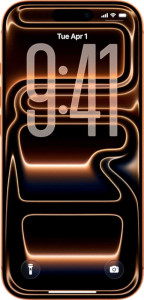
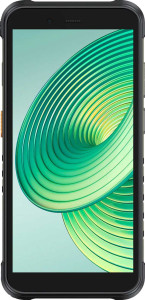
Wireless connectivity is where the generational gap between these two devices becomes especially apparent. The iPhone 17 Pro Max supports 5G, Wi-Fi 7, and Bluetooth 6, while the RugKing is capped at 4G LTE, Wi-Fi 5, and Bluetooth 5. In practical terms, the Pro Max can achieve cellular download speeds up to 10,000 Mbps versus the RugKing's 300 Mbps ceiling — a difference that matters in data-intensive environments. Wi-Fi 7 also brings lower latency and better performance in congested networks compared to Wi-Fi 5, and the newer Bluetooth version offers improved range and connection stability for wireless peripherals.
The sensor and safety feature set further separates the two. The Pro Max includes emergency SOS via satellite, crash detection, a barometer, an infrared sensor, and 3D facial recognition — none of which appear on the RugKing. Satellite SOS in particular is a significant safety differentiator for users in remote areas without cellular coverage, which is somewhat ironic given the RugKing's rugged positioning. The USB gap also matters for data workflows: the Pro Max uses USB 3.2 for fast file transfers, while the RugKing's USB 2.0 is considerably slower. The RugKing does offer two practical counters: physical dual SIM slots for two active lines simultaneously, and a microSD card slot for expandable storage — both absent on the Pro Max.
Overall, the iPhone 17 Pro Max holds a commanding connectivity advantage — faster cellular, faster Wi-Fi, newer Bluetooth, and a richer sensor suite including safety-critical features. The RugKing's dual SIM and expandable storage are useful for specific operational needs, but they do not offset the breadth of the Pro Max's connectivity and feature lead.