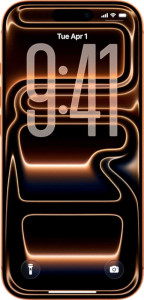
Apple iPhone 17 Pro Max
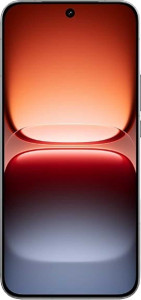
Vivo iQOO 15

Apple iPhone 17 Pro Max Vivo iQOO 15

Overview

Welcome to our in-depth spec comparison between the Apple iPhone 17 Pro Max and the Vivo iQOO 15. Both flagships share a solid IP68 waterproof rating, OLED displays, and 5G connectivity, but they take very different paths when it comes to raw performance, camera versatility, battery capacity, and software experience. Read on to discover how these two powerhouses stack up across every major category.

Common Features

  • Both phones are waterproof with an IP68 ingress protection rating.
  • Neither phone has a rugged build.
  • Neither phone can be folded.
  • Both phones feature an OLED/AMOLED display type.
  • Neither phone has branded damage-resistant glass.
  • HDR10 support is available on both phones.
  • Always-On Display is available on both phones.
  • Neither phone has a secondary screen.
  • Both phones have a touchscreen.
  • Both phones have integrated LTE.
  • Both phones are built on a 3 nm semiconductor process.
  • Both phones support 64-bit processing.
  • Both phones have integrated graphics.
  • Both phones use big.LITTLE and HMP technology.
  • Both phones use DDR5 memory.
  • Both phones have a multi-lens main camera with a CMOS sensor.
  • Both phones support continuous autofocus and phase-detection autofocus when recording.
  • Both phones support slow-motion video recording and have a built-in HDR mode.
  • Both phones include clipboard warnings, location privacy options, and camera/microphone privacy controls.
  • Both phones support on-device machine learning, notification permissions, media picker, and dark mode.
  • Both phones support wireless charging and fast charging.
  • Neither phone has reverse wireless charging or a removable battery.
  • Both phones have a battery level indicator and a rechargeable battery.
  • Neither phone has a 3.5 mm audio jack.
  • Both phones have stereo speakers.
  • Neither phone supports LDAC, aptX Lossless, or a built-in radio.
  • Both phones support 5G, Bluetooth 6, NFC, USB Type-C, and USB 3.2.
  • Both phones have a maximum download speed of 10000 MBits/s and upload speed of 3500 MBits/s.
  • Neither phone has an external memory slot.
  • Both phones have a video light.
  • Neither phone has a sapphire glass display, a curved display, or an e-paper display.

Main Differences

  • Weight is 233 g on Apple iPhone 17 Pro Max and 220 g on Vivo iQOO 15.
  • Thickness is 8.75 mm on Apple iPhone 17 Pro Max and 8.1 mm on Vivo iQOO 15.
  • Width is 78 mm on Apple iPhone 17 Pro Max and 76.8 mm on Vivo iQOO 15.
  • Height is 163.4 mm on Apple iPhone 17 Pro Max and 163.7 mm on Vivo iQOO 15.
  • Volume is 111.52 cm³ on Apple iPhone 17 Pro Max and 101.83 cm³ on Vivo iQOO 15.
  • Waterproof depth rating is 6 m on Apple iPhone 17 Pro Max and 1.5 m on Vivo iQOO 15.
  • Screen size is 6.9″ on Apple iPhone 17 Pro Max and 6.85″ on Vivo iQOO 15.
  • Pixel density is 460 ppi on Apple iPhone 17 Pro Max and 508 ppi on Vivo iQOO 15.
  • Resolution is 1320 x 2868 px on Apple iPhone 17 Pro Max and 1440 x 3168 px on Vivo iQOO 15.
  • Refresh rate is 120Hz on Apple iPhone 17 Pro Max and 144Hz on Vivo iQOO 15.
  • Typical brightness is 1000 nits on Apple iPhone 17 Pro Max and 2600 nits on Vivo iQOO 15.
  • HDR10+ support is present on Vivo iQOO 15 but not available on Apple iPhone 17 Pro Max.
  • Dolby Vision support is present on Apple iPhone 17 Pro Max but not available on Vivo iQOO 15.
  • Internal storage is 2048 GB on Apple iPhone 17 Pro Max and 1024 GB on Vivo iQOO 15.
  • RAM is 12 GB on Apple iPhone 17 Pro Max and 16 GB on Vivo iQOO 15.
  • AnTuTu benchmark score is 2,885,786 on Apple iPhone 17 Pro Max and 4,030,245 on Vivo iQOO 15.
  • The chipset is Apple A19 Pro on Apple iPhone 17 Pro Max and Qualcomm Snapdragon 8 Elite Gen 5 on Vivo iQOO 15.
  • The GPU is Apple A18 GPU on Apple iPhone 17 Pro Max and Adreno 830 on Vivo iQOO 15.
  • CPU speed is 2 x 4.26 & 4 x 2.51 GHz on Apple iPhone 17 Pro Max and 2 x 4.6 & 6 x 3.62 GHz on Vivo iQOO 15.
  • Geekbench 6 multi-core result is 10,223 on Apple iPhone 17 Pro Max and 10,059 on Vivo iQOO 15.
  • Geekbench 6 single-core result is 3,933 on Apple iPhone 17 Pro Max and 3,234 on Vivo iQOO 15.
  • GPU clock speed is 1490 MHz on Apple iPhone 17 Pro Max and 1200 MHz on Vivo iQOO 15.
  • RAM speed is 4800 MHz on Apple iPhone 17 Pro Max and 5300 MHz on Vivo iQOO 15.
  • Maximum memory bandwidth is 78.8 GB/s on Apple iPhone 17 Pro Max and 85.1 GB/s on Vivo iQOO 15.
  • Main camera megapixels are 48 & 48 & 48 MP on Apple iPhone 17 Pro Max and 50 & 50 & 50 MP on Vivo iQOO 15.
  • Front camera resolution is 18 MP on Apple iPhone 17 Pro Max and 32 MP on Vivo iQOO 15.
  • Optical image stabilization is present on Apple iPhone 17 Pro Max but not available on Vivo iQOO 15.
  • Video recording resolution is 2160p at 120 fps on Apple iPhone 17 Pro Max and 4320p at 30 fps on Vivo iQOO 15.
  • Optical zoom is 8x on Apple iPhone 17 Pro Max and 3x on Vivo iQOO 15.
  • Laser autofocus is present on Apple iPhone 17 Pro Max but not available on Vivo iQOO 15.
  • Manual shutter speed control is available on Apple iPhone 17 Pro Max but not on Vivo iQOO 15.
  • A BSI sensor is present on Apple iPhone 17 Pro Max but not on Vivo iQOO 15.
  • Mail Privacy Protection is available on Apple iPhone 17 Pro Max but not on Vivo iQOO 15.
  • Theme customization is available on Vivo iQOO 15 but not on Apple iPhone 17 Pro Max.
  • Cross-site tracking blocking is present on Apple iPhone 17 Pro Max but not on Vivo iQOO 15.
  • The ability to play games while they download is available on Vivo iQOO 15 but not on Apple iPhone 17 Pro Max.
  • Wi-Fi password sharing is available on Apple iPhone 17 Pro Max but not on Vivo iQOO 15.
  • An extra dim mode is available on Vivo iQOO 15 but not on Apple iPhone 17 Pro Max.
  • Focus modes are available on Apple iPhone 17 Pro Max but not on Vivo iQOO 15.
  • Dynamic theming is available on Vivo iQOO 15 but not on Apple iPhone 17 Pro Max.
  • Split screen support is present on Vivo iQOO 15 but not on Apple iPhone 17 Pro Max.
  • Direct OS updates are available on Apple iPhone 17 Pro Max but not on Vivo iQOO 15.
  • The operating system is free and open source on Vivo iQOO 15 but not on Apple iPhone 17 Pro Max.
  • Multi-user system support is present on Vivo iQOO 15 but not on Apple iPhone 17 Pro Max.
  • Battery capacity is 5088 mAh on Apple iPhone 17 Pro Max and 7000 mAh on Vivo iQOO 15.
  • Wired charging speed is 40W on Apple iPhone 17 Pro Max and 100W on Vivo iQOO 15.
  • Wireless charging speed is 30W on Apple iPhone 17 Pro Max and 40W on Vivo iQOO 15.
  • A charger is included in the box with Vivo iQOO 15 but not with Apple iPhone 17 Pro Max.
  • aptX, aptX HD, and aptX Adaptive support are available on Vivo iQOO 15 but not on Apple iPhone 17 Pro Max.
  • Wi-Fi 6E support is present on Apple iPhone 17 Pro Max but not on Vivo iQOO 15.
  • Apple iPhone 17 Pro Max supports 1 physical SIM and 1 eSIM, while Vivo iQOO 15 supports 2 physical SIM cards.
  • A fingerprint scanner is present on Vivo iQOO 15 but not on Apple iPhone 17 Pro Max.
  • Emergency SOS via satellite is available on Apple iPhone 17 Pro Max but not on Vivo iQOO 15.
  • Crash detection is available on Apple iPhone 17 Pro Max but not on Vivo iQOO 15.
  • 3D facial recognition is used on Apple iPhone 17 Pro Max but not on Vivo iQOO 15.
Specs Comparison
Apple iPhone 17 Pro Max

Apple iPhone 17 Pro Max

Vivo iQOO 15

Vivo iQOO 15

Design:
water resistance Waterproof Waterproof
weight 233 g 220 g
thickness 8.75 mm 8.1 mm
width 78 mm 76.8 mm
height 163.4 mm 163.7 mm
volume 111.5205 cm³ 101.834496 cm³
Ingress Protection (IP) rating IP68 IP68
waterproof depth rating 6 m 1.5 m
has a rugged build
can be folded

Both the Apple iPhone 17 Pro Max and the Vivo iQOO 15 share an IP68 rating and are classified as waterproof, but their depth tolerances differ significantly. The iPhone 17 Pro Max is rated to 6 m underwater, while the iQOO 15 is certified to only 1.5 m. In practice, both will survive splashes, rain, and accidental submersion in everyday situations, but the iPhone offers a considerably wider safety margin for activities like poolside use or shallow water photography.

Where the iQOO 15 pulls ahead is in physical ergonomics. At 220 g versus 233 g, it is 13 grams lighter — a difference that becomes noticeable during extended one-handed use or long calls. It is also meaningfully slimmer at 8.1 mm compared to the iPhone's 8.75 mm, and narrower at 76.8 mm versus 78 mm. Combined, these dimensions translate to a smaller overall volume (101.8 cm³ vs 111.5 cm³), making the iQOO 15 the more compact and pocket-friendly device despite nearly identical heights.

In summary, design is a split verdict: the iPhone 17 Pro Max holds a clear edge in water resistance depth, which matters for anyone frequently near water, while the iQOO 15 wins on everyday handling comfort thanks to its lighter weight and slimmer profile. Neither device is ruggedized or foldable, so the decision here comes down to whether deep-water protection or a lighter form factor matters more to the user.

Display:
Display type OLED/AMOLED OLED/AMOLED
screen size 6.9" 6.85"
pixel density 460 ppi 508 ppi
resolution 1320 x 2868 px 1440 x 3168 px
refresh rate 120Hz 144Hz
brightness (typical) 1000 nits 2600 nits
has branded damage-resistant glass
supports HDR10
supports HDR10+
Always-On Display
supports Dolby Vision
Has a secondary screen
has a touch screen

Both phones use OLED/AMOLED panels and support Always-On Display and HDR10, so the baseline viewing experience is strong on either device. The real divergence, however, lies in raw display performance. The iQOO 15 packs a noticeably sharper panel at 508 ppi versus 460 ppi on the iPhone 17 Pro Max, paired with a higher native resolution of 1440 x 3168 px — differences that translate to visibly crisper text and finer detail, especially on media or when reading small print.

The brightness gap is arguably the most impactful differentiator here. The iQOO 15's typical brightness of 2600 nits dwarfs the iPhone's 1000 nits, which means the iQOO 15 will remain far more legible under harsh direct sunlight — a genuinely practical advantage for outdoor users. The iQOO 15 also edges ahead with a 144Hz refresh rate versus 120Hz, offering marginally smoother scrolling and animations, though the difference is subtle in everyday use. On the HDR front, the iQOO 15 adds HDR10+ support on top of HDR10, enabling dynamic tone mapping for compatible content, while the iPhone counters with Dolby Vision — a premium HDR format with strong support across streaming platforms like Netflix and Apple TV+.

On balance, the iQOO 15 holds a clear technical edge in this category: its higher pixel density, substantially superior brightness, and faster refresh rate make it the stronger display on paper. The iPhone 17 Pro Max's Dolby Vision support is a meaningful advantage for streaming enthusiasts in Apple's ecosystem, but it is not enough to offset the iQOO 15's commanding lead in brightness and sharpness.

Performance:
internal storage 2048GB 1024GB
RAM 12GB 16GB
AnTuTu benchmark score 2885786 4030245
Chipset (SoC) name Apple A19 Pro Qualcomm Snapdragon 8 Elite Gen 5
GPU name Apple A18 GPU Adreno 830
CPU speed 2 x 4.26 & 4 x 2.51 GHz 2 x 4.6 & 6 x 3.62 GHz
Geekbench 6 result (multi) 10223 10059
Geekbench 6 result (single) 3933 3234
GPU clock speed 1490 MHz 1200 MHz
Has integrated LTE
RAM speed 4800 MHz 5300 MHz
semiconductor size 3 nm 3 nm
Supports 64-bit
Has integrated graphics
Uses big.LITTLE technology
CPU threads 6 threads 8 threads
Uses HMP
Has TrustZone
maximum memory bandwidth 78.8 GB/s 85.1 GB/s
L2 cache 16 MB 12 MB
Supports ECC memory
maximum memory amount 12GB 24GB
uses multithreading
Thermal Design Power (TDP) 10W 8.2W
DDR memory version 5 5
shading units 128 1536

The single-core story strongly favors the Apple iPhone 17 Pro Max: its Apple A19 Pro chip scores 3,933 in Geekbench 6 single-core versus 3,234 for the iQOO 15's Snapdragon 8 Elite Gen 5 — a 21% lead that reflects Apple's sustained dominance in per-core CPU performance. This advantage directly benefits tasks that run on a single thread, such as app launches, UI responsiveness, and many everyday workloads. Multi-core scores, however, are essentially tied (10,223 vs 10,059), meaning heavily parallelized tasks like video encoding offer no meaningful CPU advantage to either phone.

Zoom out to the full-system AnTuTu benchmark, and the picture flips decisively. The iQOO 15 posts a score of 4,030,245 against the iPhone's 2,885,786 — a 40% gap that is largely explained by GPU architecture. The Adreno 830 in the iQOO 15 features a staggering 1,536 shading units compared to just 128 in the iPhone's GPU, giving it a massive theoretical advantage in graphics-intensive workloads like gaming, real-time rendering, and compute tasks. The iQOO 15 also leads in memory bandwidth (85.1 GB/s vs 78.8 GB/s) and ships with more RAM (16 GB at a faster 5,300 MHz vs 12 GB at 4,800 MHz), supporting heavier multitasking and future-proofing for demanding applications.

This is a genuinely split performance category. The iPhone 17 Pro Max wins on single-threaded CPU speed and ships with double the maximum storage (2048 GB vs 1024 GB), while the iQOO 15 dominates in GPU throughput, overall system performance, and memory capacity. For gaming, graphics workloads, or sustained multitasking, the iQOO 15 holds a clear advantage; for users who prioritize snappy single-threaded responsiveness and raw storage headroom, the iPhone competes strongly.
Cameras:
megapixels (main camera) 48 & 48 & 48 MP 50 & 50 & 50 MP
wide aperture (main camera) 1.78 & 2.2 & 2.8f 1.9 & 2.7 & 2.1f
Has a dual-lens (or multi-lens) main camera
megapixels (front camera) 18MP 32MP
has built-in optical image stabilization
video recording (main camera) 2160 x 120 fps 4320 x 30 fps
Has a dual-tone LED flash
number of flash LEDs 2 1
has a BSI sensor
has a CMOS sensor
has continuous autofocus when recording movies
Has phase-detection autofocus for photos
supports slow-motion video recording
has a built-in HDR mode
has manual exposure
has a flash
optical zoom 8x 3x
has manual ISO
has a serial shot mode
has manual focus
has a front camera
Has laser autofocus
Shoots 360° panorama
has manual white balance
shoots raw
has touch autofocus
has manual shutter speed
can create panoramas in-camera
wide aperture (front camera) 1.9f 2.2f
Has timelapse function
Has a front-facing LED flash
has a dual-lens (or multi-lens) front camera
supports HDR10 recording
supports Dolby Vision recording
has a front-facing camera under the display
Has a RGB LED flash
has 3D photo/video recording capabilities

Megapixel counts are nearly identical across the triple-lens systems — 48 MP per lens on the iPhone 17 Pro Max versus 50 MP on the iQOO 15 — so the real camera story lies elsewhere. The iPhone holds a commanding lead in telephoto reach with 8x optical zoom compared to just 3x on the iQOO 15, a difference that is immediately felt when shooting distant subjects. The iPhone also benefits from optical image stabilization, a BSI sensor for improved low-light capture, laser autofocus for faster and more reliable locking in dim conditions, and a wider main aperture of f/1.78 versus f/1.9 — all of which collectively strengthen its low-light and action photography credentials.

Video is another area where the two phones diverge sharply. The iPhone records up to 4K at 120 fps, supports Dolby Vision and HDR10 recording, and includes manual shutter speed control — a toolkit that targets serious videographers. The iQOO 15, by contrast, tops out at 8K at 30 fps, which delivers exceptional resolution for static or slow-moving scenes but lacks the high-frame-rate flexibility and professional HDR format support of the iPhone. It also omits manual shutter speed, limiting creative control in video. For selfie shooters, the iQOO 15 does pull ahead with a 32 MP front camera versus 18 MP, and its brighter front aperture of f/2.2 versus... wait, the iPhone front is f/1.9 which is actually wider — so the iPhone has the edge there too.

The iPhone 17 Pro Max holds a clear overall advantage in this category. Its superior optical zoom, OIS, BSI sensor, laser autofocus, and professional video feature set outweigh the iQOO 15's higher 8K resolution ceiling and slightly higher front camera megapixel count. Users who prioritize versatile, high-quality imaging across a wide range of conditions will find the iPhone's camera system more comprehensively capable.

Operating system:
has clipboard warnings
has location privacy options
has camera/microphone privacy options
has Mail Privacy Protection
has theme customization
can block app tracking
blocks cross-site tracking
has on-device machine learning
has notification permissions
has media picker
Can play games while they download
has dark mode
has Wi-Fi password sharing
has battery health check
has an extra dim mode
has focus modes
has dynamic theming
can offload apps
Has customizable notifications
has Live Text
has full-page screenshots
supports split screen
gets direct OS updates
has PiP
Can be used as a PC
Has sharing intents
has a child lock
Supports widgets
Is free and open source
Has offline voice recognition
has voice commands
Tracks the current position of a mobile device
is a multi-user system
has Quick Start

Privacy is a strength for both devices, with shared support for location controls, camera and microphone permissions, app tracking blocks, clipboard warnings, and on-device machine learning. However, the iPhone 17 Pro Max goes further with Mail Privacy Protection and cross-site tracking blocking — two features absent on the iQOO 15 — making it the stronger choice for users who treat privacy as a priority. The iPhone also benefits from direct OS updates, meaning it receives new software and security patches immediately from Apple without waiting on a manufacturer or carrier to push them through. The iQOO 15 does not get direct updates, which can mean delayed or uncertain long-term software support.

Where the iQOO 15 differentiates itself is in flexibility and personalization. It supports split-screen multitasking, dynamic theming, theme customization, and is a multi-user system — features the iPhone entirely lacks. The ability to run two apps side by side is a meaningful productivity advantage, and multi-user support makes the device more shareable in household or work settings. Being open source (Android-based) also means a broader ecosystem of customization options. The iQOO 15 additionally allows games to be played while downloading and includes an extra dim mode, useful for low-light environments.

This category is a genuine trade-off driven by platform philosophy. The iPhone 17 Pro Max holds an edge in privacy depth and software update reliability — critical factors for security-conscious users. The iQOO 15 counters with meaningfully greater flexibility, multitasking capability, and personalization. Neither OS is objectively superior here; the right choice depends squarely on whether the user values a tightly controlled, privacy-first experience or a more open, customizable environment.

Battery:
battery power 5088 mAh 7000 mAh
has wireless charging
Supports fast charging
charging speed 40W 100W
wireless charging speed 30W 40W
has reverse wireless charging
comes with a charger
has a removable battery
has a battery level indicator
has a rechargeable battery

The capacity gap here is substantial. The iQOO 15 carries a 7,000 mAh battery against the iPhone 17 Pro Max's 5,088 mAh — a 37% advantage that, all else being equal, points to meaningfully longer time between charges. For heavy users, travelers, or anyone who regularly ends the day in the red, that extra headroom is a tangible real-world benefit.

Charging speed tells an equally one-sided story. The iQOO 15 supports 100W wired fast charging versus the iPhone's 40W, meaning the iQOO 15 can replenish its much larger battery in a fraction of the time. Wireless charging follows the same pattern — 40W on the iQOO 15 versus 30W on the iPhone. The iQOO 15 also ships with a charger included in the box, while the iPhone does not, adding an out-of-pocket cost consideration for new iPhone buyers who need one.

The iQOO 15 wins this category outright. It offers a larger battery, dramatically faster wired and wireless charging, and includes the charger in the box — advantages that stack up across every dimension of the battery experience. The iPhone 17 Pro Max has no offsetting edge in this group.

Audio:
has a socket for a 3.5 mm audio jack
has stereo speakers
has aptX
has LDAC
has aptX HD
has aptX Adaptive
has aptX Lossless
Has a radio

Shared ground is easy to summarize: both phones drop the 3.5mm headphone jack, feature stereo speakers, and neither supports a radio. For casual listening through the built-in speakers, the experience is comparable on paper. The divergence emerges entirely in Bluetooth audio codec support — and it is one-sided.

The iQOO 15 supports aptX, aptX HD, and aptX Adaptive, while the iPhone 17 Pro Max supports none of these. For wireless audio, codecs matter because they determine how much audio data is transmitted over Bluetooth — higher-quality codecs reduce compression artifacts and latency. aptX HD enables high-resolution wireless audio up to 24-bit quality, while aptX Adaptive is the most advanced of the three, dynamically adjusting bitrate for both quality and low latency simultaneously. Users with compatible aptX headphones or earbuds will hear a tangible improvement in audio fidelity on the iQOO 15 that the iPhone simply cannot match wirelessly.

The iQOO 15 takes this category clearly. Its aptX codec stack — particularly aptX Adaptive — gives it a meaningful advantage for anyone invested in high-quality wireless audio. The iPhone 17 Pro Max offers no offsetting audio feature from the provided specs, making this a straightforward win for the iQOO 15 among audiophiles using compatible Bluetooth gear.

Connectivity & Features:
release date September 2025 October 2025
has 5G support
Wi-Fi version Wi-Fi 6 (802.11ax), Wi-Fi 5 (802.11ac), Wi-Fi 4 (802.11n), Wi-Fi 6E (802.11ax), Wi-Fi 7 (802.11be) Wi-Fi 4 (802.11n), Wi-Fi 5 (802.11ac), Wi-Fi 6 (802.11ax), Wi-Fi 7 (802.11be)
SIM cards 1 SIM, 1 eSIM 2 SIM
Bluetooth version 6 6
has an external memory slot
Has USB Type-C
USB version 3.2 3.2
has NFC
download speed 10000 MBits/s 10000 MBits/s
upload speed 3500 MBits/s 3500 MBits/s
Has a fingerprint scanner
has emergency SOS via satellite
has crash detection
is DLNA-certified
has a gyroscope
supports ANT+
Has a heart rate monitor
has GPS
has a compass
supports Wi-Fi
Has an infrared sensor
has an accelerometer
has a cellular module
Has a barometer
has an HDMI output
Uses 3D facial recognition
Has an iris scanner
Stylus included
supports Galileo
Has motion tracking
Has optical tracking
Has a built-in projector

The connectivity foundations are remarkably well-matched: both phones share Wi-Fi 7, Bluetooth 6, USB 3.2 Type-C, 5G, NFC, and identical peak download and upload speeds. Sensors are also aligned, with both carrying a gyroscope, barometer, compass, accelerometer, and infrared sensor. For everyday connectivity tasks, users on either device are operating from the same baseline.

The differentiators are meaningful but targeted. The iQOO 15 supports dual physical SIM cards, a practical advantage for users who manage work and personal lines or travel internationally without relying on eSIM compatibility. It also includes a fingerprint scanner, offering a familiar and flexible biometric unlock method. The iPhone 17 Pro Max counters with 3D facial recognition — a more secure biometric method that works without touching the device — and adds eSIM support alongside its single physical SIM. More significantly, the iPhone includes emergency SOS via satellite and crash detection, two safety features entirely absent on the iQOO 15. These are not everyday tools, but in genuine emergencies — particularly in areas without cellular coverage — they can be critical.

This group is close overall, but the iPhone 17 Pro Max edges ahead on the strength of its safety features. Emergency satellite SOS and crash detection represent a qualitative advantage that goes beyond typical connectivity metrics. The iQOO 15's dual-SIM support and fingerprint scanner are legitimate practical wins for certain users, but they do not carry the same weight as life-safety functionality.

Miscellaneous:
has a video light
Has sapphire glass display
Has a curved display
Has an e-paper display

The Miscellaneous spec group presents a complete tie. Every data point here — video light presence, the absence of sapphire glass, a flat (non-curved) display, and no e-paper panel — is identical across the Apple iPhone 17 Pro Max and the Vivo iQOO 15. There are no differentiators to analyze within the provided data.

Based strictly on the specs in this group, neither product holds any advantage over the other. This is a draw in every respect.

Comparison Summary & Verdict

After examining every spec, it is clear that both devices excel in distinct areas. The Apple iPhone 17 Pro Max stands out with its superior optical zoom (8x), optical image stabilization, deeper waterproofing at 6 m, stronger single-core CPU performance, and a tightly integrated ecosystem with direct OS updates, emergency SOS via satellite, and 3D facial recognition. It is the better choice for users who prioritize camera versatility, privacy-focused software, and long-term software support. The Vivo iQOO 15, on the other hand, dominates in raw benchmark performance, a sharper and brighter 144Hz display, a massive 7000 mAh battery with 100W wired charging, more RAM, and greater Android flexibility with split-screen, multi-user support, and theme customization. It is the ideal pick for power users and gamers who demand endurance and peak speed above all else.

Apple iPhone 17 Pro Max
Buy Apple iPhone 17 Pro Max if...

Buy the Apple iPhone 17 Pro Max if you value superior optical zoom, optical image stabilization, deeper water resistance, and a tightly controlled software ecosystem with direct OS updates and advanced privacy features.

Vivo iQOO 15
Buy Vivo iQOO 15 if...

Buy the Vivo iQOO 15 if you prioritize top-tier benchmark performance, a brighter high-refresh display, a larger battery with much faster charging, and a flexible Android experience with more RAM and multi-user support.