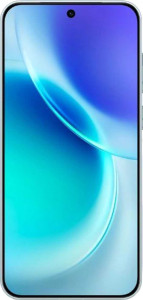
On paper, the Vivo X300 holds a commanding lead in raw benchmark numbers. Its MediaTek Dimensity 9500 scores 4,011,900 on AnTuTu versus the iPhone 17 Pro Max's 2,885,786 — a roughly 39% gap — and also leads in Geekbench 6 multi-core with 12,189 against 10,223. The Vivo's 8-thread CPU with three distinct performance clusters gives it more sustained throughput in heavily parallelized tasks like video rendering or large file processing. The iPhone, however, flips the result in single-core performance at 3,933 versus 3,781, which is the metric most relevant to everyday app responsiveness and UI fluidity — tasks that rarely saturate all cores simultaneously.
Memory is another area where the Vivo X300 pulls ahead meaningfully. With 16 GB of RAM at 5333 MHz and a maximum supported amount of 24 GB, it edges out the iPhone's 12 GB at 4800 MHz. Higher RAM capacity directly translates to more apps staying resident in the background without being reloaded, and the faster RAM speed contributes to the Vivo's slightly higher maximum memory bandwidth of 85.3 GB/s versus 78.8 GB/s. For power users running multiple demanding applications simultaneously, this gap is tangible. Storage capacity favors the iPhone, however, with up to 2048 GB versus the Vivo's 1024 GB maximum.
Both chips are built on a 3 nm process and share the same shading unit count, so efficiency and GPU parallelism are structurally similar. The Vivo's GPU does clock higher at 1750 MHz versus 1490 MHz, consistent with its stronger multi-threaded benchmark profile. Overall, the Vivo X300 wins this group on raw and sustained performance metrics, while the iPhone 17 Pro Max retains an edge in single-core speed and available storage — making the iPhone feel snappier in day-to-day use despite lower peak throughput figures.