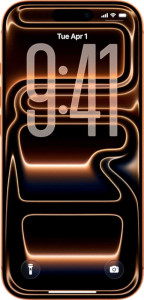
Apple iPhone 17 Pro Max
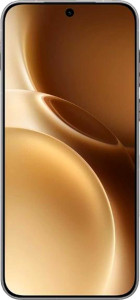
Vivo X300 Pro

Apple iPhone 17 Pro Max Vivo X300 Pro

Overview

Welcome to our in-depth specs comparison between the Apple iPhone 17 Pro Max and the Vivo X300 Pro — two flagship smartphones that take very different approaches to mobile excellence. From their contrasting camera philosophies and display technologies to their battery capacities and operating system ecosystems, these two devices offer compelling but distinct experiences. Read on to discover how they stack up across every major category.

Common Features

  • Both the Apple iPhone 17 Pro Max and Vivo X300 Pro are waterproof.
  • Neither the Apple iPhone 17 Pro Max nor the Vivo X300 Pro has a rugged build.
  • Neither the Apple iPhone 17 Pro Max nor the Vivo X300 Pro can be folded.
  • Both the Apple iPhone 17 Pro Max and Vivo X300 Pro feature an OLED/AMOLED display.
  • Both the Apple iPhone 17 Pro Max and Vivo X300 Pro have a 120Hz refresh rate.
  • Both the Apple iPhone 17 Pro Max and Vivo X300 Pro support HDR10.
  • Both the Apple iPhone 17 Pro Max and Vivo X300 Pro have an Always-On Display.
  • Both the Apple iPhone 17 Pro Max and Vivo X300 Pro support Dolby Vision.
  • Both the Apple iPhone 17 Pro Max and Vivo X300 Pro have a touchscreen.
  • Neither the Apple iPhone 17 Pro Max nor the Vivo X300 Pro has a secondary screen.
  • Both the Apple iPhone 17 Pro Max and Vivo X300 Pro use a 3 nm semiconductor.
  • Both the Apple iPhone 17 Pro Max and Vivo X300 Pro use DDR5 memory.
  • Both the Apple iPhone 17 Pro Max and Vivo X300 Pro have integrated LTE.
  • Both the Apple iPhone 17 Pro Max and Vivo X300 Pro feature a multi-lens main camera with built-in optical image stabilization.
  • Both the Apple iPhone 17 Pro Max and Vivo X300 Pro support slow-motion video recording.
  • Both the Apple iPhone 17 Pro Max and Vivo X300 Pro have a built-in HDR mode.
  • Both the Apple iPhone 17 Pro Max and Vivo X300 Pro support wireless charging and fast charging.
  • Neither the Apple iPhone 17 Pro Max nor the Vivo X300 Pro has a removable battery.
  • Neither the Apple iPhone 17 Pro Max nor the Vivo X300 Pro has a 3.5mm audio jack.
  • Both the Apple iPhone 17 Pro Max and Vivo X300 Pro have stereo speakers.
  • Both the Apple iPhone 17 Pro Max and Vivo X300 Pro support 5G, Bluetooth 6, NFC, USB Type-C 3.2, and emergency SOS via satellite.
  • Both the Apple iPhone 17 Pro Max and Vivo X300 Pro include clipboard warnings and location privacy options.
  • Both the Apple iPhone 17 Pro Max and Vivo X300 Pro have on-device machine learning and dark mode.

Main Differences

  • Weight is 233 g on Apple iPhone 17 Pro Max and 226 g on Vivo X300 Pro.
  • Thickness is 8.75 mm on Apple iPhone 17 Pro Max and 8 mm on Vivo X300 Pro.
  • Volume is 111.5205 cm³ on Apple iPhone 17 Pro Max and 97.3648 cm³ on Vivo X300 Pro.
  • IP rating is IP68 on Apple iPhone 17 Pro Max and IP69 on Vivo X300 Pro, while waterproof depth is 6 m on Apple iPhone 17 Pro Max and 1.5 m on Vivo X300 Pro.
  • Screen size is 6.9″ on Apple iPhone 17 Pro Max and 6.78″ on Vivo X300 Pro.
  • Touch sampling rate is 120Hz on Apple iPhone 17 Pro Max and 300Hz on Vivo X300 Pro.
  • Damage-resistant glass branding is present on Vivo X300 Pro but not on Apple iPhone 17 Pro Max.
  • HDR10+ support is present on Vivo X300 Pro but not available on Apple iPhone 17 Pro Max.
  • Contrast ratio is 2,000,000:1 on Apple iPhone 17 Pro Max and 8,000,000:1 on Vivo X300 Pro.
  • Internal storage is 2048 GB on Apple iPhone 17 Pro Max and 1024 GB on Vivo X300 Pro.
  • RAM is 12 GB on Apple iPhone 17 Pro Max and 16 GB on Vivo X300 Pro.
  • AnTuTu benchmark score is 2,885,786 on Apple iPhone 17 Pro Max and 3,015,900 on Vivo X300 Pro.
  • Geekbench 6 multi-core score is 10,223 on Apple iPhone 17 Pro Max and 12,189 on Vivo X300 Pro, while single-core score is 3,933 on Apple iPhone 17 Pro Max and 3,781 on Vivo X300 Pro.
  • Main camera resolution is 48 & 48 & 48 MP on Apple iPhone 17 Pro Max and 200 & 50 & 50 MP on Vivo X300 Pro.
  • Optical zoom is 8x on Apple iPhone 17 Pro Max and 3.7x on Vivo X300 Pro.
  • Front camera resolution is 18 MP on Apple iPhone 17 Pro Max and 50 MP on Vivo X300 Pro.
  • Video recording capability is 2160p at 120 fps on Apple iPhone 17 Pro Max and 4320p at 30 fps on Vivo X300 Pro.
  • Battery capacity is 5088 mAh on Apple iPhone 17 Pro Max and 6510 mAh on Vivo X300 Pro.
  • Wired charging speed is 40W on Apple iPhone 17 Pro Max and 90W on Vivo X300 Pro, while wireless charging speed is 30W on Apple iPhone 17 Pro Max and 40W on Vivo X300 Pro.
  • Reverse wireless charging is available on Vivo X300 Pro but not on Apple iPhone 17 Pro Max.
  • A charger is included with Vivo X300 Pro but not with Apple iPhone 17 Pro Max.
  • aptX and aptX HD support are present on Vivo X300 Pro but not available on Apple iPhone 17 Pro Max.
  • Split-screen support is available on Vivo X300 Pro but not on Apple iPhone 17 Pro Max.
  • Direct OS updates are available on Apple iPhone 17 Pro Max but not on Vivo X300 Pro.
  • A fingerprint scanner is present on Vivo X300 Pro but not on Apple iPhone 17 Pro Max, while 3D facial recognition is available on Apple iPhone 17 Pro Max but not on Vivo X300 Pro.
  • Crash detection is available on Apple iPhone 17 Pro Max but not on Vivo X300 Pro.
  • SIM configuration is 1 SIM plus 1 eSIM on Apple iPhone 17 Pro Max and 2 physical SIM cards on Vivo X300 Pro.
  • Mail Privacy Protection is available on Apple iPhone 17 Pro Max but not on Vivo X300 Pro.
  • Cross-site tracking blocking is present on Apple iPhone 17 Pro Max but not on Vivo X300 Pro.
  • Wi-Fi 6E support is present on Apple iPhone 17 Pro Max but not on Vivo X300 Pro.
Specs Comparison
Apple iPhone 17 Pro Max

Apple iPhone 17 Pro Max

Vivo X300 Pro

Vivo X300 Pro

Design:
water resistance Waterproof Waterproof
weight 233 g 226 g
thickness 8.75 mm 8 mm
width 78 mm 75.5 mm
height 163.4 mm 161.2 mm
volume 111.5205 cm³ 97.3648 cm³
Ingress Protection (IP) rating IP68 IP69
waterproof depth rating 6 m 1.5 m
has a rugged build
can be folded

In terms of physical footprint, the Vivo X300 Pro is the more compact and pocketable device. It is slimmer at 8 mm versus 8.75 mm, lighter at 226 g versus 233 g, and occupies a meaningfully smaller volume (97.36 cm³ versus 111.52 cm³). While none of these differences is dramatic in isolation, combined they give the X300 Pro a noticeably more manageable feel in hand and pocket, particularly for users sensitive to the bulk of large-screen flagships.

Water resistance is where the comparison becomes nuanced. Both phones are waterproof, but their certifications protect against different threats. The iPhone 17 Pro Max carries an IP68 rating with a depth tolerance of 6 m, making it far more resilient to accidental submersion — a pool drop or an underwater shot. The X300 Pro holds an IP69 rating, which is actually a higher standard in one specific dimension: it is certified to withstand high-temperature, high-pressure water jets. However, its rated submersion depth is only 1.5 m. In everyday reality, IP68 at 6 m is the more practically useful protection for most users, whereas IP69 is more relevant in industrial or outdoor environments where pressure washing could occur.

Neither phone has a rugged build or a folding form factor, so those axes offer no differentiation. Overall, the X300 Pro has an edge in ergonomics and portability, while the iPhone 17 Pro Max holds a clear advantage in submersion depth tolerance. Which matters more depends entirely on the user's lifestyle — slim carry versus deep-water confidence.

Display:
Display type OLED/AMOLED OLED/AMOLED
screen size 6.9" 6.78"
pixel density 460 ppi 452 ppi
resolution 1320 x 2868 px 1260 x 2800 px
refresh rate 120Hz 120Hz
touch sampling rate 120Hz 300Hz
has branded damage-resistant glass
supports HDR10
supports HDR10+
Always-On Display
supports Dolby Vision
contrast ratio 2000000:1 8000000:1
Has a secondary screen
has a touch screen

Both phones use OLED/AMOLED panels with a 120Hz refresh rate, Always-On Display, and support for both Dolby Vision and HDR10 — so the viewing experience baseline is strong on either device. The iPhone 17 Pro Max pulls ahead on raw screen real estate with a 6.9″ panel versus 6.78″, and its slightly higher pixel density (460 ppi vs 452 ppi) means marginally crisper text and fine detail, though both are well beyond the threshold where differences are visible to the naked eye under normal use.

Where the Vivo X300 Pro differentiates itself meaningfully is in contrast and touch responsiveness. Its stated contrast ratio of 8,000,000:1 dwarfs the iPhone's 2,000,000:1, which on paper translates to deeper blacks and more vivid shadow detail in dark scenes — though real-world perception depends heavily on display calibration. More practically impactful is the X300 Pro's 300Hz touch sampling rate versus the iPhone's 120Hz. A higher sampling rate means the screen registers finger input more frequently per second, a tangible advantage in fast-paced gaming or precise stylus-like interactions where responsiveness is critical. The X300 Pro also adds HDR10+ support and ships with branded damage-resistant glass — two features absent on the iPhone 17 Pro Max in these specs.

On balance, the X300 Pro holds a clearer edge in this category. Its superior touch sampling rate and higher contrast ratio offer real-world advantages that go beyond spec-sheet bragging rights, and the inclusion of damage-resistant glass adds practical durability the iPhone lacks here. The iPhone counters with a larger screen, but that alone is not enough to tip the scales.

Performance:
internal storage 2048GB 1024GB
RAM 12GB 16GB
AnTuTu benchmark score 2885786 3015900
Chipset (SoC) name Apple A19 Pro MediaTek Dimensity 9500
GPU name Apple A18 GPU Mali G1 Ultra MP12
CPU speed 2 x 4.26 & 4 x 2.51 GHz 1 x 4.21 & 3 x 3.5 & 4 x 2.7 GHz
Geekbench 6 result (multi) 10223 12189
Geekbench 6 result (single) 3933 3781
GPU clock speed 1490 MHz 1750 MHz
Has integrated LTE
RAM speed 4800 MHz 5333 MHz
semiconductor size 3 nm 3 nm
Supports 64-bit
Has integrated graphics
Uses big.LITTLE technology
CPU threads 6 threads 8 threads
Uses HMP
maximum memory bandwidth 78.8 GB/s 85.3 GB/s
maximum memory amount 12GB 24GB
uses multithreading
DDR memory version 5 5
shading units 128 128

Both chips are fabbed on a 3 nm process, so neither holds a manufacturing advantage. The headline benchmark numbers lean toward the Vivo X300 Pro: its MediaTek Dimensity 9500 scores 3,015,900 on AnTuTu versus 2,885,786 for the iPhone 17 Pro Max's Apple A19 Pro, and its Geekbench 6 multi-core result of 12,189 comfortably outpaces the iPhone's 10,223. The X300 Pro achieves this partly through a more thread-rich CPU configuration — 8 threads versus 6 — and by supporting multithreading, which helps it distribute heavy workloads more efficiently across cores. For sustained multi-tasking, video rendering, or parallel processing tasks, this architecture gives the Dimensity 9500 a tangible edge.

Single-core performance tells a different story. The iPhone's A19 Pro scores 3,933 in Geekbench 6 single-core versus 3,781 for the X300 Pro, meaning Apple retains its traditional advantage in per-core speed. Since most everyday tasks — app launches, UI responsiveness, quick interactions — rely heavily on single-core throughput, the iPhone feels snappy and fluid in day-to-day use despite trailing in raw multi-core grunt. The A19 Pro's memory bandwidth of 78.8 GB/s and RAM speed of 4800 MHz are also slightly behind the X300 Pro's 85.3 GB/s and 5333 MHz, though the iPhone's tighter hardware-software integration often compensates for this in practice.

The X300 Pro also leads in memory capacity — up to 24 GB maximum RAM versus 12 GB — and offers double the addressable headroom for memory-intensive workloads like large AI models or extreme multi-tasking. Storage tops out at 2048 GB on the iPhone versus 1024 GB on the X300 Pro, flipping the advantage back to Apple for users who need maximum local storage. Overall, the X300 Pro holds the performance edge on paper — particularly for sustained, parallel, and memory-heavy workloads — while the iPhone counters with superior single-core speed and far greater storage capacity.
Cameras:
megapixels (main camera) 48 & 48 & 48 MP 200 & 50 & 50 MP
wide aperture (main camera) 1.78 & 2.2 & 2.8f 2.7 & 1.6 & 2f
Has a dual-lens (or multi-lens) main camera
megapixels (front camera) 18MP 50MP
has built-in optical image stabilization
video recording (main camera) 2160 x 120 fps 4320 x 30 fps
Has a dual-tone LED flash
number of flash LEDs 2 2
has a BSI sensor
has a CMOS sensor
has continuous autofocus when recording movies
Has phase-detection autofocus for photos
supports slow-motion video recording
has a built-in HDR mode
has manual exposure
has a flash
optical zoom 8x 3.7x
has manual ISO
has a serial shot mode
has manual focus
has a front camera
Has laser autofocus
Shoots 360° panorama
has manual white balance
shoots raw
has touch autofocus
has manual shutter speed
can create panoramas in-camera
wide aperture (front camera) 1.9f 2f
Has timelapse function
minimum focal length 13 mm 15 mm
maximum focal length 120 mm 85 mm
Has a front-facing LED flash
has a dual-lens (or multi-lens) front camera
supports HDR10 recording
supports Dolby Vision recording
has a front-facing camera under the display
Has a RGB LED flash
has 3D photo/video recording capabilities

The camera systems here represent two genuinely different philosophies. The Vivo X300 Pro leads with a staggering 200 MP primary sensor — nearly four times the resolution of the iPhone 17 Pro Max's 48 MP main shooter — which enables extreme detail retention when cropping and delivers more flexibility in post-processing. Its front camera is equally aggressive at 50 MP, dwarfing the iPhone's 18 MP selfie sensor. For pixel-peepers and those who regularly crop or enlarge images, the X300 Pro has a raw resolution advantage that is hard to ignore. On the video side, however, the iPhone strikes back decisively: it records up to 2160p at 120 fps versus the X300 Pro's maximum of 4320p at 30 fps. The Vivo reaches 8K resolution, but only at 30 frames per second, which is limiting for motion. The iPhone's ability to shoot 4K at 120 fps opens up high-frame-rate slow-motion and ultra-smooth footage that the X300 Pro cannot match. The iPhone also adds HDR10 and Dolby Vision recording — missing entirely on the X300 Pro — which matters significantly for cinematic video work.

Telephoto reach is another major split. The iPhone's 8x optical zoom and maximum focal length of 120 mm give it a substantial advantage for distant subjects — wildlife, sports, or candid street photography — compared to the X300 Pro's 3.7x zoom topping out at 85 mm. Conversely, the X300 Pro starts wider at an aperture of f/1.6 on its second lens, which is notably faster than the iPhone's widest aperture of f/1.78, meaning it can gather more light in low-light scenarios on that lens. The iPhone includes a BSI (backside-illuminated) sensor on its main camera — a feature absent on the X300 Pro — which generally improves low-light sensitivity and dynamic range.

Neither phone has a clear sweep across all camera categories; this is a trade-off comparison. The X300 Pro wins on still image resolution and selfie quality. The iPhone 17 Pro Max wins on telephoto reach, high-frame-rate video, and professional video format support. Users who prioritize video production or long-range zoom should favor the iPhone; those who shoot primarily stills and want maximum detail or front-camera quality will find the X300 Pro compelling.

Operating system:
has clipboard warnings
has location privacy options
has camera/microphone privacy options
has Mail Privacy Protection
has theme customization
can block app tracking
blocks cross-site tracking
has on-device machine learning
has notification permissions
has media picker
Can play games while they download
has dark mode
has Wi-Fi password sharing
has battery health check
has an extra dim mode
has focus modes
has dynamic theming
can offload apps
Has customizable notifications
has Live Text
has full-page screenshots
supports split screen
gets direct OS updates
has PiP
Can be used as a PC
Has sharing intents
has a child lock
Supports widgets
Is free and open source
Has offline voice recognition
has voice commands
Tracks the current position of a mobile device
is a multi-user system
has Quick Start

The operating system comparison here is less about raw features — both phones share a solid common ground in dark mode, widgets, PiP, offline voice recognition, battery health checks, and robust privacy controls like camera/microphone permissions and app tracking blocks — and more about two contrasting philosophies. The iPhone 17 Pro Max runs a closed, tightly controlled OS that delivers direct OS updates straight from Apple, meaning users receive security patches and new features promptly without waiting on a manufacturer or carrier. The Vivo X300 Pro, running an open-source Android-based OS, does not get direct updates by the same standard, which can mean delayed or inconsistent update cadences — a meaningful consideration for long-term security and software longevity.

On the customization and flexibility side, the X300 Pro pulls ahead noticeably. It supports dynamic theming, theme customization, split-screen multitasking, and a multi-user system — none of which are available on the iPhone. Split-screen alone is a practical productivity differentiator for users who want to run two apps side by side. The X300 Pro also includes an extra dim mode, useful for night-time viewing comfort, and can play games while they download, a small but convenient quality-of-life feature. The iPhone counters with Mail Privacy Protection, cross-site tracking blocking, Focus Modes, and Wi-Fi password sharing — features that strengthen both its privacy posture and its ease of use within the Apple ecosystem.

Neither OS is strictly superior across the board; the gap reflects genuine platform differences. The iPhone 17 Pro Max is the stronger choice for users who prioritize privacy controls and reliable, timely software updates. The X300 Pro appeals more to users who value customization freedom, multitasking flexibility, and openness — including the ability to support multiple device users. The deciding factor largely comes down to whether the user already lives within an Apple ecosystem or prefers the configurability of Android.

Battery:
battery power 5088 mAh 6510 mAh
has wireless charging
Supports fast charging
charging speed 40W 90W
wireless charging speed 30W 40W
has reverse wireless charging
comes with a charger
has a removable battery
has a battery level indicator
has a rechargeable battery

Raw capacity is where this comparison opens with a decisive gap. The Vivo X300 Pro packs a 6510 mAh battery against the iPhone 17 Pro Max's 5088 mAh — a difference of over 1400 mAh, or roughly 28% more stored energy. All else being equal, that margin translates directly into meaningfully longer time between charges, which is one of the most tangible day-to-day advantages a phone can have. Heavy users who regularly push their device through long days or travel without reliable access to power will feel this gap acutely.

Charging speed amplifies the X300 Pro's advantage further. Its 90W wired fast charging more than doubles the iPhone's 40W, meaning the Vivo can replenish its larger battery in a fraction of the time. Wireless charging follows the same pattern — 40W on the X300 Pro versus 30W on the iPhone — and the Vivo adds reverse wireless charging, allowing it to top up accessories like earbuds or a smartwatch directly from the phone's battery, a feature the iPhone entirely lacks here. The X300 Pro also ships with a charger included in the box, while the iPhone does not — a practical and cost consideration for buyers.

There is no meaningful counterargument from the iPhone 17 Pro Max in this category based on the provided specs. The X300 Pro holds a clear and multidimensional advantage: a larger battery, significantly faster wired and wireless charging, reverse wireless charging capability, and a bundled charger. For users who treat battery life and charging convenience as priorities, the X300 Pro is the stronger choice by a wide margin.

Audio:
has a socket for a 3.5 mm audio jack
has stereo speakers
has aptX
has LDAC
has aptX HD
has aptX Adaptive
has aptX Lossless
Has a radio

Shared ground dominates this category: neither phone includes a 3.5 mm headphone jack, both feature stereo speakers, and neither supports LDAC or a radio. For speaker-based listening, the two devices are evenly matched on paper.

The meaningful differentiator emerges in Bluetooth audio codec support. The Vivo X300 Pro supports both aptX and aptX HD, while the iPhone 17 Pro Max supports neither. This matters for wireless audio quality: aptX reduces Bluetooth latency and improves audio compression over standard SBC, and aptX HD extends that further by supporting up to 24-bit audio transmission — effectively delivering near-lossless quality to compatible headphones. For users who invest in high-quality wireless headphones or earbuds that support these codecs, the X300 Pro can deliver a noticeably more faithful audio signal. The iPhone, by contrast, relies on its own wireless audio pipeline, which offers no equivalent codec advantage based on the provided specs.

The X300 Pro holds a clear edge in this group for wireless audio enthusiasts. It is a narrow but real advantage — one that only materializes when paired with aptX or aptX HD-compatible headphones, but for that audience it represents a genuine qualitative difference the iPhone cannot match here.

Connectivity & Features:
release date September 2025 October 2025
has 5G support
Wi-Fi version Wi-Fi 6 (802.11ax), Wi-Fi 5 (802.11ac), Wi-Fi 4 (802.11n), Wi-Fi 6E (802.11ax), Wi-Fi 7 (802.11be) Wi-Fi 4 (802.11n), Wi-Fi 5 (802.11ac), Wi-Fi 6 (802.11ax), Wi-Fi 7 (802.11be)
SIM cards 1 SIM, 1 eSIM 2 SIM
Bluetooth version 6 6
has an external memory slot
Has USB Type-C
USB version 3.2 3.2
has NFC
download speed 10000 MBits/s 10700 MBits/s
Has a fingerprint scanner
has emergency SOS via satellite
has crash detection
is DLNA-certified
has a gyroscope
supports ANT+
Has a heart rate monitor
has GPS
has a compass
supports Wi-Fi
Has an infrared sensor
has an accelerometer
has a cellular module
Has a barometer
has an HDMI output
Uses 3D facial recognition
Has an iris scanner
Stylus included
supports Galileo
Has motion tracking
Has optical tracking
Has a built-in projector

At the core connectivity level, these two phones are remarkably well matched. Both run on 5G, support Wi-Fi 7, share identical Bluetooth 6 and USB 3.2 Type-C implementations, and include NFC, GPS, Galileo, gyroscope, accelerometer, compass, and an infrared sensor. Download speeds are effectively equivalent at 10,000 Mbits/s versus 10,700 Mbits/s — a gap too marginal to matter in real-world network conditions. For most users, day-to-day connectivity will feel indistinguishable between the two devices.

The divergences are meaningful but targeted. The Vivo X300 Pro supports dual physical SIM cards, making it more practical for users who need to run two numbers simultaneously — frequent travelers or people separating work and personal lines. It also includes a fingerprint scanner, giving users a second biometric authentication method alongside any face-based unlock. The iPhone 17 Pro Max counters with 3D facial recognition — a more secure and sophisticated biometric system than a standard fingerprint sensor — and a barometer, useful for altitude tracking and environmental sensing. Critically, the iPhone also includes crash detection, an automated safety feature that can contact emergency services after a severe impact, which the X300 Pro lacks entirely.

Taken together, this group ends in a narrow split rather than a clean win for either side. The X300 Pro offers more SIM flexibility and an additional biometric option. The iPhone brings a more advanced facial recognition system, a barometer, and the potentially life-saving advantage of crash detection. Users who travel internationally with multiple SIMs will lean toward the Vivo; those who prioritize safety features and sensor depth will find the iPhone more compelling.

Miscellaneous:
has a video light
Has sapphire glass display
Has a curved display
Has an e-paper display

The Miscellaneous group offers no differentiation between the two devices whatsoever. The Apple iPhone 17 Pro Max and Vivo X300 Pro share identical results across every spec listed here: both include a video light, and neither features a sapphire glass display, a curved display, or an e-paper display. This is a complete tie by every available data point in this category.

Comparison Summary & Verdict

After a thorough comparison, both phones prove themselves as serious flagships, but they cater to different priorities. The Apple iPhone 17 Pro Max stands out with its superior optical zoom (8x), larger internal storage (up to 2 TB), direct OS updates, advanced privacy features like Mail Privacy Protection and cross-site tracking blocking, and a higher single-core CPU score — making it the stronger choice for Apple ecosystem loyalists and power users who demand long-term software support. The Vivo X300 Pro, on the other hand, wins on battery life and charging (6510 mAh, 90W wired, 40W wireless), a sharper 200 MP main camera, a higher-resolution 50 MP front camera, 8K video recording, a higher multi-core benchmark, and a more feature-rich Android experience with split-screen, dynamic theming, and a fingerprint scanner. Choose the iPhone for ecosystem depth and zoom; choose the Vivo for raw power, photography resolution, and battery endurance.

Apple iPhone 17 Pro Max
Buy Apple iPhone 17 Pro Max if...

Buy the Apple iPhone 17 Pro Max if you value a superior 8x optical zoom, seamless iOS ecosystem integration with direct OS updates, and advanced privacy protections like Mail Privacy Protection and cross-site tracking blocking.

Vivo X300 Pro
Buy Vivo X300 Pro if...

Buy the Vivo X300 Pro if you want a larger battery with faster 90W charging, a high-resolution 200 MP main camera with 8K video capability, and a more feature-rich Android experience including split-screen multitasking and dynamic theming.