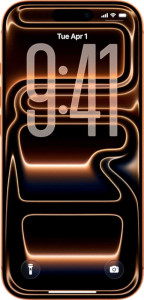
Apple iPhone 17 Pro Max
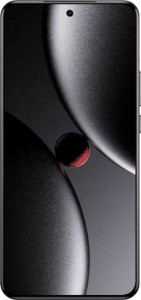
Xiaomi 15 Ultra

Apple iPhone 17 Pro Max Xiaomi 15 Ultra

Overview

When it comes to choosing between the Apple iPhone 17 Pro Max and the Xiaomi 15 Ultra, the decision is anything but simple. These two flagship powerhouses go head-to-head across every dimension that matters to a discerning buyer, from display quality and camera capabilities to raw performance, battery endurance, and software experience. Whether you value a refined ecosystem or cutting-edge hardware flexibility, this detailed spec comparison will help you find the phone that truly fits your needs.

Common Features

  • Both phones are waterproof with an IP68 ingress protection rating.
  • Neither phone has a rugged build.
  • Neither phone can be folded.
  • Both phones feature an OLED/AMOLED display.
  • Both phones support a 120Hz refresh rate.
  • Neither phone has branded damage-resistant glass.
  • Both phones support HDR10.
  • Both phones feature an Always-On Display.
  • Both phones support Dolby Vision.
  • Neither phone has a secondary screen.
  • Both phones have a touchscreen.
  • Both phones have integrated LTE.
  • Both phones are built on a 3 nm semiconductor process.
  • Both phones support 64-bit processing.
  • Both phones use big.LITTLE technology and HMP.
  • Both phones use DDR5 memory.
  • Both phones have a multi-lens main camera with built-in optical image stabilization.
  • Both phones have a dual-tone LED flash with 2 LEDs.
  • Both phones have a CMOS sensor with phase-detection autofocus and continuous autofocus during video recording.
  • Both phones support slow-motion video recording.
  • Both phones include clipboard warnings, location privacy options, camera/microphone privacy options, app tracking blocking, on-device machine learning, notification permissions, a media picker, and dark mode.
  • Both phones support wireless charging and fast charging.
  • Neither phone has a removable battery.
  • Both phones have a battery level indicator and a rechargeable battery.
  • Neither phone has a 3.5 mm audio jack.
  • Both phones have stereo speakers.
  • Neither phone has a radio.
  • Both phones support 5G, Bluetooth 6, NFC, and USB Type-C with USB 3.2.
  • Both phones share the same download speed of 10000 MBits/s and upload speed of 3500 MBits/s.
  • Both phones support Wi-Fi 4, Wi-Fi 5, Wi-Fi 6, Wi-Fi 6E, and Wi-Fi 7.
  • Neither phone has an external memory slot.
  • Both phones have a video light.
  • Neither phone has a sapphire glass display, a curved display, or an e-paper display.

Main Differences

  • Weight is 233 g on Apple iPhone 17 Pro Max and 229 g on Xiaomi 15 Ultra.
  • Thickness is 8.75 mm on Apple iPhone 17 Pro Max and 9.4 mm on Xiaomi 15 Ultra.
  • Width is 78 mm on Apple iPhone 17 Pro Max and 75.3 mm on Xiaomi 15 Ultra.
  • Height is 163.4 mm on Apple iPhone 17 Pro Max and 161.3 mm on Xiaomi 15 Ultra.
  • Screen size is 6.9″ on Apple iPhone 17 Pro Max and 6.73″ on Xiaomi 15 Ultra.
  • Pixel density is 460 ppi on Apple iPhone 17 Pro Max and 522 ppi on Xiaomi 15 Ultra.
  • Resolution is 1320 x 2868 px on Apple iPhone 17 Pro Max and 1440 x 3200 px on Xiaomi 15 Ultra.
  • Touch sampling rate is 120Hz on Apple iPhone 17 Pro Max and 300Hz on Xiaomi 15 Ultra.
  • Typical brightness is 1000 nits on Apple iPhone 17 Pro Max and 3200 nits on Xiaomi 15 Ultra.
  • HDR10+ support is present on Xiaomi 15 Ultra but not available on Apple iPhone 17 Pro Max.
  • Contrast ratio is 2000000:1 on Apple iPhone 17 Pro Max and 8000000:1 on Xiaomi 15 Ultra.
  • Maximum internal storage is 2048 GB on Apple iPhone 17 Pro Max and 1024 GB on Xiaomi 15 Ultra.
  • RAM is 12 GB on Apple iPhone 17 Pro Max and 16 GB on Xiaomi 15 Ultra.
  • AnTuTu benchmark score is 2885786 on Apple iPhone 17 Pro Max and 2746580 on Xiaomi 15 Ultra.
  • The chipset is Apple A19 Pro on Apple iPhone 17 Pro Max and Qualcomm Snapdragon 8 Elite on Xiaomi 15 Ultra.
  • The GPU is Apple A18 GPU on Apple iPhone 17 Pro Max and Adreno 830 on Xiaomi 15 Ultra.
  • Geekbench 6 single-core score is 3933 on Apple iPhone 17 Pro Max and 3234 on Xiaomi 15 Ultra.
  • Geekbench 6 multi-core score is 10223 on Apple iPhone 17 Pro Max and 10059 on Xiaomi 15 Ultra.
  • GPU clock speed is 1490 MHz on Apple iPhone 17 Pro Max and 1100 MHz on Xiaomi 15 Ultra.
  • Maximum memory bandwidth is 78.8 GB/s on Apple iPhone 17 Pro Max and 85.1 GB/s on Xiaomi 15 Ultra.
  • Main camera megapixels are 48 & 48 & 48 MP on Apple iPhone 17 Pro Max and 200 & 50 & 50 & 50 MP on Xiaomi 15 Ultra.
  • Optical zoom is 8x on Apple iPhone 17 Pro Max and 4.3x on Xiaomi 15 Ultra.
  • Front camera resolution is 18 MP on Apple iPhone 17 Pro Max and 32 MP on Xiaomi 15 Ultra.
  • Maximum video resolution is 2160p at 120 fps on Apple iPhone 17 Pro Max and 4320p at 30 fps on Xiaomi 15 Ultra.
  • A BSI sensor is present on Apple iPhone 17 Pro Max but not on Xiaomi 15 Ultra.
  • 360° panorama shooting is available on Xiaomi 15 Ultra but not on Apple iPhone 17 Pro Max.
  • Mail Privacy Protection is available on Apple iPhone 17 Pro Max but not on Xiaomi 15 Ultra.
  • Theme customization is available on Xiaomi 15 Ultra but not on Apple iPhone 17 Pro Max.
  • Cross-site tracking is blocked on Apple iPhone 17 Pro Max but not on Xiaomi 15 Ultra.
  • Playing games while they download is supported on Xiaomi 15 Ultra but not on Apple iPhone 17 Pro Max.
  • Wi-Fi password sharing is available on Apple iPhone 17 Pro Max but not on Xiaomi 15 Ultra.
  • An extra dim mode is available on Xiaomi 15 Ultra but not on Apple iPhone 17 Pro Max.
  • Split screen is supported on Xiaomi 15 Ultra but not on Apple iPhone 17 Pro Max.
  • Direct OS updates are available on Apple iPhone 17 Pro Max but not on Xiaomi 15 Ultra.
  • Battery capacity is 5088 mAh on Apple iPhone 17 Pro Max and 6000 mAh on Xiaomi 15 Ultra.
  • Wired charging speed is 40W on Apple iPhone 17 Pro Max and 90W on Xiaomi 15 Ultra.
  • Wireless charging speed is 30W on Apple iPhone 17 Pro Max and 80W on Xiaomi 15 Ultra.
  • Reverse wireless charging is available on Xiaomi 15 Ultra but not on Apple iPhone 17 Pro Max.
  • A charger is included in the box with Xiaomi 15 Ultra but not with Apple iPhone 17 Pro Max.
  • Battery life is rated at 39 hours on Apple iPhone 17 Pro Max and 19 hours on Xiaomi 15 Ultra.
  • aptX, LDAC, aptX HD, aptX Adaptive, and aptX Lossless audio codec support are available on Xiaomi 15 Ultra but not on Apple iPhone 17 Pro Max.
  • Number of microphones is 3 on Apple iPhone 17 Pro Max and 4 on Xiaomi 15 Ultra.
  • SIM configuration is 1 SIM + 1 eSIM on Apple iPhone 17 Pro Max and dual physical SIM on Xiaomi 15 Ultra.
  • A fingerprint scanner is present on Xiaomi 15 Ultra but not on Apple iPhone 17 Pro Max.
  • Crash detection is available on Apple iPhone 17 Pro Max but not on Xiaomi 15 Ultra.
  • 3D facial recognition is used on Apple iPhone 17 Pro Max but not on Xiaomi 15 Ultra.
Specs Comparison
Apple iPhone 17 Pro Max

Apple iPhone 17 Pro Max

Xiaomi 15 Ultra

Xiaomi 15 Ultra

Design:
water resistance Waterproof Waterproof
weight 233 g 229 g
thickness 8.75 mm 9.4 mm
width 78 mm 75.3 mm
height 163.4 mm 161.3 mm
volume 111.5205 cm³ 114.171366 cm³
Ingress Protection (IP) rating IP68 IP68
has a rugged build
can be folded

Both the iPhone 17 Pro Max and Xiaomi 15 Ultra share the same IP68 waterproof rating, meaning neither has an edge in water and dust resistance — both can handle submersion under similar conditions. Neither features a rugged build or a foldable form factor, so they compete on the same terms as conventional flagship slabs.

Where things get more nuanced is in their physical dimensions. The Xiaomi 15 Ultra is marginally lighter at 229 g versus 233 g, a 4 g difference that is essentially imperceptible in daily use. More meaningfully, the 15 Ultra has a smaller footprint — it is 2.1 mm shorter and 2.7 mm narrower — which translates to a slightly more one-hand-friendly grip. The iPhone 17 Pro Max, however, is noticeably thinner at 8.75 mm compared to the Xiaomi's 9.4 mm, a 0.65 mm gap that gives it a sleeker, more pocketable profile despite its larger surface area. Interestingly, the iPhone's overall volume (111.52 cm³) is slightly smaller than the Xiaomi's (114.17 cm³), confirming that its slimness more than compensates for its wider, taller frame.

In terms of design, this is essentially a trade-off rather than a clear win. Users who prioritize a narrower, easier-to-grip device will prefer the Xiaomi 15 Ultra, while those who value a slimmer, more elegant profile will lean toward the iPhone 17 Pro Max. The two are closely matched overall, with no decisive advantage on either side.

Display:
Display type OLED/AMOLED OLED/AMOLED
screen size 6.9" 6.73"
pixel density 460 ppi 522 ppi
resolution 1320 x 2868 px 1440 x 3200 px
refresh rate 120Hz 120Hz
touch sampling rate 120Hz 300Hz
brightness (typical) 1000 nits 3200 nits
has branded damage-resistant glass
supports HDR10
supports HDR10+
Always-On Display
supports Dolby Vision
contrast ratio 2000000:1 8000000:1
Has a secondary screen
has a touch screen

Both phones use OLED/AMOLED panels with 120Hz refresh rates and share support for HDR10, Dolby Vision, and Always-On Display — so the baseline viewing experience is competitive on both sides. The iPhone 17 Pro Max offers a larger 6.9″ screen versus the Xiaomi 15 Ultra's 6.73″, which benefits media consumption and keyboard comfort, but screen size alone tells only part of the story here.

The Xiaomi 15 Ultra pulls ahead decisively on raw display quality metrics. Its 522 ppi pixel density versus the iPhone's 460 ppi means visibly sharper text and finer detail, especially noticeable when reading small print or viewing high-resolution images up close. More striking is the brightness gap: the Xiaomi reaches 3200 nits typical brightness compared to 1000 nits on the iPhone — a difference that makes outdoor visibility in direct sunlight dramatically better on the Xiaomi. The contrast ratio gap is equally wide, with the Xiaomi at 8,000,000:1 versus the iPhone's 2,000,000:1, translating to deeper blacks and more vivid perceived colors. The Xiaomi also adds HDR10+ support, which the iPhone lacks, enabling dynamic tone-mapping for compatible content. Finally, its 300Hz touch sampling rate versus the iPhone's 120Hz means the Xiaomi's display responds to touch inputs significantly faster — a meaningful advantage for gaming and fast gesture navigation.

The Xiaomi 15 Ultra holds a clear edge in display quality. While the iPhone 17 Pro Max offers a larger canvas, the Xiaomi outperforms it on sharpness, peak brightness, contrast, and touch responsiveness — specs that have direct, everyday impact on how vivid and reactive the screen feels.

Performance:
internal storage 2048GB 1024GB
RAM 12GB 16GB
AnTuTu benchmark score 2885786 2746580
Chipset (SoC) name Apple A19 Pro Qualcomm Snapdragon 8 Elite
GPU name Apple A18 GPU Adreno 830
CPU speed 2 x 4.26 & 4 x 2.51 GHz 2 x 4.32 & 6 x 3.53 GHz
Geekbench 6 result (multi) 10223 10059
Geekbench 6 result (single) 3933 3234
GPU clock speed 1490 MHz 1100 MHz
Has integrated LTE
RAM speed 4800 MHz 5300 MHz
semiconductor size 3 nm 3 nm
Supports 64-bit
Has integrated graphics
Uses big.LITTLE technology
CPU threads 6 threads 8 threads
Uses HMP
Has TrustZone
maximum memory bandwidth 78.8 GB/s 85.1 GB/s
L2 cache 16 MB 12 MB
Supports ECC memory
maximum memory amount 12GB 24GB
uses multithreading
Thermal Design Power (TDP) 10W 8.2W
DDR memory version 5 5
shading units 128 1536

On raw benchmark numbers, the Apple A19 Pro leads across the board in CPU performance. Its AnTuTu score of 2,885,786 beats the Snapdragon 8 Elite's 2,746,580, and the single-core Geekbench 6 gap — 3,933 versus 3,234 — is especially significant. Single-core performance governs how snappy everyday tasks like app launches, UI rendering, and general responsiveness feel, and a ~22% advantage here is meaningful in real-world use. Multi-core scores are much closer (10,223 vs 10,059), meaning sustained parallel workloads are roughly equivalent between the two chips.

The GPU picture flips the narrative considerably. The Xiaomi 15 Ultra's Adreno 830 features 1,536 shading units compared to just 128 on the iPhone's GPU — a staggering difference on paper that suggests far greater theoretical graphics throughput for compute-heavy tasks. However, the iPhone's GPU runs at a much higher clock speed (1490 MHz vs 1100 MHz), partially offsetting the shading unit gap. The Xiaomi also benefits from greater memory bandwidth (85.1 GB/s vs 78.8 GB/s), more RAM (16 GB vs 12 GB), faster RAM speed (5300 MHz vs 4800 MHz), and a higher maximum memory ceiling of 24 GB — all of which support smoother multitasking and more headroom for memory-intensive applications. The Xiaomi also supports ECC memory, which adds error-correction useful in demanding computational scenarios, and runs at a lower TDP of 8.2W versus the iPhone's 10W, hinting at better thermal efficiency under load.

This is a genuinely split category with no single winner. The iPhone 17 Pro Max holds a clear edge in CPU responsiveness — particularly single-threaded tasks — making it feel faster in day-to-day interactions. The Xiaomi 15 Ultra counters with superior memory specs, better thermal efficiency, and a GPU architecture better suited for parallel compute workloads. Users prioritizing snappy performance and app speed will favor the iPhone; those running memory-heavy, GPU-intensive, or multitasking scenarios will find the Xiaomi's spec sheet more compelling.
Cameras:
megapixels (main camera) 48 & 48 & 48 MP 200 & 50 & 50 & 50 MP
wide aperture (main camera) 1.78 & 2.2 & 2.8f 2.6 & 1.8 & 1.6 & 2.2f
Has a dual-lens (or multi-lens) main camera
megapixels (front camera) 18MP 32MP
has built-in optical image stabilization
video recording (main camera) 2160 x 120 fps 4320 x 30 fps
Has a dual-tone LED flash
number of flash LEDs 2 2
has a BSI sensor
has a CMOS sensor
has continuous autofocus when recording movies
Has phase-detection autofocus for photos
supports slow-motion video recording
has a built-in HDR mode
has manual exposure
has a flash
optical zoom 8x 4.3x
has manual ISO
has a serial shot mode
has manual focus
pixel size (main camera) 1.22 & 0.7 & 2.8 µm 0.56 & 0.7 & 1.6 & 0.64 µm
has a front camera
Has laser autofocus
Shoots 360° panorama
has manual white balance
shoots raw
has touch autofocus
has manual shutter speed
can create panoramas in-camera
wide aperture (front camera) 1.9f 2f
Has timelapse function
Has a front-facing LED flash
has a dual-lens (or multi-lens) front camera
supports HDR10 recording
supports Dolby Vision recording
has a front-facing camera under the display
Has a RGB LED flash
has 3D photo/video recording capabilities

The Apple iPhone 17 Pro Max and the Xiaomi 15 Ultra both offer impressive camera setups, but with distinct configurations. The iPhone 17 Pro Max features a triple-lens main camera setup with 48MP for each of its three lenses, while the Xiaomi 15 Ultra boasts a more diverse four-lens array with a 200MP primary sensor, complemented by 50MP and 50MP ultra-wide and telephoto lenses, and another 50MP lens for additional functionality. Both phones support optical zoom, with the iPhone 17 Pro Max offering 8x optical zoom, while the Xiaomi 15 Ultra has a more limited 4.3x optical zoom.

Both phones offer a variety of advanced camera features. The iPhone 17 Pro Max supports 4K video recording at 120 fps, while the Xiaomi 15 Ultra records 8K video at 30 fps. Both phones have built-in HDR modes, shoot raw images, and support manual exposure, focus, ISO, and shutter speed adjustments. The iPhone 17 Pro Max has a pixel size of 1.22 µm for its main camera, while the Xiaomi 15 Ultra has smaller pixel sizes across its four lenses, ranging from 0.56 µm to 1.6 µm, which could affect how each phone performs in different lighting conditions.

When it comes to front cameras, the iPhone 17 Pro Max is equipped with an 18MP front-facing camera, while the Xiaomi 15 Ultra has a 32MP front camera. Both phones have wide apertures, with the iPhone offering a 1.9f for its front camera and the Xiaomi featuring a 2f aperture. Both devices have built-in LED flashes for the main camera and front camera, but neither has a front-facing LED flash. Additionally, the iPhone 17 Pro Max can shoot 360° panoramas, while the Xiaomi 15 Ultra supports this feature as well as the ability to create panoramas in-camera. Neither phone has a dual-lens or multi-lens front camera.

Operating system:
has clipboard warnings
has location privacy options
has camera/microphone privacy options
has Mail Privacy Protection
has theme customization
can block app tracking
blocks cross-site tracking
has on-device machine learning
has notification permissions
has media picker
Can play games while they download
has dark mode
has Wi-Fi password sharing
has battery health check
has an extra dim mode
has focus modes
has dynamic theming
can offload apps
Has customizable notifications
has Live Text
has full-page screenshots
supports split screen
gets direct OS updates
has PiP
Can be used as a PC
Has sharing intents
has a child lock
Supports widgets
Is free and open source
Has offline voice recognition
has voice commands
Tracks the current position of a mobile device
is a multi-user system
has Quick Start

The Apple iPhone 17 Pro Max and Xiaomi 15 Ultra both offer robust privacy and customization features in their operating systems. Both phones include clipboard warnings, location privacy options, and camera/microphone privacy settings. The iPhone 17 Pro Max also includes Mail Privacy Protection, while the Xiaomi 15 Ultra does not. Both phones support blocking app tracking, but only the iPhone 17 Pro Max blocks cross-site tracking. The iPhone 17 Pro Max offers Wi-Fi password sharing, battery health check, and customizable notifications, whereas the Xiaomi 15 Ultra does not support Wi-Fi password sharing and offers an extra dim mode, which the iPhone lacks.

Both phones feature dark mode, focus modes, and on-device machine learning. The iPhone 17 Pro Max does not offer theme customization or dynamic theming, while the Xiaomi 15 Ultra supports both. The iPhone supports full-page screenshots, Live Text, and PiP, while the Xiaomi 15 Ultra also supports PiP but has the added benefit of split screen functionality, which the iPhone does not support. Additionally, the iPhone has Quick Start, but the Xiaomi 15 Ultra does not.

The iPhone 17 Pro Max is not a multi-user system, while the Xiaomi 15 Ultra supports multiple users. Both phones feature offline voice recognition, voice commands, and the ability to track the current position of the device. The Xiaomi 15 Ultra is free and open source, while the iPhone 17 Pro Max is not. Lastly, neither phone has a front-facing camera under the display, but both support widgets and have a child lock feature.

Battery:
battery power 5088 mAh 6000 mAh
has wireless charging
Supports fast charging
charging speed 40W 90W
wireless charging speed 30W 80W
has reverse wireless charging
comes with a charger
has a removable battery
has a battery level indicator
Battery life 39 hours 19 hours
has a rechargeable battery

The Apple iPhone 17 Pro Max and the Xiaomi 15 Ultra feature different battery specifications. The iPhone 17 Pro Max is equipped with a 5088 mAh battery, while the Xiaomi 15 Ultra has a larger 6000 mAh battery. Despite the larger battery, the Xiaomi 15 Ultra offers a shorter battery life of 19 hours compared to the iPhone 17 Pro Max’s 39 hours of battery life.

Both devices support wireless charging, with the iPhone 17 Pro Max offering a wireless charging speed of 30W, while the Xiaomi 15 Ultra supports faster wireless charging at 80W. The iPhone 17 Pro Max also supports fast charging at 40W, while the Xiaomi 15 Ultra offers even faster charging at 90W. The Xiaomi 15 Ultra additionally supports reverse wireless charging, a feature not found on the iPhone 17 Pro Max.

Neither phone has a removable battery, but both come with a battery level indicator and have rechargeable batteries. The iPhone 17 Pro Max does not come with a charger, whereas the Xiaomi 15 Ultra includes a charger in the box.

Audio:
has a socket for a 3.5 mm audio jack
has stereo speakers
has aptX
has LDAC
has aptX HD
has aptX Adaptive
has aptX Lossless
Has a radio
number of microphones 3 4

Both the Apple iPhone 17 Pro Max and the Xiaomi 15 Ultra lack a 3.5 mm audio jack socket, so users will need to rely on wireless or USB-C audio solutions. Both devices feature stereo speakers for an enhanced audio experience. The iPhone 17 Pro Max does not support any of the aptX audio codecs, while the Xiaomi 15 Ultra supports aptX, aptX HD, aptX Adaptive, and aptX Lossless, offering a broader range of high-quality audio options for wireless headphones and speakers.

In terms of microphones, the iPhone 17 Pro Max comes with three microphones, while the Xiaomi 15 Ultra has four microphones, which may contribute to better sound capture for calls and recordings.

Neither phone features a built-in radio, so users looking for FM radio functionality will need to explore other options.

Connectivity & Features:
release date September 2025 February 2025
has 5G support
Wi-Fi version Wi-Fi 6 (802.11ax), Wi-Fi 5 (802.11ac), Wi-Fi 4 (802.11n), Wi-Fi 6E (802.11ax), Wi-Fi 7 (802.11be) Wi-Fi 4 (802.11n), Wi-Fi 6 (802.11ax), Wi-Fi 5 (802.11ac), Wi-Fi 7 (802.11be), Wi-Fi 6E (802.11ax)
SIM cards 1 SIM, 1 eSIM 2 SIM
Bluetooth version 6 6
has an external memory slot
Has USB Type-C
USB version 3.2 3.2
has NFC
download speed 10000 MBits/s 10000 MBits/s
upload speed 3500 MBits/s 3500 MBits/s
Has a fingerprint scanner
has emergency SOS via satellite
has crash detection
is DLNA-certified
has a gyroscope
supports ANT+
Has a heart rate monitor
has GPS
has a compass
supports Wi-Fi
Has an infrared sensor
has an accelerometer
has a cellular module
Has a barometer
has an HDMI output
Uses 3D facial recognition
Has an iris scanner
Stylus included
supports Galileo
Has motion tracking
Has optical tracking
Has a built-in projector

The Apple iPhone 17 Pro Max and the Xiaomi 15 Ultra both support 5G, but their SIM configurations differ. The iPhone 17 Pro Max supports 1 SIM and 1 eSIM, while the Xiaomi 15 Ultra supports 2 physical SIM cards. Both devices feature the same Bluetooth version (6) and offer USB Type-C with USB 3.2 support. NFC is available on both devices, and both offer similar download speeds of 10000 MBits/s and upload speeds of 3500 MBits/s.

When it comes to biometric security, the iPhone 17 Pro Max does not have a fingerprint scanner, while the Xiaomi 15 Ultra includes one. Both phones support emergency SOS via satellite, but the iPhone also has crash detection, a feature missing from the Xiaomi. Both devices are equipped with a range of sensors, including gyroscopes, accelerometers, barometers, GPS, and compasses. The iPhone has 3D facial recognition, but the Xiaomi lacks this feature and does not include any iris scanning capability.

Neither phone features an HDMI output, a built-in projector, or motion and optical tracking. The Xiaomi 15 Ultra supports two SIM cards, while the iPhone 17 Pro Max only supports one SIM and one eSIM. Both phones support Galileo satellite navigation and have infrared sensors, but only the iPhone includes crash detection. The iPhone also lacks a fingerprint scanner, while the Xiaomi 15 Ultra has one for additional security.

Miscellaneous:
has a video light
Has sapphire glass display
Has a curved display
Has an e-paper display

Both the Apple iPhone 17 Pro Max and the Xiaomi 15 Ultra are equipped with a video light, providing enhanced lighting for video recordings. Neither device features sapphire glass display technology, curved displays, or e-paper displays, meaning both phones offer traditional flat displays without the added features of these more specialized technologies.

In summary, the video light is a shared feature between both phones, while the other display-related features (sapphire glass, curved display, and e-paper display) are absent in both models.

Comparison Summary & Verdict

After a thorough comparison, both phones emerge as elite flagships with genuinely different strengths. The Apple iPhone 17 Pro Max stands out with its superior battery life of 39 hours, a higher single-core performance score, greater optical zoom at 8x, and a tightly integrated ecosystem with direct OS updates and advanced privacy features. It is the ideal choice for users who prioritize longevity between charges, iOS exclusives, and seamless software support. The Xiaomi 15 Ultra, on the other hand, dominates in display brightness at 3200 nits, faster 90W wired and 80W wireless charging, a larger 6000 mAh battery capacity, a more versatile 200 MP quad-camera system, and a richer audio codec selection including LDAC and aptX. It suits power users who want the most capable Android hardware, faster top-ups, and greater customization freedom.

Apple iPhone 17 Pro Max
Buy Apple iPhone 17 Pro Max if...

Buy the Apple iPhone 17 Pro Max if you prioritize longer battery life, a deeper iOS ecosystem with direct OS updates, stronger privacy protections, and greater optical zoom reach at 8x.

Xiaomi 15 Ultra
Buy Xiaomi 15 Ultra if...

Buy the Xiaomi 15 Ultra if you want a sharper and significantly brighter display, faster wired and wireless charging, a more versatile quad-camera setup with a 200 MP main sensor, and broader audio codec support.