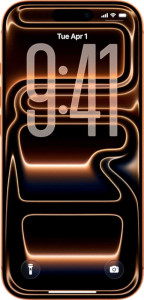
Apple iPhone 17 Pro Max
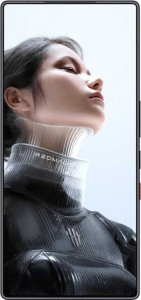
ZTE Nubia Red Magic 11 Pro

Apple iPhone 17 Pro Max ZTE Nubia Red Magic 11 Pro

Overview

Welcome to our in-depth spec comparison between the Apple iPhone 17 Pro Max and the ZTE Nubia Red Magic 11 Pro. These two flagship smartphones represent very different philosophies: one refined for everyday premium use, the other engineered for raw performance and gaming. In this comparison, we examine the key battlegrounds of battery life and charging speed, camera versatility, display quality, processing power, and software experience to help you decide which device best suits your needs.

Common Features

  • Neither product has a rugged build.
  • Neither product can be folded.
  • Both products use an OLED/AMOLED display type.
  • HDR10+ support is not available on either product.
  • Always-On Display is available on both products.
  • Neither product has a secondary screen.
  • Both products have a touch screen.
  • Both products have integrated LTE.
  • Both products are built on a 3 nm semiconductor process.
  • Both products support 64-bit processing.
  • Both products have integrated graphics.
  • Both products use big.LITTLE technology.
  • Both products use HMP.
  • Both products have TrustZone.
  • Both products use DDR5 memory.
  • Both products feature a dual-lens or multi-lens main camera.
  • Built-in optical image stabilization is present on both products.
  • Both products use a CMOS sensor.
  • Continuous autofocus when recording movies is supported on both products.
  • Phase-detection autofocus for photos is available on both products.
  • Slow-motion video recording is supported on both products.
  • A built-in HDR mode is present on both products.
  • Manual exposure is available on both products.
  • Clipboard warnings are present on both products.
  • Location privacy options are available on both products.
  • Camera and microphone privacy options are available on both products.
  • App tracking can be blocked on both products.
  • On-device machine learning is available on both products.
  • Notification permissions are present on both products.
  • A media picker is available on both products.
  • Dark mode is available on both products.
  • Wireless charging is available on both products.
  • Fast charging is supported on both products.
  • Reverse wireless charging is not available on either product.
  • Neither product has a removable battery.
  • A battery level indicator is present on both products.
  • Both products have a rechargeable battery.
  • Both products have stereo speakers.
  • aptX support is not available on either product.
  • aptX HD support is not available on either product.
  • aptX Adaptive support is not available on either product.
  • aptX Lossless support is not available on either product.
  • Neither product has a radio.
  • Both products support 5G.
  • Neither product has an external memory slot.
  • Both products have USB Type-C.
  • Both products use USB version 3.2.
  • NFC is available on both products.
  • Both products support a download speed of 10000 MBits/s and upload speed of 3500 MBits/s.
  • Neither product is DLNA-certified.
  • A video light is present on both products.
  • Neither product has a sapphire glass display.
  • Neither product has a curved display.
  • Neither product has an e-paper display.

Main Differences

  • Water resistance is rated as waterproof on Apple iPhone 17 Pro Max and water resistant on ZTE Nubia Red Magic 11 Pro.
  • Weight is 233 g on Apple iPhone 17 Pro Max and 230 g on ZTE Nubia Red Magic 11 Pro.
  • Thickness is 8.75 mm on Apple iPhone 17 Pro Max and 8.9 mm on ZTE Nubia Red Magic 11 Pro.
  • Width is 78 mm on Apple iPhone 17 Pro Max and 76.5 mm on ZTE Nubia Red Magic 11 Pro.
  • Height is 163.4 mm on Apple iPhone 17 Pro Max and 163.8 mm on ZTE Nubia Red Magic 11 Pro.
  • The IP rating is IP68 on Apple iPhone 17 Pro Max and IPX8 on ZTE Nubia Red Magic 11 Pro.
  • Waterproof depth rating is 6 m on Apple iPhone 17 Pro Max and 1.5 m on ZTE Nubia Red Magic 11 Pro.
  • Screen size is 6.9″ on Apple iPhone 17 Pro Max and 6.85″ on ZTE Nubia Red Magic 11 Pro.
  • Pixel density is 460 ppi on Apple iPhone 17 Pro Max and 431 ppi on ZTE Nubia Red Magic 11 Pro.
  • Resolution is 1320 x 2868 px on Apple iPhone 17 Pro Max and 1216 x 2688 px on ZTE Nubia Red Magic 11 Pro.
  • Refresh rate is 120Hz on Apple iPhone 17 Pro Max and 144Hz on ZTE Nubia Red Magic 11 Pro.
  • Branded damage-resistant glass is present on ZTE Nubia Red Magic 11 Pro but not available on Apple iPhone 17 Pro Max.
  • HDR10 support is available on Apple iPhone 17 Pro Max but not on ZTE Nubia Red Magic 11 Pro.
  • Dolby Vision support is available on Apple iPhone 17 Pro Max but not on ZTE Nubia Red Magic 11 Pro.
  • Internal storage is 2048 GB on Apple iPhone 17 Pro Max and 1024 GB on ZTE Nubia Red Magic 11 Pro.
  • RAM is 12 GB on Apple iPhone 17 Pro Max and 24 GB on ZTE Nubia Red Magic 11 Pro.
  • The chipset is Apple A19 Pro on Apple iPhone 17 Pro Max and Qualcomm Snapdragon 8 Elite Gen 5 on ZTE Nubia Red Magic 11 Pro.
  • The GPU is Apple A18 GPU on Apple iPhone 17 Pro Max and Adreno 830 on ZTE Nubia Red Magic 11 Pro.
  • CPU speed is 2 x 4.26 & 4 x 2.51 GHz on Apple iPhone 17 Pro Max and 2 x 4.6 & 6 x 3.62 GHz on ZTE Nubia Red Magic 11 Pro.
  • Geekbench 6 multi-core result is 10223 on Apple iPhone 17 Pro Max and 10059 on ZTE Nubia Red Magic 11 Pro.
  • Geekbench 6 single-core result is 3933 on Apple iPhone 17 Pro Max and 3234 on ZTE Nubia Red Magic 11 Pro.
  • GPU clock speed is 1490 MHz on Apple iPhone 17 Pro Max and 1200 MHz on ZTE Nubia Red Magic 11 Pro.
  • RAM speed is 4800 MHz on Apple iPhone 17 Pro Max and 5300 MHz on ZTE Nubia Red Magic 11 Pro.
  • CPU threads count is 6 on Apple iPhone 17 Pro Max and 8 on ZTE Nubia Red Magic 11 Pro.
  • Maximum memory bandwidth is 78.8 GB/s on Apple iPhone 17 Pro Max and 85.1 GB/s on ZTE Nubia Red Magic 11 Pro.
  • L2 cache is 16 MB on Apple iPhone 17 Pro Max and 12 MB on ZTE Nubia Red Magic 11 Pro.
  • Main camera megapixels are 48 & 48 & 48 MP on Apple iPhone 17 Pro Max and 50 & 50 & 2 MP on ZTE Nubia Red Magic 11 Pro.
  • Main camera wide aperture is f/1.78, f/2.2, f/2.8 on Apple iPhone 17 Pro Max and f/1.9, f/2.2, f/2.4 on ZTE Nubia Red Magic 11 Pro.
  • Front camera megapixels are 18 MP on Apple iPhone 17 Pro Max and 16 MP on ZTE Nubia Red Magic 11 Pro.
  • Main camera video recording reaches 2160p at 120 fps on Apple iPhone 17 Pro Max and 4320p at 30 fps on ZTE Nubia Red Magic 11 Pro.
  • A dual-tone LED flash is present on Apple iPhone 17 Pro Max but not on ZTE Nubia Red Magic 11 Pro.
  • Number of flash LEDs is 2 on Apple iPhone 17 Pro Max and 1 on ZTE Nubia Red Magic 11 Pro.
  • A BSI sensor is present on Apple iPhone 17 Pro Max but not on ZTE Nubia Red Magic 11 Pro.
  • Optical zoom is 8x on Apple iPhone 17 Pro Max and 0x on ZTE Nubia Red Magic 11 Pro.
  • Laser autofocus is available on Apple iPhone 17 Pro Max but not on ZTE Nubia Red Magic 11 Pro.
  • Manual shutter speed is available on Apple iPhone 17 Pro Max but not on ZTE Nubia Red Magic 11 Pro.
  • Front camera wide aperture is f/1.9 on Apple iPhone 17 Pro Max and f/2.0 on ZTE Nubia Red Magic 11 Pro.
  • HDR10 video recording is supported on Apple iPhone 17 Pro Max but not on ZTE Nubia Red Magic 11 Pro.
  • Mail Privacy Protection is available on Apple iPhone 17 Pro Max but not on ZTE Nubia Red Magic 11 Pro.
  • Theme customization is available on ZTE Nubia Red Magic 11 Pro but not on Apple iPhone 17 Pro Max.
  • Cross-site tracking blocking is available on Apple iPhone 17 Pro Max but not on ZTE Nubia Red Magic 11 Pro.
  • Playing games while they download is supported on ZTE Nubia Red Magic 11 Pro but not on Apple iPhone 17 Pro Max.
  • Wi-Fi password sharing is available on Apple iPhone 17 Pro Max but not on ZTE Nubia Red Magic 11 Pro.
  • An extra dim mode is available on ZTE Nubia Red Magic 11 Pro but not on Apple iPhone 17 Pro Max.
  • Focus modes are available on Apple iPhone 17 Pro Max but not on ZTE Nubia Red Magic 11 Pro.
  • Dynamic theming is available on ZTE Nubia Red Magic 11 Pro but not on Apple iPhone 17 Pro Max.
  • Split screen is supported on ZTE Nubia Red Magic 11 Pro but not on Apple iPhone 17 Pro Max.
  • Direct OS updates are available on Apple iPhone 17 Pro Max but not on ZTE Nubia Red Magic 11 Pro.
  • The operating system is free and open source on ZTE Nubia Red Magic 11 Pro but not on Apple iPhone 17 Pro Max.
  • Multi-user support is available on ZTE Nubia Red Magic 11 Pro but not on Apple iPhone 17 Pro Max.
  • Battery capacity is 5088 mAh on Apple iPhone 17 Pro Max and 7500 mAh on ZTE Nubia Red Magic 11 Pro.
  • Wired charging speed is 40W on Apple iPhone 17 Pro Max and 80W on ZTE Nubia Red Magic 11 Pro.
  • Wireless charging speed is 30W on Apple iPhone 17 Pro Max and 80W on ZTE Nubia Red Magic 11 Pro.
  • A 3.5 mm audio jack is present on ZTE Nubia Red Magic 11 Pro but not on Apple iPhone 17 Pro Max.
  • SIM configuration is 1 SIM plus 1 eSIM on Apple iPhone 17 Pro Max and 2 physical SIMs on ZTE Nubia Red Magic 11 Pro.
  • Bluetooth version is 6 on Apple iPhone 17 Pro Max and 5.4 on ZTE Nubia Red Magic 11 Pro.
  • A fingerprint scanner is present on ZTE Nubia Red Magic 11 Pro but not on Apple iPhone 17 Pro Max.
  • Emergency SOS via satellite is available on Apple iPhone 17 Pro Max but not on ZTE Nubia Red Magic 11 Pro.
  • Crash detection is available on Apple iPhone 17 Pro Max but not on ZTE Nubia Red Magic 11 Pro.
  • A barometer is present on Apple iPhone 17 Pro Max but not on ZTE Nubia Red Magic 11 Pro.
  • 3D facial recognition is available on Apple iPhone 17 Pro Max but not on ZTE Nubia Red Magic 11 Pro.
Specs Comparison
Apple iPhone 17 Pro Max

Apple iPhone 17 Pro Max

ZTE Nubia Red Magic 11 Pro

ZTE Nubia Red Magic 11 Pro

Design:
water resistance Waterproof Water resistant
weight 233 g 230 g
thickness 8.75 mm 8.9 mm
width 78 mm 76.5 mm
height 163.4 mm 163.8 mm
volume 111.5205 cm³ 111.52323 cm³
Ingress Protection (IP) rating IP68 IPX8
waterproof depth rating 6 m 1.5 m
has a rugged build
can be folded

In terms of physical form factor, these two devices are remarkably close. Both weigh in at virtually the same figure — 233 g for the iPhone 17 Pro Max versus 230 g for the Red Magic 11 Pro — and their overall volumes are nearly identical at around 111.52 cm³. The height and width differences are marginal (163.4 mm vs 163.8 mm tall; 78 mm vs 76.5 mm wide), meaning neither phone offers a meaningfully more compact or lighter feel in hand. Neither device features a rugged build or a folding form factor, so both target the same conventional candy-bar smartphone audience.

Where a real-world difference emerges is in water protection. The iPhone 17 Pro Max carries a full IP68 rating with a certified submersion depth of 6 meters, classifying it as genuinely waterproof. The Red Magic 11 Pro holds an IPX8 rating, which also indicates submersion resistance but is certified only to 1.5 meters. The absence of the ″dust″ digit (the ″X″ in IPX8) means the Red Magic's solid particle resistance has not been formally tested or rated, while IP68 covers both dust and water ingress comprehensively.

For most everyday scenarios — rain, splashed drinks, or an accidental drop in shallow water — both phones offer adequate protection. However, the iPhone 17 Pro Max holds a clear design edge for users who need deeper water exposure tolerance or want the added assurance of full dust sealing, making it the stronger choice for those with active, outdoor lifestyles.

Display:
Display type OLED/AMOLED OLED/AMOLED
screen size 6.9" 6.85"
pixel density 460 ppi 431 ppi
resolution 1320 x 2868 px 1216 x 2688 px
refresh rate 120Hz 144Hz
has branded damage-resistant glass
supports HDR10
supports HDR10+
Always-On Display
supports Dolby Vision
Has a secondary screen
has a touch screen

Both phones use OLED/AMOLED panels and support Always-On Display, so the baseline viewing experience is strong on either device. The iPhone 17 Pro Max pulls ahead on sharpness, however — its 460 ppi pixel density at a 1320 x 2868 resolution is noticeably crisper than the Red Magic 11 Pro's 431 ppi, a difference that becomes perceptible when reading fine text or viewing detailed imagery up close.

The trade-off comes in motion clarity. The Red Magic 11 Pro's 144Hz refresh rate edges out the iPhone's 120Hz, which translates to marginally smoother scrolling and more fluid gameplay — a deliberate perk for the gaming audience this phone targets. On the content quality front, the iPhone 17 Pro Max supports Dolby Vision and HDR10, giving it a richer, more certified HDR ecosystem for streaming services. The Red Magic supports neither standard, which is a meaningful gap for media consumption. Conversely, the Red Magic carries branded damage-resistant glass while the iPhone does not list any equivalent protection, offering the Red Magic a physical durability advantage at the screen level.

Overall, the iPhone 17 Pro Max holds the stronger display package for most users: superior pixel density, a broader HDR standard support, and a larger screen. The Red Magic 11 Pro counters with a higher refresh rate and screen glass protection, making it more compelling specifically for gamers or those prioritizing drop resilience — but for general-purpose display quality, the iPhone leads.

Performance:
internal storage 2048GB 1024GB
RAM 12GB 24GB
Chipset (SoC) name Apple A19 Pro Qualcomm Snapdragon 8 Elite Gen 5
GPU name Apple A18 GPU Adreno 830
CPU speed 2 x 4.26 & 4 x 2.51 GHz 2 x 4.6 & 6 x 3.62 GHz
Geekbench 6 result (multi) 10223 10059
Geekbench 6 result (single) 3933 3234
GPU clock speed 1490 MHz 1200 MHz
Has integrated LTE
RAM speed 4800 MHz 5300 MHz
semiconductor size 3 nm 3 nm
Supports 64-bit
Has integrated graphics
Uses big.LITTLE technology
CPU threads 6 threads 8 threads
Uses HMP
Has TrustZone
maximum memory bandwidth 78.8 GB/s 85.1 GB/s
L2 cache 16 MB 12 MB
Supports ECC memory
maximum memory amount 12GB 24GB
uses multithreading
Thermal Design Power (TDP) 10W 8.2W
DDR memory version 5 5
shading units 128 1536

Raw CPU performance tells an interesting story here. The Apple A19 Pro delivers a commanding Geekbench 6 single-core score of 3933 against the Snapdragon 8 Elite Gen 5's 3234 — a gap of roughly 22% that has direct real-world implications. Single-core performance governs the snappiness of everyday tasks: app launches, UI responsiveness, and general fluidity. In that dimension, the iPhone 17 Pro Max feels meaningfully faster in day-to-day use. Multi-core scores, however, are nearly identical (10223 vs 10059), meaning sustained workloads like video exports or heavy multitasking are essentially a wash between the two.

Where the Red Magic 11 Pro makes a serious statement is in GPU and memory architecture. Its Adreno 830 packs 1536 shading units compared to just 128 on the Apple GPU — a staggering difference on paper that reflects the fundamentally different GPU design philosophies between the two platforms. The Red Magic also carries 24 GB of RAM at 5300 MHz with 85.1 GB/s memory bandwidth, versus the iPhone's 12 GB at 4800 MHz and 78.8 GB/s. More RAM means the Red Magic can keep far more apps active simultaneously without reloading, and its higher bandwidth benefits memory-intensive workloads. The Red Magic additionally supports ECC memory, which adds error-correction useful in compute-heavy tasks, and its 8.2W TDP suggests it achieves its performance at lower thermal cost than the iPhone's 10W.

Declaring an outright winner here depends heavily on use case. The iPhone 17 Pro Max has a clear edge in single-threaded speed and raw CPU efficiency — the experience most users feel most often. The Red Magic 11 Pro counters with a significant memory advantage and a GPU architecture designed for high-throughput rendering, making it the stronger choice for sustained gaming or parallel compute tasks. For general-purpose performance leadership, the iPhone's CPU dominance is more universally impactful; for memory-intensive or GPU-bound workloads, the Red Magic's hardware profile is compelling.

Cameras:
megapixels (main camera) 48 & 48 & 48 MP 50 & 50 & 2 MP
wide aperture (main camera) 1.78 & 2.2 & 2.8f 1.9 & 2.2 & 2.4f
Has a dual-lens (or multi-lens) main camera
megapixels (front camera) 18MP 16MP
has built-in optical image stabilization
video recording (main camera) 2160 x 120 fps 4320 x 30 fps
Has a dual-tone LED flash
number of flash LEDs 2 1
has a BSI sensor
has a CMOS sensor
has continuous autofocus when recording movies
Has phase-detection autofocus for photos
supports slow-motion video recording
has a built-in HDR mode
has manual exposure
has a flash
optical zoom 8x 0x
has manual ISO
has a serial shot mode
has manual focus
has a front camera
Has laser autofocus
Shoots 360° panorama
has manual white balance
has touch autofocus
has manual shutter speed
can create panoramas in-camera
wide aperture (front camera) 1.9f 2f
Has timelapse function
Has a front-facing LED flash
has a dual-lens (or multi-lens) front camera
supports HDR10 recording
supports Dolby Vision recording
has a front-facing camera under the display
Has a RGB LED flash
has 3D photo/video recording capabilities

The most consequential difference in this category is optical zoom. The iPhone 17 Pro Max offers 8x optical zoom, enabled by its genuinely versatile triple-camera system where all three lenses — each at 48 MP — are full-resolution shooters. The Red Magic 11 Pro, by contrast, lists 0x optical zoom, and its third lens at just 2 MP functions effectively as a depth sensor rather than a true telephoto. For users who regularly shoot subjects at a distance, this is a defining gap: digital zoom degrades image quality, whereas optical zoom does not.

The video capabilities further separate the two. The Red Magic records at 4320p (8K) at 30 fps, which sounds impressive on paper, but the iPhone counters with 4K at 120 fps — a frame rate that enables smooth slow-motion footage and fluid action capture. Crucially, the iPhone also supports Dolby Vision recording and HDR10 video, delivering a far richer color and dynamic range pipeline for videographers. The Red Magic supports neither. On the sensor side, the iPhone's BSI (backside-illuminated) sensor and laser autofocus further reinforce its low-light and focusing capabilities — features absent on the Red Magic.

The iPhone 17 Pro Max holds a clear and comprehensive camera advantage. Its trifecta of true optical zoom, professional video standards, and a more capable sensor and autofocus system makes it the stronger imaging device across nearly every scenario — from telephoto photography to cinematic video production. The Red Magic's 8K recording is its one headline camera stat, but without optical zoom or HDR video support, it falls short as an all-around camera phone.

Operating system:
has clipboard warnings
has location privacy options
has camera/microphone privacy options
has Mail Privacy Protection
has theme customization
can block app tracking
blocks cross-site tracking
has on-device machine learning
has notification permissions
has media picker
Can play games while they download
has dark mode
has Wi-Fi password sharing
has battery health check
has an extra dim mode
has focus modes
has dynamic theming
can offload apps
Has customizable notifications
has Live Text
has full-page screenshots
supports split screen
gets direct OS updates
has PiP
Can be used as a PC
Has sharing intents
has a child lock
Supports widgets
Is free and open source
Has offline voice recognition
has voice commands
Tracks the current position of a mobile device
is a multi-user system
has Quick Start

Privacy is a shared strength for both devices at a foundational level — clipboard warnings, location controls, and camera/microphone permissions are present on each. The iPhone 17 Pro Max goes further in a few meaningful ways, however: it adds Mail Privacy Protection, cross-site tracking blocking, and focus modes, the latter allowing users to filter notifications and app access based on context (work, sleep, personal). The Red Magic 11 Pro lacks these, which matters for users who prioritize a tightly controlled digital environment. The iPhone's direct OS updates also ensure security patches and new features arrive immediately from Apple, whereas the Red Magic does not receive direct updates — meaning patches may be delayed or dependent on the manufacturer's release schedule.

The Red Magic 11 Pro compensates with notably stronger personalization and flexibility. It supports theme customization, dynamic theming, and split-screen multitasking — the last of which the iPhone lacks entirely, a real limitation for productivity users who want two apps side by side. The Red Magic is also a multi-user system, making it practical for shared-device scenarios, and being open source (Android) gives power users and developers broader access to the underlying platform. The ability to play games while they download is a small but appreciated perk for its gaming-focused audience.

Neither OS profile dominates unconditionally. The iPhone 17 Pro Max has the stronger privacy posture and the significant advantage of guaranteed, timely software updates. The Red Magic 11 Pro wins on flexibility — customization depth, split-screen support, and multi-user capability make it the more adaptable platform. Users who prioritize security and a tightly integrated ecosystem will favor the iPhone; those who want more control over their interface and multitasking will find the Red Magic's Android foundation more accommodating.

Battery:
battery power 5088 mAh 7500 mAh
has wireless charging
Supports fast charging
charging speed 40W 80W
wireless charging speed 30W 80W
has reverse wireless charging
has a removable battery
has a battery level indicator
has a rechargeable battery

The battery gap here is substantial. The Red Magic 11 Pro houses a 7500 mAh cell against the iPhone 17 Pro Max's 5088 mAh — a difference of nearly 48%. All else being equal, a larger battery directly translates to more hours between charges, and a gap this wide is practically significant for heavy users, gamers, or anyone frequently away from a power source.

Charging speed amplifies the Red Magic's advantage further. At 80W wired and 80W wireless, it charges at twice the rate of the iPhone's 40W wired and 30W wireless speeds. In practice, this means the Red Magic can replenish its much larger battery in a fraction of the time the iPhone needs to top up its smaller one — a combination that is difficult to argue against on pure battery metrics. Both phones support wireless charging and neither offers reverse wireless charging or a removable battery, so those features are a wash.

The Red Magic 11 Pro holds an unambiguous and decisive advantage in this category. A larger capacity paired with dramatically faster charging — both wired and wireless — makes it the clear winner for users who prioritize battery endurance and minimal downtime, regardless of use case.

Audio:
has a socket for a 3.5 mm audio jack
has stereo speakers
has aptX
has aptX HD
has aptX Adaptive
has aptX Lossless
Has a radio

Audio is one of the simpler categories to assess in this matchup. Both phones feature stereo speakers, neither supports aptX or any of its variants, and neither includes a radio — so the shared ground is broad. The one meaningful differentiator is the 3.5 mm headphone jack, which the Red Magic 11 Pro retains and the iPhone 17 Pro Max omits.

For wired audio enthusiasts, this is a genuine practical advantage. A headphone jack allows direct connection to a wide range of headphones, earphones, and audio equipment without adapters, and it typically enables lower-latency audio output compared to Bluetooth — a detail that matters for gaming and video editing. iPhone users who prefer wired listening must rely on a Lightning or USB-C adapter or invest in wireless alternatives, adding friction and cost.

The Red Magic 11 Pro edges ahead in this category solely on the strength of its 3.5 mm jack. It is a single spec point, but for its target gaming audience — where wired headsets remain common and latency is a concern — it is a meaningful one. For users already committed to wireless audio, the gap is largely irrelevant and the two phones are otherwise evenly matched.

Connectivity & Features:
release date September 2025 November 2025
has 5G support
Wi-Fi version Wi-Fi 6 (802.11ax), Wi-Fi 5 (802.11ac), Wi-Fi 4 (802.11n), Wi-Fi 6E (802.11ax), Wi-Fi 7 (802.11be) Wi-Fi 4 (802.11n), Wi-Fi 6E (802.11ax), Wi-Fi 6 (802.11ax), Wi-Fi 5 (802.11ac), Wi-Fi 7 (802.11be)
SIM cards 1 SIM, 1 eSIM 2 SIM
Bluetooth version 6 5.4
has an external memory slot
Has USB Type-C
USB version 3.2 3.2
has NFC
download speed 10000 MBits/s 10000 MBits/s
upload speed 3500 MBits/s 3500 MBits/s
Has a fingerprint scanner
has emergency SOS via satellite
has crash detection
is DLNA-certified
has a gyroscope
supports ANT+
Has a heart rate monitor
has GPS
has a compass
supports Wi-Fi
Has an infrared sensor
has an accelerometer
has a cellular module
Has a barometer
has an HDMI output
Uses 3D facial recognition
Has an iris scanner
Stylus included
supports Galileo
Has motion tracking
Has optical tracking
Has a built-in projector

Core connectivity is well-matched — both phones support 5G, Wi-Fi 7, USB-C 3.2, NFC, and identical peak download and upload speeds, so neither holds an advantage in day-to-day network performance. The iPhone 17 Pro Max does pull ahead with Bluetooth 6 versus the Red Magic's Bluetooth 5.4, a newer standard that brings improved connection stability, lower latency, and better coexistence with other wireless signals — a subtle but real benefit for wireless audio and peripheral use.

Security and safety features diverge notably. The iPhone relies on 3D facial recognition for biometric authentication and adds no fingerprint scanner, while the Red Magic 11 Pro takes the opposite approach with a fingerprint scanner and no facial recognition. Neither method is inherently superior — preference here is personal — but users who frequently authenticate in low-light or masked conditions may favor the Red Magic's fingerprint approach. More significantly, the iPhone offers emergency SOS via satellite and crash detection, two features entirely absent on the Red Magic. These are potentially life-critical capabilities for users in remote areas or high-risk situations. The iPhone also includes a barometer, useful for altitude-aware apps and weather monitoring, while the Red Magic does not.

On SIM flexibility, the Red Magic supports dual physical SIM cards, whereas the iPhone offers one physical SIM and one eSIM — practically equivalent for most users, though travelers who prefer two physical cards will find the Red Magic more convenient. Overall, the iPhone 17 Pro Max holds the stronger connectivity and features profile, with its newer Bluetooth standard, satellite SOS, and crash detection representing advantages that meaningfully extend beyond everyday use cases.
Miscellaneous:
has a video light
Has sapphire glass display
Has a curved display
Has an e-paper display

The miscellaneous category offers no differentiating data between these two devices. Both feature a video light, and neither carries a sapphire glass display, a curved display, or an e-paper display — the specs are identical across every point in this group.

This is a clear tie. Based strictly on the provided data, neither the Apple iPhone 17 Pro Max nor the ZTE Nubia Red Magic 11 Pro holds any advantage here, and this category has no bearing on the decision between the two phones.

Comparison Summary & Verdict

After examining every specification, it is clear that both devices excel in distinct areas. The Apple iPhone 17 Pro Max stands out with its superior camera system — offering 8x optical zoom, laser autofocus, BSI sensor, and HDR10 video recording — alongside a higher Geekbench single-core score, stronger waterproofing at 6 m depth, and exclusive safety features like emergency SOS via satellite and crash detection. It is the ideal choice for users who prioritize a polished ecosystem, top-tier photography, and long-term OS support. The ZTE Nubia Red Magic 11 Pro, on the other hand, dominates in battery capacity at 7500 mAh, doubles the charging speed at 80W wired and wireless, and offers 24 GB of RAM alongside a 144Hz display — making it the clear pick for power users and mobile gamers who demand endurance, multitasking headroom, and a 3.5 mm audio jack.

Apple iPhone 17 Pro Max
Buy Apple iPhone 17 Pro Max if...

Buy the Apple iPhone 17 Pro Max if you want a best-in-class camera system with 8x optical zoom and superior waterproofing, backed by direct OS updates and advanced safety features like emergency SOS via satellite.

ZTE Nubia Red Magic 11 Pro
Buy ZTE Nubia Red Magic 11 Pro if...

Buy the ZTE Nubia Red Magic 11 Pro if you prioritize a massive 7500 mAh battery, 80W fast charging, 24 GB of RAM, and a 144Hz display for an uncompromising gaming and endurance-focused experience.