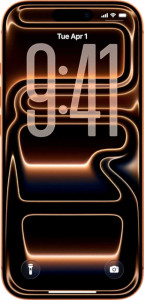
Apple iPhone 17 Pro
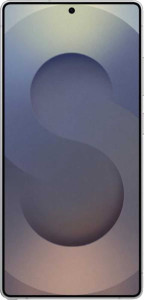
Samsung Galaxy S25 Ultra

Apple iPhone 17 Pro Samsung Galaxy S25 Ultra

Overview

When it comes to flagship smartphones in 2024, few matchups are as compelling as the Apple iPhone 17 Pro vs Samsung Galaxy S25 Ultra. These two powerhouses share a strong foundation — IP68 waterproofing, 120Hz OLED displays, and top-tier chipsets — yet they diverge sharply in areas like display size and brightness, camera versatility, battery capacity, and software ecosystems. Whether you value raw processing speed or a larger, more feature-packed experience, this comparison will help you decide which flagship truly fits your lifestyle.

Common Features

  • Both phones are waterproof with an IP68 ingress protection rating.
  • Neither phone has a rugged build.
  • The operating temperature range is the same on both, from 0°C to 35°C.
  • Neither phone can be folded.
  • Both phones feature an OLED/AMOLED display.
  • Both displays support a 120Hz refresh rate.
  • HDR10 support is available on both phones.
  • Always-On Display is available on both phones.
  • Neither phone has a secondary screen.
  • Both phones have a touchscreen.
  • Both phones come with 1024GB internal storage and 12GB of RAM.
  • Both phones use a 3nm semiconductor and support 64-bit processing.
  • Integrated LTE, integrated graphics, big.LITTLE technology, and HMP are present on both phones.
  • Both phones feature a multi-lens main camera with built-in optical image stabilization.
  • Both cameras include a dual-tone LED flash with 2 LEDs, a BSI sensor, a CMOS sensor, continuous autofocus for video, and phase-detection autofocus for photos.
  • Both operating systems include clipboard warnings, location privacy options, camera and microphone privacy options, app tracking blocking, cross-site tracking blocking, on-device machine learning, notification permissions, and a media picker.
  • Wireless charging and fast charging are supported on both phones, and neither comes with a charger in the box.
  • Neither phone has a removable battery, and both have a battery level indicator.
  • Both phones have stereo speakers, no 3.5mm audio jack, no radio, and 3 microphones.
  • Both phones support 5G, USB Type-C (USB 3.2), NFC, Wi-Fi 7, and have no external memory slot.
  • Download speed is 10000 Mbits/s and upload speed is 3500 Mbits/s on both phones.
  • Neither phone is DLNA-certified.
  • Both phones have a video light, no sapphire glass display, no curved display, and no e-paper display.

Main Differences

  • Weight is 206g on Apple iPhone 17 Pro and 218g on Samsung Galaxy S25 Ultra.
  • Thickness is 8.75mm on Apple iPhone 17 Pro and 8.2mm on Samsung Galaxy S25 Ultra.
  • Width is 71.9mm on Apple iPhone 17 Pro and 77.6mm on Samsung Galaxy S25 Ultra.
  • Height is 150mm on Apple iPhone 17 Pro and 162.8mm on Samsung Galaxy S25 Ultra.
  • Screen size is 6.3″ on Apple iPhone 17 Pro and 6.9″ on Samsung Galaxy S25 Ultra.
  • Pixel density is 460 ppi on Apple iPhone 17 Pro and 498 ppi on Samsung Galaxy S25 Ultra.
  • Resolution is 1206x2622px on Apple iPhone 17 Pro and 1440x3120px on Samsung Galaxy S25 Ultra.
  • Touch sampling rate is 120Hz on Apple iPhone 17 Pro and 240Hz on Samsung Galaxy S25 Ultra.
  • Typical brightness is 1000 nits on Apple iPhone 17 Pro and 2600 nits on Samsung Galaxy S25 Ultra.
  • Damage-resistant glass branding is present on Samsung Galaxy S25 Ultra but not on Apple iPhone 17 Pro.
  • HDR10+ support is present on Samsung Galaxy S25 Ultra but not available on Apple iPhone 17 Pro.
  • Dolby Vision support is present on Apple iPhone 17 Pro but not available on Samsung Galaxy S25 Ultra.
  • Contrast ratio is 2000000:1 on Apple iPhone 17 Pro and 3000000:1 on Samsung Galaxy S25 Ultra.
  • The chipset is Apple A19 Pro on Apple iPhone 17 Pro and Qualcomm Snapdragon 8 Elite on Samsung Galaxy S25 Ultra.
  • AnTuTu benchmark score is 2,707,681 on Apple iPhone 17 Pro and 2,207,809 on Samsung Galaxy S25 Ultra.
  • Geekbench 6 single-core score is 3781 on Apple iPhone 17 Pro and 3057 on Samsung Galaxy S25 Ultra.
  • Geekbench 6 multi-core score is 9553 on Apple iPhone 17 Pro and 9846 on Samsung Galaxy S25 Ultra.
  • ECC memory support is present on Samsung Galaxy S25 Ultra but not available on Apple iPhone 17 Pro.
  • Main camera resolution is 48 & 48 & 48 MP on Apple iPhone 17 Pro and 200 & 50 & 50 & 10 MP on Samsung Galaxy S25 Ultra.
  • Front camera resolution is 18MP on Apple iPhone 17 Pro and 12MP on Samsung Galaxy S25 Ultra.
  • Optical zoom is 4x on Apple iPhone 17 Pro and 5x on Samsung Galaxy S25 Ultra.
  • Maximum video recording resolution is 2160p at 120fps on Apple iPhone 17 Pro and 4320p at 30fps on Samsung Galaxy S25 Ultra.
  • Dolby Vision video recording is supported on Apple iPhone 17 Pro but not on Samsung Galaxy S25 Ultra.
  • Mail Privacy Protection is present on Apple iPhone 17 Pro but not available on Samsung Galaxy S25 Ultra.
  • Theme customization and dynamic theming are available on Samsung Galaxy S25 Ultra but not on Apple iPhone 17 Pro.
  • Split screen support is present on Samsung Galaxy S25 Ultra but not on Apple iPhone 17 Pro.
  • Direct OS updates are provided on Apple iPhone 17 Pro but not on Samsung Galaxy S25 Ultra.
  • The ability to be used as a PC is available on Samsung Galaxy S25 Ultra but not on Apple iPhone 17 Pro.
  • Multi-user system support is present on Samsung Galaxy S25 Ultra but not on Apple iPhone 17 Pro.
  • Battery capacity is 4252 mAh on Apple iPhone 17 Pro and 5000 mAh on Samsung Galaxy S25 Ultra.
  • Wired charging speed is 40W on Apple iPhone 17 Pro and 45W on Samsung Galaxy S25 Ultra.
  • Wireless charging speed is 30W on Apple iPhone 17 Pro and 15W on Samsung Galaxy S25 Ultra.
  • Reverse wireless charging is available on Samsung Galaxy S25 Ultra but not on Apple iPhone 17 Pro.
  • Battery life is rated at 33 hours on Apple iPhone 17 Pro and 31 hours on Samsung Galaxy S25 Ultra.
  • LDAC, aptX, and aptX HD audio codec support are available on Samsung Galaxy S25 Ultra but not on Apple iPhone 17 Pro.
  • Bluetooth version is 6 on Apple iPhone 17 Pro and 5.4 on Samsung Galaxy S25 Ultra.
  • A fingerprint scanner is present on Samsung Galaxy S25 Ultra but not on Apple iPhone 17 Pro.
  • 3D facial recognition is available on Apple iPhone 17 Pro but not on Samsung Galaxy S25 Ultra.
  • Emergency SOS via satellite is available on Apple iPhone 17 Pro but not on Samsung Galaxy S25 Ultra.
  • Crash detection is present on Apple iPhone 17 Pro but not on Samsung Galaxy S25 Ultra.
  • An infrared sensor is present on Apple iPhone 17 Pro but not on Samsung Galaxy S25 Ultra.
  • A stylus is included with Samsung Galaxy S25 Ultra but not with Apple iPhone 17 Pro.
  • SIM card support is 1 SIM and 1 eSIM on Apple iPhone 17 Pro and 2 SIM and 2 eSIM on Samsung Galaxy S25 Ultra.
  • ANT+ support is available on Samsung Galaxy S25 Ultra but not on Apple iPhone 17 Pro.
Specs Comparison
Apple iPhone 17 Pro

Apple iPhone 17 Pro

Samsung Galaxy S25 Ultra

Samsung Galaxy S25 Ultra

Design:
water resistance Waterproof Waterproof
weight 206 g 218 g
thickness 8.75 mm 8.2 mm
width 71.9 mm 77.6 mm
height 150 mm 162.8 mm
volume 94.36875 cm³ 103.592896 cm³
Ingress Protection (IP) rating IP68 IP68
has a rugged build
lowest potential operating temperature 0 °C 0 °C
maximum operating temperature 35 °C 35 °C
can be folded

Both phones share the same IP68 waterproof rating and identical operating temperature ranges, so neither has an edge in environmental protection. The real design story here is about form factor. The iPhone 17 Pro is notably more compact — 150 mm tall and 71.9 mm wide versus the S25 Ultra's 162.8 mm height and 77.6 mm width — resulting in a total volume of 94.37 cm³ compared to the S25 Ultra's 103.59 cm³. In practical terms, the iPhone 17 Pro fits more naturally in smaller hands and tighter pockets.

Weight and thickness tell a split story. The iPhone 17 Pro is the lighter device at 206 g versus 218 g for the S25 Ultra — a 12 g difference that becomes noticeable during extended one-handed use or when holding the phone up for prolonged periods. The S25 Ultra, however, is the slimmer handset at 8.2 mm thick compared to the iPhone 17 Pro's 8.75 mm, giving it a sleeker profile despite its larger footprint.

Overall, the iPhone 17 Pro holds a meaningful edge for users who prioritize ergonomics and portability — it is lighter and substantially more compact. The S25 Ultra trades that compactness for a larger canvas, which suits users who value screen real estate and can accept a bigger, heavier device. Neither phone is ruggedized, so durability beyond the shared IP68 rating is not a differentiator here.

Display:
Display type OLED/AMOLED OLED/AMOLED
screen size 6.3" 6.9"
pixel density 460 ppi 498 ppi
resolution 1206 x 2622 px 1440 x 3120 px
refresh rate 120Hz 120Hz
touch sampling rate 120Hz 240Hz
brightness (typical) 1000 nits 2600 nits
has branded damage-resistant glass
supports HDR10
supports HDR10+
Always-On Display
supports Dolby Vision
contrast ratio 2000000:1 3000000:1
Has a secondary screen
has a touch screen

The screen size gap between these two phones is significant: the S25 Ultra's 6.9″ panel versus the iPhone 17 Pro's 6.3″ display means noticeably more usable area for reading, multitasking, and media consumption. The S25 Ultra also wins on raw sharpness, with a pixel density of 498 ppi compared to 460 ppi — both are well beyond the threshold where individual pixels become invisible to the naked eye, but the Ultra's advantage is measurable under close inspection. More impactful in daily use is brightness: the S25 Ultra's 2600 nits typical output dwarfs the iPhone 17 Pro's 1000 nits, translating to dramatically better legibility in direct sunlight.

Touch responsiveness is another area where the S25 Ultra differentiates itself, offering a 240Hz touch sampling rate versus 120Hz on the iPhone 17 Pro. This means the S25 Ultra registers finger input twice as frequently, which benefits fast-paced gaming and stylus use more than everyday browsing. On the HDR front, the two phones diverge rather than stack up: the iPhone 17 Pro supports Dolby Vision while the S25 Ultra does not, whereas the S25 Ultra covers HDR10+ which the iPhone 17 Pro lacks. For most users this distinction is content-ecosystem-dependent — streaming platforms and video apps tend to favor one standard or the other. The S25 Ultra also ships with branded damage-resistant glass, an advantage the iPhone 17 Pro's specs do not match in this dataset.

The S25 Ultra holds a clear overall edge in this category. Its advantages in screen size, peak brightness, pixel density, touch sampling rate, and glass protection collectively add up to a more capable display — particularly for outdoor use and power users. The iPhone 17 Pro counters with Dolby Vision support, which matters in specific content workflows, but that single differentiator does not close the gap.

Performance:
internal storage 1024GB 1024GB
RAM 12GB 12GB
AnTuTu benchmark score 2707681 2207809
Chipset (SoC) name Apple A19 Pro Qualcomm Snapdragon 8 Elite
GPU name Apple A18 GPU Adreno 830
CPU speed 2 x 4.26 & 4 x 2.51 GHz 2 x 4.47 & 6 x 3.53 GHz
Geekbench 6 result (multi) 9553 9846
Geekbench 6 result (single) 3781 3057
GPU clock speed 1490 MHz 1200 MHz
Has integrated LTE
RAM speed 4800 MHz 5300 MHz
semiconductor size 3 nm 3 nm
Supports 64-bit
Has integrated graphics
Uses big.LITTLE technology
CPU threads 6 threads 8 threads
Uses HMP
Has TrustZone
maximum memory bandwidth 78.8 GB/s 85.1 GB/s
L2 cache 16 MB 12 MB
Supports ECC memory
maximum memory amount 12GB 24GB
uses multithreading
Thermal Design Power (TDP) 10W 8.2W
DDR memory version 5 5
shading units 128 1536

Single-core performance is where the iPhone 17 Pro's Apple A19 Pro chip makes its dominance unmistakable. Its Geekbench 6 single-core score of 3,781 towers over the S25 Ultra's 3,057 — a gap of roughly 24% that directly reflects how snappy the iPhone feels in everyday tasks like app launches, UI interactions, and workloads that cannot be parallelized. The overall AnTuTu score reinforces this: 2,707,681 versus 2,207,809 for the Snapdragon 8 Elite, a lead of roughly 23%. For general responsiveness, the A19 Pro is the faster chip by a meaningful margin.

The picture shifts considerably when looking at GPU and memory architecture. The S25 Ultra's Adreno 830 packs 1,536 shading units against the iPhone 17 Pro's 128 — an enormous structural difference that gives the S25 Ultra a fundamentally larger graphics pipeline for compute-heavy and GPU-parallel workloads. The S25 Ultra also leads in memory bandwidth at 85.1 GB/s versus 78.8 GB/s, and its RAM runs at a faster 5,300 MHz. Critically, the S25 Ultra supports up to 24 GB of RAM — double the iPhone 17 Pro's 12 GB ceiling — along with ECC memory for error correction, features that matter most for sustained multitasking, large AI model inference, and pro-grade workloads. Its 8.2W TDP versus the iPhone's 10W also suggests the Snapdragon achieves its performance more efficiently under sustained load.

This group does not have a single clean winner — it depends entirely on use case. The iPhone 17 Pro is the faster chip for single-threaded and everyday performance. The S25 Ultra counters with a vastly wider GPU, more headroom in memory capacity and bandwidth, and greater multi-core throughput, making it better suited for graphics-intensive applications and heavy parallel workloads. Power users running demanding apps will find more ceiling on the S25 Ultra; users who prize fluid, low-latency everyday performance will favor the A19 Pro.

Cameras:
megapixels (main camera) 48 & 48 & 48 MP 200 & 50 & 50 & 10 MP
wide aperture (main camera) 1.78 & 2.2 & 2.8f 1.7 & 3.4 & 1.9 & 2.4f
Has a dual-lens (or multi-lens) main camera
megapixels (front camera) 18MP 12MP
has built-in optical image stabilization
video recording (main camera) 2160 x 120 fps 4320 x 30 fps
Has a dual-tone LED flash
number of flash LEDs 2 2
has a BSI sensor
has a CMOS sensor
has continuous autofocus when recording movies
Has phase-detection autofocus for photos
supports slow-motion video recording
has a built-in HDR mode
has manual exposure
has a flash
optical zoom 4x 5x
has manual ISO
has a serial shot mode
has manual focus
pixel size (main camera) 1.22 & 0.7 & 2.8 µm 0.6 & 0.7 & 0.7 & 1.12 µm
has a front camera
Has laser autofocus
Shoots 360° panorama
has manual white balance
shoots raw
has touch autofocus
has manual shutter speed
can create panoramas in-camera
wide aperture (front camera) 1.9f 2.2f
Has timelapse function
minimum focal length 13 mm 24 mm
maximum focal length 120 mm 111 mm
Has a front-facing LED flash
has a dual-lens (or multi-lens) front camera
supports HDR10 recording
supports Dolby Vision recording
has a front-facing camera under the display
Has a RGB LED flash
has 3D photo/video recording capabilities

The rear camera systems reveal fundamentally different philosophies. The S25 Ultra deploys a four-lens array headlined by a 200 MP primary sensor — a resolution that enables aggressive cropping and exceptional detail retention in well-lit scenes. By contrast, the iPhone 17 Pro runs a triple-lens setup where all three cameras are fixed at 48 MP, prioritizing consistency across focal lengths over a single dominant sensor. The S25 Ultra's primary pixel size of 0.6 µm is smaller than any of the iPhone 17 Pro's sensors, with the Pro's main camera offering 1.22 µm pixels — larger pixels generally capture more light per photosite, which matters in low-light conditions. The iPhone 17 Pro also starts wider, with a minimum focal length of 13 mm versus 24 mm on the S25 Ultra, giving it a more versatile ultra-wide reach. The S25 Ultra counters with 5x optical zoom against the iPhone's 4x, and its four-lens system covers more discrete focal lengths overall.

For video, the iPhone 17 Pro pulls ahead in one notable way: it supports 4K at 120 fps recording, versus the S25 Ultra's 8K at 30 fps ceiling. The iPhone also retains its Dolby Vision recording capability, absent on the S25 Ultra, which is a meaningful differentiator for anyone editing in a Dolby Vision-compatible workflow. The S25 Ultra's 8K capture, on the other hand, offers an enormous resolution buffer for reframing or cropping footage in post-production. On the front camera, the iPhone 17 Pro's 18 MP selfie sensor outresolves the S25 Ultra's 12 MP, and its wider f/1.9 aperture versus f/2.2 on the S25 Ultra means better low-light selfie performance.

This is a close category with no universal winner. The S25 Ultra is the stronger choice for photographers who want maximum resolution, more optical zoom range, and 8K video capture. The iPhone 17 Pro is the better fit for videographers who need high-frame-rate 4K, Dolby Vision recording, and a wider ultra-wide starting point. The right call depends entirely on whether stills resolution or video versatility matters more to the user.

Operating system:
has clipboard warnings
has location privacy options
has camera/microphone privacy options
has Mail Privacy Protection
has theme customization
can block app tracking
blocks cross-site tracking
has on-device machine learning
has notification permissions
has media picker
Can play games while they download
has dark mode
has Wi-Fi password sharing
has battery health check
has an extra dim mode
has focus modes
has dynamic theming
can offload apps
Has customizable notifications
has Live Text
has full-page screenshots
supports split screen
gets direct OS updates
has PiP
Can be used as a PC
Has sharing intents
has a child lock
Supports widgets
Is free and open source
Has offline voice recognition
has voice commands
Tracks the current position of a mobile device
is a multi-user system
has Quick Start

On shared ground, both phones cover the essentials well — dark mode, focus modes, customizable notifications, battery health checks, Picture-in-Picture, widgets, offline voice recognition, and robust privacy controls including camera/microphone permissions, app tracking blocks, and cross-site tracking prevention. For most users, this common feature floor is sufficient for daily use. The divergence, however, lies in flexibility and openness. The S25 Ultra supports split-screen multitasking, multi-user accounts, dynamic theming, and can function as a PC replacement — capabilities the iPhone 17 Pro entirely lacks. These are not minor omissions; split screen and desktop mode meaningfully expand what a phone can do as a productivity device.

The iPhone 17 Pro's key advantage in this category is its update model. It receives direct OS updates from Apple, meaning new software versions arrive immediately without carrier or manufacturer delays. The S25 Ultra does not share this trait, as Android updates pass through an additional layer before reaching the device. The iPhone also offers Mail Privacy Protection, a privacy feature absent on the S25 Ultra, which prevents email senders from tracking whether and when a message was opened. These are meaningful wins for privacy-conscious and security-focused users.

Taken as a whole, the S25 Ultra holds the broader feature advantage in this group, with more customization options, superior multitasking capabilities, multi-user support, and desktop use — all of which cater to power users who want their phone to do more. The iPhone 17 Pro counters with a tighter, more privacy-centric experience and a faster, more predictable update pipeline, which will matter more to users who prioritize security and simplicity over flexibility.
Battery:
battery power 4252 mAh 5000 mAh
has wireless charging
Supports fast charging
charging speed 40W 45W
wireless charging speed 30W 15W
has reverse wireless charging
comes with a charger
has a removable battery
has a battery level indicator
Battery life 33 hours 31 hours
has a rechargeable battery

Despite the S25 Ultra carrying a notably larger 5,000 mAh battery versus the iPhone 17 Pro's 4,252 mAh, the real-world battery life figures tell a surprising story: the iPhone 17 Pro lasts 33 hours compared to the S25 Ultra's 31 hours. This means the A19 Pro chip's efficiency effectively neutralizes the S25 Ultra's capacity advantage, squeezing more runtime out of fewer milliamp-hours. For users, the practical takeaway is that both phones are closely matched in longevity, and the iPhone 17 Pro edges ahead on endurance despite the smaller cell.

Charging is where the two phones split in different directions. The S25 Ultra is faster on wired charging at 45W versus 40W, a modest but real difference that shaves a few minutes off a full charge cycle. The iPhone 17 Pro flips the advantage on wireless charging, offering 30W wirelessly compared to the S25 Ultra's 15W — double the wireless speed, which is a meaningful gap for users who rely on a wireless pad as their primary charging method. The S25 Ultra adds reverse wireless charging, a feature the iPhone 17 Pro lacks entirely, allowing it to top up accessories like earbuds or a smartwatch directly from the phone's back.

Neither phone ships with a charger in the box, so both require a separate purchase regardless. Overall, this group is closely contested: the iPhone 17 Pro leads on battery life and wireless charging speed, while the S25 Ultra counters with a larger capacity, faster wired charging, and the added utility of reverse wireless charging. Users who charge wirelessly will find the iPhone 17 Pro more capable; those who use wired charging or want to power accessories on the go will lean toward the S25 Ultra.

Audio:
has a socket for a 3.5 mm audio jack
has stereo speakers
has aptX
has LDAC
has aptX HD
has aptX Adaptive
has aptX Lossless
Has a radio
number of microphones 3 3

Both phones share the same hardware baseline here — stereo speakers, no 3.5mm headphone jack, and three microphones — so the core listening and call-capture experience is structurally identical on paper. The meaningful separation comes entirely from Bluetooth audio codec support. The S25 Ultra supports aptX, aptX HD, and LDAC, while the iPhone 17 Pro supports none of these. For wireless audio enthusiasts, this is a significant gap: LDAC in particular transmits up to three times the data of standard Bluetooth audio, delivering near-lossless quality to compatible headphones and speakers.

In practical terms, the iPhone 17 Pro is limited to standard Bluetooth audio codecs when paired with wireless headphones. Users with high-end LDAC-compatible or aptX HD-compatible headphones will only unlock their full audio fidelity potential on the S25 Ultra. Neither phone supports aptX Adaptive or aptX Lossless, so the S25 Ultra's codec advantage, while real, has a ceiling — but it is still a ceiling the iPhone 17 Pro cannot reach at all based on these specs.

The S25 Ultra holds a clear edge in this category for anyone who takes wireless audio quality seriously. The three-microphone setup and stereo speakers leave both phones evenly matched for calls and speakerphone use, but the S25 Ultra's LDAC and aptX HD support makes it the stronger choice for users invested in high-resolution wireless audio.

Connectivity & Features:
release date September 2025 January 2025
has 5G support
Wi-Fi version Wi-Fi 6 (802.11ax), Wi-Fi 5 (802.11ac), Wi-Fi 4 (802.11n), Wi-Fi 6E (802.11ax), Wi-Fi 7 (802.11be) Wi-Fi 4 (802.11n), Wi-Fi 6 (802.11ax), Wi-Fi 5 (802.11ac), Wi-Fi 7 (802.11be), Wi-Fi 6E (802.11ax)
SIM cards 1 SIM, 1 eSIM 2 SIM, 2 eSIM
Bluetooth version 6 5.4
has an external memory slot
Has USB Type-C
USB version 3.2 3.2
has NFC
download speed 10000 MBits/s 10000 MBits/s
upload speed 3500 MBits/s 3500 MBits/s
Has a fingerprint scanner
has emergency SOS via satellite
has crash detection
is DLNA-certified
has a gyroscope
supports ANT+
Has a heart rate monitor
has GPS
has a compass
supports Wi-Fi
Has an infrared sensor
has an accelerometer
has a cellular module
Has a barometer
has an HDMI output
Uses 3D facial recognition
Has an iris scanner
Stylus included
supports Galileo
Has motion tracking
Has optical tracking
Has a built-in projector

Wireless connectivity is nearly identical between these two phones — both support Wi-Fi 7, 5G, NFC, USB 3.2 Type-C, and GPS with Galileo — so neither holds a structural advantage in raw network capability. Where they diverge is in Bluetooth: the iPhone 17 Pro ships with the newer Bluetooth 6 versus the S25 Ultra's Bluetooth 5.4, which translates to improved connection stability, lower latency, and better handling of multiple simultaneous audio devices. The iPhone 17 Pro also supports only a single physical SIM plus one eSIM, while the S25 Ultra accommodates 2 SIMs and 2 eSIMs — a tangible advantage for frequent travelers or users who juggle work and personal lines on one device.

The unique features each phone brings to the table are notably different in character. The iPhone 17 Pro offers emergency SOS via satellite and crash detection — safety-oriented capabilities the S25 Ultra entirely lacks — alongside 3D facial recognition and an infrared sensor. The S25 Ultra answers with a fingerprint scanner, a built-in stylus, and ANT+ support for fitness accessory connectivity. The stylus inclusion is particularly significant for productivity and note-taking use cases, representing a hardware capability the iPhone 17 Pro simply cannot replicate.

This category ends as a meaningful split rather than a clean win for either side. The iPhone 17 Pro's edge in Bluetooth 6 and its satellite safety features make it the stronger choice for users who prioritize connectivity precision and emergency preparedness. The S25 Ultra's dual-SIM flexibility, fingerprint scanner, integrated stylus, and ANT+ support cater to power users, travelers, and anyone who values a broader physical feature set. Which phone wins here depends entirely on which of these capabilities aligns with the user's daily needs.

Miscellaneous:
has a video light
Has sapphire glass display
Has a curved display
Has an e-paper display

The miscellaneous specs for these two phones are a complete match across every data point provided. Both feature a video light, neither uses sapphire glass, neither has a curved or e-paper display. There is nothing in this group that separates them.

This is an unambiguous tie. No advantage exists for either the Apple iPhone 17 Pro or the Samsung Galaxy S25 Ultra based solely on the specs provided here, and users should look to other specification groups to inform their decision.

Comparison Summary & Verdict

After examining every major specification, it is clear that both devices excel in their own right, but they cater to different types of users. The Apple iPhone 17 Pro stands out with its superior single-core performance, longer battery life, faster wireless charging at 30W, a more compact and lighter build, and exclusive features like emergency SOS via satellite, 3D facial recognition, and Dolby Vision recording — making it the ideal choice for users deeply invested in the Apple ecosystem who prioritize portability and software polish. The Samsung Galaxy S25 Ultra, on the other hand, wins on sheer versatility: its larger 6.9″ display with 2600 nits brightness and 240Hz touch sampling, a 200MP main camera with 5x optical zoom, the included S Pen stylus, a 5000 mAh battery, and a more open Android environment make it the definitive pick for power users, content creators, and multitaskers who want the most feature-rich Android flagship available.

Apple iPhone 17 Pro
Buy Apple iPhone 17 Pro if...

Buy the Apple iPhone 17 Pro if you want a more compact and lighter flagship with longer battery life, faster wireless charging, superior single-core performance, and exclusive features like Dolby Vision recording and emergency SOS via satellite.

Samsung Galaxy S25 Ultra
Buy Samsung Galaxy S25 Ultra if...

Buy the Samsung Galaxy S25 Ultra if you want a larger, brighter display, a more versatile 200MP quad-camera system with 5x optical zoom, an included S Pen stylus, and a bigger 5000 mAh battery with greater Android flexibility.