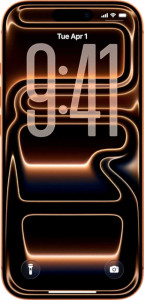
Apple iPhone 17 Pro
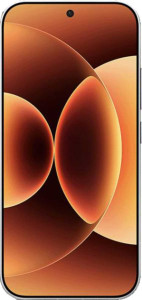
Xiaomi 17 Pro

Apple iPhone 17 Pro Xiaomi 17 Pro

Overview

When comparing the Apple iPhone 17 Pro and the Xiaomi 17 Pro, two flagship smartphones emerge with sharply different philosophies. Both share a polished OLED display, IP68 waterproofing, and 1024GB of storage, yet they diverge significantly in areas like battery capacity, camera capabilities, and raw performance. Whether you value Apple's tightly integrated ecosystem or Xiaomi's hardware ambition, this head-to-head breakdown covers every key battleground to help you decide.

Common Features

  • Both phones are waterproof with an IP68 ingress protection rating.
  • Neither phone has a rugged build.
  • Neither phone can be folded.
  • Both phones feature an OLED/AMOLED display with a 6.3″ screen size.
  • Both phones support a 120Hz refresh rate.
  • HDR10 support is available on both phones.
  • Always-On Display is available on both phones.
  • Dolby Vision support is available on both phones.
  • Both phones have a touchscreen.
  • Both phones come with 1024GB of internal storage.
  • Both phones have integrated LTE.
  • Both phones are built on a 3 nm semiconductor process.
  • Both phones use big.LITTLE technology with HMP and TrustZone support.
  • Both phones have a multi-lens main camera with built-in optical image stabilization.
  • Both phones have a dual-tone LED flash with 2 LEDs.
  • Both phones include BSI and CMOS sensors with phase-detection and continuous autofocus.
  • Both phones have clipboard warnings, location privacy options, camera/microphone privacy options, app tracking blocking, on-device machine learning, notification permissions, a media picker, and dark mode.
  • Both phones support wireless charging and fast charging, and neither has a removable battery.
  • Neither phone has a 3.5mm audio jack, but both feature stereo speakers.
  • Both phones support 5G, USB Type-C (USB 3.2), NFC, Wi-Fi 7, and have no external memory slot.

Main Differences

  • Weight is 206 g on Apple iPhone 17 Pro and 192 g on Xiaomi 17 Pro.
  • Thickness is 8.75 mm on Apple iPhone 17 Pro and 8 mm on Xiaomi 17 Pro.
  • Waterproof depth rating is 6 m on Apple iPhone 17 Pro and 4 m on Xiaomi 17 Pro.
  • Touch sampling rate is 120Hz on Apple iPhone 17 Pro and 300Hz on Xiaomi 17 Pro.
  • Damage-resistant glass branding is present on Xiaomi 17 Pro but not on Apple iPhone 17 Pro.
  • HDR10+ support is present on Xiaomi 17 Pro but not available on Apple iPhone 17 Pro.
  • A secondary screen is present on Xiaomi 17 Pro but not on Apple iPhone 17 Pro.
  • RAM is 12GB on Apple iPhone 17 Pro and 16GB on Xiaomi 17 Pro.
  • AnTuTu benchmark score is 2,707,681 on Apple iPhone 17 Pro and 3,691,009 on Xiaomi 17 Pro.
  • Geekbench 6 single-core result is 3781 on Apple iPhone 17 Pro and 3234 on Xiaomi 17 Pro, while multi-core result is 9553 on Apple iPhone 17 Pro and 10059 on Xiaomi 17 Pro.
  • Main camera megapixels are 48 & 48 & 48 MP on Apple iPhone 17 Pro and 50 & 50 & 50 MP on Xiaomi 17 Pro.
  • Front camera resolution is 18MP on Apple iPhone 17 Pro and 50MP on Xiaomi 17 Pro.
  • Maximum video resolution is 2160p at 120fps on Apple iPhone 17 Pro and 4320p at 30fps on Xiaomi 17 Pro.
  • Optical zoom is 4x on Apple iPhone 17 Pro and 5x on Xiaomi 17 Pro.
  • Manual shutter speed is available on Apple iPhone 17 Pro but not on Xiaomi 17 Pro.
  • Battery capacity is 4252 mAh on Apple iPhone 17 Pro and 6300 mAh on Xiaomi 17 Pro.
  • Wired charging speed is 40W on Apple iPhone 17 Pro and 100W on Xiaomi 17 Pro.
  • Wireless charging speed is 30W on Apple iPhone 17 Pro and 50W on Xiaomi 17 Pro.
  • Reverse wireless charging is available on Xiaomi 17 Pro but not on Apple iPhone 17 Pro.
  • aptX, aptX HD, and aptX Adaptive audio support are present on Xiaomi 17 Pro but not available on Apple iPhone 17 Pro.
  • SIM configuration is 1 SIM + 1 eSIM on Apple iPhone 17 Pro and dual physical SIM on Xiaomi 17 Pro.
  • Bluetooth version is 6 on Apple iPhone 17 Pro and 5.4 on Xiaomi 17 Pro.
  • A fingerprint scanner is present on Xiaomi 17 Pro but not on Apple iPhone 17 Pro.
  • Emergency SOS via satellite is available on Apple iPhone 17 Pro but not on Xiaomi 17 Pro.
  • Crash detection is available on Apple iPhone 17 Pro but not on Xiaomi 17 Pro.
  • 3D facial recognition is available on Apple iPhone 17 Pro but not on Xiaomi 17 Pro.
  • Mail Privacy Protection is available on Apple iPhone 17 Pro but not on Xiaomi 17 Pro.
  • Cross-site tracking blocking is present on Apple iPhone 17 Pro but not on Xiaomi 17 Pro.
  • Split-screen support is available on Xiaomi 17 Pro but not on Apple iPhone 17 Pro.
  • Direct OS updates are provided on Apple iPhone 17 Pro but not on Xiaomi 17 Pro.
Specs Comparison
Apple iPhone 17 Pro

Apple iPhone 17 Pro

Xiaomi 17 Pro

Xiaomi 17 Pro

Design:
water resistance Waterproof Waterproof
weight 206 g 192 g
thickness 8.75 mm 8 mm
width 71.9 mm 71.8 mm
height 150 mm 151.1 mm
volume 94.36875 cm³ 86.79184 cm³
Ingress Protection (IP) rating IP68 IP68
waterproof depth rating 6 m 4 m
has a rugged build
can be folded

In terms of form factor, the two phones share nearly identical footprints — almost the same width (71.9 mm vs 71.8 mm) and a very similar height — meaning they will feel virtually interchangeable in one hand. Where they diverge meaningfully is in thickness and weight: the Xiaomi 17 Pro is noticeably slimmer at 8 mm versus 8.75 mm for the iPhone 17 Pro, and lighter at 192 g compared to 206 g. That 14-gram difference and the slimmer profile translate directly into a less fatiguing, more premium-feeling device during extended use, and the Xiaomi's smaller overall volume (86.79 cm³ vs 94.37 cm³) reflects a tighter, more efficiently packaged chassis.

On water resistance, both phones carry an IP68 rating, so everyday splashes, rain, and accidental drops in shallow water are covered on either device. However, the iPhone 17 Pro is certified to a deeper waterproof rating of 6 m versus the Xiaomi's 4 m, which matters in practice for activities like poolside use or underwater photography — the Apple device offers a meaningful extra margin of safety in those scenarios.

Overall, the design category is split: the Xiaomi 17 Pro has a clear physical edge in everyday ergonomics thanks to its lighter weight and slimmer build, while the iPhone 17 Pro holds an advantage for water-related durability with its superior depth rating. Neither has a rugged build or a foldable form factor, keeping both firmly in the mainstream flagship category.

Display:
Display type OLED/AMOLED OLED/AMOLED
screen size 6.3" 6.3"
pixel density 460 ppi 464 ppi
resolution 1206 x 2622 px 1220 x 2656 px
refresh rate 120Hz 120Hz
touch sampling rate 120Hz 300Hz
has branded damage-resistant glass
supports HDR10
supports HDR10+
Always-On Display
supports Dolby Vision
Has a secondary screen
has a touch screen

At first glance, these two displays are remarkably close: both are 6.3″ OLED/AMOLED panels running at 120Hz with near-identical pixel densities (460 ppi vs 464 ppi), making sharpness a non-issue on either device. HDR10 and Always-On Display support is shared across both, and Dolby Vision is present on each — so for the vast majority of streaming and media consumption use cases, the viewing experience will be essentially equivalent.

The differentiators emerge in the details. The Xiaomi 17 Pro pulls ahead with a 300Hz touch sampling rate versus the iPhone 17 Pro's 120Hz — a spec that matters most to gamers, as higher sampling rates translate to faster, more precise touch input registration during fast-paced gameplay. The Xiaomi also adds HDR10+ support alongside Dolby Vision, giving it broader compatibility with high dynamic range content across different platforms. Critically, it features branded damage-resistant glass — something the iPhone 17 Pro lacks according to the provided data — offering a layer of real-world scratch and drop protection for the screen itself. The Xiaomi also includes a secondary screen, which expands its versatility for quick-glance notifications or always-on information without engaging the main panel.

The Xiaomi 17 Pro holds a clear advantage in this category. While core image quality is virtually tied, the Xiaomi wins on interactivity with its superior touch sampling rate, edges ahead on content format support, and adds meaningful practical benefits in screen protection and a secondary display that the iPhone 17 Pro simply does not offer.

Performance:
internal storage 1024GB 1024GB
RAM 12GB 16GB
AnTuTu benchmark score 2707681 3691009
Chipset (SoC) name Apple A19 Pro Qualcomm Snapdragon 8 Elite Gen 5
GPU name Apple A18 GPU Adreno 830
CPU speed 2 x 4.26 & 4 x 2.51 GHz 2 x 4.6 & 6 x 3.62 GHz
Geekbench 6 result (multi) 9553 10059
Geekbench 6 result (single) 3781 3234
GPU clock speed 1490 MHz 1200 MHz
Has integrated LTE
RAM speed 4800 MHz 5300 MHz
semiconductor size 3 nm 3 nm
Supports 64-bit
Has integrated graphics
Uses big.LITTLE technology
CPU threads 6 threads 8 threads
Uses HMP
Has TrustZone
maximum memory bandwidth 78.8 GB/s 85.1 GB/s
L2 cache 16 MB 12 MB
Supports ECC memory
maximum memory amount 12GB 24GB
uses multithreading
Thermal Design Power (TDP) 10W 8.2W
DDR memory version 5 5
shading units 128 1536

The single-core story belongs to the iPhone 17 Pro. Apple's A19 Pro chip posts a Geekbench 6 single-core score of 3,781 — a commanding lead over the Xiaomi's 3,234 — which reflects Apple's continued dominance in per-core CPU efficiency. For tasks that rely on a single fast core, such as app launches, UI responsiveness, and many everyday operations, this translates to a noticeably snappier feel. The iPhone also carries a larger 16 MB L2 cache versus 12 MB, which helps keep frequently accessed data closer to the processor and reduces latency in sustained workloads.

Zoom out to broader performance, however, and the Xiaomi 17 Pro asserts itself decisively. Its Snapdragon 8 Elite Gen 5 chip scores 3,691,009 on AnTuTu — nearly a million points ahead of the iPhone's 2,707,681 — and edges ahead in multi-core Geekbench as well. The most striking gap is in GPU compute: the Xiaomi's Adreno 830 packs 1,536 shading units against the Apple GPU's 128, a gulf that points to a substantial raw graphics throughput advantage for GPU-heavy workloads like 3D gaming and compute tasks. The Xiaomi also offers more RAM (16 GB vs 12 GB) at a faster speed (5,300 MHz vs 4,800 MHz), higher memory bandwidth (85.1 GB/s vs 78.8 GB/s), and a lower TDP (8.2W vs 10W), suggesting it achieves its higher throughput more efficiently.

The verdict depends on the workload. For raw single-threaded speed, the iPhone 17 Pro retains a real edge that matters in day-to-day use. But on virtually every other performance dimension — overall benchmark scores, graphics power, memory capacity, and efficiency — the Xiaomi 17 Pro holds a clear and measurable advantage, making it the stronger performer for demanding, multi-threaded, and GPU-intensive tasks.
Cameras:
megapixels (main camera) 48 & 48 & 48 MP 50 & 50 & 50 MP
wide aperture (main camera) 1.78 & 2.2 & 2.8f 1.7 & 2.4 & 3f
Has a dual-lens (or multi-lens) main camera
megapixels (front camera) 18MP 50MP
has built-in optical image stabilization
video recording (main camera) 2160 x 120 fps 4320 x 30 fps
Has a dual-tone LED flash
number of flash LEDs 2 2
has a BSI sensor
has a CMOS sensor
has continuous autofocus when recording movies
Has phase-detection autofocus for photos
supports slow-motion video recording
has a built-in HDR mode
has manual exposure
has a flash
optical zoom 4x 5x
has manual ISO
has a serial shot mode
has manual focus
has a front camera
Has laser autofocus
Shoots 360° panorama
has manual white balance
has touch autofocus
has manual shutter speed
can create panoramas in-camera
wide aperture (front camera) 1.9f 2.2f
Has timelapse function
minimum focal length 13 mm 17 mm
maximum focal length 120 mm 115 mm
Has a front-facing LED flash
has a dual-lens (or multi-lens) front camera
supports HDR10 recording
supports Dolby Vision recording
has a front-facing camera under the display
Has a RGB LED flash
has 3D photo/video recording capabilities

Both phones deploy a triple-lens rear system with OIS, laser autofocus, and identical manual controls for most shooting scenarios — a strong shared foundation. The meaningful separations emerge when you look closer. The Xiaomi 17 Pro leads on resolution across the board, with 50 MP across all three rear lenses versus the iPhone 17 Pro's 48 MP, and a dramatically higher-resolution front camera at 50 MP compared to just 18 MP — a gap that matters considerably for selfie detail and video calls. The Xiaomi also extends its telephoto reach with 5x optical zoom against the iPhone's 4x, and its wider minimum focal length gives the iPhone a slight edge at the ultra-wide end (13 mm vs 17 mm), meaning Apple captures a broader field of view without distortion.

The video specs tell two very different stories. The iPhone 17 Pro tops out at 4K at 120 fps, which is the superior choice for high-frame-rate content — smooth slow-motion and fluid action footage at full resolution. The Xiaomi 17 Pro, by contrast, maxes out at 8K at 30 fps, prioritizing maximum resolution over frame rate — ideal for cinematic, detail-rich footage that can be cropped in post. Neither approach is objectively superior; they serve different creative priorities. Both support Dolby Vision and HDR10 recording, keeping professional-grade color grading within reach on either device. One notable gap: the iPhone 17 Pro includes manual shutter speed control, which the Xiaomi omits — a genuine advantage for photographers who want granular exposure control in challenging light.

On balance, the Xiaomi 17 Pro holds a moderate overall edge in this category, driven by its higher-resolution selfie camera, greater optical zoom, and 8K video capability. The iPhone 17 Pro counters with a wider ultra-wide focal length, superior high-frame-rate video, and manual shutter speed — advantages that will resonate with users who prioritize creative control and smooth motion capture over raw resolution.

Operating system:
has clipboard warnings
has location privacy options
has camera/microphone privacy options
has Mail Privacy Protection
has theme customization
can block app tracking
blocks cross-site tracking
has on-device machine learning
has notification permissions
has media picker
Can play games while they download
has dark mode
has Wi-Fi password sharing
has battery health check
has an extra dim mode
has focus modes
has dynamic theming
can offload apps
Has customizable notifications
has Live Text
has full-page screenshots
supports split screen
gets direct OS updates
has PiP
Can be used as a PC
Has sharing intents
has a child lock
Supports widgets
Is free and open source
Has offline voice recognition
has voice commands
Tracks the current position of a mobile device
is a multi-user system
has Quick Start

Privacy is a strength on both devices, but the approaches diverge in telling ways. The iPhone 17 Pro adds Mail Privacy Protection and cross-site tracking blocking — two features the Xiaomi 17 Pro lacks — making it the stronger choice for users who prioritize a locked-down, anti-surveillance experience out of the box. The iPhone also benefits from direct OS updates, meaning security patches and new features arrive immediately from Apple without carrier or manufacturer delays — a meaningful long-term advantage the Xiaomi cannot match, as its updates are filtered through the Android ecosystem chain.

Where the Xiaomi 17 Pro asserts itself is in flexibility and personalization. It supports dynamic theming, theme customization, split-screen multitasking, and a multi-user system — none of which are available on the iPhone. Split-screen alone is a practical productivity differentiator for power users, and multi-user support makes the device more shareable in family or professional contexts. The Xiaomi also allows playing games while they download and includes an extra dim mode for low-light comfort, small but genuinely useful quality-of-life additions. Being based on an open-source platform further distinguishes it for users who value ecosystem openness.

This category reflects a fundamental philosophical divide rather than one product simply outclassing the other. The iPhone 17 Pro holds a clearer edge for privacy-focused users and those who value timely, reliable software updates. The Xiaomi 17 Pro wins on customization depth and multitasking flexibility. Users who prioritize control over their experience will lean Xiaomi; those who prioritize security and software longevity will lean Apple.

Battery:
battery power 4252 mAh 6300 mAh
has wireless charging
Supports fast charging
charging speed 40W 100W
wireless charging speed 30W 50W
has reverse wireless charging
has a removable battery
has a battery level indicator
has a rechargeable battery

Few spec categories produce as lopsided a result as this one. The Xiaomi 17 Pro packs a 6,300 mAh battery against the iPhone 17 Pro's 4,252 mAh — a 48% larger cell that, all else being equal, points to substantially longer time between charges. For heavy users, road travelers, or anyone routinely away from a power source, that gap is difficult to ignore.

The charging story amplifies the Xiaomi's advantage further. Its 100W wired charging is 2.5 times faster than the iPhone's 40W, meaning the Xiaomi can replenish its much larger battery in a fraction of the time. Wireless charging follows the same pattern — 50W on the Xiaomi versus 30W on the iPhone — and the Xiaomi adds reverse wireless charging, allowing it to top up accessories like earbuds or a smartwatch directly from the phone's back, a feature the iPhone 17 Pro entirely lacks.

The Xiaomi 17 Pro wins this category decisively and without qualification. It carries more capacity, charges faster by every available method, and offers a charging capability — reverse wireless — that the iPhone simply does not provide. For battery-conscious buyers, the Xiaomi's lead here is one of the most concrete advantages in this entire comparison.

Audio:
has a socket for a 3.5 mm audio jack
has stereo speakers
has aptX
has LDAC
has aptX HD
has aptX Adaptive
has aptX Lossless
Has a radio

Shared ground is easy to summarize: neither phone has a 3.5mm headphone jack or FM radio, and both deliver stereo speakers — so for casual listening straight from the device, the out-of-box experience is structurally identical. The real divergence surfaces in wireless audio codec support, which determines the quality ceiling when using Bluetooth headphones.

The Xiaomi 17 Pro supports aptX, aptX HD, and aptX Adaptive, while the iPhone 17 Pro supports none of these codecs. In practical terms, this means Xiaomi users with compatible headphones can stream higher-quality, lower-latency Bluetooth audio — aptX HD in particular targets high-resolution wireless playback, and aptX Adaptive dynamically adjusts bitrate for both quality and latency optimization. The iPhone 17 Pro, lacking these codecs, is limited to AAC and SBC over Bluetooth, which represent a lower ceiling for wireless audio fidelity with non-Apple headphones.

The Xiaomi 17 Pro holds a clear advantage here for audiophiles or anyone invested in a high-quality Bluetooth audio setup. That said, neither device supports LDAC or aptX Lossless, so both fall short of the absolute top tier of wireless audio. For users who listen exclusively through Apple's own ecosystem of wireless accessories, the practical gap may be smaller — but on paper, the Xiaomi's codec support is meaningfully broader.

Connectivity & Features:
release date September 2025 September 2025
has 5G support
Wi-Fi version Wi-Fi 6 (802.11ax), Wi-Fi 5 (802.11ac), Wi-Fi 4 (802.11n), Wi-Fi 6E (802.11ax), Wi-Fi 7 (802.11be) Wi-Fi 4 (802.11n), Wi-Fi 6E (802.11ax), Wi-Fi 6 (802.11ax), Wi-Fi 5 (802.11ac), Wi-Fi 7 (802.11be)
SIM cards 1 SIM, 1 eSIM 2 SIM
Bluetooth version 6 5.4
has an external memory slot
Has USB Type-C
USB version 3.2 3.2
has NFC
download speed 10000 MBits/s 10000 MBits/s
upload speed 3500 MBits/s 3500 MBits/s
Has a fingerprint scanner
has emergency SOS via satellite
has crash detection
is DLNA-certified
has a gyroscope
supports ANT+
Has a heart rate monitor
has GPS
has a compass
supports Wi-Fi
Has an infrared sensor
has an accelerometer
has a cellular module
Has a barometer
has an HDMI output
Uses 3D facial recognition
Has an iris scanner
Stylus included
supports Galileo
Has motion tracking
Has optical tracking
Has a built-in projector

The connectivity baseline is strong and essentially identical: both phones support 5G, Wi-Fi 7, USB-C 3.2, NFC, and the same peak download and upload speeds. Sensors are also well-matched, with GPS, compass, gyroscope, barometer, accelerometer, and even an infrared sensor present on each. For everyday connectivity needs, neither device leaves the other behind.

The differentiators cut in opposite directions depending on what you value. The iPhone 17 Pro runs on Bluetooth 6 versus the Xiaomi's Bluetooth 5.4 — a newer spec that offers improvements in connection efficiency and positioning accuracy. More significantly, the iPhone adds emergency SOS via satellite and crash detection, two safety-oriented features entirely absent on the Xiaomi — capabilities that can be genuinely life-saving in remote areas or accident scenarios. For biometric authentication, the iPhone relies on 3D facial recognition, while the Xiaomi opts for a fingerprint scanner — a difference in approach rather than a clear hierarchy, though fingerprint scanners tend to be more versatile across lighting conditions and mask-wearing scenarios. The Xiaomi also supports dual physical SIM cards, compared to the iPhone's single SIM plus eSIM configuration, which is a meaningful practical advantage for travelers or users managing two numbers.

This category is closely contested, but the iPhone 17 Pro holds a meaningful edge for users who prioritize personal safety infrastructure and cutting-edge Bluetooth. The Xiaomi 17 Pro counters with dual SIM flexibility and a fingerprint scanner — features that serve a different but equally valid set of real-world priorities.

Miscellaneous:
has a video light
Has sapphire glass display
Has a curved display
Has an e-paper display

The miscellaneous specs for these two devices are a perfect mirror of each other. Both include a video light, and neither features a sapphire glass display, a curved display, or an e-paper display. There is not a single differentiator across any of the provided data points in this group.

This is a complete tie. Based strictly on the specs provided here, this category offers no basis for preferring one device over the other — buyers can set these particular attributes aside entirely when making their decision.

Comparison Summary & Verdict

After a thorough comparison, both devices are undeniably flagship-tier, but they cater to different priorities. The Apple iPhone 17 Pro stands out with its superior single-core performance, deeper waterproofing at 6 m, emergency SOS via satellite, crash detection, and a more privacy-focused OS with direct updates — making it ideal for users deeply embedded in the Apple ecosystem who value safety features and software longevity. The Xiaomi 17 Pro, on the other hand, dominates in battery life with its 6300 mAh cell and 100W wired charging, offers a significantly higher-resolution 50MP front camera, 5x optical zoom, an 8K-capable main camera, and a larger 16GB RAM — making it the stronger pick for power users and content creators who want maximum hardware for their money.

Apple iPhone 17 Pro
Buy Apple iPhone 17 Pro if...

Buy the Apple iPhone 17 Pro if you prioritize a tightly integrated ecosystem, superior single-core performance, deeper waterproofing, and critical safety features like emergency SOS via satellite and crash detection.

Xiaomi 17 Pro
Buy Xiaomi 17 Pro if...

Buy the Xiaomi 17 Pro if you want a much larger battery with faster 100W charging, a higher-resolution front camera, 5x optical zoom, and more RAM for demanding multitasking and content creation.