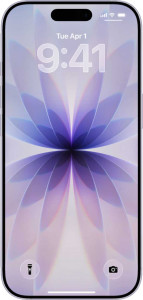
Apple iPhone 17
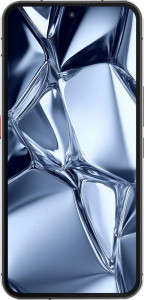
Oukitel WP200 Pro

Apple iPhone 17 Oukitel WP200 Pro

Overview

When comparing the Apple iPhone 17 and the Oukitel WP200 Pro, two very different philosophies of smartphone design come into focus. One is a refined flagship built for everyday elegance and raw processing power, while the other is a feature-packed device engineered for endurance and versatility. In this comparison, we examine their key battlegrounds: performance and display quality, camera capabilities, battery life, and connectivity — to help you decide which device truly fits your needs.

Common Features

  • Both products are waterproof with an IP68 ingress protection rating.
  • Neither product has a rugged build.
  • Neither product can be folded.
  • Both products feature an OLED/AMOLED display.
  • Both products support a 120Hz refresh rate.
  • HDR10+ support is not available on either product.
  • Neither product has a secondary screen.
  • Both products have a touchscreen.
  • Both products have integrated LTE.
  • Both products support 64-bit processing.
  • Both products use big.LITTLE technology.
  • Both products use DDR5 memory.
  • Both products have a dual-lens or multi-lens main camera.
  • Both products have 2 flash LEDs.
  • Both products have a CMOS sensor.
  • Both products support continuous autofocus when recording video.
  • Both products have phase-detection autofocus for photos.
  • Both products support slow-motion video recording.
  • Both products have a built-in HDR mode.
  • Both products support manual exposure.
  • Both products have clipboard warnings.
  • Both products have location privacy options.
  • Both products have camera and microphone privacy options.
  • Both products can block app tracking.
  • Both products have on-device machine learning.
  • Both products have notification permissions.
  • Both products have a media picker.
  • Both products have dark mode.
  • Both products support fast charging.
  • Reverse wireless charging is not available on either product.
  • Neither product has a removable battery.
  • Both products have a battery level indicator.
  • Both products have a rechargeable battery.
  • Neither product has a 3.5mm audio jack.
  • Neither product supports aptX, LDAC, aptX HD, aptX Adaptive, aptX Lossless.
  • Neither product has a radio.
  • Both products support 5G.
  • Neither product has an external memory slot.
  • Both products have USB Type-C with USB version 2.
  • Both products have NFC.
  • Neither product is DLNA-certified.
  • Both products have a gyroscope.
  • Neither product supports ANT+.
  • Both products have a video light.
  • Neither product has a sapphire glass display.
  • Neither product has a curved display.
  • Neither product has an e-paper display.

Main Differences

  • Weight is 177 g on Apple iPhone 17 and 311 g on Oukitel WP200 Pro.
  • Thickness is 7.95 mm on Apple iPhone 17 and 13.7 mm on Oukitel WP200 Pro.
  • Width is 71.5 mm on Apple iPhone 17 and 77.85 mm on Oukitel WP200 Pro.
  • Height is 149.6 mm on Apple iPhone 17 and 163.6 mm on Oukitel WP200 Pro.
  • Volume is 85.04 cm³ on Apple iPhone 17 and 174.49 cm³ on Oukitel WP200 Pro.
  • Waterproof depth rating is 6 m on Apple iPhone 17 and 1.5 m on Oukitel WP200 Pro.
  • Screen size is 6.3″ on Apple iPhone 17 and 6.7″ on Oukitel WP200 Pro.
  • Pixel density is 460 ppi on Apple iPhone 17 and 394 ppi on Oukitel WP200 Pro.
  • Resolution is 1206 x 2622 px on Apple iPhone 17 and 1080 x 2412 px on Oukitel WP200 Pro.
  • Typical brightness is 1000 nits on Apple iPhone 17 and 500 nits on Oukitel WP200 Pro.
  • Branded damage-resistant glass is present on Oukitel WP200 Pro but not on Apple iPhone 17.
  • HDR10 support is available on Apple iPhone 17 but not on Oukitel WP200 Pro.
  • Always-On Display is available on Apple iPhone 17 but not on Oukitel WP200 Pro.
  • Dolby Vision support is present on Apple iPhone 17 but not on Oukitel WP200 Pro.
  • Internal storage is 512 GB on Apple iPhone 17 and 1000 GB on Oukitel WP200 Pro.
  • RAM is 8 GB on Apple iPhone 17 and 24 GB on Oukitel WP200 Pro.
  • CPU speed is 2 x 4.26 & 4 x 2.51 GHz on Apple iPhone 17 and 1 x 3.1 & 3 x 3 & 4 x 2 GHz on Oukitel WP200 Pro.
  • Geekbench 6 multi-core score is 8810 on Apple iPhone 17 and 3891 on Oukitel WP200 Pro.
  • Geekbench 6 single-core score is 3608 on Apple iPhone 17 and 1224 on Oukitel WP200 Pro.
  • GPU clock speed is 1490 MHz on Apple iPhone 17 and 950 MHz on Oukitel WP200 Pro.
  • RAM speed is 4800 MHz on Apple iPhone 17 and 6400 MHz on Oukitel WP200 Pro.
  • Semiconductor size is 3 nm on Apple iPhone 17 and 4 nm on Oukitel WP200 Pro.
  • Maximum memory bandwidth is 78.8 GB/s on Apple iPhone 17 and 51.2 GB/s on Oukitel WP200 Pro.
  • Maximum supported memory is 12 GB on Apple iPhone 17 and 16 GB on Oukitel WP200 Pro.
  • Thermal Design Power is 10 W on Apple iPhone 17 and 6 W on Oukitel WP200 Pro.
  • Main camera megapixels are 48 & 48 MP on Apple iPhone 17 and 108 & 2 & 0.3 MP on Oukitel WP200 Pro.
  • Front camera megapixels are 18 MP on Apple iPhone 17 and 32 MP on Oukitel WP200 Pro.
  • Optical image stabilization is present on Apple iPhone 17 but not on Oukitel WP200 Pro.
  • Main camera max video recording is 2160p at 60 fps on Apple iPhone 17 and 2160p at 30 fps on Oukitel WP200 Pro.
  • Dual-tone LED flash is available on Apple iPhone 17 but not on Oukitel WP200 Pro.
  • A BSI sensor is present on Apple iPhone 17 but not on Oukitel WP200 Pro.
  • Optical zoom is 2x on Apple iPhone 17 and 0x on Oukitel WP200 Pro.
  • Manual shutter speed is supported on Apple iPhone 17 but not on Oukitel WP200 Pro.
  • Front camera aperture is f/1.9 on Apple iPhone 17 and f/2.2 on Oukitel WP200 Pro.
  • HDR10 video recording is supported on Apple iPhone 17 but not on Oukitel WP200 Pro.
  • Dolby Vision recording is supported on Apple iPhone 17 but not on Oukitel WP200 Pro.
  • Mail Privacy Protection is available on Apple iPhone 17 but not on Oukitel WP200 Pro.
  • Theme customization is available on Oukitel WP200 Pro but not on Apple iPhone 17.
  • Cross-site tracking blocking is available on Apple iPhone 17 but not on Oukitel WP200 Pro.
  • Playing games while downloading is supported on Oukitel WP200 Pro but not on Apple iPhone 17.
  • Wi-Fi password sharing is available on Apple iPhone 17 but not on Oukitel WP200 Pro.
  • An extra dim mode is available on Oukitel WP200 Pro but not on Apple iPhone 17.
  • Focus modes are available on Apple iPhone 17 but not on Oukitel WP200 Pro.
  • Dynamic theming is available on Oukitel WP200 Pro but not on Apple iPhone 17.
  • Split screen is supported on Oukitel WP200 Pro but not on Apple iPhone 17.
  • Direct OS updates are provided on Apple iPhone 17 but not on Oukitel WP200 Pro.
  • The operating system is free and open source on Oukitel WP200 Pro but not on Apple iPhone 17.
  • Multi-user support is available on Oukitel WP200 Pro but not on Apple iPhone 17.
  • Battery capacity is 3692 mAh on Apple iPhone 17 and 8800 mAh on Oukitel WP200 Pro.
  • Wireless charging is available on Apple iPhone 17 but not on Oukitel WP200 Pro.
  • Charging speed is 40 W on Apple iPhone 17 and 45 W on Oukitel WP200 Pro.
  • Stereo speakers are present on Apple iPhone 17 but not on Oukitel WP200 Pro.
  • Wi-Fi 7 (802.11be) support is present on Apple iPhone 17 but not on Oukitel WP200 Pro.
  • Apple iPhone 17 supports 1 physical SIM and 1 eSIM, while Oukitel WP200 Pro supports 2 physical SIM cards.
  • Bluetooth version is 6 on Apple iPhone 17 and 5.3 on Oukitel WP200 Pro.
  • Download speed is 10000 Mbits/s on Apple iPhone 17 and 4700 Mbits/s on Oukitel WP200 Pro.
  • Upload speed is 3500 Mbits/s on Apple iPhone 17 and 2500 Mbits/s on Oukitel WP200 Pro.
  • A fingerprint scanner is present on Oukitel WP200 Pro but not on Apple iPhone 17.
  • Emergency SOS via satellite is available on Apple iPhone 17 but not on Oukitel WP200 Pro.
  • Crash detection is available on Apple iPhone 17 but not on Oukitel WP200 Pro.
  • 3D facial recognition is used on Apple iPhone 17 but not on Oukitel WP200 Pro.
Specs Comparison
Apple iPhone 17

Apple iPhone 17

Oukitel WP200 Pro

Oukitel WP200 Pro

Design:
water resistance Waterproof Waterproof
weight 177 g 311 g
thickness 7.95 mm 13.7 mm
width 71.5 mm 77.85 mm
height 149.6 mm 163.6 mm
volume 85.03638 cm³ 174.486762 cm³
Ingress Protection (IP) rating IP68 IP68
waterproof depth rating 6 m 1.5 m
has a rugged build
can be folded

Both phones carry an IP68 waterproof rating, but the real-world protection they offer differs significantly. The Apple iPhone 17 is rated to 6 m depth, while the Oukitel WP200 Pro is only certified to 1.5 m — the bare minimum for IP68. For most everyday scenarios like rain or accidental splashes this distinction is moot, but for water sports, diving, or underwater photography, the iPhone 17 offers a considerably safer margin.

Where the gap becomes even more striking is form factor. The iPhone 17 weighs 177 g and measures just 7.95 mm thick, whereas the WP200 Pro tips the scales at 311 g with a 13.7 mm profile — nearly twice as heavy and 72% thicker. That translates directly into pocket comfort and one-handed usability: the iPhone 17 will feel light and slim all day, while the WP200 Pro carries a noticeably bulky, almost tablet-like heft in hand. The volume difference reinforces this — 85 cm³ versus 174 cm³ means the WP200 Pro occupies roughly double the physical space.

Neither device has a rugged build designation or a foldable form factor, so those traits offer no differentiator here. Overall, the iPhone 17 holds a clear design advantage: it is dramatically more pocketable and lighter while simultaneously offering superior waterproofing depth — an unusual combination where the slimmer device is actually the more water-resilient one.

Display:
Display type OLED/AMOLED OLED/AMOLED
screen size 6.3" 6.7"
pixel density 460 ppi 394 ppi
resolution 1206 x 2622 px 1080 x 2412 px
refresh rate 120Hz 120Hz
brightness (typical) 1000 nits 500 nits
has branded damage-resistant glass
supports HDR10
supports HDR10+
Always-On Display
supports Dolby Vision
Has a secondary screen
has a touch screen

Both screens use OLED/AMOLED panels with a 120Hz refresh rate, so motion smoothness and contrast fundamentals are shared ground. The meaningful divergence starts with sharpness and brightness. The iPhone 17 packs a 460 ppi pixel density versus the WP200 Pro's 394 ppi — a difference that is perceptible in fine text, icons, and detailed imagery, especially at typical reading distances. More critically, the iPhone 17's typical brightness of 1000 nits is double the WP200 Pro's 500 nits, which has direct consequences outdoors: in sunlight, the iPhone 17 will remain comfortably legible while the WP200 Pro is likely to struggle.

The HDR and color pipeline tells a similar story. The iPhone 17 supports both HDR10 and Dolby Vision, meaning compatible streaming content and photos will render with wider dynamic range and more accurate tone mapping. The WP200 Pro supports neither standard, so its OLED panel — despite the hardware capability — won't unlock those visual improvements in supported apps. The iPhone 17 also features an Always-On Display, a practical convenience for checking time or notifications without a full wake. The WP200 Pro counters with branded damage-resistant glass, which offers better scratch and drop protection for the screen — the one hardware protection edge it holds here.

On balance, the iPhone 17 has a clear display advantage across almost every quality metric: sharper pixels, far higher brightness, richer HDR support, and Always-On functionality. The WP200 Pro's larger 6.7″ screen and tougher glass are real benefits for those who prioritize screen real estate and durability, but they don't offset the depth of the iPhone 17's display performance lead.

Performance:
internal storage 512GB 1000GB
RAM 8GB 24GB
CPU speed 2 x 4.26 & 4 x 2.51 GHz 1 x 3.1 & 3 x 3 & 4 x 2 GHz
Geekbench 6 result (multi) 8810 3891
Geekbench 6 result (single) 3608 1224
GPU clock speed 1490 MHz 950 MHz
Has integrated LTE
RAM speed 4800 MHz 6400 MHz
semiconductor size 3 nm 4 nm
Supports 64-bit
Has integrated graphics
Uses big.LITTLE technology
CPU threads 6 threads 8 threads
Has NX bit
Uses HMP
Has TrustZone
maximum memory bandwidth 78.8 GB/s 51.2 GB/s
maximum memory amount 12GB 16GB
Thermal Design Power (TDP) 10W 6W
DDR memory version 5 5

The benchmark numbers settle the raw performance debate decisively. The iPhone 17 scores 3608 single-core and 8810 multi-core on Geekbench 6, compared to the WP200 Pro's 1224 and 3891 respectively. Single-core performance is roughly three times higher — and that matters more than most users realize, because the vast majority of everyday tasks like app launches, UI responsiveness, and web browsing are single-threaded workloads. The iPhone 17's 3 nm chip versus the WP200 Pro's 4 nm process also translates to better performance-per-watt, meaning the iPhone 17 delivers far more compute while its 10W TDP only modestly exceeds the WP200 Pro's 6W. The GPU clock advantage — 1490 MHz versus 950 MHz — reinforces the iPhone 17's lead in graphics-intensive tasks like gaming and video rendering.

On paper, the WP200 Pro fights back with 24GB of RAM and 1TB of internal storage, dwarfing the iPhone 17's 8GB and 512GB. More RAM can help with aggressive multitasking and keeping many apps resident in memory simultaneously, and 1TB of storage is a genuine differentiator for users who carry large media libraries or files. However, the iPhone 17's higher 78.8 GB/s memory bandwidth means its smaller RAM pool is fed data far more efficiently than the WP200 Pro's 51.2 GB/s, partially offsetting the raw capacity gap in real-world throughput.

The iPhone 17 holds an overwhelming performance advantage in processing speed and GPU power — the kind of gap that shows up in every interaction, not just benchmarks. The WP200 Pro's larger RAM and storage capacity are practical perks for specific use cases, but they cannot compensate for a processor that is fundamentally outclassed at the architectural level.

Cameras:
megapixels (main camera) 48 & 48 MP 108 & 2 & 0.3 MP
Has a dual-lens (or multi-lens) main camera
megapixels (front camera) 18MP 32MP
has built-in optical image stabilization
video recording (main camera) 2160 x 60 fps 2160 x 30 fps
Has a dual-tone LED flash
number of flash LEDs 2 2
has a BSI sensor
has a CMOS sensor
has continuous autofocus when recording movies
Has phase-detection autofocus for photos
supports slow-motion video recording
has a built-in HDR mode
has manual exposure
has a flash
optical zoom 2x 0x
has manual ISO
has a serial shot mode
has manual focus
has a front camera
Has laser autofocus
Shoots 360° panorama
has manual white balance
shoots raw
has touch autofocus
has manual shutter speed
can create panoramas in-camera
wide aperture (front camera) 1.9f 2.2f
Has a front-facing LED flash
has a dual-lens (or multi-lens) front camera
supports HDR10 recording
supports Dolby Vision recording
has a front-facing camera under the display
Has a RGB LED flash
has 3D photo/video recording capabilities

Megapixel counts can be misleading, and this comparison is a prime example. The WP200 Pro leads with a 108 MP primary sensor, but its secondary lenses — 2 MP and 0.3 MP — are essentially decorative, offering negligible real utility. The iPhone 17's dual 48 MP setup is more balanced and purposeful, and critically, it includes optical image stabilization (OIS), which the WP200 Pro entirely lacks. OIS is one of the most impactful camera features for everyday shooting — it reduces blur in low-light photos, smooths handheld video, and enables sharper shots at slower shutter speeds in ways that extra megapixels simply cannot compensate for.

Video capability is another area where the gap is meaningful. The iPhone 17 captures 4K at 60 fps with support for both HDR10 and Dolby Vision recording, delivering cinema-grade color and dynamic range that is directly compatible with professional editing workflows. The WP200 Pro tops out at 4K at 30 fps with no HDR recording standard supported. For anyone who shoots and edits video seriously, that distinction matters. The iPhone 17 also retains manual shutter speed control, which the WP200 Pro omits — a small but notable loss for users who want granular manual control. On the front camera, the WP200 Pro offers a higher-resolution 32 MP sensor against the iPhone 17's 18 MP, and while resolution alone doesn't guarantee better selfies, it does provide more flexibility for cropping. The iPhone 17's front aperture of f/1.9 is wider than the WP200 Pro's f/2.2, meaning it should admit more light in low-light selfie scenarios.

The iPhone 17 holds a clear camera advantage in the areas that drive real-world image and video quality: OIS, superior video frame rates, Dolby Vision recording, and a more practically useful dual-lens layout. The WP200 Pro's headline 108 MP sensor may appeal to spec-sheet browsers, but the absence of stabilization and high-frame-rate video puts it at a functional disadvantage for most shooting scenarios.
Operating system:
has clipboard warnings
has location privacy options
has camera/microphone privacy options
has Mail Privacy Protection
has theme customization
can block app tracking
blocks cross-site tracking
has on-device machine learning
has notification permissions
has media picker
Can play games while they download
has dark mode
has Wi-Fi password sharing
has battery health check
has an extra dim mode
has focus modes
has dynamic theming
can offload apps
Has customizable notifications
has Live Text
has full-page screenshots
supports split screen
gets direct OS updates
has PiP
Can be used as a PC
Has sharing intents
has a child lock
Supports widgets
Is free and open source
Has offline voice recognition
has voice commands
Tracks the current position of a mobile device
is a multi-user system
has Quick Start

The privacy picture leans toward the iPhone 17. While both phones share core protections — location controls, camera/microphone permissions, clipboard warnings, and app tracking blockers — the iPhone 17 adds Mail Privacy Protection and cross-site tracking blocking, two features the WP200 Pro lacks. For users who are deliberate about their digital footprint, these extras form a meaningfully more complete privacy layer, particularly the cross-site tracking block which limits how advertisers profile users across the web.

Flip the lens to flexibility and customization, and the WP200 Pro reclaims ground. It supports split-screen multitasking, dynamic theming, theme customization, a multi-user system, and an extra dim mode — none of which the iPhone 17 offers. Split-screen is a genuine productivity feature for power users, and multi-user support makes the device shareable in household or work environments. The WP200 Pro is also free and open source, which matters to a specific but committed segment of users who value transparency and community-driven development. The iPhone 17 counters with Focus modes and Wi-Fi password sharing, practical day-to-day conveniences the WP200 Pro skips.

Perhaps the most consequential difference for long-term ownership is update delivery: the iPhone 17 gets direct OS updates, ensuring timely security patches and new features, while the WP200 Pro does not — a meaningful disadvantage that compounds over time. On balance, this category is genuinely split by user priority: the iPhone 17 leads on privacy and software longevity, while the WP200 Pro leads on customization and multitasking flexibility.

Battery:
battery power 3692 mAh 8800 mAh
has wireless charging
Supports fast charging
charging speed 40W 45W
has reverse wireless charging
has a removable battery
has a battery level indicator
has a rechargeable battery

Raw capacity is where the WP200 Pro makes its most unambiguous statement in this entire comparison. Its 8800 mAh battery is more than double the iPhone 17's 3692 mAh — a gap so large that, all else being equal, it translates directly into dramatically longer time between charges. For field workers, travelers, or anyone who spends long stretches away from a power source, that extra capacity is a practical lifeline that no software optimization can fully replicate.

Charging speed is surprisingly close: the WP200 Pro supports 45W fast charging versus the iPhone 17's 40W, a difference too small to feel in daily use. Where the iPhone 17 pulls ahead is with wireless charging support, which the WP200 Pro lacks entirely. Wireless charging is a genuine convenience for desk and nightstand use — the ability to simply set the phone down rather than plug in adds up meaningfully over time. Neither device offers reverse wireless charging, so neither can top up accessories like earbuds.

The WP200 Pro holds a clear battery advantage by virtue of its massive capacity — for users who prioritize longevity between charges above all else, it is the obvious choice here. The iPhone 17 trades raw endurance for the added convenience of wireless charging, which will matter more to users in environments where charging infrastructure is readily available.

Audio:
has a socket for a 3.5 mm audio jack
has stereo speakers
has aptX
has LDAC
has aptX HD
has aptX Adaptive
has aptX Lossless
Has a radio

The audio spec sheet for both devices is notably sparse, and the two phones share most of the same omissions: no 3.5 mm headphone jack, no advanced wireless audio codecs like aptX or LDAC, and no built-in radio. For wired headphone users, both phones require an adapter or Bluetooth headphones — neither offers a native solution. The absence of high-resolution wireless codecs means neither device will satisfy audiophiles seeking lossless Bluetooth audio to compatible headphones.

The one meaningful differentiator is that the iPhone 17 features stereo speakers, while the WP200 Pro does not. Stereo speakers create a wider, more immersive soundstage for media consumption — whether watching videos, playing games, or listening to music without headphones. A single mono speaker, by contrast, produces a narrower, more directional sound that feels comparatively flat. For a device the size of the WP200 Pro, the absence of stereo output is a noticeable gap.

Given how thin the shared feature set is here, the iPhone 17 takes a modest but clear audio edge purely on the strength of its stereo speaker setup. Neither phone distinguishes itself as an audio-focused device, but for casual speakerphone listening and media playback, the iPhone 17's stereo configuration delivers a more enveloping experience than the WP200 Pro's mono output.

Connectivity & Features:
release date September 2025 February 2025
has 5G support
Wi-Fi version Wi-Fi 6 (802.11ax), Wi-Fi 5 (802.11ac), Wi-Fi 4 (802.11n), Wi-Fi 7 (802.11be) Wi-Fi 4 (802.11n), Wi-Fi 5 (802.11ac), Wi-Fi 6 (802.11ax)
SIM cards 1 SIM, 1 eSIM 2 SIM
Bluetooth version 6 5.3
has an external memory slot
Has USB Type-C
USB version 2 2
has NFC
download speed 10000 MBits/s 4700 MBits/s
upload speed 3500 MBits/s 2500 MBits/s
Has a fingerprint scanner
has emergency SOS via satellite
has crash detection
is DLNA-certified
has a gyroscope
supports ANT+
Has a heart rate monitor
has GPS
has a compass
supports Wi-Fi
Has an infrared sensor
has an accelerometer
has a cellular module
Has a barometer
has an HDMI output
Uses 3D facial recognition
Has an iris scanner
Stylus included
supports Galileo
Has motion tracking
Has optical tracking
Has a built-in projector

Wireless connectivity strongly favors the iPhone 17. Its Bluetooth 6 versus the WP200 Pro's Bluetooth 5.3 is a generational step forward, offering improved connection stability, lower latency, and better range — benefits that are tangible with wireless audio and peripherals. More striking is the cellular throughput gap: the iPhone 17's peak download speed of 10,000 Mbits/s dwarfs the WP200 Pro's 4,700 Mbits/s, and a similar gap exists on upload. In practice, on congested 5G networks, higher theoretical ceilings translate to more consistent real-world speeds. The iPhone 17 also adds Wi-Fi 7 support on top of the Wi-Fi 6 both devices share, future-proofing it for next-generation routers that can deliver dramatically higher throughput and lower latency at home or in the office.

Safety and biometric features split interestingly between the two. The iPhone 17 brings emergency SOS via satellite and crash detection — features with genuine life-safety implications for users in remote areas or at risk of accidents — alongside 3D facial recognition as its primary biometric. The WP200 Pro skips both safety features but includes a fingerprint scanner, which many users prefer for its speed and reliability in varied lighting conditions, and it accommodates 2 physical SIM cards compared to the iPhone 17's 1 SIM plus eSIM — a practical advantage for travelers or users managing personal and work lines simultaneously.

The iPhone 17 holds the broader connectivity advantage, particularly in wireless speed, Bluetooth generation, and Wi-Fi ceiling. The WP200 Pro's dual physical SIM and fingerprint scanner are meaningful practical wins, but the iPhone 17's satellite SOS and crash detection add a layer of utility that goes beyond standard connectivity — and for some users, those features alone could be decisive.

Miscellaneous:
has a video light
Has sapphire glass display
Has a curved display
Has an e-paper display

Across every spec in this category, the Apple iPhone 17 and Oukitel WP200 Pro are in complete agreement. Both feature a video light, and neither offers a sapphire glass display, curved display, or e-paper display. There is simply no differentiator to analyze here.

This group is a full tie — the provided data gives neither device any advantage over the other.

Comparison Summary & Verdict

After reviewing all specifications, it is clear that the Apple iPhone 17 and the Oukitel WP200 Pro serve very different audiences. The iPhone 17 dominates in processing performance, offering dramatically higher Geekbench scores, a sharper and brighter display, superior camera features including optical zoom and optical image stabilization, and a notably lighter and slimmer design. It is the better choice for users who value a premium multimedia experience, seamless software updates, and a polished everyday device. The Oukitel WP200 Pro, on the other hand, stands out for its massive 8800 mAh battery, significantly larger storage at 1 TB, 24 GB of RAM, a fingerprint scanner, dual physical SIM support, and a more flexible Android-based operating system with multi-user and split-screen support. It is the stronger pick for power users, heavy multitaskers, or those who need all-day endurance without reaching for a charger.

Apple iPhone 17
Buy Apple iPhone 17 if...

Buy the Apple iPhone 17 if you prioritize top-tier processing performance, a sharper and brighter display, advanced camera features like optical zoom and image stabilization, and a lightweight design with a premium software experience.

Oukitel WP200 Pro
Buy Oukitel WP200 Pro if...

Buy the Oukitel WP200 Pro if you need a long-lasting battery, maximum RAM and storage capacity, dual physical SIM support, and a flexible operating system with multi-user and split-screen capabilities.