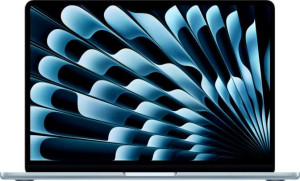
Apple MacBook Air (2025) 13.6" Apple M4 (10-core CPU) / 16GB RAM / 256GB SSD
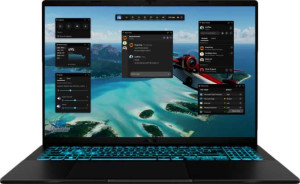
Asus V16 (V3607) 16"

Apple MacBook Air (2025) 13.6" Apple M4 (10-core CPU) / 16GB RAM / 256GB SSD Asus V16 (V3607) 16"

Common Features

  • Both products have a backlit keyboard.
  • Neither product is weather-sealed.
  • Both products lack a rugged build.
  • Both products use flash storage.
  • Both products use multithreading.
  • Both products support Wi-Fi.
  • Both products have Bluetooth 5.3.
  • Both products have stereo speakers.
  • Both products have a socket for a 3.5 mm audio jack.
  • Both products have a front camera.
  • Both products support Wi-Fi 4.
  • Both products have a gyroscope.
  • Both products have integrated graphics.
  • Both products use big.LITTLE technology.
  • Both products have a sleep-and-charge USB port.
  • Both products have a maximum memory bandwidth of at least 120 GB/s.
  • Both products are laptops.
  • Both products support USB Type-C.
  • Both products do not have an HDMI output.
  • Both products do not support 3D facial recognition.

Main Differences

  • Apple MacBook Air (2025) 13.6″ Apple M4 (10-core CPU) / 16GB RAM / 256GB SSD is a productivity laptop, while Asus V16 (V3607) 16″ is a gaming laptop.
  • Apple MacBook Air (2025) 13.6″ Apple M4 (10-core CPU) / 16GB RAM / 256GB SSD weighs 1240 g, while Asus V16 (V3607) 16″ weighs 1950 g.
  • Apple MacBook Air (2025) 13.6″ Apple M4 (10-core CPU) / 16GB RAM / 256GB SSD uses a fanless design, while Asus V16 (V3607) 16″ does not.
  • Apple MacBook Air (2025) 13.6″ Apple M4 (10-core CPU) / 16GB RAM / 256GB SSD has a volume of 718.96 cm³, while Asus V16 (V3607) 16″ has a volume of 1606.5 cm³.
  • Apple MacBook Air (2025) 13.6″ Apple M4 (10-core CPU) / 16GB RAM / 256GB SSD has a width of 304 mm, while Asus V16 (V3607) 16″ has a width of 357 mm.
  • Apple MacBook Air (2025) 13.6″ Apple M4 (10-core CPU) / 16GB RAM / 256GB SSD has a height of 215 mm, while Asus V16 (V3607) 16″ has a height of 250 mm.
  • Apple MacBook Air (2025) 13.6″ Apple M4 (10-core CPU) / 16GB RAM / 256GB SSD has a thickness of 11 mm, while Asus V16 (V3607) 16″ has a thickness of 18 mm.
  • Apple MacBook Air (2025) 13.6″ Apple M4 (10-core CPU) / 16GB RAM / 256GB SSD has a resolution of 2560 x 1664 px, while Asus V16 (V3607) 16″ has a resolution of 2560 x 1600 px.
  • Apple MacBook Air (2025) 13.6″ Apple M4 (10-core CPU) / 16GB RAM / 256GB SSD has a pixel density of 224 ppi, while Asus V16 (V3607) 16″ has a pixel density of 188 ppi.
  • Apple MacBook Air (2025) 13.6″ Apple M4 (10-core CPU) / 16GB RAM / 256GB SSD has a brightness of 500 nits, while Asus V16 (V3607) 16″ has a brightness of 400 nits.
  • Apple MacBook Air (2025) 13.6″ Apple M4 (10-core CPU) / 16GB RAM / 256GB SSD has a refresh rate of 60Hz, while Asus V16 (V3607) 16″ has a refresh rate of 144Hz.
  • Apple MacBook Air (2025) 13.6″ Apple M4 (10-core CPU) / 16GB RAM / 256GB SSD does not have an anti-reflection coating, while Asus V16 (V3607) 16″ does.
  • Apple MacBook Air (2025) 13.6″ Apple M4 (10-core CPU) / 16GB RAM / 256GB SSD supports up to 2 external displays, while Asus V16 (V3607) 16″ supports up to 4 external displays.
  • Apple MacBook Air (2025) 13.6″ Apple M4 (10-core CPU) / 16GB RAM / 256GB SSD has 16GB of RAM, while Asus V16 (V3607) 16″ has 32GB of RAM.
  • Apple MacBook Air (2025) 13.6″ Apple M4 (10-core CPU) / 16GB RAM / 256GB SSD has 256GB of internal storage, while Asus V16 (V3607) 16″ has 1024GB of internal storage.
  • Apple MacBook Air (2025) 13.6″ Apple M4 (10-core CPU) / 16GB RAM / 256GB SSD has 10 CPU threads, while Asus V16 (V3607) 16″ has 20 CPU threads.
  • Apple MacBook Air (2025) 13.6″ Apple M4 (10-core CPU) / 16GB RAM / 256GB SSD has a semiconductor size of 3 nm, while Asus V16 (V3607) 16″ has a semiconductor size of 5 nm.
  • Apple MacBook Air (2025) 13.6″ Apple M4 (10-core CPU) / 16GB RAM / 256GB SSD has 2 USB 4 40Gbps ports, while Asus V16 (V3607) 16″ has none.
  • Apple MacBook Air (2025) 13.6″ Apple M4 (10-core CPU) / 16GB RAM / 256GB SSD has 2 Thunderbolt 4 ports, while Asus V16 (V3607) 16″ has none.
  • Apple MacBook Air (2025) 13.6″ Apple M4 (10-core CPU) / 16GB RAM / 256GB SSD does not have an HDMI output, while Asus V16 (V3607) 16″ has an HDMI output.
  • Apple MacBook Air (2025) 13.6″ Apple M4 (10-core CPU) / 16GB RAM / 256GB SSD supports Wi-Fi 6E, while Asus V16 (V3607) 16″ supports only Wi-Fi 6.
Specs Comparison
Apple MacBook Air (2025) 13.6" Apple M4 (10-core CPU) / 16GB RAM / 256GB SSD

Apple MacBook Air (2025) 13.6" Apple M4 (10-core CPU) / 16GB RAM / 256GB SSD

Asus V16 (V3607) 16"

Asus V16 (V3607) 16"

Design:
Type Productivity Gaming
weight 1240 g 1950 g
Uses a fanless design
Has a backlit keyboard
volume 718.96 cm³ 1606.5 cm³
width 304 mm 357 mm
height 215 mm 250 mm
thickness 11 mm 18 mm
is weather-sealed (splashproof)
has a rugged build

The Apple MacBook Air (2025) and Asus V16 differ significantly in terms of design. The MacBook Air is a 13.6-inch productivity-focused laptop, weighing just 1240 g. It has a slim profile, with a thickness of 11 mm and a volume of 718.96 cm³. In contrast, the Asus V16 is a larger 16-inch gaming laptop, much heavier at 1950 g, with a thickness of 18 mm and a larger volume of 1606.5 cm³. These size and weight differences highlight the MacBook Air's more portable, lightweight design compared to the bulkier Asus V16.

Both laptops feature a backlit keyboard, which is common in modern devices. The MacBook Air uses a fanless design, making it more silent and efficient for everyday productivity tasks. On the other hand, the Asus V16 does not have a fanless design, likely due to its gaming orientation, where performance may require active cooling.

Neither laptop is weather-sealed or rugged, so they aren't built for tough outdoor conditions. However, the MacBook Air does have a compact and thinner profile, which may appeal to users seeking a sleek, travel-friendly device. The Asus V16, with its larger screen and higher weight, is geared more towards gaming, where the design prioritizes performance over portability.

Display:
screen size 13.6" 16"
resolution 2560 x 1664 px 2560 x 1600 px
pixel density 224 ppi 188 ppi
Display type LCD, LED-backlit, IPS LCD, LED-backlit
has a touch screen
brightness (typical) 500 nits 400 nits
refresh rate 60Hz 144Hz
has anti-reflection coating
supported displays 2 4

The display specifications of the Apple MacBook Air (2025) and Asus V16 differ in several key areas. The MacBook Air features a 13.6″ LCD display with a resolution of 2560 x 1664 px, resulting in a pixel density of 224 ppi. The screen has a typical brightness of 500 nits but lacks an anti-reflection coating. It also supports up to two external displays. In comparison, the Asus V16 has a larger 16″ LCD screen with a resolution of 2560 x 1600 px, giving it a lower pixel density of 188 ppi. The brightness is slightly lower at 400 nits, but the display does include an anti-reflection coating, which could reduce glare in bright environments. The V16 also supports up to four external displays, allowing for more extensive multi-monitor setups.

Both laptops have a non-touch screen, but the refresh rate differs. The MacBook Air has a standard 60Hz refresh rate, while the Asus V16 offers a higher refresh rate of 144Hz, which may appeal to users looking for smoother motion, especially for gaming or fast-paced content.

In summary, while both laptops feature LCD, LED-backlit displays, the MacBook Air offers a higher pixel density and brighter display, whereas the Asus V16 has a larger screen size, an anti-reflection coating, and a higher refresh rate. Each display type has advantages depending on the intended use, with the MacBook Air excelling in clarity and brightness and the Asus V16 catering more to those who prioritize smooth motion and reduced glare.

Performance:
RAM 16GB 32GB
Uses flash storage
internal storage 256GB 1024GB
CPU speed 4 x 4.05 & 6 x 2.75 GHz 6 x 2.7 & 8 x 2 GHz
CPU threads 10 threads 20 threads
Is an NVMe SSD
uses multithreading
maximum memory amount 24GB 32GB
DDR memory version 5 5
semiconductor size 3 nm 5 nm
has XeSS (XMX)
Supports 64-bit

The Apple MacBook Air (2025) and Asus V16 differ significantly in performance specifications. The MacBook Air comes with 16GB of DDR5 RAM and a 256GB NVMe SSD, while the Asus V16 has 32GB of DDR5 RAM and a much larger 1024GB NVMe SSD. Both devices use flash storage and support multithreading, but the V16 offers more memory and storage, which could benefit tasks requiring higher capacity.

In terms of processing power, the MacBook Air features a 10-core CPU, with 4 cores running at 4.05 GHz and 6 cores running at 2.75 GHz, while the Asus V16 has a 20-thread CPU, with 6 cores running at 2.7 GHz and 8 cores running at 2 GHz. Despite the MacBook Air having faster core speeds, the V16’s greater number of threads may provide superior performance for multi-tasking and parallel computing tasks.

Both products support 64-bit operations and use the same DDR5 memory version. The MacBook Air’s CPU is based on a 3nm semiconductor, while the Asus V16 uses a slightly larger 5nm semiconductor. Both systems do not support XeSS (XMX), so neither device has this specific performance feature. Overall, while the MacBook Air may excel in single-threaded tasks due to its higher clock speeds, the Asus V16 is designed for users who require more RAM, storage, and threads for demanding multitasking and complex workloads.

Connectivity:
USB 3.2 Gen 2 ports (USB-C) 0 0
USB 3.2 Gen 2 ports (USB-A) 0 0
USB 4 20Gbps ports 0 0
USB 4 40Gbps ports 2 0
Thunderbolt 4 ports 2 0
USB 3.2 Gen 1 ports (USB-C) 0 1
USB 3.2 Gen 1 ports (USB-A) 0 2
Thunderbolt 3 ports 0 0
has an HDMI output
Has USB Type-C
supports Wi-Fi
Wi-Fi version Wi-Fi 6E (802.11ax), Wi-Fi 6 (802.11ax), Wi-Fi 5 (802.11ac), Wi-Fi 4 (802.11n) Wi-Fi 6 (802.11ax), Wi-Fi 5 (802.11ac), Wi-Fi 4 (802.11n)
has an external memory slot
Bluetooth version 5.3 5.3
RJ45 ports 0 0
HDMI ports 0 1
DisplayPort outputs 0 0
USB 2.0 ports 0 0
has AirPlay
mini DisplayPort outputs 0 0
has a VGA connector

The connectivity options of the Apple MacBook Air (2025) and Asus V16 differ in several ways. The MacBook Air has two Thunderbolt 4 ports, which provide high-speed data transfer and connectivity. It also features USB Type-C, Wi-Fi 6E, and Bluetooth 5.3. In contrast, the Asus V16 includes one USB 3.2 Gen 1 Type-C port, two USB 3.2 Gen 1 Type-A ports, and has HDMI output, allowing it to connect to external displays easily. Both laptops support Wi-Fi 6 and Bluetooth 5.3, ensuring modern wireless connectivity.

While both laptops lack RJ45 ports, external memory slots, and VGA connectors, the MacBook Air supports up to two external displays via its Thunderbolt 4 ports, while the Asus V16 only supports one HDMI output. The MacBook Air also has AirPlay functionality, which the Asus V16 does not mention.

Overall, the MacBook Air is equipped with more advanced Thunderbolt ports, while the Asus V16 offers more USB Type-A ports and an HDMI output. Both devices offer robust wireless connectivity, but the MacBook Air's support for AirPlay and multiple Thunderbolt 4 ports gives it a more flexible connectivity profile for certain use cases.

Battery:
battery size 53.8 Wh 63 Wh
Has sleep-and-charge USB ports
Has a MagSafe power adapter

The Apple MacBook Air (2025) and Asus V16 have slightly different battery configurations. The MacBook Air features a 53.8 Wh battery, while the Asus V16 comes with a larger 63 Wh battery. Both devices support sleep-and-charge USB ports, allowing for charging of devices even when the laptop is in sleep mode.

One key difference is that the MacBook Air includes a MagSafe power adapter, which offers a secure magnetic connection for charging. In contrast, the Asus V16 does not include a MagSafe adapter, relying on other charging methods.

Overall, the MacBook Air has a smaller battery and includes MagSafe, while the Asus V16 offers a slightly larger battery but lacks MagSafe functionality. Both provide the convenience of sleep-and-charge USB ports for added versatility.

Features:
release date March 2025 December 2024
has stereo speakers
has a socket for a 3.5 mm audio jack
supports ray tracing
supports DLSS
has Dolby Atmos
Stylus included
Has a fingerprint scanner
number of microphones 3 1
Uses 3D facial recognition
has voice commands
has a front camera
Has S/PDIF Out port
has a gyroscope
has GPS
has an accelerometer
has a compass
Has an optical disc drive

The Apple MacBook Air (2025) and Asus V16 both offer stereo speakers and a 3.5 mm audio jack, but their features diverge in several areas. The MacBook Air includes Dolby Atmos support for enhanced audio, while the Asus V16 lacks this feature. Additionally, the MacBook Air has a fingerprint scanner for added security, which the Asus V16 does not. The MacBook Air also includes three microphones, compared to the Asus V16's single microphone, and supports voice commands, a feature not available on the Asus V16.

Both laptops come with a front camera, but neither includes 3D facial recognition. The MacBook Air does not support ray tracing or DLSS, while the Asus V16 does, which may benefit users interested in gaming or high-performance graphics. Neither device has a gyroscope, GPS, accelerometer, compass, S/PDIF Out port, or optical disc drive.

In summary, the MacBook Air focuses on features like security (fingerprint scanner) and audio (Dolby Atmos), while the Asus V16 is better equipped for graphics-intensive tasks with support for ray tracing and DLSS. Both laptops have similar basic features, but the MacBook Air offers more advanced audio and security options.

Miscellaneous:
Type Laptop, Desktop Laptop
Supports ECC memory
maximum memory bandwidth 120 GB/s 448 GB/s
Has NX bit
Has integrated graphics
number of transistors 28000 million 21900 million
Uses big.LITTLE technology
RAM speed (max) 6400 MHz 5600 MHz

The Apple MacBook Air (2025) and Asus V16 have several technical differences in their miscellaneous specs. The MacBook Air supports a maximum memory bandwidth of 120 GB/s, while the Asus V16 supports a much higher 448 GB/s. Additionally, the MacBook Air has a higher RAM speed at 6400 MHz, compared to the Asus V16's 5600 MHz. Both devices support big.LITTLE technology and feature integrated graphics, but the MacBook Air has 28000 million transistors, while the Asus V16 has 21900 million transistors.

Both devices have the NX bit, a security feature, and neither supports ECC memory, with the Asus V16 being the only one to do so.

Overall, the Asus V16 stands out with its higher memory bandwidth and ECC memory support, while the MacBook Air offers faster RAM speeds and a higher number of transistors, which may contribute to overall performance in different tasks.

Comparison Summary

This is a specification comparison between Apple MacBook Air (2025) 13.6″ Apple M4 (10-core CPU) / 16GB RAM / 256GB SSD and Asus V16 (V3607) 16″. Both models have a backlit keyboard, support Wi-Fi, and feature stereo speakers. The Apple MacBook Air has a fanless design, weighs 1240 g, and offers 256GB of storage, while the Asus V16 weighs 1950 g, features 32GB of RAM, and has a higher screen resolution of 2560 x 1600 px. Additionally, the Apple model supports up to 2 external displays, while the Asus V16 supports up to 4. The Apple MacBook Air is equipped with a MagSafe power adapter, unlike the Asus V16, which lacks this feature.