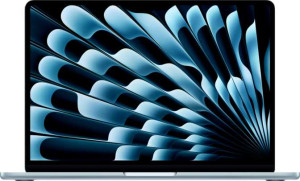
Apple MacBook Air (2025) 13.6" Apple M4 (10-core CPU / 8-core GPU) / 16GB RAM / 256GB SSD
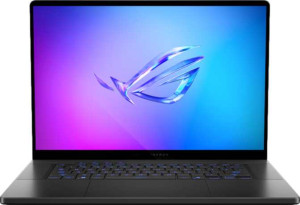
Asus ROG Zephyrus G16 (2025) GU605 16"

Apple MacBook Air (2025) 13.6" Apple M4 (10-core CPU / 8-core GPU) / 16GB RAM / 256GB SSD Asus ROG Zephyrus G16 (2025) GU605 16"

Common Features

  • Backlit keyboard support is present on both products.
  • Weather sealing or splashproofing is not available on either product.
  • A rugged build is not featured on either product.
  • Touch screen support is not included on either display.
  • Both products use flash storage.
  • Internal storage capacity is 2048GB on both products.
  • NVMe SSD support is used by both products.
  • Multithreading support is available on both products.
  • DDR memory version 5 is used by both products.
  • Both products support 64-bit operation.
  • USB Type-C connectivity is supported on both products.
  • Wi-Fi connectivity is supported on both products.
  • Sleep-and-charge USB functionality is available on both products.
  • Stereo speakers are included on both products.
  • Both products use big.LITTLE technology.

Main Differences

  • Product type is Productivity on Apple MacBook Air (2025) 13.6″ Apple M4 (10-core CPU / 8-core GPU) / 16GB RAM / 256GB SSD and Gaming on Asus ROG Zephyrus G16 (2025) GU605 16″.
  • Weight is 1240 g on Apple MacBook Air (2025) 13.6″ Apple M4 (10-core CPU / 8-core GPU) / 16GB RAM / 256GB SSD and 1950 g on Asus ROG Zephyrus G16 (2025) GU605 16″.
  • A fanless design is used by Apple MacBook Air (2025) 13.6″ Apple M4 (10-core CPU / 8-core GPU) / 16GB RAM / 256GB SSD but not by Asus ROG Zephyrus G16 (2025) GU605 16″.
  • Screen size is 13.6″ on Apple MacBook Air (2025) 13.6″ Apple M4 (10-core CPU / 8-core GPU) / 16GB RAM / 256GB SSD and 16″ on Asus ROG Zephyrus G16 (2025) GU605 16″.
  • Display type is LCD, LED-backlit, IPS on Apple MacBook Air (2025) 13.6″ Apple M4 (10-core CPU / 8-core GPU) / 16GB RAM / 256GB SSD and OLED or AMOLED on Asus ROG Zephyrus G16 (2025) GU605 16″.
  • Refresh rate is 60Hz on Apple MacBook Air (2025) 13.6″ Apple M4 (10-core CPU / 8-core GPU) / 16GB RAM / 256GB SSD and 240Hz on Asus ROG Zephyrus G16 (2025) GU605 16″.
  • RAM capacity is 32GB on Apple MacBook Air (2025) 13.6″ Apple M4 (10-core CPU / 8-core GPU) / 16GB RAM / 256GB SSD and 64GB on Asus ROG Zephyrus G16 (2025) GU605 16″.
  • CPU threads count is 10 threads on Apple MacBook Air (2025) 13.6″ Apple M4 (10-core CPU / 8-core GPU) / 16GB RAM / 256GB SSD and 16 threads on Asus ROG Zephyrus G16 (2025) GU605 16″.
  • HDMI output is available on Asus ROG Zephyrus G16 (2025) GU605 16″ but not available on Apple MacBook Air (2025) 13.6″ Apple M4 (10-core CPU / 8-core GPU) / 16GB RAM / 256GB SSD.
  • Wi-Fi version includes Wi-Fi 7 on Asus ROG Zephyrus G16 (2025) GU605 16″, while Apple MacBook Air (2025) 13.6″ Apple M4 (10-core CPU / 8-core GPU) / 16GB RAM / 256GB SSD supports up to Wi-Fi 6E.
  • Battery size is 53.8 Wh on Apple MacBook Air (2025) 13.6″ Apple M4 (10-core CPU / 8-core GPU) / 16GB RAM / 256GB SSD and 90 Wh on Asus ROG Zephyrus G16 (2025) GU605 16″.
  • MagSafe power adapter support is available on Apple MacBook Air (2025) 13.6″ Apple M4 (10-core CPU / 8-core GPU) / 16GB RAM / 256GB SSD but not on Asus ROG Zephyrus G16 (2025) GU605 16″.
Specs Comparison
Apple MacBook Air (2025) 13.6" Apple M4 (10-core CPU / 8-core GPU) / 16GB RAM / 256GB SSD

Apple MacBook Air (2025) 13.6" Apple M4 (10-core CPU / 8-core GPU) / 16GB RAM / 256GB SSD

Asus ROG Zephyrus G16 (2025) GU605 16"

Asus ROG Zephyrus G16 (2025) GU605 16"

Design:
Type Productivity Gaming
weight 1240 g 1950 g
Uses a fanless design
Has a backlit keyboard
volume 718.96 cm³ 1219.176 cm³
width 304 mm 354 mm
height 215 mm 246 mm
thickness 11 mm 14 mm
is weather-sealed (splashproof)
has a rugged build

The Apple MacBook Air (2025) and the Asus ROG Zephyrus G16 (2025) are designed for different use cases, and their designs reflect that. The MacBook Air is a compact, lightweight laptop with a focus on portability, weighing just 1240 g and featuring a fanless design. In contrast, the Asus ROG Zephyrus G16 is a larger, heavier gaming laptop, tipping the scales at 1950 g and using an active cooling system with a fan, which may add to its bulk.

In terms of size, the MacBook Air is more compact with a width of 304 mm, a height of 215 mm, and a thickness of only 11 mm. The Asus ROG Zephyrus G16 is noticeably larger, measuring 354 mm in width, 246 mm in height, and 14 mm in thickness. Both laptops feature a backlit keyboard for better visibility in low-light conditions, but only the MacBook Air is fanless, making it quieter during operation.

Both laptops have a similar lack of ruggedness and weather-sealing, as neither is splashproof or built to withstand extreme conditions. The MacBook Air's smaller volume of 718.96 cm³ contrasts with the Asus ROG Zephyrus G16’s larger volume of 1219.176 cm³, reflecting the difference in size and design between the two models.

Display:
screen size 13.6" 16"
resolution 2560 x 1664 px 2560 x 1600 px
pixel density 224 ppi 188 ppi
Display type LCD, LED-backlit, IPS OLED/AMOLED
has a touch screen
refresh rate 60Hz 240Hz
has anti-reflection coating
supported displays 2 4

The Apple MacBook Air (2025) and the Asus ROG Zephyrus G16 (2025) both feature high-quality displays, but they differ significantly in size, technology, and refresh rate. The MacBook Air has a 13.6″ LCD screen with a resolution of 2560 x 1664 px, offering a pixel density of 224 ppi. It uses an IPS LED-backlit display and includes an anti-reflection coating for better visibility under bright lighting. On the other hand, the Asus ROG Zephyrus G16 features a larger 16″ OLED/AMOLED display with a resolution of 2560 x 1600 px and a pixel density of 188 ppi. The OLED display offers richer colors and deeper blacks, though the pixel density is slightly lower compared to the MacBook Air.

In terms of refresh rate, the MacBook Air is limited to 60Hz, which is typical for productivity-focused laptops, while the Asus ROG Zephyrus G16 offers a much higher 240Hz refresh rate, designed to provide a smoother experience, especially for gaming and fast-motion tasks.

Both laptops have no touch screen functionality. The MacBook Air supports up to 2 external displays, while the Asus ROG Zephyrus G16 can support up to 4, offering more flexibility for multi-monitor setups.

Performance:
RAM 32GB 64GB
Uses flash storage
internal storage 2048GB 2048GB
CPU speed 4 x 4.05 & 6 x 2.75 GHz 6 x 2.9 & 8 x 2.7 GHz
CPU threads 10 threads 16 threads
Is an NVMe SSD
uses multithreading
maximum memory amount 24GB 64GB
DDR memory version 5 5
semiconductor size 3 nm 4 nm
Supports 64-bit

When it comes to performance, the Apple MacBook Air (2025) and the Asus ROG Zephyrus G16 (2025) offer different strengths. The MacBook Air is equipped with 32GB of RAM, while the ROG Zephyrus G16 features a larger 64GB of RAM. Both devices use flash storage and feature NVMe SSDs, with identical internal storage capacities of 2048GB, which is fast and efficient for data transfer. The MacBook Air has a CPU with 10 threads, running at speeds of 4 x 4.05 GHz and 6 x 2.75 GHz. In comparison, the ROG Zephyrus G16’s processor has 16 threads, with 6 cores running at 2.9 GHz and 8 cores running at 2.7 GHz.

Both laptops support multithreading, with the MacBook Air’s 10-core CPU utilizing multithreading for enhanced performance. The ROG Zephyrus G16’s 16-thread configuration allows for more simultaneous tasks to be handled, potentially offering greater multitasking capability. Both devices feature the latest DDR5 memory, with the MacBook Air using a 3nm semiconductor, while the ROG Zephyrus G16 uses a slightly larger 4nm semiconductor.

Additionally, the maximum memory capacity for the MacBook Air is limited to 24GB, while the ROG Zephyrus G16 can handle up to 64GB of memory, making it more suitable for demanding tasks that require larger memory capacities. Both laptops support 64-bit systems, ensuring compatibility with modern software and operating systems.

Connectivity:
USB 3.2 Gen 2 ports (USB-C) 0 1
USB 3.2 Gen 2 ports (USB-A) 0 2
USB 4 20Gbps ports 0 0
USB 4 40Gbps ports 2 1
Thunderbolt 4 ports 2 1
USB 3.2 Gen 1 ports (USB-C) 0 0
USB 3.2 Gen 1 ports (USB-A) 0 0
Thunderbolt 3 ports 0 0
has an HDMI output
Has USB Type-C
supports Wi-Fi
Wi-Fi version Wi-Fi 6E (802.11ax), Wi-Fi 6 (802.11ax), Wi-Fi 5 (802.11ac), Wi-Fi 4 (802.11n) Wi-Fi 7 (802.11be), Wi-Fi 6E (802.11ax), Wi-Fi 6 (802.11ax), Wi-Fi 5 (802.11ac), Wi-Fi 4 (802.11n)
has an external memory slot
Bluetooth version 5.3 5.4
RJ45 ports 0 0
HDMI ports 0 1
DisplayPort outputs 0 0
has AirPlay
mini DisplayPort outputs 0 0
has a VGA connector

The Apple MacBook Air (2025) and the Asus ROG Zephyrus G16 (2025) offer different connectivity options, catering to distinct user needs. The MacBook Air is equipped with two Thunderbolt 4 ports, which can support high-speed data transfer and external displays. It also supports USB Type-C but lacks any traditional USB-A or HDMI ports. In contrast, the Asus ROG Zephyrus G16 offers a wider range of connectivity with one USB 3.2 Gen 2 port (USB-C), two USB 3.2 Gen 2 ports (USB-A), and one USB 4 40Gbps port, alongside a Thunderbolt 4 port. The ROG Zephyrus G16 also includes an HDMI output, allowing users to easily connect to external monitors or TVs.

Both laptops support Wi-Fi, with the MacBook Air offering Wi-Fi 6E, Wi-Fi 6, Wi-Fi 5, and Wi-Fi 4, while the ROG Zephyrus G16 supports Wi-Fi 7, Wi-Fi 6E, Wi-Fi 6, Wi-Fi 5, and Wi-Fi 4. The MacBook Air supports Bluetooth 5.3, while the ROG Zephyrus G16 supports Bluetooth 5.4, which may offer slight improvements in connectivity range and speed.

Both laptops are equipped with AirPlay for wireless screen mirroring, but the MacBook Air does not have an HDMI port, whereas the ROG Zephyrus G16 includes one HDMI port. The MacBook Air also lacks an external memory slot, a feature available on the ROG Zephyrus G16, which allows for more flexible storage options.

Battery:
battery size 53.8 Wh 90 Wh
Has sleep-and-charge USB ports
Has a MagSafe power adapter

The Apple MacBook Air (2025) and the Asus ROG Zephyrus G16 (2025) differ in battery capacity and charging features. The MacBook Air is equipped with a 53.8 Wh battery, which is designed to offer efficient power for its compact form. It also supports sleep-and-charge USB ports, allowing for charging devices even when the laptop is in sleep mode. Additionally, the MacBook Air includes a MagSafe power adapter, which provides a secure and easy-to-connect charging solution.

On the other hand, the Asus ROG Zephyrus G16 features a larger 90 Wh battery, providing more capacity for extended use, particularly for gaming or demanding tasks. Like the MacBook Air, it also has sleep-and-charge USB ports, but it does not include a MagSafe power adapter. Instead, the charging is handled through traditional ports.

In summary, the ROG Zephyrus G16 offers a significantly larger battery, while the MacBook Air stands out with its inclusion of a MagSafe power adapter, providing a more secure charging method for users.

Features:
release date March 2025 January 2025
has stereo speakers
has a socket for a 3.5 mm audio jack
supports ray tracing
supports DLSS
has Dolby Atmos
Stylus included
Has a fingerprint scanner
number of microphones 3 3
Uses 3D facial recognition
has voice commands
has a front camera
Has S/PDIF Out port
has a gyroscope
has GPS
has an accelerometer
has a compass
Has an optical disc drive

The Apple MacBook Air (2025) and the Asus ROG Zephyrus G16 (2025) offer several similar and differing features. Both laptops are equipped with stereo speakers and a 3.5 mm audio jack for standard audio connections. Both also support Dolby Atmos for an enhanced sound experience. However, the MacBook Air does not support ray tracing or DLSS, while the ROG Zephyrus G16 does, making it more suitable for gaming and tasks requiring advanced graphics processing.

The MacBook Air includes a fingerprint scanner for security, but it does not feature 3D facial recognition or support voice commands, unlike the ROG Zephyrus G16, which has 3D facial recognition but lacks voice command functionality. Both laptops have a front camera and three microphones, enabling clear video and audio capture. The MacBook Air also supports voice commands, while the ROG Zephyrus G16 does not.

Neither device includes a stylus, optical disc drive, S/PDIF Out port, gyroscope, GPS, accelerometer, nor compass. Both laptops are similarly equipped in terms of basic sensors, but the MacBook Air offers a fingerprint scanner for additional security, while the ROG Zephyrus G16 focuses on advanced facial recognition.

Miscellaneous:
Type Laptop, Desktop Laptop
Supports ECC memory
maximum memory bandwidth 120 GB/s 811.5 GB/s
Has NX bit
Has integrated graphics
number of transistors 28000 million 17800 million
Uses big.LITTLE technology
RAM speed (max) 6400 MHz 8400 MHz

The Apple MacBook Air (2025) and the Asus ROG Zephyrus G16 (2025) are both laptops, but they have some differences in their technical specifications. The MacBook Air does not support ECC memory, while the ROG Zephyrus G16 does. This means the ROG Zephyrus G16 may be better suited for workloads that require error-correcting code memory for enhanced stability. The MacBook Air has a maximum memory bandwidth of 120 GB/s, which is lower than the ROG Zephyrus G16’s 811.5 GB/s, indicating the latter can potentially handle more intensive memory operations.

Both laptops feature an NX bit for security, integrated graphics, and utilize big.LITTLE technology for efficient power and performance management. However, the MacBook Air has 28,000 million transistors, whereas the ROG Zephyrus G16 has 17,800 million transistors. This indicates that the MacBook Air has a higher transistor count, which can be an advantage for certain tasks. The maximum RAM speed for the MacBook Air is 6400 MHz, while the ROG Zephyrus G16 offers a higher RAM speed of 8400 MHz, which could lead to faster data transfer rates in the latter.

In summary, the MacBook Air and the ROG Zephyrus G16 share some similarities in terms of architecture but differ in memory capabilities, transistor count, and RAM speed, with the ROG Zephyrus G16 featuring higher memory bandwidth and faster RAM speed, while the MacBook Air has a higher transistor count.

Comparison Summary

This is a specification comparison between Apple MacBook Air (2025) 13.6″ Apple M4 (10-core CPU / 8-core GPU) / 16GB RAM / 256GB SSD and Asus ROG Zephyrus G16 (2025) GU605 16″. Both systems share several baseline traits, including a backlit keyboard, absence of a touch screen, use of flash storage with NVMe and a shared 2048GB internal storage, as well as support for USB Type-C and Wi-Fi connectivity and stereo speakers. Key differences appear in form factor and hardware scale: weight is 1240 g versus 1950 g, and screen size is 13.6″ compared with 16″, alongside a 60Hz refresh rate versus 240Hz and LCD IPS versus OLED or AMOLED display types. Memory configuration differs with 32GB RAM on one and 64GB on the other, while CPU threading counts are 10 versus 16. Additional distinctions include a fanless design on one model, HDMI output availability on the other, Wi-Fi version support reaching Wi-Fi 7 on one system, and battery capacity differing at 53.8 Wh versus 90 Wh.