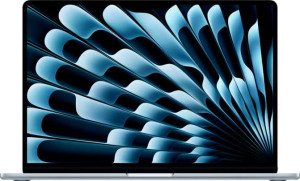
Apple MacBook Air (2025) 15.3" Apple M4 (10-core CPU) / 16GB RAM / 512GB SSD
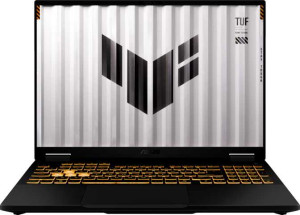
Asus TUF Gaming F16 (2025) FX608 16"

Apple MacBook Air (2025) 15.3" Apple M4 (10-core CPU) / 16GB RAM / 512GB SSD Asus TUF Gaming F16 (2025) FX608 16"

Common Features

  • Both products have a backlit keyboard.
  • Neither product is weather-sealed (splashproof).
  • Both products use flash storage.
  • Both products support Wi-Fi 6E (802.11ax), Wi-Fi 6 (802.11ax), Wi-Fi 5 (802.11ac), and Wi-Fi 4 (802.11n).
  • Both products support USB Type-C.
  • Both products have stereo speakers.
  • Both products have a front camera.
  • Both products have a 3.5 mm audio jack.
  • Both products have voice commands.
  • Both products have an integrated graphics card.
  • Both products use big.LITTLE technology.
  • Both products have a maximum memory bandwidth of 120 GB/s.
  • Both products support multithreading.
  • Both products use DDR5 memory.
  • Both products support 64-bit architecture.
  • Both products have an NVMe SSD.
  • Both products have USB 4 20Gbps ports.
  • Both products have a maximum memory amount of 24GB.
  • Both products support up to two displays.

Main Differences

  • Apple MacBook Air (2025) 15.3″ Apple M4 (10-core CPU) / 16GB RAM / 512GB SSD weighs 1510 g, while Asus TUF Gaming F16 (2025) FX608 16″ weighs 2200 g.
  • Apple MacBook Air (2025) 15.3″ Apple M4 (10-core CPU) / 16GB RAM / 512GB SSD uses a fanless design, whereas Asus TUF Gaming F16 (2025) FX608 16″ does not.
  • Apple MacBook Air (2025) 15.3″ Apple M4 (10-core CPU) / 16GB RAM / 512GB SSD has a volume of 886.38 cm³, while Asus TUF Gaming F16 (2025) FX608 16″ has a volume of 1618.842 cm³.
  • Apple MacBook Air (2025) 15.3″ Apple M4 (10-core CPU) / 16GB RAM / 512GB SSD has a width of 340 mm, while Asus TUF Gaming F16 (2025) FX608 16″ has a width of 354 mm.
  • Apple MacBook Air (2025) 15.3″ Apple M4 (10-core CPU) / 16GB RAM / 512GB SSD is 11 mm thick, while Asus TUF Gaming F16 (2025) FX608 16″ is 17 mm thick.
  • Apple MacBook Air (2025) 15.3″ Apple M4 (10-core CPU) / 16GB RAM / 512GB SSD has a resolution of 2880 x 1864 px, while Asus TUF Gaming F16 (2025) FX608 16″ has a resolution of 2560 x 1600 px.
  • Apple MacBook Air (2025) 15.3″ Apple M4 (10-core CPU) / 16GB RAM / 512GB SSD has a pixel density of 224 ppi, while Asus TUF Gaming F16 (2025) FX608 16″ has a pixel density of 188 ppi.
  • Apple MacBook Air (2025) 15.3″ Apple M4 (10-core CPU) / 16GB RAM / 512GB SSD has a refresh rate of 60Hz, while Asus TUF Gaming F16 (2025) FX608 16″ has a refresh rate of 165Hz.
  • Apple MacBook Air (2025) 15.3″ Apple M4 (10-core CPU) / 16GB RAM / 512GB SSD does not have anti-reflection coating, whereas Asus TUF Gaming F16 (2025) FX608 16″ does.
  • Apple MacBook Air (2025) 15.3″ Apple M4 (10-core CPU) / 16GB RAM / 512GB SSD supports 2 displays, while Asus TUF Gaming F16 (2025) FX608 16″ supports 4 displays.
  • Apple MacBook Air (2025) 15.3″ Apple M4 (10-core CPU) / 16GB RAM / 512GB SSD has 16GB of RAM, while Asus TUF Gaming F16 (2025) FX608 16″ has 32GB of RAM.
  • Apple MacBook Air (2025) 15.3″ Apple M4 (10-core CPU) / 16GB RAM / 512GB SSD has a CPU speed of 4 x 4.05 & 6 x 2.75 GHz, while Asus TUF Gaming F16 (2025) FX608 16″ has a CPU speed of 8 x 2.2 & 8 x 1.6 GHz.
  • Apple MacBook Air (2025) 15.3″ Apple M4 (10-core CPU) / 16GB RAM / 512GB SSD has 10 CPU threads, while Asus TUF Gaming F16 (2025) FX608 16″ has 24 CPU threads.
  • Apple MacBook Air (2025) 15.3″ Apple M4 (10-core CPU) / 16GB RAM / 512GB SSD has a maximum memory amount of 24GB, while Asus TUF Gaming F16 (2025) FX608 16″ has a maximum memory amount of 64GB.
  • Apple MacBook Air (2025) 15.3″ Apple M4 (10-core CPU) / 16GB RAM / 512GB SSD uses a 3 nm semiconductor size, while Asus TUF Gaming F16 (2025) FX608 16″ uses a 4 nm semiconductor size.
  • Apple MacBook Air (2025) 15.3″ Apple M4 (10-core CPU) / 16GB RAM / 512GB SSD has 0 USB 3.2 Gen 2 ports (USB-C), while Asus TUF Gaming F16 (2025) FX608 16″ has 1 USB 3.2 Gen 2 port (USB-C).
  • Apple MacBook Air (2025) 15.3″ Apple M4 (10-core CPU) / 16GB RAM / 512GB SSD has 0 USB 3.2 Gen 2 ports (USB-A), while Asus TUF Gaming F16 (2025) FX608 16″ has 3 USB 3.2 Gen 2 ports (USB-A).
  • Apple MacBook Air (2025) 15.3″ Apple M4 (10-core CPU) / 16GB RAM / 512GB SSD has 2 USB 4 40Gbps ports, while Asus TUF Gaming F16 (2025) FX608 16″ has 1 USB 4 40Gbps port.
  • Apple MacBook Air (2025) 15.3″ Apple M4 (10-core CPU) / 16GB RAM / 512GB SSD has 2 Thunderbolt 4 ports, while Asus TUF Gaming F16 (2025) FX608 16″ has 1 Thunderbolt 4 port.
  • Apple MacBook Air (2025) 15.3″ Apple M4 (10-core CPU) / 16GB RAM / 512GB SSD does not have an HDMI output, while Asus TUF Gaming F16 (2025) FX608 16″ has an HDMI output.
  • Apple MacBook Air (2025) 15.3″ Apple M4 (10-core CPU) / 16GB RAM / 512GB SSD does not have an RJ45 port, while Asus TUF Gaming F16 (2025) FX608 16″ has an RJ45 port.
  • Apple MacBook Air (2025) 15.3″ Apple M4 (10-core CPU) / 16GB RAM / 512GB SSD has a battery size of 72.4 Wh, while Asus TUF Gaming F16 (2025) FX608 16″ has a battery size of 90 Wh.
  • Apple MacBook Air (2025) 15.3″ Apple M4 (10-core CPU) / 16GB RAM / 512GB SSD has a MagSafe power adapter, while Asus TUF Gaming F16 (2025) FX608 16″ does not.
  • Apple MacBook Air (2025) 15.3″ Apple M4 (10-core CPU) / 16GB RAM / 512GB SSD supports Dolby Atmos, while Asus TUF Gaming F16 (2025) FX608 16″ does not.
  • Apple MacBook Air (2025) 15.3″ Apple M4 (10-core CPU) / 16GB RAM / 512GB SSD has a fingerprint scanner, while Asus TUF Gaming F16 (2025) FX608 16″ does not.
  • Apple MacBook Air (2025) 15.3″ Apple M4 (10-core CPU) / 16GB RAM / 512GB SSD has 3 microphones, while Asus TUF Gaming F16 (2025) FX608 16″ has 1 microphone.
  • Apple MacBook Air (2025) 15.3″ Apple M4 (10-core CPU) / 16GB RAM / 512GB SSD does not use 3D facial recognition, while Asus TUF Gaming F16 (2025) FX608 16″ does.
Specs Comparison
Apple MacBook Air (2025) 15.3" Apple M4 (10-core CPU) / 16GB RAM / 512GB SSD

Apple MacBook Air (2025) 15.3" Apple M4 (10-core CPU) / 16GB RAM / 512GB SSD

Asus TUF Gaming F16 (2025) FX608 16"

Asus TUF Gaming F16 (2025) FX608 16"

Design:
weight 1510 g 2200 g
Uses a fanless design
Has a backlit keyboard
volume 886.38 cm³ 1618.842 cm³
width 340 mm 354 mm
height 237 mm 269 mm
thickness 11 mm 17 mm
is weather-sealed (splashproof)

The Apple MacBook Air (2025) and the Asus TUF Gaming F16 (2025) differ in several key design aspects. The MacBook Air is lighter at 1510 g, compared to the Asus TUF Gaming F16's 2200 g, making it more portable for users who prioritize weight. The MacBook Air also benefits from a fanless design, while the TUF Gaming F16 does not, using a traditional cooling system instead.

In terms of size, the MacBook Air has more compact dimensions, measuring 340 mm in width, 237 mm in height, and 11 mm in thickness. The Asus TUF Gaming F16, on the other hand, is larger, with a width of 354 mm, height of 269 mm, and a thickness of 17 mm. This makes the TUF Gaming F16 bulkier, though it does come with a larger 16″ display.

Both laptops feature a backlit keyboard, but neither is weather-sealed or splashproof. Additionally, the MacBook Air has a smaller volume of 886.38 cm³, whereas the TUF Gaming F16 has a significantly larger volume of 1618.842 cm³, reflecting its more substantial build.

Display:
screen size 15.3" 16"
resolution 2880 x 1864 px 2560 x 1600 px
pixel density 224 ppi 188 ppi
Display type LCD, LED-backlit, IPS LCD, LED-backlit, IPS
has a touch screen
refresh rate 60Hz 165Hz
has anti-reflection coating
supported displays 2 4

The Apple MacBook Air (2025) and the Asus TUF Gaming F16 (2025) have notable differences in their display specifications. The MacBook Air features a 15.3″ screen with a resolution of 2880 x 1864 px, offering a pixel density of 224 ppi. In contrast, the TUF Gaming F16 has a slightly larger 16″ screen with a resolution of 2560 x 1600 px, resulting in a lower pixel density of 188 ppi.

Both displays use an LCD, LED-backlit, IPS panel and do not support touch functionality. However, the TUF Gaming F16 supports a much higher refresh rate of 165Hz, while the MacBook Air has a 60Hz refresh rate. Additionally, the TUF Gaming F16 features an anti-reflection coating, while the MacBook Air lacks this feature.

In terms of external display support, the MacBook Air can handle up to 2 displays, while the TUF Gaming F16 supports up to 4 external displays.

Performance:
RAM 16GB 32GB
Uses flash storage
CPU speed 4 x 4.05 & 6 x 2.75 GHz 8 x 2.2 & 8 x 1.6 GHz
CPU threads 10 threads 24 threads
Is an NVMe SSD
uses multithreading
maximum memory amount 24GB 64GB
DDR memory version 5 5
semiconductor size 3 nm 4 nm
Supports 64-bit

The Apple MacBook Air (2025) and the Asus TUF Gaming F16 (2025) differ significantly in their performance specifications. The MacBook Air is equipped with 16GB of RAM, while the TUF Gaming F16 offers 32GB of RAM. Both devices use flash storage and NVMe SSDs, ensuring fast read and write speeds, but the TUF Gaming F16 features a larger memory capacity and supports up to 64GB of RAM, compared to the MacBook Air's maximum of 24GB.

In terms of the CPU, the MacBook Air has a 10-core Apple M4 chip, with 4 cores running at 4.05 GHz and 6 cores at 2.75 GHz. The TUF Gaming F16, on the other hand, has a CPU with 24 threads, consisting of 8 cores running at 2.2 GHz and 8 cores running at 1.6 GHz. While both products support multithreading, the TUF Gaming F16 has a higher number of CPU threads, which could be beneficial for certain multitasking scenarios.

Both laptops support 64-bit computing and use DDR5 memory, with the MacBook Air utilizing a 3nm semiconductor size and the TUF Gaming F16 using a slightly larger 4nm semiconductor. The differences in CPU architecture and RAM capacity may impact overall performance, depending on the type of workload.

Connectivity:
USB 3.2 Gen 2 ports (USB-C) 0 1
USB 3.2 Gen 2 ports (USB-A) 0 3
USB 4 20Gbps ports 0 0
USB 4 40Gbps ports 2 1
Thunderbolt 4 ports 2 1
USB 3.2 Gen 1 ports (USB-C) 0 0
USB 3.2 Gen 1 ports (USB-A) 0 0
Thunderbolt 3 ports 0 0
has an HDMI output
Has USB Type-C
supports Wi-Fi
Wi-Fi version Wi-Fi 6E (802.11ax), Wi-Fi 6 (802.11ax), Wi-Fi 5 (802.11ac), Wi-Fi 4 (802.11n) Wi-Fi 6E (802.11ax), Wi-Fi 6 (802.11ax), Wi-Fi 5 (802.11ac), Wi-Fi 4 (802.11n)
has an external memory slot
Bluetooth version 5.3 5.3
RJ45 ports 0 1
HDMI ports 0 1
DisplayPort outputs 0 0
has AirPlay
mini DisplayPort outputs 0 0
has a VGA connector

The Apple MacBook Air (2025) and the Asus TUF Gaming F16 (2025) offer different connectivity options. The MacBook Air is equipped with two Thunderbolt 4 ports and no USB 3.2 Gen 2, USB 4, or HDMI ports. In contrast, the TUF Gaming F16 has one Thunderbolt 4 port, one USB 4 40Gbps port, and one HDMI output, in addition to three USB 3.2 Gen 2 USB-A ports and one USB 3.2 Gen 2 USB-C port.

Both devices support Wi-Fi 6E and Bluetooth 5.3, ensuring fast wireless connectivity. The MacBook Air supports up to four Wi-Fi standards, while the TUF Gaming F16 supports the same Wi-Fi versions, from Wi-Fi 4 to Wi-Fi 6E. The TUF Gaming F16 also includes an RJ45 port for wired Ethernet, which the MacBook Air does not have.

Neither device features an external memory slot, mini DisplayPort outputs, or VGA connectors. Both have AirPlay support, but the MacBook Air does not provide an HDMI port, whereas the TUF Gaming F16 includes one HDMI output for connecting to external displays.

Battery:
battery size 72.4 Wh 90 Wh
Has sleep-and-charge USB ports
Has a MagSafe power adapter

The Apple MacBook Air (2025) and the Asus TUF Gaming F16 (2025) differ in battery size and charging features. The MacBook Air is equipped with a 72.4 Wh battery, while the TUF Gaming F16 has a larger 90 Wh battery. Both devices feature sleep-and-charge USB ports, allowing for charging even when the laptop is in sleep mode.

One key difference is the MagSafe power adapter. The MacBook Air includes a MagSafe power adapter, whereas the TUF Gaming F16 does not have this feature, relying on a standard charging method instead.

Features:
release date March 2025 January 2025
has stereo speakers
has a socket for a 3.5 mm audio jack
has Dolby Atmos
Stylus included
Has a fingerprint scanner
number of microphones 3 1
Uses 3D facial recognition
has voice commands
has a front camera
Has S/PDIF Out port
has a gyroscope
has GPS
has an accelerometer
has a compass
Has an optical disc drive

The Apple MacBook Air (2025) and the Asus TUF Gaming F16 (2025) share several features but also have some differences. Both laptops are equipped with stereo speakers and a 3.5 mm audio jack for audio output. However, the MacBook Air supports Dolby Atmos, while the TUF Gaming F16 does not.

In terms of security and biometrics, the MacBook Air includes a fingerprint scanner, while the TUF Gaming F16 does not. The MacBook Air also has three microphones, whereas the TUF Gaming F16 only includes one microphone. The MacBook Air lacks 3D facial recognition, but the TUF Gaming F16 supports it.

Both laptops have a front camera and support voice commands. Neither device includes a stylus or S/PDIF Out port. Additionally, neither laptop has a gyroscope, GPS, accelerometer, compass, or an optical disc drive.

Miscellaneous:
Type Laptop, Desktop Laptop
Supports ECC memory
maximum memory bandwidth 120 GB/s 405.8 GB/s
Has NX bit
Has integrated graphics
Uses big.LITTLE technology
RAM speed (max) 6400 MHz 5600 MHz

The Apple MacBook Air (2025) and the Asus TUF Gaming F16 (2025) share some similar features, but there are notable differences in their specifications. Both devices are laptops and feature integrated graphics, NX bit support, and utilize big.LITTLE technology. However, the MacBook Air does not support ECC memory, while the TUF Gaming F16 does. This may make the TUF Gaming F16 more suitable for applications requiring higher memory reliability.

In terms of performance, the MacBook Air has a maximum memory bandwidth of 120 GB/s, which is significantly lower than the TUF Gaming F16's 405.8 GB/s. Additionally, the MacBook Air supports faster RAM speeds, with a maximum of 6400 MHz, compared to the TUF Gaming F16's 5600 MHz.

Overall, while both laptops share a similar architectural design, the TUF Gaming F16 has a clear advantage in terms of memory bandwidth and ECC memory support, while the MacBook Air excels in RAM speed.

Comparison Summary

This is a specification comparison between Apple MacBook Air (2025) 15.3″ Apple M4 (10-core CPU) / 16GB RAM / 512GB SSD and Asus TUF Gaming F16 (2025) FX608 16″. Both products feature a backlit keyboard, integrated graphics, and support Wi-Fi 6E (802.11ax), while neither has a weather-sealed design. The Apple MacBook Air has a fanless design, weighs 1510 g, and offers a screen resolution of 2880 x 1864 px, while the Asus TUF Gaming F16 has a higher RAM capacity at 32GB, a refresh rate of 165Hz, and includes HDMI and RJ45 ports. The battery size on the Apple MacBook Air is 72.4 Wh, compared to 90 Wh on the Asus TUF Gaming F16.