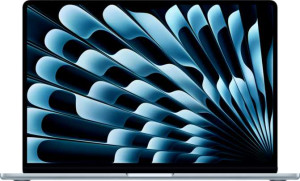
Apple MacBook Air (2025) 15.3" Apple M4 (10-core CPU) / 32GB RAM / 512GB SSD
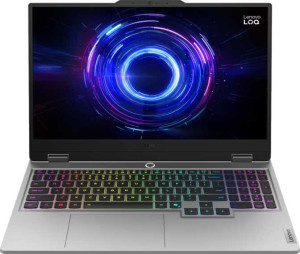
Lenovo LOQ 15i Gen 10 15"

Apple MacBook Air (2025) 15.3" Apple M4 (10-core CPU) / 32GB RAM / 512GB SSD Lenovo LOQ 15i Gen 10 15"

Overview

Welcome to our in-depth comparison of the Apple MacBook Air (2025) 15.3″ Apple M4 (10-core CPU) / 32GB RAM / 512GB SSD and the Lenovo LOQ 15i Gen 10 15″ — two 15-inch laptops that take fundamentally different approaches to everyday computing. In this head-to-head, we examine the key battlegrounds: portability and build design, display quality, performance architecture, and connectivity options, to help you decide which machine truly fits your needs.

Common Features

  • Both laptops feature a backlit keyboard.
  • Neither laptop is weather-sealed or splashproof.
  • Both use an LCD, LED-backlit, IPS display type.
  • Neither laptop has a touch screen.
  • Both laptops are equipped with 32GB of RAM.
  • Both use flash storage.
  • Both use an NVMe SSD.
  • Both support multithreading.
  • Both use DDR5 memory.
  • Both support 64-bit processing.
  • Neither laptop has a USB 3.2 Gen 2 Type-A port.
  • Neither laptop has a USB 4 20Gbps port.
  • Neither laptop has a USB 3.2 Gen 1 Type-C port.
  • Neither laptop has a Thunderbolt 3 port.
  • Both laptops have a USB Type-C port.
  • Both laptops support Wi-Fi.
  • Neither laptop has an external memory card slot.
  • Neither laptop has a DisplayPort output.
  • Both laptops have sleep-and-charge USB ports.
  • Both laptops have stereo speakers.
  • Both laptops have a 3.5mm audio jack.
  • No stylus is included with either laptop.
  • Neither laptop uses 3D facial recognition.
  • Both laptops have a front-facing camera.
  • Neither laptop has an S/PDIF Out port.
  • Neither laptop has a gyroscope.
  • Neither laptop has GPS.
  • Both laptops have the NX bit security feature.
  • Both laptops have integrated graphics.
  • Both laptops use big.LITTLE CPU technology.

Main Differences

  • Weight is 1510 g on Apple MacBook Air (2025) 15.3″ Apple M4 (10-core CPU) / 32GB RAM / 512GB SSD and 2400 g on Lenovo LOQ 15i Gen 10 15″.
  • A fanless design is used on Apple MacBook Air (2025) 15.3″ Apple M4 (10-core CPU) / 32GB RAM / 512GB SSD but not on Lenovo LOQ 15i Gen 10 15″.
  • Volume is 886.38 cm³ on Apple MacBook Air (2025) 15.3″ Apple M4 (10-core CPU) / 32GB RAM / 512GB SSD and 1945.062 cm³ on Lenovo LOQ 15i Gen 10 15″.
  • Width is 340 mm on Apple MacBook Air (2025) 15.3″ Apple M4 (10-core CPU) / 32GB RAM / 512GB SSD and 359 mm on Lenovo LOQ 15i Gen 10 15″.
  • Height is 237 mm on Apple MacBook Air (2025) 15.3″ Apple M4 (10-core CPU) / 32GB RAM / 512GB SSD and 258 mm on Lenovo LOQ 15i Gen 10 15″.
  • Thickness is 11 mm on Apple MacBook Air (2025) 15.3″ Apple M4 (10-core CPU) / 32GB RAM / 512GB SSD and 21 mm on Lenovo LOQ 15i Gen 10 15″.
  • Screen size is 15.3″ on Apple MacBook Air (2025) 15.3″ Apple M4 (10-core CPU) / 32GB RAM / 512GB SSD and 15.6″ on Lenovo LOQ 15i Gen 10 15″.
  • Resolution is 2880 x 1864 px on Apple MacBook Air (2025) 15.3″ Apple M4 (10-core CPU) / 32GB RAM / 512GB SSD and 2560 x 1440 px on Lenovo LOQ 15i Gen 10 15″.
  • Pixel density is 224 ppi on Apple MacBook Air (2025) 15.3″ Apple M4 (10-core CPU) / 32GB RAM / 512GB SSD and 188 ppi on Lenovo LOQ 15i Gen 10 15″.
  • Brightness is 500 nits on Apple MacBook Air (2025) 15.3″ Apple M4 (10-core CPU) / 32GB RAM / 512GB SSD and 350 nits on Lenovo LOQ 15i Gen 10 15″.
  • Refresh rate is 60Hz on Apple MacBook Air (2025) 15.3″ Apple M4 (10-core CPU) / 32GB RAM / 512GB SSD and 165Hz on Lenovo LOQ 15i Gen 10 15″.
  • An anti-reflection coating is present on Lenovo LOQ 15i Gen 10 15″ but not on Apple MacBook Air (2025) 15.3″ Apple M4 (10-core CPU) / 32GB RAM / 512GB SSD.
  • The number of supported external displays is 2 on Apple MacBook Air (2025) 15.3″ Apple M4 (10-core CPU) / 32GB RAM / 512GB SSD and 4 on Lenovo LOQ 15i Gen 10 15″.
  • Internal storage is 512GB on Apple MacBook Air (2025) 15.3″ Apple M4 (10-core CPU) / 32GB RAM / 512GB SSD and 1024GB on Lenovo LOQ 15i Gen 10 15″.
  • CPU speed is 4 x 4.05 & 6 x 2.75 GHz on Apple MacBook Air (2025) 15.3″ Apple M4 (10-core CPU) / 32GB RAM / 512GB SSD and 8 x 2.1 & 12 x 1.5 GHz on Lenovo LOQ 15i Gen 10 15″.
  • CPU thread count is 10 on Apple MacBook Air (2025) 15.3″ Apple M4 (10-core CPU) / 32GB RAM / 512GB SSD and 28 on Lenovo LOQ 15i Gen 10 15″.
  • Maximum supported memory is 24GB on Apple MacBook Air (2025) 15.3″ Apple M4 (10-core CPU) / 32GB RAM / 512GB SSD and 32GB on Lenovo LOQ 15i Gen 10 15″.
  • Semiconductor size is 3 nm on Apple MacBook Air (2025) 15.3″ Apple M4 (10-core CPU) / 32GB RAM / 512GB SSD and 5 nm on Lenovo LOQ 15i Gen 10 15″.
  • USB 3.2 Gen 2 Type-C port count is 0 on Apple MacBook Air (2025) 15.3″ Apple M4 (10-core CPU) / 32GB RAM / 512GB SSD and 1 on Lenovo LOQ 15i Gen 10 15″.
  • USB 4 40Gbps port count is 2 on Apple MacBook Air (2025) 15.3″ Apple M4 (10-core CPU) / 32GB RAM / 512GB SSD and 0 on Lenovo LOQ 15i Gen 10 15″.
  • Thunderbolt 4 port count is 2 on Apple MacBook Air (2025) 15.3″ Apple M4 (10-core CPU) / 32GB RAM / 512GB SSD and 0 on Lenovo LOQ 15i Gen 10 15″.
  • USB 3.2 Gen 1 Type-A port count is 0 on Apple MacBook Air (2025) 15.3″ Apple M4 (10-core CPU) / 32GB RAM / 512GB SSD and 3 on Lenovo LOQ 15i Gen 10 15″.
  • An HDMI output is present on Lenovo LOQ 15i Gen 10 15″ but not on Apple MacBook Air (2025) 15.3″ Apple M4 (10-core CPU) / 32GB RAM / 512GB SSD.
  • Wi-Fi 6E support is available on Apple MacBook Air (2025) 15.3″ Apple M4 (10-core CPU) / 32GB RAM / 512GB SSD but not on Lenovo LOQ 15i Gen 10 15″.
  • Bluetooth version is 5.3 on Apple MacBook Air (2025) 15.3″ Apple M4 (10-core CPU) / 32GB RAM / 512GB SSD and 5.2 on Lenovo LOQ 15i Gen 10 15″.
  • An RJ45 Ethernet port is present on Lenovo LOQ 15i Gen 10 15″ but not on Apple MacBook Air (2025) 15.3″ Apple M4 (10-core CPU) / 32GB RAM / 512GB SSD.
  • Battery size is 72.4 Wh on Apple MacBook Air (2025) 15.3″ Apple M4 (10-core CPU) / 32GB RAM / 512GB SSD and 60 Wh on Lenovo LOQ 15i Gen 10 15″.
  • A MagSafe power adapter is supported on Apple MacBook Air (2025) 15.3″ Apple M4 (10-core CPU) / 32GB RAM / 512GB SSD but not on Lenovo LOQ 15i Gen 10 15″.
  • Front camera resolution is 12MP on Apple MacBook Air (2025) 15.3″ Apple M4 (10-core CPU) / 32GB RAM / 512GB SSD and 5MP on Lenovo LOQ 15i Gen 10 15″.
  • Dolby Atmos is supported on Apple MacBook Air (2025) 15.3″ Apple M4 (10-core CPU) / 32GB RAM / 512GB SSD but not on Lenovo LOQ 15i Gen 10 15″.
  • A fingerprint scanner is present on Apple MacBook Air (2025) 15.3″ Apple M4 (10-core CPU) / 32GB RAM / 512GB SSD but not on Lenovo LOQ 15i Gen 10 15″.
  • The number of microphones is 3 on Apple MacBook Air (2025) 15.3″ Apple M4 (10-core CPU) / 32GB RAM / 512GB SSD and 2 on Lenovo LOQ 15i Gen 10 15″.
  • Voice command support is available on Apple MacBook Air (2025) 15.3″ Apple M4 (10-core CPU) / 32GB RAM / 512GB SSD but not on Lenovo LOQ 15i Gen 10 15″.
  • ECC memory support is available on Lenovo LOQ 15i Gen 10 15″ but not on Apple MacBook Air (2025) 15.3″ Apple M4 (10-core CPU) / 32GB RAM / 512GB SSD.
  • Maximum memory bandwidth is 120 GB/s on Apple MacBook Air (2025) 15.3″ Apple M4 (10-core CPU) / 32GB RAM / 512GB SSD and 448 GB/s on Lenovo LOQ 15i Gen 10 15″.
  • Number of transistors is 28000 million on Apple MacBook Air (2025) 15.3″ Apple M4 (10-core CPU) / 32GB RAM / 512GB SSD and 21900 million on Lenovo LOQ 15i Gen 10 15″.
  • Maximum RAM speed is 6400 MHz on Apple MacBook Air (2025) 15.3″ Apple M4 (10-core CPU) / 32GB RAM / 512GB SSD and 5600 MHz on Lenovo LOQ 15i Gen 10 15″.
Specs Comparison
Apple MacBook Air (2025) 15.3" Apple M4 (10-core CPU) / 32GB RAM / 512GB SSD

Apple MacBook Air (2025) 15.3" Apple M4 (10-core CPU) / 32GB RAM / 512GB SSD

Lenovo LOQ 15i Gen 10 15"

Lenovo LOQ 15i Gen 10 15"

Design:
weight 1510 g 2400 g
Uses a fanless design
Has a backlit keyboard
volume 886.38 cm³ 1945.062 cm³
width 340 mm 359 mm
height 237 mm 258 mm
thickness 11 mm 21 mm
is weather-sealed (splashproof)

The most striking difference in this group is weight and size. The MacBook Air 15 tips the scale at 1,510 g and measures just 11 mm thick, while the Lenovo LOQ 15i comes in at 2,400 g and 21 mm thick — that is nearly 60% heavier and almost twice as thick. In volume terms, the LOQ occupies 1,945 cm³ versus the MacBook Air's 886 cm³, meaning it takes up roughly 2.2× more physical space. For a user who commutes, travels, or works from a bag, this gap is immediately felt every single day.

A key reason the MacBook Air achieves that slim, light profile is its fanless design. With no cooling fan or vents required, Apple can engineer a thinner, more compact chassis. The LOQ, by contrast, uses active cooling — a necessity given its positioning as a performance-oriented machine, but one that demands more internal volume and adds mechanical components. This also means the MacBook Air operates in complete silence at all times, while the LOQ will produce fan noise under load.

Both laptops share a backlit keyboard and neither offers weather sealing, so those factors are a wash. Overall, the MacBook Air 15 holds a clear design advantage for portability: its dramatically lower weight, thinner profile, and fanless construction make it the superior choice for users who prioritize a lightweight, travel-friendly form factor. The LOQ's bulk is the trade-off for its active-cooling architecture.

Display:
screen size 15.3" 15.6"
resolution 2880 x 1864 px 2560 x 1440 px
pixel density 224 ppi 188 ppi
Display type LCD, LED-backlit, IPS LCD, LED-backlit, IPS
has a touch screen
brightness (typical) 500 nits 350 nits
refresh rate 60Hz 165Hz
has anti-reflection coating
supported displays 2 4

These two displays split their advantages sharply depending on what you prioritize. The MacBook Air 15 leads on image quality: its 2880 x 1864 resolution delivers a pixel density of 224 ppi, compared to the LOQ's 2560 x 1440 at 188 ppi. That 36 ppi gap is visible — text and fine detail appear noticeably crisper on the MacBook Air, which matters for document work, photo editing, or anyone sensitive to screen sharpness. The MacBook Air also pulls ahead on brightness at 500 nits versus 350 nits, making it significantly more usable in well-lit environments or near windows.

Where the LOQ fights back hard is motion. A 165Hz refresh rate versus the MacBook Air's 60Hz is a fundamental difference for gaming — animations are smoother, input lag feels lower, and fast-moving scenes are far less prone to blur. For a machine positioned as a gaming laptop, this is a critical spec. The LOQ also includes an anti-reflection coating, which partially compensates for its lower brightness in bright rooms, and it supports up to 4 external displays versus the MacBook Air's 2 — a meaningful edge for users building a multi-monitor workstation.

Neither display has a touchscreen, and both use IPS LCD panels, so color science fundamentals are broadly comparable. The verdict depends entirely on use case: the MacBook Air 15 wins for content creation and everyday visual quality, while the LOQ 15i wins decisively for gaming and multi-display productivity scenarios.

Performance:
RAM 32GB 32GB
Uses flash storage
internal storage 512GB 1024GB
CPU speed 4 x 4.05 & 6 x 2.75 GHz 8 x 2.1 & 12 x 1.5 GHz
CPU threads 10 threads 28 threads
Is an NVMe SSD
uses multithreading
maximum memory amount 24GB 32GB
DDR memory version 5 5
semiconductor size 3 nm 5 nm
Supports 64-bit

Both machines arrive with 32GB of DDR5 RAM and NVMe SSDs, so the baseline memory and storage technology is on equal footing. The more revealing differences lie in CPU architecture. The MacBook Air's chip runs its performance cores at up to 4.05 GHz — considerably higher clock speeds than the LOQ's peak of 2.1 GHz. For single-threaded tasks like general app responsiveness, compiling small projects, or running everyday software, higher clock speeds tend to translate directly into snappier, more immediate performance.

Flip to multi-threaded workloads, however, and the picture shifts. The LOQ's CPU offers 28 threads compared to the MacBook Air's 10 — a gap that becomes meaningful in heavily parallelized tasks such as video encoding, 3D rendering, or running large background processes simultaneously. The MacBook Air counters with a 3 nm semiconductor process versus the LOQ's 5 nm, which generally means more computational work per watt, a direct contributor to the fanless efficiency noted in its design. On storage, the LOQ ships with 1024 GB versus 512 GB, a practical doubling that matters for users accumulating large game libraries, video footage, or datasets. The LOQ also supports a higher maximum memory of 32 GB versus 24 GB on the MacBook Air.

There is no single winner here — the two CPUs are optimized for different goals. The MacBook Air holds an edge in efficiency and single-core responsiveness, while the LOQ 15i has the advantage in raw thread count, storage capacity, and memory ceiling, making it better suited to sustained multi-threaded workloads where sheer parallelism counts.

Connectivity:
USB 3.2 Gen 2 ports (USB-C) 0 1
USB 3.2 Gen 2 ports (USB-A) 0 0
USB 4 20Gbps ports 0 0
USB 4 40Gbps ports 2 0
Thunderbolt 4 ports 2 0
USB 3.2 Gen 1 ports (USB-C) 0 0
USB 3.2 Gen 1 ports (USB-A) 0 3
Thunderbolt 3 ports 0 0
has an HDMI output
Has USB Type-C
supports Wi-Fi
Wi-Fi version Wi-Fi 6E (802.11ax), Wi-Fi 6 (802.11ax), Wi-Fi 5 (802.11ac), Wi-Fi 4 (802.11n) Wi-Fi 6 (802.11ax), Wi-Fi 5 (802.11ac), Wi-Fi 4 (802.11n)
has an external memory slot
Bluetooth version 5.3 5.2
RJ45 ports 0 1
HDMI ports 0 1
DisplayPort outputs 0 0
has AirPlay
mini DisplayPort outputs 0 0
has a VGA connector

Port philosophy is where these two laptops diverge most sharply. The MacBook Air goes all-in on high-bandwidth, high-versatility connections: its two Thunderbolt 4 / USB4 40Gbps ports can each handle data transfer, video output, and charging simultaneously, making them extraordinarily capable in a compact form. The LOQ 15i takes a more traditional approach, offering three USB-A 3.2 Gen 1 ports, a USB-C 3.2 Gen 2 port, a dedicated HDMI output, and an RJ45 ethernet jack. For most users, that means plugging in a mouse, an external drive, a monitor, and a wired network connection without a single adapter.

That practical reality is the LOQ's key advantage here. The MacBook Air has no native HDMI and no wired ethernet — users who need either must carry a hub or dongle. Conversely, the MacBook Air's Thunderbolt 4 ports offer far greater bandwidth and flexibility per port than anything on the LOQ, which has no Thunderbolt at all. On wireless, the MacBook Air supports Wi-Fi 6E versus the LOQ's Wi-Fi 6 — the ″E″ extension adds the 6 GHz band, delivering lower congestion and higher potential throughput in supported environments. The Bluetooth gap (5.3 vs 5.2) is minor and unlikely to be felt in practice.

Neither machine is objectively better connected — they serve different users. The LOQ 15i has the edge for plug-and-play compatibility with existing peripherals and wired infrastructure, while the MacBook Air leads on cutting-edge bandwidth and wireless capability. Users who regularly work with dongles or hubs will barely notice the MacBook Air's omissions; those who prefer a clean, adapter-free desk will find the LOQ far more accommodating out of the box.

Battery:
battery size 72.4 Wh 60 Wh
Has sleep-and-charge USB ports
Has a MagSafe power adapter

Battery capacity tells only part of the story, but it is a meaningful part. The MacBook Air carries a 72.4 Wh cell versus the LOQ's 60 Wh — a roughly 20% larger reservoir of energy. All else being equal, a bigger battery means more time between charges, and the gap here is substantial enough to matter across a full workday. That said, actual runtime depends heavily on how efficiently each machine consumes that energy, which falls outside the data provided here.

Both laptops support sleep-and-charge USB ports, meaning they can top up phones or accessories even when the lid is closed — a convenience feature that is now table stakes in this category. Where they differ is charging ergonomics: the MacBook Air includes a MagSafe power adapter, which uses a magnetic connection that detaches safely if the cable is snagged, and keeps the Thunderbolt ports free during charging. The LOQ charges exclusively through its standard port with no magnetic safety mechanism.

On battery specs alone, the MacBook Air holds a clear advantage — it packs a larger cell and adds the practical benefit of MagSafe charging. The LOQ's smaller battery is a trade-off that users of performance-oriented laptops often accept, but it is a real concession compared to what the MacBook Air offers in this group.

Features:
release date March 2025 October 2025
has stereo speakers
has a socket for a 3.5 mm audio jack
megapixels (front camera) 12MP 5MP
has Dolby Atmos
Stylus included
Has a fingerprint scanner
number of microphones 3 2
Uses 3D facial recognition
has voice commands
has a front camera
Has S/PDIF Out port
has a gyroscope
has GPS
has an accelerometer
has a compass
Has an optical disc drive

For video calls and multimedia, the MacBook Air pulls noticeably ahead. Its front camera resolves at 12MP compared to the LOQ's 5MP — a difference that is immediately visible in video conferencing, where the MacBook Air produces a significantly sharper, more detailed image. Pair that with a 3-microphone array versus the LOQ's 2, and the MacBook Air is the stronger communication machine by a meaningful margin. The addition of Dolby Atmos support also elevates its audio output for media playback, a feature the LOQ omits entirely.

Security and authentication tell a similar story. The MacBook Air includes a fingerprint scanner, enabling fast biometric login without typing a password each time — a genuine quality-of-life feature that the LOQ simply does not offer. Voice command support on the MacBook Air adds another interaction layer, though how valuable that is depends entirely on individual workflow. Neither device uses 3D facial recognition, so that is a non-factor.

Where the two laptops stand equal is in their audio output fundamentals: both carry stereo speakers and a 3.5 mm headphone jack, covering the basics for any user. Overall, though, the MacBook Air holds a clear advantage in this group — its superior webcam, larger microphone array, Dolby Atmos audio, and fingerprint scanner collectively represent a more feature-complete package for communication and everyday usability.

Miscellaneous:
Type Laptop, Desktop Laptop
Supports ECC memory
maximum memory bandwidth 120 GB/s 448 GB/s
Has NX bit
Has integrated graphics
number of transistors 28000 million 21900 million
Uses big.LITTLE technology
RAM speed (max) 6400 MHz 5600 MHz

The single most dramatic figure in this group is memory bandwidth: the LOQ delivers a maximum of 448 GB/s versus the MacBook Air's 120 GB/s — nearly four times greater throughput. Memory bandwidth is a critical bottleneck for tasks that move large amounts of data rapidly between the processor and RAM, such as GPU-accelerated workloads, high-resolution video processing, and scientific computing. For the LOQ's target gaming and performance audience, this headroom is highly relevant. The MacBook Air counters with a higher RAM speed of 6400 MHz versus 5600 MHz and a larger transistor count of 28,000 million against 21,900 million, reflecting its denser, more modern chip architecture — though those advantages do not offset the raw bandwidth gap for bandwidth-hungry tasks.

One niche but notable difference is ECC memory support: the LOQ carries it, the MacBook Air does not. ECC (error-correcting code) memory detects and corrects single-bit memory errors in real time, a feature valued in workstation and professional computing contexts where data integrity is paramount. For the vast majority of consumer use cases it is irrelevant, but it signals the LOQ's broader hardware compatibility scope. The MacBook Air's classification as both a ″Laptop″ and ″Desktop″ type suggests it is designed to function as a desktop replacement as well as a portable device — a reflection of its versatility rather than a hardware specification per se.

Both chips use big.LITTLE heterogeneous core designs and both include integrated graphics, so those are shared foundations. On balance, the LOQ 15i holds the advantage in this group due to its dramatically higher memory bandwidth and ECC support, factors that matter most in sustained, data-intensive workloads. The MacBook Air's superior transistor density and RAM speed are genuine strengths but do not close that bandwidth gap within the specs provided.

Comparison Summary & Verdict

After a thorough look at the specs, these two laptops clearly serve different audiences. The Apple MacBook Air (2025) stands out for users who value an ultra-thin, fanless and featherlight design at just 1510 g, a sharper and brighter display at 224 ppi and 500 nits, a superior front camera at 12MP, and a robust Thunderbolt 4 and USB 4 port selection — all backed by a larger 72.4 Wh battery. The Lenovo LOQ 15i Gen 10, on the other hand, is the stronger choice for users who demand a high-refresh-rate 165Hz display, more external display support (4 screens), greater storage at 1TB, a full suite of legacy ports including HDMI and RJ45, and a significantly higher memory bandwidth of 448 GB/s. Neither product is a universal winner — the right choice depends entirely on whether you prioritize portability and polish or connectivity and raw throughput.

Apple MacBook Air (2025) 15.3
Buy Apple MacBook Air (2025) 15.3" Apple M4 (10-core CPU) / 32GB RAM / 512GB SSD if...

Buy the Apple MacBook Air (2025) 15.3″ Apple M4 (10-core CPU) / 32GB RAM / 512GB SSD if you prioritize a slim, fanless, and lightweight design with a sharper display, a superior webcam, Thunderbolt 4 connectivity, and a larger battery for all-day portability.

Lenovo LOQ 15i Gen 10 15
Buy Lenovo LOQ 15i Gen 10 15" if...

Buy the Lenovo LOQ 15i Gen 10 15″ if you need a high-refresh-rate 165Hz display, more storage, a broader range of legacy ports including HDMI and Ethernet, and support for up to four external displays.