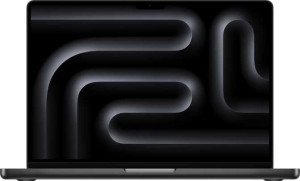
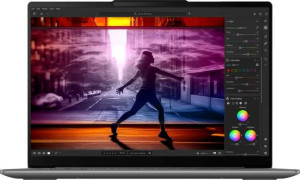
The feature set here is remarkably close, with both laptops sharing stereo speakers, a 3.5 mm audio jack, Dolby Atmos support, 3D facial recognition, and a front camera. The small but meaningful splits come down to security input, microphone count, and voice control. The MacBook Pro (2025) 14″ adds a fingerprint scanner alongside facial recognition, giving users two hardware authentication options — useful in bright or low-light conditions where a camera-based system may struggle. The Yoga Slim 7 omits the fingerprint reader entirely, leaving 3D facial recognition as its sole biometric method.
On the audio capture side, the Yoga Slim 7 edges ahead with 4 microphones versus the MacBook Pro's 3, which can translate to marginally better noise isolation and voice pickup in video calls or recordings. The MacBook Pro counters with voice command support, a feature the Yoga Slim 7 lacks — relevant for hands-free workflows, though its practical weight depends heavily on how central voice interaction is to a given user's habits.
This group is closely contested, but the MacBook Pro (2025) 14″ holds a narrow overall edge: the addition of a fingerprint scanner meaningfully broadens its biometric flexibility, and voice command support adds a layer of hands-free convenience the Yoga cannot match. The Yoga Slim 7's extra microphone is a genuine but modest counterpoint, most relevant to users who prioritize call quality above all else.