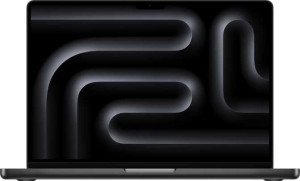
Apple MacBook Pro (2025) 14"
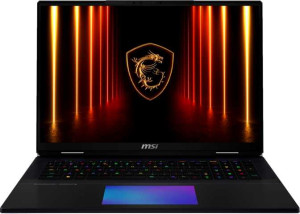
MSI Titan 18 HX AI A2XW (2025) 18" (Ultra 9 285HX / RTX 5090 Laptop / 64GB RAM / 6TB)

Apple MacBook Pro (2025) 14" MSI Titan 18 HX AI A2XW (2025) 18" (Ultra 9 285HX / RTX 5090 Laptop / 64GB RAM / 6TB)

Common Features

  • Backlit keyboard support is present on both products.
  • A fanless design is not used on either product.
  • Weather-sealed splash protection is not available on either product.
  • Touch screen support is not available on either product.
  • The display refresh rate is 120Hz on both products.
  • Anti-reflection coating on the display is not present on either product.
  • Both products use flash storage.
  • Both products use NVMe SSD storage.
  • Multithreading support is available on both products.
  • Both products use DDR5 memory.
  • 64-bit support is available on both products.
  • An HDMI output is included on both products.
  • USB Type-C connectivity is supported on both products.
  • Wi-Fi connectivity is supported on both products.
  • Sleep-and-charge USB functionality is supported on both products.

Main Differences

  • Product type is Productivity on Apple MacBook Pro (2025) 14″ and Gaming on MSI Titan 18 HX AI A2XW (2025) 18″ (Ultra 9 285HX / RTX 5090 Laptop / 64GB RAM / 6TB).
  • Weight is 1550 g on Apple MacBook Pro (2025) 14″ and 3600 g on MSI Titan 18 HX AI A2XW (2025) 18″ (Ultra 9 285HX / RTX 5090 Laptop / 64GB RAM / 6TB).
  • Screen size is 14.2″ on Apple MacBook Pro (2025) 14″ and 18″ on MSI Titan 18 HX AI A2XW (2025) 18″ (Ultra 9 285HX / RTX 5090 Laptop / 64GB RAM / 6TB).
  • Display resolution is 3024 x 1964 px on Apple MacBook Pro (2025) 14″ and 3840 x 2400 px on MSI Titan 18 HX AI A2XW (2025) 18″ (Ultra 9 285HX / RTX 5090 Laptop / 64GB RAM / 6TB).
  • Installed RAM capacity is 32GB on Apple MacBook Pro (2025) 14″ and 64GB on MSI Titan 18 HX AI A2XW (2025) 18″ (Ultra 9 285HX / RTX 5090 Laptop / 64GB RAM / 6TB).
  • Internal storage capacity is 4096GB on Apple MacBook Pro (2025) 14″ and 6144GB on MSI Titan 18 HX AI A2XW (2025) 18″ (Ultra 9 285HX / RTX 5090 Laptop / 64GB RAM / 6TB).
  • CPU threads count is 10 threads on Apple MacBook Pro (2025) 14″ and 24 threads on MSI Titan 18 HX AI A2XW (2025) 18″ (Ultra 9 285HX / RTX 5090 Laptop / 64GB RAM / 6TB).
  • USB 4 40Gbps ports count is 4 on Apple MacBook Pro (2025) 14″ and 2 on MSI Titan 18 HX AI A2XW (2025) 18″ (Ultra 9 285HX / RTX 5090 Laptop / 64GB RAM / 6TB).
  • Thunderbolt 4 ports are available on Apple MacBook Pro (2025) 14″ but not provided on MSI Titan 18 HX AI A2XW (2025) 18″ (Ultra 9 285HX / RTX 5090 Laptop / 64GB RAM / 6TB).
  • Wi-Fi version support reaches Wi-Fi 6E on Apple MacBook Pro (2025) 14″ and extends to Wi-Fi 7 on MSI Titan 18 HX AI A2XW (2025) 18″ (Ultra 9 285HX / RTX 5090 Laptop / 64GB RAM / 6TB).
  • Battery capacity is 72.4 Wh on Apple MacBook Pro (2025) 14″ and 99 Wh on MSI Titan 18 HX AI A2XW (2025) 18″ (Ultra 9 285HX / RTX 5090 Laptop / 64GB RAM / 6TB).
  • Ray tracing support is available on MSI Titan 18 HX AI A2XW (2025) 18″ (Ultra 9 285HX / RTX 5090 Laptop / 64GB RAM / 6TB) but not available on Apple MacBook Pro (2025) 14″.
Specs Comparison
Apple MacBook Pro (2025) 14"

Apple MacBook Pro (2025) 14"

MSI Titan 18 HX AI A2XW (2025) 18" (Ultra 9 285HX / RTX 5090 Laptop / 64GB RAM / 6TB)

MSI Titan 18 HX AI A2XW (2025) 18" (Ultra 9 285HX / RTX 5090 Laptop / 64GB RAM / 6TB)

Design:
Type Productivity Gaming
weight 1550 g 3600 g
Uses a fanless design
Has a backlit keyboard
volume 1034.28 cm³ 2976.672 cm³
width 312 mm 404 mm
height 221 mm 307 mm
thickness 15 mm 24 mm
is weather-sealed (splashproof)
has a rugged build

The Apple MacBook Pro (2025) 14″ and the MSI Titan 18 HX AI A2XW (2025) 18″ differ significantly in their design specifications. The MacBook Pro is a much more compact and lightweight device, weighing 1550 g with dimensions of 312 mm in width, 221 mm in height, and 15 mm in thickness. In contrast, the MSI Titan is significantly larger and heavier, weighing 3600 g, with a width of 404 mm, height of 307 mm, and a thickness of 24 mm. This makes the Titan more cumbersome but potentially more suited for gaming setups that prioritize screen size and performance over portability.

Both laptops feature a backlit keyboard, so typing in low-light environments will be equally convenient on both devices. However, neither device uses a fanless design, meaning both rely on active cooling solutions to manage heat. Additionally, neither of these laptops is weather-sealed (splashproof) or ruggedly built, so they may not be ideal for use in extreme environments.

In terms of internal volume, the MSI Titan takes up considerably more space, with a volume of 2976.672 cm³ compared to the MacBook Pro's 1034.28 cm³. This large volume in the Titan is likely a result of its larger size and the inclusion of high-performance gaming components. The design focus for the MacBook Pro is clearly on a more portable productivity-focused experience, whereas the Titan’s design caters more to performance-heavy tasks in a larger, more stationary package.

Display:
screen size 14.2" 18"
resolution 3024 x 1964 px 3840 x 2400 px
pixel density 253 ppi 251 ppi
Display type Mini-LED LCD, Mini-LED
has a touch screen
refresh rate 120Hz 120Hz
has anti-reflection coating
supported displays 2 4

The Apple MacBook Pro (2025) 14″ and the MSI Titan 18 HX AI A2XW (2025) 18″ feature displays that are both high-quality but cater to different needs. The MacBook Pro has a 14.2″ Mini-LED screen with a resolution of 3024 x 1964 px and a pixel density of 253 ppi. In comparison, the MSI Titan has a much larger 18″ LCD/Mini-LED screen, offering a higher resolution of 3840 x 2400 px, with a pixel density of 251 ppi. Despite the Titan’s larger screen and higher resolution, the pixel density on both devices is quite similar, with the MacBook Pro having a slightly sharper display in terms of pixels per inch.

Both laptops feature a 120Hz refresh rate, ensuring smooth visual performance for tasks such as gaming or video editing. Neither device has a touch screen or anti-reflection coating, which may limit certain user interactions and outdoor visibility, respectively. The MacBook Pro supports up to 2 external displays, while the Titan supports up to 4 external displays, offering more flexibility for multitaskers or those requiring extensive screen real estate.

Overall, the MacBook Pro focuses on a more compact yet high-resolution display for productivity, while the MSI Titan’s larger screen and support for additional external displays make it a stronger option for users needing extensive display setups or higher resolution for gaming or content creation.

Performance:
RAM 32GB 64GB
Uses flash storage
internal storage 4096GB 6144GB
CPU speed 4 x 4.6 & 6 x 3.2 GHz 8 x 2.8 & 16 x 2.1 GHz
CPU threads 10 threads 24 threads
Is an NVMe SSD
uses multithreading
maximum memory amount 64GB 96GB
DDR memory version 5 5
semiconductor size 3 nm 4 nm
has XeSS (XMX)
Supports 64-bit

The Apple MacBook Pro (2025) 14″ and the MSI Titan 18 HX AI A2XW (2025) 18″ differ significantly in performance specs, reflecting their distinct use cases. The MacBook Pro has 32GB of RAM, with a maximum capacity of 64GB, while the Titan offers 64GB of RAM, and supports up to 96GB. The Titan clearly provides more memory, which could be advantageous for more memory-intensive tasks such as 3D rendering or large-scale video editing.

In terms of storage, both laptops use flash storage and NVMe SSDs, but the MacBook Pro has 4096GB of internal storage, while the Titan offers 6144GB. Both systems benefit from fast storage speeds, but the Titan provides more capacity for larger files and applications. The MacBook Pro has a higher CPU speed with 10 threads (4 cores at 4.6 GHz and 6 cores at 3.2 GHz), compared to the Titan's 24 threads (8 cores at 2.8 GHz and 16 cores at 2.1 GHz). This gives the Titan a higher thread count, which could improve performance in multithreaded applications.

Both systems feature multithreading and 64-bit support, and both use DDR5 memory and share similar semiconductor technology, with the MacBook Pro using a 3 nm process and the Titan using a 4 nm process. Neither laptop includes XeSS (XMX) technology, and both systems have an NVMe SSD for fast data access. Overall, while the MacBook Pro has faster individual CPU cores, the Titan’s greater RAM capacity, additional threads, and higher storage make it a stronger option for tasks requiring more parallel processing and larger file handling.

Connectivity:
USB 3.2 Gen 2 ports (USB-C) 0 0
USB 3.2 Gen 2 ports (USB-A) 0 3
USB 4 20Gbps ports 0 0
USB 4 40Gbps ports 4 2
Thunderbolt 4 ports 4 0
USB 3.2 Gen 1 ports (USB-C) 0 0
USB 3.2 Gen 1 ports (USB-A) 0 0
Thunderbolt 3 ports 0 0
has an HDMI output
Has USB Type-C
supports Wi-Fi
Wi-Fi version Wi-Fi 6E (802.11ax), Wi-Fi 6 (802.11ax), Wi-Fi 5 (802.11ac), Wi-Fi 4 (802.11n) Wi-Fi 7 (802.11be), Wi-Fi 6E (802.11ax), Wi-Fi 6 (802.11ax), Wi-Fi 5 (802.11ac), Wi-Fi 4 (802.11n)
has an external memory slot
Bluetooth version 5.3 5.4
RJ45 ports 0 1
HDMI ports 1 1
DisplayPort outputs 0 0
has AirPlay
mini DisplayPort outputs 0 0
has a VGA connector

The connectivity options on the Apple MacBook Pro (2025) 14″ and the MSI Titan 18 HX AI A2XW (2025) 18″ vary in several key areas, particularly in the number and type of ports. The MacBook Pro features 4 Thunderbolt 4 ports (40Gbps), while the Titan offers 2 USB 4 40Gbps ports. Neither device includes USB 3.2 Gen 2 ports, and both feature no USB 3.2 Gen 1 or Gen 2 ports (USB-C or USB-A). However, the Titan provides 3 USB 3.2 Gen 2 (USB-A) ports, which the MacBook Pro lacks entirely.

Both laptops have HDMI output, allowing for easy external display connections. The MacBook Pro has 1 HDMI port, while the Titan has the same. Neither device includes DisplayPort or mini DisplayPort outputs. Additionally, the MacBook Pro offers 4 Thunderbolt 4 ports, while the Titan lacks Thunderbolt 4 but offers other USB options. Both laptops also support AirPlay, which allows wireless streaming to compatible devices.

In terms of wireless connectivity, the MacBook Pro supports Wi-Fi 6E, Wi-Fi 6, Wi-Fi 5, and Wi-Fi 4, while the Titan supports Wi-Fi 7, Wi-Fi 6E, Wi-Fi 6, Wi-Fi 5, and Wi-Fi 4. The Titan offers Bluetooth 5.4, slightly newer than the MacBook Pro’s Bluetooth 5.3. The Titan also includes 1 RJ45 port for wired networking, which the MacBook Pro lacks entirely. Both laptops have an external memory slot, but neither has a VGA connector.

Battery:
battery size 72.4 Wh 99 Wh
Has sleep-and-charge USB ports
Has a MagSafe power adapter

The Apple MacBook Pro (2025) 14″ and the MSI Titan 18 HX AI A2XW (2025) 18″ differ in battery size and power-related features. The MacBook Pro has a 72.4 Wh battery, while the Titan features a larger 99 Wh battery. This suggests the Titan is designed to support more power-hungry components, likely giving it a longer battery life, though the actual runtime will depend on usage patterns.

Both laptops offer sleep-and-charge USB ports, allowing you to charge devices even when the laptop is in sleep mode. However, only the MacBook Pro includes a MagSafe power adapter, providing a magnetic connection for easier charging. The Titan, on the other hand, does not include a MagSafe power adapter, relying on a different charging method.

Overall, while both laptops have features aimed at convenient charging, the MacBook Pro has a smaller battery and the added benefit of MagSafe, whereas the Titan’s larger battery may provide longer use in high-demand scenarios, but it lacks MagSafe support.

Features:
release date October 2025 February 2025
has stereo speakers
has a socket for a 3.5 mm audio jack
supports ray tracing
supports DLSS
has Dolby Atmos
Stylus included
Has a fingerprint scanner
number of microphones 3 1
Uses 3D facial recognition
has voice commands
has a front camera
Has S/PDIF Out port
has a gyroscope
has GPS
has an accelerometer
has a compass
Has an optical disc drive

The Apple MacBook Pro (2025) 14″ and the MSI Titan 18 HX AI A2XW (2025) 18″ have some similarities and differences when it comes to their features. Both laptops feature stereo speakers and a 3.5 mm audio jack, but the MacBook Pro includes Dolby Atmos for a more immersive audio experience, while the Titan does not. Neither device includes a stylus, but both have a front camera for video calls.

The MacBook Pro has a fingerprint scanner, 3 microphones, and supports 3D facial recognition, along with voice commands, making it more focused on security and user interaction. In contrast, the Titan lacks a fingerprint scanner, has only 1 microphone, and does not support 3D facial recognition or voice commands, offering a more basic set of features in this area.

On the gaming side, the Titan supports both ray tracing and DLSS, enhancing gaming performance and visuals, which the MacBook Pro does not offer. Both laptops lack an S/PDIF Out port, gyroscope, GPS, accelerometer, compass, and optical disc drive, so these are not distinguishing factors. Overall, the MacBook Pro seems to prioritize user interaction and security features, while the Titan is tailored more toward gaming with support for advanced graphics technologies.

Miscellaneous:
clock multiplier 46 28
Has an unlocked multiplier
L2 cache 16 MB 40 MB
Type Laptop Laptop
Supports ECC memory
maximum memory bandwidth 153 GB/s 811.5 GB/s
Has NX bit
Has integrated graphics
Uses big.LITTLE technology
RAM speed (max) 6400 MHz 6400 MHz

The Apple MacBook Pro (2025) 14″ and the MSI Titan 18 HX AI A2XW (2025) 18″ differ in several miscellaneous technical aspects. The MacBook Pro features a clock multiplier of 46, whereas the Titan has a lower multiplier of 28. Additionally, the MacBook Pro does not have an unlocked multiplier, while the Titan does, offering more flexibility for overclocking and performance tuning.

In terms of cache, the MacBook Pro has a smaller 16 MB L2 cache, while the Titan has a much larger 40 MB L2 cache, which can benefit certain workloads by improving data access speeds. The Titan also supports ECC (Error-Correcting Code) memory, a feature the MacBook Pro does not include, which can be crucial for tasks requiring high data integrity, such as scientific computations or server work.

The MacBook Pro has a maximum memory bandwidth of 153 GB/s, while the Titan’s bandwidth is significantly higher at 811.5 GB/s, indicating a much higher capacity for handling large amounts of data in memory. Both devices feature integrated graphics, support big.LITTLE technology, and have the NX bit for security, but both have the same maximum RAM speed of 6400 MHz. Overall, the Titan seems to have more advanced memory and cache configurations for high-performance use cases, while the MacBook Pro is more limited in these areas.

Comparison Summary

This is a specification comparison between Apple MacBook Pro (2025) 14″ and MSI Titan 18 HX AI A2XW (2025) 18″ (Ultra 9 285HX / RTX 5090 Laptop / 64GB RAM / 6TB). Both products feature a backlit keyboard, support NVMe SSD storage and multithreading, include an HDMI output, and offer USB Type-C connectivity with Wi-Fi support. The Apple MacBook Pro (2025) 14″ is lighter at 1550 g with a smaller 14.2″ display, 32GB RAM, and 4096GB internal storage, while the MSI Titan 18 HX AI A2XW (2025) 18″ is heavier at 3600 g with an 18″ display, 64GB RAM, and 6144GB internal storage. CPU threads differ with 10 on the MacBook and 24 on the MSI, and the MacBook provides more USB 4 40Gbps and Thunderbolt 4 ports, whereas the MSI supports ray tracing. Battery capacities are 72.4 Wh on the MacBook and 99 Wh on the MSI.