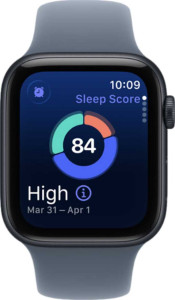
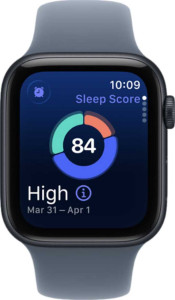
The most consequential design difference between these two models is physical size. The larger variant ships with a 44 mm × 38 mm case versus 40 mm × 34 mm for the smaller one, which directly translates into a bigger canvas: a 1.78″ screen at 368 × 448 px compared to a 1.57″ panel at 324 × 394 px. In practice, the larger display means more readable text, easier tap targets, and more content visible at a glance — a tangible benefit for users who rely heavily on notifications or health metrics. Pixel density is virtually identical at 326 ppi vs 325 ppi, so sharpness is a non-issue on either model.
Where the smaller model reclaims ground is in wearability. At 26.3 g, it is notably lighter than the 33 g of its larger sibling — a roughly 20% difference that becomes perceptible during all-day or overnight wear, particularly for users with smaller wrists. Thickness is effectively the same (10.7 mm vs 10.74 mm), so neither model sits lower on the wrist than the other. Both share identical durability credentials: IP68 / 5 ATM water resistance to 50 m, Always-On Display, replaceable bands, and branded damage-resistant glass (no sapphire on either).
The choice here hinges entirely on wrist size and use-case priority. The 44 mm model has a clear edge in screen real estate and overall display usability, while the 40 mm model holds the advantage in comfort and discretion on smaller wrists. Neither is objectively superior — they serve different ergonomic preferences, and every other design attribute is functionally equivalent.