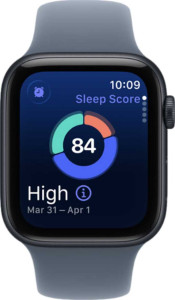
Apple Watch SE 3
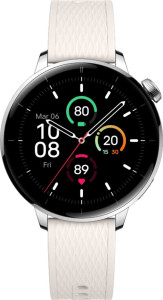
OnePlus Watch 3 43mm

Apple Watch SE 3 OnePlus Watch 3 43mm

Overview

Choosing between the Apple Watch SE 3 and the OnePlus Watch 3 43mm means weighing two very different philosophies in smartwatch design. Both deliver OLED displays, built-in GPS, NFC, heart rate monitoring, and sleep tracking — but they diverge sharply when it comes to battery life, ecosystem compatibility, and sensor capabilities. Whether you value platform integration or endurance, this side-by-side comparison covers every spec that matters.

Common Features

  • Both watches feature an OLED/AMOLED display type.
  • Both watches are waterproof with a 5 ATM rating.
  • Always-On Display is available on both watches.
  • Watch bands are replaceable on both watches.
  • Both watches have a touchscreen display.
  • Sapphire glass is not present on either watch.
  • Both watches include a heart rate monitor.
  • Both watches have built-in GPS.
  • Both watches include an accelerometer, compass, and gyroscope.
  • Neither watch has a cadence sensor.
  • Neither watch monitors perspiration.
  • Both watches track sleep and provide sleep reports.
  • Both watches track distance, steps taken, pace, elevation, and include a route tracker.
  • Both watches detect activities automatically.
  • Both watches support Wi-Fi 4 (802.11n).
  • ANT+ is not supported on either watch.
  • Both watches have NFC.
  • Both watches support Galileo.
  • Both watches have a rechargeable, non-removable battery with no solar power capability.
  • Both watches measure resting heart rate and provide fast/slow heart rate notifications.
  • Both watches can answer calls, support call control, and have notifications, silent alarm, vibrating alerts, and a stopwatch.
  • Both watches provide activity reports, inactivity alerts, calorie burn tracking, goal setting, and achievements.
  • Neither watch has a barcode scanner in the app.
  • Both watches have a battery level indicator.
  • Neither watch is compatible with Windows, has an external memory slot, or a 3.5mm audio jack socket.

Main Differences

  • Screen size is 1.78″ on Apple Watch SE 3 and 1.32″ on OnePlus Watch 3 43mm.
  • IP rating is IP68 on Apple Watch SE 3 and IP67 on OnePlus Watch 3 43mm.
  • Pixel density is 326 ppi on Apple Watch SE 3 and 352 ppi on OnePlus Watch 3 43mm.
  • Resolution is 368 x 448 px on Apple Watch SE 3 and 466 x 466 px on OnePlus Watch 3 43mm.
  • Branded damage-resistant glass is present on Apple Watch SE 3 but not available on OnePlus Watch 3 43mm.
  • Thickness is 10.7 mm on Apple Watch SE 3 and 11 mm on OnePlus Watch 3 43mm.
  • Weight is 33 g on Apple Watch SE 3 and 37.8 g on OnePlus Watch 3 43mm.
  • Height is 44 mm on Apple Watch SE 3 and 43.2 mm on OnePlus Watch 3 43mm.
  • Width is 38 mm on Apple Watch SE 3 and 43.2 mm on OnePlus Watch 3 43mm.
  • Blood oxygenation monitoring is available on OnePlus Watch 3 43mm but not on Apple Watch SE 3.
  • A temperature sensor is present on Apple Watch SE 3 but not on OnePlus Watch 3 43mm.
  • A barometer is present on Apple Watch SE 3 but not on OnePlus Watch 3 43mm.
  • Multi-sport mode is available on Apple Watch SE 3 but not on OnePlus Watch 3 43mm.
  • Calorie intake tracking is available on OnePlus Watch 3 43mm but not on Apple Watch SE 3.
  • A cellular module is present on Apple Watch SE 3 but not on OnePlus Watch 3 43mm.
  • iOS compatibility is available on Apple Watch SE 3 but not on OnePlus Watch 3 43mm.
  • Android compatibility is available on OnePlus Watch 3 43mm but not on Apple Watch SE 3.
  • Bluetooth version is 5.3 on Apple Watch SE 3 and 5.2 on OnePlus Watch 3 43mm.
  • Wi-Fi connectivity is supported on Apple Watch SE 3 but not on OnePlus Watch 3 43mm.
  • Battery life is 0.75 days on Apple Watch SE 3 and 2.5 days on OnePlus Watch 3 43mm.
  • Battery life in power save mode is 32 hours on Apple Watch SE 3 and 168 hours on OnePlus Watch 3 43mm.
  • Wireless charging is available on Apple Watch SE 3 but not on OnePlus Watch 3 43mm.
  • VO2 max measurement is available on OnePlus Watch 3 43mm but not on Apple Watch SE 3.
  • Readiness level tracking is available on OnePlus Watch 3 43mm but not on Apple Watch SE 3.
  • Irregular heart rate warnings are present on Apple Watch SE 3 but not on OnePlus Watch 3 43mm.
  • Fall detection is available on Apple Watch SE 3 but not on OnePlus Watch 3 43mm.
  • A smart alarm is available on Apple Watch SE 3 but not on OnePlus Watch 3 43mm.
  • Internal storage is 64GB on Apple Watch SE 3 and 32GB on OnePlus Watch 3 43mm.
  • Water intake tracking is available on OnePlus Watch 3 43mm but not on Apple Watch SE 3.
  • Weight tracking is available on OnePlus Watch 3 43mm but not on Apple Watch SE 3.
  • macOS compatibility is available on Apple Watch SE 3 but not on OnePlus Watch 3 43mm.
Specs Comparison
Apple Watch SE 3

Apple Watch SE 3

OnePlus Watch 3 43mm

OnePlus Watch 3 43mm

Design:
screen size 1.78" 1.32"
Display type OLED/AMOLED OLED/AMOLED
water resistance Waterproof Waterproof
ATM rating 5 ATM 5 ATM
Ingress Protection (IP) rating IP68 IP67
Always-On Display
pixel density 326 ppi 352 ppi
resolution 368 x 448 px 466 x 466 px
Watch band is replaceable
has branded damage-resistant glass
thickness 10.7 mm 11 mm
weight 33 g 37.8 g
height 44 mm 43.2 mm
width 38 mm 43.2 mm
Has a display
has a touch screen
Has sapphire glass display
volume 17.8904 cm³ 20.52864 cm³

Both watches share a solid design foundation: OLED/AMOLED panels with Always-On Display, 5 ATM water resistance, replaceable bands, and touchscreens. However, the most striking difference is screen size. The Apple Watch SE 3 packs a 1.78″ display into a 44 × 38 mm rectangular case, while the OnePlus Watch 3 43mm uses a 1.32″ circular panel in a 43.2 × 43.2 mm square footprint. That nearly half-inch difference in screen real estate is substantial — the SE 3 offers considerably more usable display area for reading notifications, navigating menus, and viewing health data at a glance, despite the two watches being close in overall size.

Sharpness is where the OnePlus pushes back: its 352 ppi pixel density edges out the SE 3's 326 ppi, and its 466 × 466 px resolution surpasses the SE 3's 368 × 448 px. In practice, both are sharp enough that pixel-level differences are unlikely to be noticeable day-to-day, but the OnePlus does have the technical edge here. On durability, the SE 3 holds an advantage with a branded damage-resistant glass coating absent on the OnePlus, and a slightly better IP68 ingress protection rating versus the OnePlus's IP67 — meaning the SE 3 is rated for deeper or more prolonged submersion.

For wearability, the SE 3 is meaningfully lighter at 33 g versus the OnePlus's 37.8 g, and its slimmer 10.7 mm thickness (vs. 11 mm) gives it a subtly more refined on-wrist feel. Overall, the Apple Watch SE 3 holds the design edge: its dramatically larger screen, lighter build, better water resistance rating, and damage-resistant glass outweigh the OnePlus's modest pixel density advantage — particularly for users who prioritize display usability and everyday durability.

Sensors:
Monitors blood oxygenation levels
Has a heart rate monitor
has GPS
has an accelerometer
Has a temperature sensor
has a compass
Has a barometer
has a gyroscope
Has a cadence sensor
Monitors perspiration

The two watches share a strong common sensor core — heart rate monitor, GPS, accelerometer, gyroscope, and compass all feature on both. For most users tracking daily activity, workouts, and navigation, this shared foundation delivers a comparable experience. Where things diverge, though, the differences carry real health-monitoring implications.

The Apple Watch SE 3 adds a temperature sensor and barometer that the OnePlus lacks. The temperature sensor enables more nuanced health insights such as cycle tracking and overnight wellness monitoring, while the barometer provides altitude data — particularly useful for hikers, cyclists, and stair-counting accuracy. The OnePlus Watch 3, on the other hand, counters with blood oxygen (SpO2) monitoring, which the SE 3 omits entirely. SpO2 tracking is meaningful for users who want to monitor respiratory health, sleep quality, or altitude acclimatization.

Ultimately, this group reflects a deliberate trade-off: the SE 3 prioritizes environmental and contextual awareness with its barometer and temperature sensor, while the OnePlus leans toward physiological monitoring via SpO2. Neither sensor suite is objectively superior — the right choice depends on the user's priorities. That said, the SE 3's two exclusive sensors versus the OnePlus's one gives it a narrow overall edge in sensor breadth for users who value both fitness and environmental tracking.

Activity tracking:
Tracks your sleep
Tracks distance
Tracks steps taken
Measures pace
Provides sleep reports
Detects activities automatically
Has a route tracker
Tracks elevation
Has multi-sport mode
Has exercise tagging
Tracks calorie intake
Designed for diving
Designed for golf

Activity tracking is remarkably well-matched between these two watches. Both cover the essentials thoroughly — sleep tracking with reports, step counting, distance, pace, elevation, route tracking, automatic activity detection, and exercise tagging are all present on each. For the majority of everyday users, this shared feature set means neither watch leaves you wanting for the basics.

The meaningful split comes down to two exclusive features. The Apple Watch SE 3 supports multi-sport mode, allowing athletes to log and switch between different sport types within a single workout session — a genuinely useful capability for triathletes, cross-trainers, or anyone who combines activities in one outing. The OnePlus Watch 3, meanwhile, adds calorie intake tracking, bringing a nutritional dimension to its fitness logging that the SE 3 lacks — appealing to users managing their diet alongside their activity levels.

Deciding which exclusive feature matters more comes down entirely to user lifestyle. Dedicated multi-sport athletes will find the SE 3's offering more practically impactful, since switching sport modes mid-workout without stopping is a workflow advantage that calorie logging cannot replicate in the same context. For general fitness and wellness users who want a more holistic view of their health that includes diet, the OnePlus holds its own. On balance, the Apple Watch SE 3 holds a slight edge here, as multi-sport mode addresses a broader range of active users than calorie intake tracking alone.

Connectivity:
has a cellular module
Is compatible with iOS
Is compatible with Android
Bluetooth version 5.3 5.2
supports Wi-Fi
Wi-Fi version Wi-Fi 4 (802.11n) Wi-Fi 4 (802.11n)
supports ANT+
has NFC
supports Galileo

Ecosystem lock-in is the defining story of this category. The Apple Watch SE 3 works exclusively with iOS, while the OnePlus Watch 3 pairs only with Android — making this a non-negotiable decision for most buyers before any other spec even enters the picture. Neither watch crosses the platform divide, so compatibility with your smartphone effectively determines which device is even an option for you.

Beyond ecosystem, the SE 3 pulls ahead on raw connectivity breadth. Its cellular module is a standout feature — it allows the watch to make calls, stream data, and receive notifications entirely independently of a paired phone. The OnePlus lacks cellular entirely, meaning it is always tethered to a nearby smartphone for network-dependent functions. The SE 3 also supports Wi-Fi, enabling direct software updates and data sync over a home network without the phone present — another capability the OnePlus does not offer. Bluetooth versions are close (5.3 on the SE 3 vs. 5.2 on the OnePlus), a difference too marginal to matter in daily use. Both carry NFC and Galileo support, keeping contactless payments and satellite positioning on an equal footing.

The Apple Watch SE 3 holds a clear connectivity advantage: cellular independence and Wi-Fi support represent genuinely meaningful real-world capabilities that the OnePlus simply cannot match. For users who want a watch that can stand on its own away from their phone, the SE 3 is the only option between these two.

Battery:
battery life 0.75 days 2.5 days
battery life in power save mode 32 hours 168 hours
has wireless charging
has a rechargeable battery
Has a solar power battery
has a removable battery

Battery life is where the gap between these two watches is most dramatic. The Apple Watch SE 3 delivers just 0.75 days of standard battery life — meaning a daily charge is not optional, it is a requirement. The OnePlus Watch 3, by contrast, rates at 2.5 days, more than three times longer. For users who dislike the discipline of nightly charging or who travel frequently, that difference has a direct, daily quality-of-life impact.

The power-save mode figures widen the gap even further. The SE 3 extends to 32 hours in power-save mode — barely enough to bridge an overnight plus a half-day if needed. The OnePlus stretches to a remarkable 168 hours (seven days), which means it can function as a basic timekeeping and health-monitoring device for an entire week without a charge. This makes the OnePlus significantly more viable for camping trips, long-haul travel, or any situation where access to a charger is unreliable.

The SE 3 does recover one point with wireless charging, which the OnePlus lacks — a convenience that makes topping up faster and cable-free when you are near a charger. But that advantage is contextual rather than structural: wireless charging only helps if you are already charging frequently, which the SE 3's battery life demands anyway. The OnePlus Watch 3 holds a decisive battery advantage — its longevity outweighs the SE 3's wireless charging convenience by a considerable margin for most users.

Features:
release date September 2025 July 2025
measures VO2 max
measures resting heart rate
has fast/slow heart rate notifications
shows readiness level
Can be used to answer calls
Has call control
Has notifications
has irregular heart rate warnings
Has silent alarm
Has vibrating alerts
has fall detection
Has a stopwatch
Has smart alarm
has voice commands
internal storage 64GB 32GB
Has a built-in camera remote control function
Acquires GPS faster
has a front camera

Across the core smartwatch feature set — call handling, notifications, voice commands, alarms, and camera remote control — these two watches are effectively identical. The real story lies in what each adds on top of that shared baseline, and the trade-offs cut in meaningfully different directions depending on the user.

The OnePlus Watch 3 brings VO2 max measurement and a readiness level score, both oriented toward serious fitness users who want deeper performance analytics and daily recovery guidance. VO2 max is a widely recognized indicator of cardiovascular fitness, and readiness scores help athletes decide whether to push hard or rest — features with genuine value for those who train consistently. The Apple Watch SE 3 counters with irregular heart rate warnings, fall detection, and a smart alarm — a cluster of features tilted toward safety and passive health monitoring rather than athletic performance. Fall detection in particular is a meaningful differentiator for older users or those in physically demanding environments. The SE 3 also doubles the OnePlus on internal storage, offering 64GB versus 32GB, which matters for users who store music or other media locally on the watch.

Taken together, the feature sets reflect two distinct user philosophies: the OnePlus caters to the fitness-focused user who wants performance metrics and recovery insights, while the SE 3 leans toward safety, health alerts, and everyday utility. Neither profile is objectively superior, but the SE 3's combination of fall detection, irregular heart rate warnings, and double the storage gives it a slight overall edge in feature breadth — particularly for users who prioritize health safety alongside general smartwatch functionality.

App & Software:
Provides activity reports
Has inactivity alerts
Counts how many calories you've burned
Has goal setting
Has achievements
Has barcode scanner on app
Tracks water intake
Has weight tracking

At the software level, these two watches are nearly identical in their core wellness app capabilities. Activity reports, inactivity alerts, calorie burn tracking, goal setting, and achievements are all present on both — a solid and well-rounded foundation that covers the needs of most everyday health-conscious users without any gaps.

The only differentiators in this category belong entirely to the OnePlus Watch 3, which adds water intake tracking and weight tracking. These features extend the app beyond pure activity monitoring into broader lifestyle and body composition management. For users trying to maintain hydration habits or monitor their weight trends alongside fitness data, having these tools natively integrated avoids the need for a separate app — a small but genuine convenience advantage.

The OnePlus Watch 3 holds the edge in this group by virtue of its two exclusive features, even if neither is transformative on its own. The Apple Watch SE 3 matches the OnePlus on every shared data point, but its absence of water intake and weight tracking makes its software offering narrower for users who want a more holistic wellness picture from a single platform.

Miscellaneous:
has a battery level indicator
Is compatible with Windows
has an external memory slot
Is compatible with Mac OS X
has a socket for a 3.5 mm audio jack

This category offers very little to separate the two watches. Both share the same limitations: no external memory slot, no 3.5mm audio jack, and no Windows compatibility — none of which are surprising or unusual for modern smartwatches in either camp.

The only distinguishing data point is Mac OS X compatibility on the Apple Watch SE 3, which the OnePlus lacks. In practice, this reflects the SE 3's deeper integration within the Apple ecosystem, allowing it to interact with macOS devices in ways the OnePlus cannot. For users already invested in Apple hardware, this is a natural extension of that ecosystem; for everyone else, it is irrelevant.

Overall, this is the least differentiated category in the comparison. The Apple Watch SE 3 holds a nominal edge due to its Mac OS X compatibility, but this advantage is highly contextual — it only matters to users who own Apple computers and actively make use of that cross-device integration. For anyone outside the Apple ecosystem, this group is effectively a tie.

Comparison Summary & Verdict

After examining the full spec sheet, both watches serve distinct audiences well. The Apple Watch SE 3 stands out with its cellular connectivity, fall detection, irregular heart rate warnings, temperature sensor, barometer, multi-sport mode, and a generous 64GB of internal storage — making it a compelling choice for safety-conscious users deeply embedded in the Apple ecosystem. The OnePlus Watch 3 43mm, on the other hand, dominates on battery life — lasting up to 2.5 days normally and an impressive 168 hours in power-save mode — and adds blood oxygen monitoring, VO2 max measurement, readiness tracking, calorie intake logging, and water intake tracking for Android users who prioritize health-focused features and endurance. Neither watch is objectively superior; the right choice depends entirely on your smartphone platform and daily priorities.

Apple Watch SE 3
Buy Apple Watch SE 3 if...

Buy the Apple Watch SE 3 if you use an iPhone and value cellular connectivity, fall detection, a temperature sensor, and a larger display in a lighter, more compact body.

OnePlus Watch 3 43mm
Buy OnePlus Watch 3 43mm if...

Buy the OnePlus Watch 3 43mm if you use an Android phone and prioritize exceptional battery life, blood oxygen monitoring, VO2 max tracking, and comprehensive health metrics.