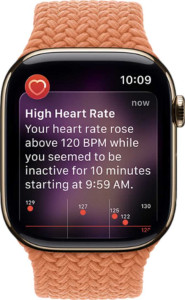
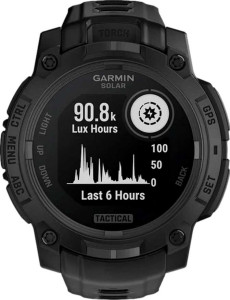
Shared ground is substantial here — both watches cover HRV tracking, VO2 max estimation, resting heart rate, fast/slow heart rate alerts, fall detection, phone finder, notifications, vibrating alerts, and a stopwatch, with identical one-year warranties. Where they diverge, however, the gaps are consequential. The Apple Watch Series 11 functions as a genuine wrist-based communication hub: it can answer calls, provide call control, respond to voice commands, and even act as a camera remote. It also adds irregular heart rate warnings — a clinically meaningful safety feature for detecting potential arrhythmias that the Garmin does not offer. The Garmin counters with a readiness level metric, which synthesizes recovery and strain data into an actionable daily score useful for structured training periodization.
The internal storage figures tell a striking story about each watch's identity. The Apple Watch carries 64 GB of onboard storage — enough for a substantial offline music or podcast library — while the Garmin offers just 0.128 GB, essentially enough for activity logs and little else. For users who want to leave their phone behind on a run and still have media, the Apple Watch is the only viable option here. On the navigation side, the Garmin's ability to acquire GPS faster is a practical field advantage, reducing the time spent waiting for a satellite lock before starting an outdoor activity.
Taken as a whole, the Apple Watch Series 11 holds a clear feature advantage in this category. Its communication capabilities, voice control, significantly larger storage, and cardiac safety alerting add up to a more versatile daily device. The Garmin's readiness score and faster GPS acquisition are meaningful perks for dedicated athletes, but they are relatively narrow gains that do not offset the Apple Watch's broader functional lead.