Apple Watch Series 11
Garmin Venu 4

Apple Watch Series 11 Garmin Venu 4

Overview

Welcome to our in-depth specification comparison between the Apple Watch Series 11 and the Garmin Venu 4. These two smartwatches represent very different philosophies: Apple leans into its ecosystem with cellular connectivity and a larger display, while Garmin counters with exceptional battery endurance and rugged outdoor readiness. Whether you prioritize seamless smartphone integration or long-lasting independence from the charger, this head-to-head breakdown covers design, sensors, activity tracking, connectivity, and more.

Common Features

  • Both watches feature an OLED/AMOLED display type.
  • Both watches are rated to a waterproof depth of 50 m.
  • Always-On Display is available on both watches.
  • Watch bands are replaceable on both models.
  • Both watches have a touch screen.
  • Neither watch is designed for kids.
  • Both watches monitor blood oxygenation levels.
  • Both watches include a heart rate monitor.
  • Both watches have built-in GPS.
  • Both watches include an accelerometer, gyroscope, compass, barometer, and temperature sensor.
  • Both watches track sleep and provide sleep reports.
  • Both watches track distance, steps taken, pace, elevation, and include a route tracker.
  • Both watches detect activities automatically.
  • Both watches are compatible with iOS and support Wi-Fi.
  • Both watches have NFC and support the Galileo satellite system.
  • Both watches have a rechargeable battery that is not removable and does not use solar power.
  • Both watches support HRV tracking, VO2 max measurement, and resting heart rate measurement.
  • Both watches can be used to answer calls, control calls, locate your phone, and display notifications.
  • Both watches provide activity reports, inactivity alerts, calorie tracking, goal setting, achievements, an exercise diary, and are ad-free with a free app.
  • Both watches have a battery level indicator, support auto pause, are compatible with smart scales and external heart rate monitors, are compatible with Mac OS X, have no external memory slot, no aptX, and no 3.5 mm audio jack.

Main Differences

  • Screen size is 1.96″ on Apple Watch Series 11 and 1.4″ on Garmin Venu 4.
  • Water resistance is rated as water resistant on Apple Watch Series 11, while Garmin Venu 4 is fully waterproof.
  • Pixel density is 330 ppi on Apple Watch Series 11 and 458 ppi on Garmin Venu 4.
  • Resolution is 416 x 496 px on Apple Watch Series 11 and 454 x 454 px on Garmin Venu 4.
  • Branded damage-resistant glass is present on Garmin Venu 4 but not available on Apple Watch Series 11.
  • Sapphire glass display is featured on Apple Watch Series 11 but not on Garmin Venu 4.
  • Thickness is 9.7 mm on Apple Watch Series 11 and 12 mm on Garmin Venu 4.
  • Weight is 43.1 g on Apple Watch Series 11 and 38 g on Garmin Venu 4.
  • Height is 46 mm on Apple Watch Series 11 and 45 mm on Garmin Venu 4.
  • Width is 39 mm on Apple Watch Series 11 and 45 mm on Garmin Venu 4.
  • Maximum operating temperature is 35 °C on Apple Watch Series 11 and 55 °C on Garmin Venu 4.
  • Lowest potential operating temperature is 0 °C on Apple Watch Series 11 and -20 °C on Garmin Venu 4.
  • Golf-specific design features are present on Garmin Venu 4 but not on Apple Watch Series 11.
  • A cellular module is included in Apple Watch Series 11 but is not available on Garmin Venu 4.
  • Android compatibility is supported on Garmin Venu 4 but not on Apple Watch Series 11.
  • ANT+ support is available on Garmin Venu 4 but not on Apple Watch Series 11.
  • Battery life is 1 day on Apple Watch Series 11 and 12 days on Garmin Venu 4.
  • Battery life in power save mode is 38 hours on Apple Watch Series 11 and 25 hours on Garmin Venu 4.
  • Charge time is 1.2 hours on Apple Watch Series 11 and 1 hour on Garmin Venu 4.
  • Wireless charging is supported on Apple Watch Series 11 but not on Garmin Venu 4.
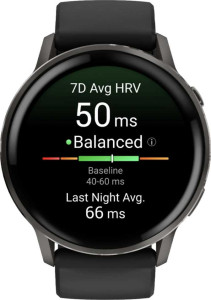
  • Readiness level tracking is available on Garmin Venu 4 but not on Apple Watch Series 11.
  • Internal storage is 64 GB on Apple Watch Series 11 and 8 GB on Garmin Venu 4.
  • A built-in camera remote control function is present on Apple Watch Series 11 but not on Garmin Venu 4.
  • Faster GPS acquisition is a feature of Garmin Venu 4 but is not present on Apple Watch Series 11.
  • Coaching features are available on Garmin Venu 4 but not on Apple Watch Series 11.
  • Windows compatibility is supported on Garmin Venu 4 but not on Apple Watch Series 11.
Specs Comparison
Apple Watch Series 11

Apple Watch Series 11

Garmin Venu 4

Garmin Venu 4

Design:
screen size 1.96" 1.4"
Display type OLED/AMOLED OLED/AMOLED
water resistance Water resistant Waterproof
waterproof depth rating 50 m 50 m
Always-On Display
pixel density 330 ppi 458 ppi
resolution 416 x 496 px 454 x 454 px
Watch band is replaceable
has branded damage-resistant glass
thickness 9.7 mm 12 mm
weight 43.1 g 38 g
height 46 mm 45 mm
width 39 mm 45 mm
maximum operating temperature 35 °C 55 °C
lowest potential operating temperature 0 °C -20 °C
Has a display
has a touch screen
Has sapphire glass display
volume 17.4018 cm³ 24.3 cm³
is designed for kids

The Apple Watch Series 11 and Garmin Venu 4 both feature OLED/AMOLED displays, offering vibrant visuals. However, there are some key differences in their screen sizes and resolutions. The Apple Watch Series 11 has a larger 1.96″ screen with a resolution of 416 x 496 px, delivering a pixel density of 330 ppi. In contrast, the Garmin Venu 4 has a 1.4″ display with a higher resolution of 454 x 454 px, resulting in a sharper 458 ppi pixel density. While both watches feature Always-On Display, the Apple Watch Series 11 offers a slightly larger display for better visibility.

Both watches are water-resistant, with each having a 50-meter waterproof depth rating, ensuring they can be used during swimming or in wet conditions. The Apple Watch Series 11 is also rated for a maximum operating temperature of 35 °C, while the Garmin Venu 4 can withstand a much higher maximum temperature of 55 °C. The Apple Watch Series 11, on the other hand, can operate in lower temperatures down to 0 °C, whereas the Garmin Venu 4 is rated to function in extreme cold conditions as low as -20 °C.

When it comes to physical design, the Apple Watch Series 11 is slightly lighter at 43.1 g, compared to the Garmin Venu 4's 38 g. The Apple Watch is thinner at 9.7 mm, while the Garmin Venu 4 is a bit bulkier with a thickness of 12 mm. The Garmin Venu 4 also has a larger overall volume of 24.3 cm³, compared to the Apple Watch Series 11’s 17.4018 cm³. Both watches offer replaceable bands, but only the Garmin Venu 4 includes branded damage-resistant glass. Additionally, the Apple Watch Series 11 has sapphire glass for extra protection against scratches, while the Garmin Venu 4 does not.
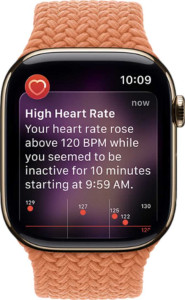
Sensors:
Monitors blood oxygenation levels
Has a heart rate monitor
has GPS
has an accelerometer
Has a temperature sensor
has a compass
Has a barometer
has a gyroscope
Has a cadence sensor
Monitors perspiration

Across every sensor listed, the Apple Watch Series 11 and Garmin Venu 4 are in complete lockstep. Both carry the full core suite: heart rate monitor, blood oxygen (SpO2), GPS, accelerometer, gyroscope, barometer, compass, and a temperature sensor. Together, these cover the vast majority of health and fitness tracking use cases — from elevation-aware route mapping and sleep monitoring to fall detection and activity recognition.

The shared absences are equally telling. Neither watch includes a cadence sensor or perspiration monitor. The lack of a dedicated cadence sensor is a minor consideration for cyclists who may rely on a separate accessory, while the absence of sweat monitoring means neither device can track hydration or electrolyte loss directly — a gap for serious endurance athletes but irrelevant for most everyday users.

This group is a complete tie. There is no sensor-based advantage to be found on either side; a buyer choosing between these two watches should look to other specification groups — such as battery life, software ecosystem, or design — to make their decision.

Activity tracking:
Tracks your sleep
Tracks distance
Tracks steps taken
Measures pace
Provides sleep reports
Detects activities automatically
Has a route tracker
Tracks elevation
Has multi-sport mode
Has exercise tagging
Has a stroke counter for swimming
Tracks calorie intake
Designed for diving
Designed for golf

For activity tracking breadth, these two watches are remarkably well-matched. Both cover the full spectrum of everyday and athletic monitoring — sleep tracking with reports, multi-sport mode, automatic activity detection, route tracking, elevation, pace, swim stroke counting, and even calorie intake logging. For the overwhelming majority of users, neither watch leaves a meaningful gap in what it can record and analyze.

The single differentiator in this group is the Garmin Venu 4's dedicated golf mode, which the Series 11 lacks. For golfers, this is a tangible feature — golf-specific tracking typically includes course mapping, shot distance measurement, and score logging, capabilities that a general multi-sport mode does not replicate. It is a niche advantage, but a decisive one for that audience.

The Venu 4 holds a narrow edge here purely by virtue of its golf mode. For anyone who plays golf, it is a clear differentiator. For everyone else, this group is effectively a tie, and other specification categories will carry more weight in the purchase decision.

Connectivity:
has a cellular module
Is compatible with iOS
Is compatible with Android
supports Wi-Fi
supports ANT+
has NFC
supports Galileo

The most consequential split in this group comes down to two opposing strengths. The Apple Watch Series 11 includes a cellular module, meaning it can make calls, stream music, and receive notifications entirely independently of a paired phone — a genuine freedom for runners, commuters, or anyone who prefers to leave their phone behind. The Garmin Venu 4 has no cellular capability, so it remains tethered to a smartphone for those functions. On the flip side, the Venu 4 supports ANT+, a low-power wireless protocol widely used to connect third-party fitness accessories like chest-strap heart rate monitors, power meters, and cycling sensors — hardware the Series 11 cannot natively communicate with.

Smartphone compatibility is another meaningful divide. The Series 11 is iOS-only, making it a non-starter for Android users, while the Venu 4 works with both iOS and Android, giving it a significantly broader potential user base. Both watches support Wi-Fi, NFC for contactless payments, and the Galileo satellite system for enhanced GPS accuracy — so those bases are equally covered.

Which watch has the connectivity edge depends entirely on the user's priorities. The Series 11 wins for iPhone users who want cellular independence, while the Venu 4 wins on ecosystem openness — it pairs with any smartphone and connects to a wide range of ANT+ fitness accessories. Neither is universally superior; the right choice hinges on your phone platform and whether standalone connectivity or accessory compatibility matters more to you.

Battery:
battery life 1 days 12 days
charge time 1.2 hours 1 hours
battery life in power save mode 38 hours 25 hours
has wireless charging
has a rechargeable battery
Has a solar power battery
has a removable battery

Battery life is where these two watches diverge most dramatically. The Garmin Venu 4 lasts up to 12 days on a single charge, while the Apple Watch Series 11 manages just 1 day. In practical terms, this means the Series 11 needs to be charged every night without exception — miss one evening and it may not survive the next day. The Venu 4, by contrast, can go nearly two weeks between charges, which is a fundamentally different ownership experience: less routine charging, more confidence during travel, and uninterrupted overnight sleep tracking without the juggling act.

The power-save mode figures add an interesting wrinkle. The Series 11 extends to 38 hours in low-power mode versus the Venu 4's 25 hours — meaning the Apple watch actually outlasts the Garmin when both are throttled to their bare minimums. This suggests the Series 11's standard battery drain is heavily driven by its always-on features and richer OS, and that power-save mode aggressively strips those back. For the Venu 4, power-save mode offers a comparatively modest extension because its normal drain is already so conservative. On charging convenience, the Series 11 supports wireless charging while the Venu 4 requires a proprietary cable — a small but real daily friction point in the Garmin's favor elsewhere evaporating here.

The Venu 4 wins this category decisively on everyday usability. A 12-day battery life removes charging from the daily routine entirely, which is especially valuable for sleep tracking continuity, multi-day trips, and general peace of mind. The Series 11's wireless charging is a convenience perk, but it cannot offset the reality of needing a nightly top-up.

Features:
release date September 2025 September 2025
has HRV tracking
measures VO2 max
measures resting heart rate
has fast/slow heart rate notifications
shows readiness level
Can be used to answer calls
Locates your phone
Has call control
Has notifications
has irregular heart rate warnings
Has ECG technology
Has silent alarm
Has vibrating alerts
has fall detection
Has a stopwatch
Has smart alarm
has voice commands
internal storage 64GB 8GB
Has a built-in camera remote control function
Acquires GPS faster
warranty period 1 years 1 years
has a front camera

The feature overlap between these two watches is extensive and impressive on both sides. Health-focused capabilities like ECG, HRV tracking, VO2 max, irregular heart rate warnings, and fall detection are present on both — meaning neither leaves a gap in core wellness monitoring. Everyday smartwatch functions such as call handling, notifications, voice commands, and phone-finding are equally matched, making both watches fully capable daily companions without meaningful compromise.

Where they part ways are three pointed differences. The Garmin Venu 4 offers a readiness score — a composite metric that synthesizes recovery data to tell you how prepared your body is for exertion that day — which the Series 11 omits. For athletes structuring their training load, this is a genuinely useful coaching signal. The Venu 4 also acquires GPS faster, which translates to less standing-around time before a run or ride begins. The Apple Watch Series 11 counters with a massive 64 GB of internal storage versus the Venu 4's 8 GB, enabling far more onboard music, podcasts, or app data — critical for users who want to leave their phone behind during workouts. The Series 11 also adds a camera remote control function, a handy but secondary perk.

This group is close, but the Venu 4 has a slight edge for fitness-focused users thanks to its readiness level tracking and faster GPS acquisition. The Series 11 counters strongly for media-heavy users with its vastly superior 64 GB storage. The deciding factor comes down to whether you value training intelligence or onboard content capacity more.

App & Software:
Provides activity reports
Has inactivity alerts
Counts how many calories you've burned
Has goal setting
Has achievements
Free app
Has exercise diary
Ad-free
Has coaching
Has temperature tracking
Has period notifications
Has voice feedback
Has music playback
Predicts ovulation
Predicts start date
Can be personalised
Has barcode scanner on app
Tracks water intake
Has weight tracking

From a software and app perspective, these two watches are almost indistinguishable on paper. Both deliver a comprehensive, free and ad-free companion app covering activity reports, goal setting, exercise diary, calorie tracking, water intake, weight tracking, and full reproductive health features including ovulation prediction and cycle start date forecasting. The parity here is genuine — users of either watch will find a well-rounded wellness platform waiting for them without any paywall friction.

The sole differentiator is that the Garmin Venu 4 includes in-app coaching, while the Apple Watch Series 11 does not. Coaching features typically provide structured guidance — suggested workouts, recovery advice, or training plan progression — which moves the app from passive tracker to active guide. For users who want their watch to tell them not just what they did, but what they should do next, this is a meaningful addition.

The Venu 4 edges ahead in this category, but only just. The presence of coaching is the single feature that separates an otherwise identical software offering. Casual users may never notice the difference, but anyone seeking guided training structure will find the Venu 4's app more actionable.

Miscellaneous:
has a battery level indicator
has aptX
Has auto pause
Compatible with smart scales
Compatible with external heart rate monitors
Is compatible with Windows
has an external memory slot
Is compatible with Mac OS X
has a socket for a 3.5 mm audio jack

This specification group is largely a wash. Both watches share battery level indication, auto-pause, smart scale compatibility, and support for external heart rate monitors — and neither offers an external memory slot or a 3.5 mm audio jack. The practical takeaway is that both integrate cleanly into a broader fitness hardware ecosystem and handle workout auto-management consistently.

The only divergence is desktop OS compatibility. Both watches work with Mac OS X, but only the Garmin Venu 4 is also compatible with Windows. For users who manage their health data or sync their device from a Windows PC, this matters — the Series 11 leaves those users without native desktop support on that platform.

The Venu 4 holds a narrow advantage here solely due to its Windows compatibility. It is a low-drama differentiator for most users, but for anyone in a Windows-primary environment, it removes a potential friction point that the Series 11 does not.

Comparison Summary & Verdict

After examining every specification, it is clear that both watches excel in distinct areas. The Apple Watch Series 11 is the stronger choice for iPhone users who want a larger, sapphire-glass display, built-in cellular independence, wireless charging, and a massive 64 GB of internal storage. Its slimmer profile and longer battery life in power-save mode also add practical appeal. The Garmin Venu 4, on the other hand, dominates on battery life at 12 days, a sharper 458 ppi screen, a wider operating temperature range, and cross-platform Android compatibility. It further stands out with golf-mode support, coaching features, ANT+ connectivity, and faster GPS acquisition, making it the ideal companion for serious outdoor and multi-sport athletes who need reliability across days of use without reaching for a charger.

Apple Watch Series 11
Buy Apple Watch Series 11 if...

Buy the Apple Watch Series 11 if you are an iPhone user who wants cellular connectivity, a larger sapphire-glass display, wireless charging, and generous 64 GB of internal storage.

Garmin Venu 4
Buy Garmin Venu 4 if...

Buy the Garmin Venu 4 if you need a long-lasting smartwatch with up to 12 days of battery life, Android compatibility, advanced coaching, golf support, and rugged temperature resilience.