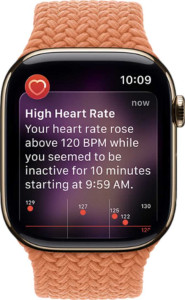
Apple Watch Series 11
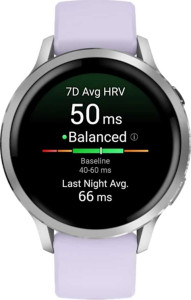
Garmin Venu 4 41mm

Apple Watch Series 11 Garmin Venu 4 41mm

Overview

Welcome to our in-depth spec comparison between the Apple Watch Series 11 and the Garmin Venu 4 41mm. These two smartwatches represent very different philosophies: Apple brings a larger, feature-rich display with deep iPhone integration, while Garmin counters with a focus on endurance, outdoor resilience, and fitness coaching. From battery life and operating temperature range to connectivity and platform compatibility, there is plenty to explore before choosing your next wrist companion.

Common Features

  • Both watches feature an OLED/AMOLED display type.
  • Both watches are waterproof to a depth of 50 m.
  • An always-on display is available on both watches.
  • The watch band is replaceable on both products.
  • Both watches have a touchscreen display.
  • Neither watch is designed for kids.
  • Blood oxygenation level monitoring is available on both watches.
  • A heart rate monitor is present on both watches.
  • GPS is built into both watches.
  • Both watches include an accelerometer, gyroscope, compass, barometer, and temperature sensor.
  • Sleep tracking and sleep reports are available on both watches.
  • Both watches track distance, steps taken, pace, elevation, and routes.
  • Activity auto-detection is supported on both watches.
  • Both watches are compatible with iOS and support Wi-Fi and NFC.
  • Galileo satellite system support is present on both watches.
  • HRV tracking and VO2 max measurement are available on both watches.
  • Both watches can measure resting heart rate and provide fast/slow heart rate notifications.
  • The ability to answer calls and control calls is available on both watches.
  • Neither watch has a solar power battery or a removable battery, but both have a rechargeable battery.
  • Both watches offer activity reports, inactivity alerts, calorie tracking, goal setting, achievements, an exercise diary, and an ad-free free app.
  • A battery level indicator is present on both watches.
  • Auto pause is supported on both watches.
  • Both watches are compatible with smart scales, external heart rate monitors, and Mac OS X.
  • Neither watch has an external memory slot or a 3.5 mm audio jack.
  • Neither watch supports aptX.

Main Differences

  • Screen size is 1.96″ on Apple Watch Series 11 and 1.2″ on Garmin Venu 4 41mm.
  • Apple Watch Series 11 is water resistant, while Garmin Venu 4 41mm is fully waterproof.
  • Pixel density is 330 ppi on Apple Watch Series 11 and 459 ppi on Garmin Venu 4 41mm.
  • Resolution is 416 x 496 px on Apple Watch Series 11 and 390 x 390 px on Garmin Venu 4 41mm.
  • Branded damage-resistant glass is present on Garmin Venu 4 41mm but not on Apple Watch Series 11.
  • Sapphire glass display is present on Apple Watch Series 11 but not on Garmin Venu 4 41mm.
  • Thickness is 9.7 mm on Apple Watch Series 11 and 12 mm on Garmin Venu 4 41mm.
  • Weight is 43.1 g on Apple Watch Series 11 and 33 g on Garmin Venu 4 41mm.
  • Height is 46 mm on Apple Watch Series 11 and 41 mm on Garmin Venu 4 41mm.
  • Width is 39 mm on Apple Watch Series 11 and 41 mm on Garmin Venu 4 41mm.
  • Maximum operating temperature is 35 °C on Apple Watch Series 11 and 55 °C on Garmin Venu 4 41mm.
  • Lowest potential operating temperature is 0 °C on Apple Watch Series 11 and -20 °C on Garmin Venu 4 41mm.
  • Golf-specific design is present on Garmin Venu 4 41mm but not on Apple Watch Series 11.
  • A cellular module is present on Apple Watch Series 11 but not on Garmin Venu 4 41mm.
  • Android compatibility is available on Garmin Venu 4 41mm but not on Apple Watch Series 11.
  • ANT+ support is present on Garmin Venu 4 41mm but not on Apple Watch Series 11.
  • Battery life is 1 day on Apple Watch Series 11 and 10 days on Garmin Venu 4 41mm.
  • Charge time is 1.2 hours on Apple Watch Series 11 and 1 hour on Garmin Venu 4 41mm.
  • Battery life in power save mode is 38 hours on Apple Watch Series 11 and 15 hours on Garmin Venu 4 41mm.
  • Wireless charging is available on Apple Watch Series 11 but not on Garmin Venu 4 41mm.
  • Readiness level tracking is present on Garmin Venu 4 41mm but not on Apple Watch Series 11.
  • Internal storage is 64 GB on Apple Watch Series 11 and 8 GB on Garmin Venu 4 41mm.
  • A built-in camera remote control function is available on Apple Watch Series 11 but not on Garmin Venu 4 41mm.
  • Faster GPS acquisition is available on Garmin Venu 4 41mm but not on Apple Watch Series 11.
  • Coaching features are available on Garmin Venu 4 41mm but not on Apple Watch Series 11.
  • Windows compatibility is available on Garmin Venu 4 41mm but not on Apple Watch Series 11.
Specs Comparison
Apple Watch Series 11

Apple Watch Series 11

Garmin Venu 4 41mm

Garmin Venu 4 41mm

Design:
screen size 1.96" 1.2"
Display type OLED/AMOLED OLED/AMOLED
water resistance Water resistant Waterproof
waterproof depth rating 50 m 50 m
Always-On Display
pixel density 330 ppi 459 ppi
resolution 416 x 496 px 390 x 390 px
Watch band is replaceable
has branded damage-resistant glass
thickness 9.7 mm 12 mm
weight 43.1 g 33 g
height 46 mm 41 mm
width 39 mm 41 mm
maximum operating temperature 35 °C 55 °C
lowest potential operating temperature 0 °C -20 °C
Has a display
has a touch screen
Has sapphire glass display
volume 17.4018 cm³ 20.172 cm³
is designed for kids

The most immediately obvious design contrast is screen real estate: the Apple Watch Series 11 features a significantly larger 1.96″ display at 416 x 496 px, while the Garmin Venu 4 41mm uses a more compact 1.2″ panel at 390 x 390 px. However, Garmin compensates with a notably higher 459 ppi pixel density versus Apple's 330 ppi, meaning the Venu 4's smaller screen is actually sharper per inch — a real advantage for crisp text and fine detail. Both use OLED/AMOLED technology and support Always-On Display, so visibility in ambient conditions is comparable in principle.

In terms of physical form factor, the two watches take different trade-offs. The Apple Watch is thinner at 9.7 mm versus the Venu 4's 12 mm, and despite having the larger display, it weighs more at 43.1 g compared to the Venu 4's lighter 33 g — a meaningful difference for all-day and sleep tracking comfort. The Apple Watch uses sapphire glass (no branded damage-resistant glass listed), while the Garmin opts for branded damage-resistant glass but no sapphire. Sapphire is generally harder and more scratch-resistant, but branded solutions like Gorilla Glass can offer superior shatter resistance — so neither approach is strictly superior.

For durability and environmental tolerance, the Garmin Venu 4 holds a clear edge. It is rated as fully waterproof versus the Apple Watch's ″water resistant″ designation (both share a 50 m depth rating), and its operating temperature range of -20 °C to 55 °C far exceeds the Apple Watch's narrower 0 °C to 35 °C window — making the Venu 4 the stronger choice for outdoor or extreme-environment use. Overall, the Apple Watch wins on display size and thinness, while the Garmin Venu 4 has the advantage in sharpness, weight, and environmental resilience.

Sensors:
Monitors blood oxygenation levels
Has a heart rate monitor
has GPS
has an accelerometer
Has a temperature sensor
has a compass
Has a barometer
has a gyroscope
Has a cadence sensor
Monitors perspiration

Across every sensor listed, the Apple Watch Series 11 and Garmin Venu 4 41mm are in complete lockstep. Both carry the full core suite — heart rate monitor, blood oxygen (SpO2), GPS, accelerometer, gyroscope, barometer, compass, and temperature sensor — meaning neither watch has a hardware sensing gap relative to the other based on this data.

That sensor combination is meaningful in practice: the barometer enables floor-climbing tracking and weather trend detection; the gyroscope and accelerometer together power fall detection and detailed motion analysis; and the temperature sensor supports menstrual cycle tracking and general wellness monitoring. GPS without a paired phone is essential for accurate outdoor route mapping, and both watches deliver that independently.

Neither device monitors perspiration or includes a cadence sensor, so both share the same ceiling and floor here. The verdict is a straightforward tie — sensor parity is total, and hardware capability in this category should not be a deciding factor between these two watches.

Activity tracking:
Tracks your sleep
Tracks distance
Tracks steps taken
Measures pace
Provides sleep reports
Detects activities automatically
Has a route tracker
Tracks elevation
Has multi-sport mode
Has exercise tagging
Has a stroke counter for swimming
Tracks calorie intake
Designed for diving
Designed for golf

Activity tracking breadth is nearly identical between these two watches. Both cover the full spectrum of everyday and athletic monitoring — sleep tracking with reports, steps, distance, pace, elevation, route tracking, automatic activity detection, multi-sport mode, exercise tagging, swim stroke counting, and calorie intake tracking. For the vast majority of users, this represents a complete feature set with no meaningful gap between the two.

The single differentiator in this category is the Garmin Venu 4's support for golf mode, which the Apple Watch Series 11 lacks. For golfers, this is a tangible advantage — dedicated golf features typically include course mapping, hole layouts, and shot distance tracking, turning the watch into an on-wrist caddie. It is a niche capability, but a decisive one for that specific audience.

For anyone outside of golf, this category is essentially a tie — the shared tracking capabilities are extensive and evenly matched. The Garmin Venu 4 holds a narrow but clear overall edge here solely on the strength of its golf mode, making it the more versatile option for active users whose pursuits extend to the course.

Connectivity:
has a cellular module
Is compatible with iOS
Is compatible with Android
supports Wi-Fi
supports ANT+
has NFC
supports Galileo

Two connectivity differences define this category. First, the Apple Watch Series 11 includes a cellular module, while the Garmin Venu 4 does not. In practice, this means the Apple Watch can make calls, stream music, and receive notifications entirely independent of a paired smartphone — a significant freedom for runners or commuters who prefer to leave their phone behind. The Garmin, without cellular, remains tethered to a phone for those functions whenever out of Wi-Fi range.

The second major split is platform compatibility. The Apple Watch is iOS-only, making it a non-starter for Android users. The Garmin Venu 4 works with both iOS and Android, giving it a much broader potential audience. Additionally, the Venu 4 supports ANT+ — a protocol widely used to connect third-party fitness hardware like heart rate chest straps, cycling power meters, and gym equipment — which the Apple Watch lacks. For athletes who rely on that accessory ecosystem, this is a meaningful practical advantage.

Both watches share Wi-Fi, NFC (enabling contactless payments), and Galileo satellite support, so the baseline connectivity experience is solid on either device. Overall, the Apple Watch holds the edge for iPhone users who value cellular independence, while the Garmin Venu 4 is the stronger choice for Android users and those invested in an ANT+ accessory ecosystem.

Battery:
battery life 1 days 10 days
charge time 1.2 hours 1 hours
battery life in power save mode 38 hours 15 hours
has wireless charging
has a rechargeable battery
Has a solar power battery
has a removable battery

Battery life is where these two watches diverge most dramatically. The Garmin Venu 4 delivers a rated 10 days of standard use compared to the Apple Watch Series 11's 1 day — a tenfold difference that fundamentally shapes the day-to-day ownership experience. For users who want uninterrupted sleep tracking, travel without chargers, or simply fewer charging rituals, the Garmin's longevity is a decisive practical advantage.

The power-save mode comparison adds an interesting twist. The Apple Watch extends to 38 hours in power-save mode versus the Garmin's 15 hours — meaning Apple's low-power mode offers a proportionally larger boost relative to its standard runtime. Still, even at 38 hours, the Apple Watch requires charging every one to two days in the best case, while the Garmin's power-save mode is an emergency buffer on top of an already-long baseline. Charge times are close — 1 hour for the Garmin versus 1.2 hours for the Apple Watch — so neither has a meaningful edge there.

The one area where the Apple Watch recovers ground is wireless charging, which the Garmin lacks. The convenience of dropping the watch on a pad rather than locating a proprietary cable is real, though it only matters if you are charging frequently — which, given the Garmin's battery life, you largely will not be. Overall, the Garmin Venu 4 holds a clear and significant advantage in this category for any user who prioritizes charging-free endurance.

Features:
release date September 2025 September 2025
has HRV tracking
measures VO2 max
measures resting heart rate
has fast/slow heart rate notifications
shows readiness level
Can be used to answer calls
Locates your phone
Has call control
Has notifications
has irregular heart rate warnings
Has ECG technology
Has silent alarm
Has vibrating alerts
has fall detection
Has a stopwatch
Has smart alarm
has voice commands
internal storage 64GB 8GB
Has a built-in camera remote control function
Acquires GPS faster
warranty period 1 years 1 years
has a front camera

The feature sets here are remarkably well-matched at the core. Both watches offer ECG technology, HRV tracking, VO2 max measurement, irregular heart rate warnings, fall detection, call answering and control, voice commands, and a full suite of alerts — a combination that covers both serious health monitoring and everyday smartwatch utility without either device falling short.

Three divergences stand out. The Garmin Venu 4 adds a readiness level score — a daily recovery metric that synthesizes sleep, HRV, and recent activity load to tell you how prepared your body is to train. This is a meaningful feature for performance-focused users that the Apple Watch Series 11 does not offer. The Garmin also acquires GPS faster, which translates to less standing-around time before a run or ride begins. On the other side, the Apple Watch packs a substantial 64GB of internal storage versus the Garmin's 8GB, enabling far more local music or podcast storage — and it includes a camera remote control function, a convenient lifestyle perk the Venu 4 lacks.

Both carry an identical 1-year warranty. Weighing the trade-offs, the Garmin edges ahead for fitness-oriented users thanks to readiness tracking and faster GPS acquisition, while the Apple Watch's storage advantage caters more to media consumption on the go. Neither watch dominates outright — the right choice depends on whether the user prioritizes athletic intelligence or on-wrist media capacity.

App & Software:
Provides activity reports
Has inactivity alerts
Counts how many calories you've burned
Has goal setting
Has achievements
Free app
Has exercise diary
Ad-free
Has coaching
Has temperature tracking
Has period notifications
Has voice feedback
Has music playback
Predicts ovulation
Predicts start date
Can be personalised
Has barcode scanner on app
Tracks water intake
Has weight tracking

Software and app capability is another area of near-total parity. Both watches pair with a free, ad-free app that covers activity reports, calorie tracking, goal setting, achievements, an exercise diary, voice feedback, music playback, water intake, weight tracking, temperature tracking, and a comprehensive women's health suite including period notifications, ovulation prediction, and cycle start date forecasting. That is a genuinely deep feature set shared identically across both platforms.

The sole differentiator is coaching, which the Garmin Venu 4 supports and the Apple Watch Series 11 does not. In-app coaching typically means structured guidance — suggested workouts, recovery advice, or adaptive training plans delivered directly through the companion app. For users who want their watch ecosystem to actively direct their fitness progression rather than just record it, this is a notable addition that the Apple Watch app lacks.

With one exception, this category is a tie. Both apps are polished, full-featured, and free. The Garmin earns a narrow edge thanks to coaching support, which adds a layer of proactive guidance that meaningfully benefits users seeking more than passive tracking — though for those who do not use structured training plans, the gap is essentially irrelevant.

Miscellaneous:
has a battery level indicator
has aptX
Has auto pause
Compatible with smart scales
Compatible with external heart rate monitors
Is compatible with Windows
has an external memory slot
Is compatible with Mac OS X
has a socket for a 3.5 mm audio jack

This category is largely uniform between the two watches. Both offer a battery level indicator, auto pause, compatibility with smart scales and external heart rate monitors, and shared support for Mac OS X — all while lacking an external memory slot and a 3.5mm audio jack. For most users, this common ground covers the practical miscellaneous bases without any gap.

The only divergence is Windows compatibility: the Garmin Venu 4 supports it, while the Apple Watch Series 11 does not. This reflects Apple's broader ecosystem boundaries — the Apple Watch is designed to function within Apple's own software environment, making it effectively inaccessible for Windows-based desktop syncing or management. For users whose primary computer runs Windows, this is a real friction point, even if day-to-day watch use is smartphone-driven.

Outside of that single distinction, this category is a tie. The Garmin earns a modest edge through its Windows compatibility, which broadens its usability across desktop platforms — a practical consideration for users who do not operate within an all-Apple environment.

Comparison Summary & Verdict

After examining every specification, it is clear that both watches excel in different scenarios. The Apple Watch Series 11 stands out with its larger 1.96″ sapphire glass display, built-in cellular module, massive 64 GB of internal storage, and wireless charging — making it the stronger choice for iPhone users who want a versatile, always-connected device. The Garmin Venu 4 41mm, on the other hand, wins decisively on battery life at 10 days, a wider operating temperature range from -20 °C to 55 °C, higher pixel density, lighter weight, and extras like ANT+ support, golf mode, readiness tracking, and built-in coaching. If longevity, outdoor durability, and cross-platform compatibility matter most to you, the Garmin is the clear pick. If you are an iPhone user seeking seamless integration and premium storage, the Apple Watch Series 11 is the better fit.

Apple Watch Series 11
Buy Apple Watch Series 11 if...

Buy the Apple Watch Series 11 if you are an iPhone user who wants built-in cellular connectivity, a large sapphire glass display, wireless charging, and 64 GB of internal storage.

Garmin Venu 4 41mm
Buy Garmin Venu 4 41mm if...

Buy the Garmin Venu 4 41mm if you prioritize a 10-day battery life, a wider operating temperature range, Android compatibility, ANT+ support, and dedicated fitness coaching features.