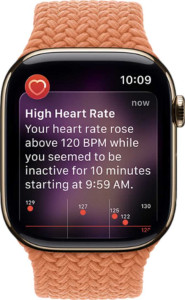
Apple Watch Series 11
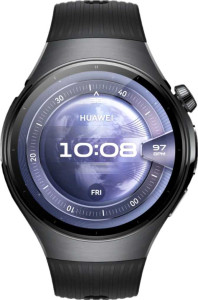
Huawei Watch 5

Apple Watch Series 11 Huawei Watch 5

Overview

Welcome to our in-depth spec comparison between the Apple Watch Series 11 and the Huawei Watch 5. These two smartwatches share a surprising amount of common ground, yet diverge sharply in areas that matter most to different types of users. From battery endurance and operating temperature range to activity tracking depth and platform compatibility, each watch takes a distinct approach to what a premium wearable should be. Read on to see how they stack up across every major specification.

Common Features

  • Both watches feature an OLED/AMOLED display type.
  • Both watches carry an IP68 ingress protection rating.
  • Always-On Display is available on both watches.
  • The watch band is replaceable on both watches.
  • Branded damage-resistant glass is not present on either watch.
  • Sapphire glass display is available on both watches.
  • A touchscreen display is present on both watches.
  • Blood oxygenation level monitoring is available on both watches.
  • A heart rate monitor is present on both watches.
  • GPS is available on both watches.
  • An accelerometer is present on both watches.
  • A temperature sensor is available on both watches.
  • A compass is present on both watches.
  • A barometer is available on both watches.
  • A gyroscope is present on both watches.
  • Sleep tracking is available on both watches.
  • Both watches track distance, steps taken, pace, elevation, and provide sleep reports.
  • Automatic activity detection is present on both watches.
  • A route tracker is available on both watches.
  • Both watches support cellular connectivity with 1 eSIM.
  • iOS compatibility is present on both watches.
  • Wi-Fi support is available on both watches.
  • ANT+ support is not available on either watch.
  • NFC is present on both watches.
  • Galileo satellite navigation is supported on both watches.
  • Wireless charging is available on both watches.
  • Neither watch has a solar power battery or a removable battery.
  • HRV tracking is available on both watches.
  • VO2 max measurement is supported on both watches.
  • Both watches can measure resting heart rate and provide fast/slow heart rate notifications.
  • Both watches can be used to answer calls and have call control.
  • Phone locating functionality is present on both watches.
  • Notifications are supported on both watches.
  • Both watches provide activity reports, inactivity alerts, and calorie tracking.
  • Goal setting and achievements are available on both watches.
  • Both watches offer a free, ad-free companion app with an exercise diary.
  • A battery level indicator is present on both watches.
  • Auto pause is available on both watches.
  • Passcode protection is present on both watches.
  • Both watches are compatible with smart scales and external heart rate monitors.
  • An external memory slot is not available on either watch.
  • A 3.5 mm audio jack socket is not present on either watch.

Main Differences

  • Screen size is 1.96″ on Apple Watch Series 11 and 1.5″ on Huawei Watch 5.
  • Apple Watch Series 11 is rated as water resistant, while Huawei Watch 5 is rated as waterproof.
  • Waterproof depth rating is 50 m on Apple Watch Series 11 and 40 m on Huawei Watch 5.
  • Pixel density is 330 ppi on Apple Watch Series 11 and 310 ppi on Huawei Watch 5.
  • Resolution is 416 x 496 px on Apple Watch Series 11 and 466 x 466 px on Huawei Watch 5.
  • Thickness is 9.7 mm on Apple Watch Series 11 and 11.3 mm on Huawei Watch 5.
  • Weight is 43.1 g on Apple Watch Series 11 and 63 g on Huawei Watch 5.
  • Height is 46 mm on Apple Watch Series 11 and 46.7 mm on Huawei Watch 5.
  • Width is 39 mm on Apple Watch Series 11 and 46 mm on Huawei Watch 5.
  • Maximum operating temperature is 35 °C on Apple Watch Series 11 and 55 °C on Huawei Watch 5.
  • Lowest potential operating temperature is 0 °C on Apple Watch Series 11 and -20 °C on Huawei Watch 5.
  • Volume is 17.4018 cm³ on Apple Watch Series 11 and 24.27466 cm³ on Huawei Watch 5.
  • Dive tracking is supported on Huawei Watch 5 but not available on Apple Watch Series 11.
  • Golf tracking is supported on Huawei Watch 5 but not available on Apple Watch Series 11.
  • Android compatibility is present on Huawei Watch 5 but not available on Apple Watch Series 11.
  • Bluetooth version is 5.3 on Apple Watch Series 11 and 5.2 on Huawei Watch 5.
  • Apple Watch Series 11 supports Wi-Fi 4 (802.11n) only, while Huawei Watch 5 supports Wi-Fi 4 (802.11n), Wi-Fi 5 (802.11ac), and Wi-Fi 6 (802.11ax).
  • Battery life is 1 day on Apple Watch Series 11 and 4.5 days on Huawei Watch 5.
  • Battery power is 327 mAh on Apple Watch Series 11 and 867 mAh on Huawei Watch 5.
  • Charge time is 1.2 hours on Apple Watch Series 11 and 1.5 hours on Huawei Watch 5.
  • Battery life in power save mode is 38 hours on Apple Watch Series 11 and 264 hours on Huawei Watch 5.
  • Readiness level tracking is present on Huawei Watch 5 but not available on Apple Watch Series 11.
  • Faster GPS acquisition is a feature of Huawei Watch 5 but not available on Apple Watch Series 11.
  • In-app coaching is available on Huawei Watch 5 but not present on Apple Watch Series 11.
Specs Comparison
Apple Watch Series 11

Apple Watch Series 11

Huawei Watch 5

Huawei Watch 5

Design:
screen size 1.96" 1.5"
Display type OLED/AMOLED OLED/AMOLED
water resistance Water resistant Waterproof
Ingress Protection (IP) rating IP68 IP68
waterproof depth rating 50 m 40 m
Always-On Display
pixel density 330 ppi 310 ppi
resolution 416 x 496 px 466 x 466 px
Watch band is replaceable
has branded damage-resistant glass
thickness 9.7 mm 11.3 mm
weight 43.1 g 63 g
height 46 mm 46.7 mm
width 39 mm 46 mm
maximum operating temperature 35 °C 55 °C
lowest potential operating temperature 0 °C -20 °C
Has a display
has a touch screen
Has sapphire glass display
volume 17.4018 cm³ 24.27466 cm³
is designed for kids

Both watches share a strong design foundation — OLED/AMOLED displays, IP68 certification, sapphire glass protection, always-on display, and replaceable bands — but their physical form factors diverge significantly. The Apple Watch Series 11 is notably more compact: at 9.7 mm thick and 43.1 g, it undercuts the Huawei Watch 5's 11.3 mm profile and 63 g weight by a meaningful margin. In day-to-day wear, that nearly 20-gram difference is perceptible, especially during sleep tracking or workouts, and the slimmer chassis makes the Apple Watch feel less obtrusive on the wrist.

Display character also differs. The Apple Watch's 1.96″ screen with 330 ppi offers a larger, slightly sharper canvas despite the watch being physically smaller overall — a result of its taller, rectangular form. The Huawei Watch 5 uses a 1.5″ circular panel at 310 ppi; while the circular shape suits traditional watch aesthetics, the smaller screen real estate limits how much information can be shown at once. The Apple Watch's higher volume of usable display area is a genuine functional advantage for readability and app interfaces.

Where the Huawei Watch 5 pulls ahead is environmental resilience. Its operating temperature range of -20 °C to 55 °C vastly exceeds the Apple Watch's 0 °C to 35 °C window, making it a more capable companion in extreme cold or heat. The Apple Watch edges out on water depth rating (50 m vs 40 m), but both are rated IP68, so the practical difference for most users is minor. Overall, the Apple Watch Series 11 has the design edge for everyday urban wear — lighter, thinner, and with a larger display — while the Huawei Watch 5 is the stronger choice for users operating in temperature extremes.

Sensors:
Monitors blood oxygenation levels
Has a heart rate monitor
has GPS
has an accelerometer
Has a temperature sensor
has a compass
Has a barometer
has a gyroscope
Has a cadence sensor
Monitors perspiration

Across every sensor category provided, the Apple Watch Series 11 and Huawei Watch 5 are in complete lockstep. Both carry the full suite of health and navigation hardware: heart rate monitoring, blood oxygen tracking, GPS, accelerometer, gyroscope, temperature sensor, compass, and barometer. This is a strong sensor package by any standard, covering the core needs of fitness tracking, outdoor navigation, and passive health monitoring.

The real-world implication of this parity is that users of either watch will have access to equivalent raw sensing capabilities — altitude awareness via barometer, precise location without a paired phone via GPS, and motion tracking granular enough for workout form analysis via the accelerometer-gyroscope combination. Neither watch monitors perspiration or cadence, so dedicated cyclists or sweat-based hydration trackers will find both equally limited in those niche areas.

This group is a clear tie. The spec data reveals no sensor advantage for either product — every listed capability is matched one-for-one. Any differentiation in health or fitness output between these two watches will come down to software algorithms and platform ecosystems, not the underlying hardware sensors.

Activity tracking:
Tracks your sleep
Tracks distance
Tracks steps taken
Measures pace
Provides sleep reports
Detects activities automatically
Has a route tracker
Tracks elevation
Has exercise tagging
Has a stroke counter for swimming
Tracks calorie intake
Designed for diving
Designed for golf

For general activity tracking, these two watches are functionally identical. Both cover the full spectrum of everyday fitness needs — sleep tracking with reports, step counting, distance, pace, elevation, route tracking, automatic activity detection, exercise tagging, calorie intake logging, and even a stroke counter for swimming. Users of either device will find a comprehensive, well-rounded tracking experience for the vast majority of sports and daily wellness monitoring.

The sole — but meaningful — divergence lies in two specialized modes: the Huawei Watch 5 is explicitly designed for diving and designed for golf, while the Apple Watch Series 11 is not. For divers, this matters practically; a watch purpose-built for diving typically includes dive-mode interfaces and depth-aware tracking that a standard water-resistant watch does not offer. For golfers, dedicated golf modes commonly include course mapping, shot tracking, and score logging — features that meaningfully enhance the on-course experience compared to generic fitness tracking.

The verdict for this group goes to the Huawei Watch 5. The core tracking feature set is a dead heat, but Huawei's two additional sport-specific design targets give it a broader athletic appeal. For the casual user, this distinction is irrelevant — but for divers or golfers, it is a decisive advantage that the Apple Watch Series 11 simply cannot match on this data alone.

Connectivity:
has a cellular module
Is compatible with iOS
Is compatible with Android
Bluetooth version 5.3 5.2
supports Wi-Fi
Wi-Fi version Wi-Fi 4 (802.11n) Wi-Fi 4 (802.11n), Wi-Fi 5 (802.11ac), Wi-Fi 6 (802.11ax)
supports ANT+
SIM cards 1 eSIM 1 eSIM
has NFC
supports Galileo

Shared ground here is substantial — both watches offer cellular via eSIM, NFC, Wi-Fi, Galileo satellite support, and Bluetooth, making them equally capable of operating independently from a paired phone for calls, payments, and navigation. Neither supports ANT+, so users reliant on that protocol for third-party fitness accessories will find both watches equally limited.

The differences, however, are pointed. On Wi-Fi, the Huawei Watch 5 supports Wi-Fi 4, Wi-Fi 5, and Wi-Fi 6, while the Apple Watch Series 11 is capped at Wi-Fi 4 (802.11n). In practice, a smartwatch rarely pushes enough data to saturate even Wi-Fi 4 bandwidth, so real-world transfer speeds during syncing will likely feel equivalent to most users — but the Huawei's newer Wi-Fi standards do offer better performance in congested network environments. On Bluetooth, the Apple Watch counters with the newer Bluetooth 5.3 versus the Huawei's 5.2, a marginal but real advantage in connection stability and efficiency. The more consequential connectivity gap is platform compatibility: the Apple Watch works exclusively with iOS, while the Huawei Watch 5 pairs with both iOS and Android, making it a viable option for a far wider range of smartphone users.

This group edges toward the Huawei Watch 5. Its broader Wi-Fi standard support and cross-platform compatibility with Android give it a meaningfully wider appeal, and those advantages outweigh the Apple Watch's incremental Bluetooth version lead. For Android users in particular, the Apple Watch is not even an option — making the Huawei the only viable choice between these two.
Battery:
battery life 1 days 4.5 days
battery power 327 mAh 867 mAh
charge time 1.2 hours 1.5 hours
battery life in power save mode 38 hours 264 hours
has wireless charging
has a rechargeable battery
Has a solar power battery
has a removable battery

Battery life is where these two watches diverge most dramatically. The Apple Watch Series 11 is rated for 1 day of use on a 327 mAh cell, meaning it demands a nightly charge as a matter of routine — a discipline that many users accept but which becomes genuinely inconvenient when traveling, during multi-day outdoor activities, or for continuous sleep tracking. The Huawei Watch 5, powered by an 867 mAh battery, is rated for 4.5 days of typical use. That is not a marginal improvement; it represents a fundamentally different relationship with the charger, where most users will plug in roughly twice a week rather than every single night.

The power-save mode gap is equally stark. Apple's low-power mode extends the watch to 38 hours — enough to bridge an emergency but not much more. The Huawei Watch 5 stretches to 264 hours in power-save mode, which translates to over 11 days. For hikers, travelers, or anyone in a situation where charging access is uncertain, that reserve is a genuine safety net. Charge times are close enough to be inconsequential — 1.2 hours for the Apple Watch versus 1.5 hours for the Huawei — though the Huawei's larger capacity makes its slightly longer charge time entirely expected.

The Huawei Watch 5 wins this category decisively and without qualification. Its battery advantage is not a minor spec-sheet footnote — it reshapes daily habits, reduces charging anxiety, and opens the watch up to use cases where the Apple Watch Series 11 simply cannot compete on a single charge. For battery-conscious buyers, this gap alone could be the deciding factor between the two.

Features:
release date September 2025 May 2025
has HRV tracking
measures VO2 max
measures resting heart rate
has fast/slow heart rate notifications
shows readiness level
Can be used to answer calls
Locates your phone
Has call control
Has notifications
has irregular heart rate warnings
Has ECG technology
Has silent alarm
Has vibrating alerts
has fall detection
Has a stopwatch
Has smart alarm
has voice commands
Has a built-in camera remote control function
Acquires GPS faster
warranty period 1 years 1 years
number of microphones 1 1
has a front camera

The feature sets of these two watches are remarkably well-matched across the health and utility categories that matter most. Both offer ECG technology, HRV tracking, VO2 max measurement, irregular heart rate warnings, and fall detection — a combination that represents a genuinely capable health monitoring platform on either wrist. Day-to-day utility is equally aligned: call answering, notifications, voice commands, camera remote, vibrating alerts, and phone locating are all present on both devices, making them functionally equivalent as smart companions for the vast majority of users.

Two features separate them. The Huawei Watch 5 includes a readiness level indicator — a daily score synthesizing recovery, sleep, and strain data to guide training decisions — which the Apple Watch Series 11 lacks. It also benefits from faster GPS acquisition, a practical advantage during outdoor workouts when users want to start moving without waiting for a signal lock. Neither watch offers a smart alarm or a front camera, and both carry the same one-year warranty with a single microphone.

The Huawei Watch 5 holds a narrow edge in this group. Its two exclusive features — readiness scoring and faster GPS — are not novelties; they address real friction points for fitness-focused users. Readiness level adds a layer of actionable daily insight that the Apple Watch does not provide on this data, and quicker GPS lock, while small in isolation, compounds positively across hundreds of outdoor sessions. The Apple Watch matches it everywhere else, but those two gaps are enough to tip the balance.

App & Software:
Provides activity reports
Has inactivity alerts
Counts how many calories you've burned
Has goal setting
Has achievements
Free app
Has exercise diary
Ad-free
Has coaching
Has temperature tracking
Has period notifications
Has voice feedback
Has music playback
Predicts ovulation
Predicts start date
Can be personalised
Has barcode scanner on app
Tracks water intake
Has weight tracking

From a software and companion app perspective, these two watches are nearly indistinguishable. Both deliver a comprehensive wellness platform: activity reports, calorie tracking, goal setting, exercise diary, inactivity alerts, weight and water intake tracking, music playback, voice feedback, and a full suite of women's health tools including temperature tracking, period notifications, ovulation prediction, and cycle start date forecasting. Crucially, both apps are free and ad-free, meaning there is no paywall or monetization friction standing between the user and the full feature set.

The single differentiator in this group is coaching, which the Huawei Watch 5's app supports and the Apple Watch Series 11's does not. In-app coaching — where the platform provides structured guidance, training plans, or real-time instructional feedback — adds a layer of value that moves the experience beyond passive tracking into active support. For users who want the app to help them improve rather than simply record, that distinction is meaningful.

The Huawei Watch 5 takes a slim but clear win here, with coaching as the deciding factor. Every other software capability is matched identically, so the gap is narrow — but for users who value guided training and structured feedback within their companion app, the Huawei holds the advantage that the Apple Watch cannot counter on this data alone.

Miscellaneous:
has a battery level indicator
Has auto pause
Has passcode
Compatible with smart scales
Compatible with external heart rate monitors
has an external memory slot
has a socket for a 3.5 mm audio jack

This category offers no differentiation whatsoever. Every spec listed — battery level indicator, auto pause, passcode protection, smart scale compatibility, and external heart rate monitor support — is present on both the Apple Watch Series 11 and the Huawei Watch 5. Similarly, both omit an external memory slot and a 3.5 mm audio jack, shared limitations that reflect the current industry norm for smartwatches of this class.

The practical takeaway is straightforward: users of either watch will find identical utility across these miscellaneous functional checkboxes. Compatibility with smart scales and external heart rate monitors is a welcome shared trait, as it signals that both devices can integrate into a broader fitness ecosystem rather than operating in isolation. Passcode support on both ensures basic wrist-detection security is available regardless of which watch you choose.

This group is an unambiguous tie. With no spec diverging between the two products, there is simply no basis on this data to favor one over the other — a rare but clear-cut outcome in an otherwise competitive comparison.

Comparison Summary & Verdict

After examining every specification, the Apple Watch Series 11 and Huawei Watch 5 emerge as strong but clearly differentiated wearables. The Apple Watch Series 11 stands out for its lighter 43.1 g build, slimmer 9.7 mm profile, and faster 1.2-hour charge time, making it the better fit for users who value comfort and seamless integration with the iOS ecosystem. The Huawei Watch 5, on the other hand, dominates in battery life — lasting up to 4.5 days normally and an extraordinary 264 hours in power-save mode — and adds meaningful extras like dive and golf tracking, Android compatibility, broader Wi-Fi support, and a wider operating temperature range from -20 °C to 55 °C. If longevity, versatility, and advanced sport features are your priority, the Huawei Watch 5 is the stronger choice. If you are an iPhone user seeking a refined, lightweight daily companion, the Apple Watch Series 11 remains a compelling option.

Apple Watch Series 11
Buy Apple Watch Series 11 if...

Buy the Apple Watch Series 11 if you are an iPhone user who prioritizes a lighter, slimmer watch with a faster charge time and a larger screen in a compact form factor.

Huawei Watch 5
Buy Huawei Watch 5 if...

Buy the Huawei Watch 5 if you want significantly longer battery life, Android compatibility, broader Wi-Fi support, and specialist tracking for activities like diving and golf.