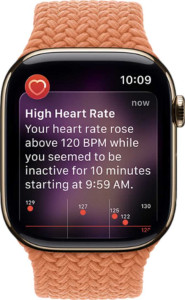
Apple Watch Series 11
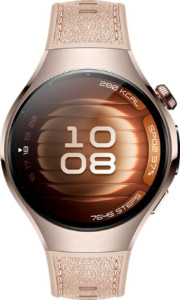
Huawei Watch 5 42mm

Apple Watch Series 11 Huawei Watch 5 42mm

Overview

Welcome to our in-depth spec comparison between the Apple Watch Series 11 and the Huawei Watch 5 42mm. These two smartwatches share a surprising amount of common ground, yet diverge sharply when it comes to battery life, platform compatibility, and activity-tracking capabilities. Whether you are drawn to Apple's tightly integrated ecosystem or Huawei's more versatile feature set, this side-by-side breakdown will help you understand exactly where each watch excels before you make your decision.

Common Features

  • Both watches feature an OLED/AMOLED display type.
  • Both watches carry an IP68 ingress protection rating.
  • Always-On Display is available on both watches.
  • The watch band is replaceable on both products.
  • Neither watch features branded damage-resistant glass.
  • Both watches have a sapphire glass display.
  • Both watches have a touchscreen display.
  • Blood oxygenation level monitoring is available on both watches.
  • A heart rate monitor is present on both watches.
  • Both watches have built-in GPS.
  • An accelerometer is present on both watches.
  • A temperature sensor is available on both watches.
  • A compass is included in both watches.
  • A barometer is present on both watches.
  • A gyroscope is included in both watches.
  • Sleep tracking is available on both watches.
  • Both watches track distance, steps taken, pace, and elevation.
  • Automatic activity detection is supported on both watches.
  • A route tracker is available on both watches.
  • Both watches include a cellular module with 1 eSIM slot.
  • iOS compatibility is present on both watches.
  • Wi-Fi 4 (802.11n) support is available on both watches.
  • ANT+ support is not available on either watch.
  • NFC is present on both watches.
  • Galileo satellite support is available on both watches.
  • Wireless charging is supported on both watches.
  • Neither watch has a solar power battery.
  • Neither watch has a removable battery.
  • HRV tracking is available on both watches.
  • VO2 max measurement is supported on both watches.
  • Resting heart rate measurement is available on both watches.
  • Fast and slow heart rate notifications are present on both watches.
  • Both watches can be used to answer calls.
  • Both watches can locate your phone.
  • Notifications are supported on both watches.
  • Activity reports are provided by both watches.
  • Inactivity alerts are available on both watches.
  • Calorie burn counting is supported on both watches.
  • Goal setting and achievements are available on both watches.
  • Both watches offer a free, ad-free companion app with an exercise diary.
  • A battery level indicator is present on both watches.
  • Auto pause is supported on both watches.
  • A passcode feature is available on both watches.
  • Both watches are compatible with smart scales and external heart rate monitors.
  • Neither watch has an external memory slot or a 3.5 mm audio jack socket.

Main Differences

  • Screen size is 1.96″ on Apple Watch Series 11 and 1.38″ on Huawei Watch 5 42mm.
  • Apple Watch Series 11 is water resistant while Huawei Watch 5 42mm is waterproof.
  • Waterproof depth rating is 50 m on Apple Watch Series 11 and 40 m on Huawei Watch 5 42mm.
  • Pixel density is 330 ppi on Apple Watch Series 11 and 338 ppi on Huawei Watch 5 42mm.
  • Resolution is 416 x 496 px on Apple Watch Series 11 and 466 x 466 px on Huawei Watch 5 42mm.
  • Thickness is 9.7 mm on Apple Watch Series 11 and 10.5 mm on Huawei Watch 5 42mm.
  • Weight is 43.1 g on Apple Watch Series 11 and 51 g on Huawei Watch 5 42mm.
  • Height is 46 mm on Apple Watch Series 11 and 42.5 mm on Huawei Watch 5 42mm.
  • Width is 39 mm on Apple Watch Series 11 and 42 mm on Huawei Watch 5 42mm.
  • Maximum operating temperature is 35 °C on Apple Watch Series 11 and 55 °C on Huawei Watch 5 42mm.
  • Lowest potential operating temperature is 0 °C on Apple Watch Series 11 and -20 °C on Huawei Watch 5 42mm.
  • Volume is 17.4018 cm³ on Apple Watch Series 11 and 18.7425 cm³ on Huawei Watch 5 42mm.
  • Diving mode is designed into Huawei Watch 5 42mm but is not available on Apple Watch Series 11.
  • Golf tracking is designed into Huawei Watch 5 42mm but is not available on Apple Watch Series 11.
  • Android compatibility is present on Huawei Watch 5 42mm but not available on Apple Watch Series 11.
  • Bluetooth version is 5.3 on Apple Watch Series 11 and 5.2 on Huawei Watch 5 42mm.
  • Huawei Watch 5 42mm supports Wi-Fi 4, Wi-Fi 5, and Wi-Fi 6, while Apple Watch Series 11 supports Wi-Fi 4 only.
  • Battery life is 1 day on Apple Watch Series 11 and 3 days on Huawei Watch 5 42mm.
  • Battery power is 327 mAh on Apple Watch Series 11 and 540 mAh on Huawei Watch 5 42mm.
  • Charge time is 1.2 hours on Apple Watch Series 11 and 1.5 hours on Huawei Watch 5 42mm.
  • Battery life in power save mode is 38 hours on Apple Watch Series 11 and 264 hours on Huawei Watch 5 42mm.
  • Readiness level reporting is available on Huawei Watch 5 42mm but not on Apple Watch Series 11.
  • Faster GPS acquisition is present on Huawei Watch 5 42mm but not on Apple Watch Series 11.
  • In-app coaching is available on Huawei Watch 5 42mm but not on Apple Watch Series 11.
Specs Comparison
Apple Watch Series 11

Apple Watch Series 11

Huawei Watch 5 42mm

Huawei Watch 5 42mm

Design:
screen size 1.96" 1.38"
Display type OLED/AMOLED OLED/AMOLED
water resistance Water resistant Waterproof
Ingress Protection (IP) rating IP68 IP68
waterproof depth rating 50 m 40 m
Always-On Display
pixel density 330 ppi 338 ppi
resolution 416 x 496 px 466 x 466 px
Watch band is replaceable
has branded damage-resistant glass
thickness 9.7 mm 10.5 mm
weight 43.1 g 51 g
height 46 mm 42.5 mm
width 39 mm 42 mm
maximum operating temperature 35 °C 55 °C
lowest potential operating temperature 0 °C -20 °C
Has a display
has a touch screen
Has sapphire glass display
volume 17.4018 cm³ 18.7425 cm³
is designed for kids

Both watches share a strong design foundation: OLED/AMOLED panels, Always-On Display, sapphire glass, and replaceable bands. The most immediate difference, however, is screen geometry. The Apple Watch Series 11 sports a larger 1.96″ display in a taller, narrower 46 × 39 mm case, while the Huawei Watch 5 42mm uses a 1.38″ round display in a 42.5 × 42 mm footprint. Despite the smaller screen, the Huawei's circular panel achieves a marginally higher pixel density — 338 ppi vs 330 ppi — meaning neither watch has a visible sharpness advantage in practice.

Where the differences become more practically meaningful is in wearability and durability. The Apple Watch is notably lighter at 43.1 g versus 51 g, and slimmer at 9.7 mm thick compared to 10.5 mm, making it the more comfortable all-day and sleep-tracking option. On water resistance, both carry an IP68 rating, but the Apple Watch edges ahead with a depth rating of 50 m versus 40 m for the Huawei. The Huawei, however, significantly outperforms on operating temperature range — from -20 °C to 55 °C versus a narrow 0 °C to 35 °C for the Apple Watch — making it a more resilient choice in extreme cold or heat environments.

Overall, the Apple Watch Series 11 has a clear design edge for everyday comfort, being lighter and thinner, with a deeper water resistance rating. The Huawei Watch 5 42mm counters with a dramatically wider operating temperature range, which matters for outdoor or industrial use cases. If wrist comfort and swimming depth are the priority, Apple wins this group; if extreme environment durability is the concern, the Huawei has a tangible advantage.

Sensors:
Monitors blood oxygenation levels
Has a heart rate monitor
has GPS
has an accelerometer
Has a temperature sensor
has a compass
Has a barometer
has a gyroscope
Has a cadence sensor
Monitors perspiration

Across the full sensor suite provided, the Apple Watch Series 11 and Huawei Watch 5 42mm are a perfect match. Both pack the same core health and motion sensors: heart rate monitor, blood oxygen (SpO2), temperature sensor, accelerometer, gyroscope, barometer, and compass, and both include GPS for standalone location tracking without a paired phone.

The practical implication is that neither watch has a sensor-based edge for the most common use cases — fitness tracking, sleep monitoring, navigation, and basic health alerts are all equally covered. The shared absence of a cadence sensor and perspiration monitor is also identical, so neither watch offers an advantage for cyclists seeking pedal cadence data or for stress/hydration monitoring via sweat analysis.

This group is a clear tie. The sensor hardware, as defined by the provided specs, is functionally equivalent across both devices. For a buyer whose decision hinges on sensor capability, this category offers no differentiating reason to choose one over the other — the comparison will need to be settled by other spec groups.

Activity tracking:
Tracks your sleep
Tracks distance
Tracks steps taken
Measures pace
Provides sleep reports
Detects activities automatically
Has a route tracker
Tracks elevation
Has exercise tagging
Has a stroke counter for swimming
Tracks calorie intake
Designed for diving
Designed for golf

For the vast majority of everyday fitness use cases, these two watches are completely interchangeable. Both cover the full breadth of general activity tracking — sleep, steps, distance, pace, elevation, route tracking, automatic activity detection, exercise tagging, swim stroke counting, and calorie intake are all present on each device. That's a comprehensive toolkit that serves runners, swimmers, hikers, and gym-goers equally well.

The only differentiator in this group, but a meaningful one for the right user, is sport-specific design. The Huawei Watch 5 42mm is explicitly designed for diving and designed for golf, features the Apple Watch Series 11 lacks entirely. For divers, this implies dedicated dive-mode tracking beyond basic water resistance. For golfers, it suggests purpose-built features such as course mapping or shot tracking — capabilities that a general-purpose watch simply cannot replicate in the same targeted way.

The Huawei Watch 5 42mm takes a clear edge in this group, solely on the strength of its diving and golf support. For users whose activities fall within the broad mainstream — running, cycling, swimming laps, or general wellness tracking — this group is effectively a tie. But for divers or golfers specifically, the Huawei is the only viable choice based on the data provided here.

Connectivity:
has a cellular module
Is compatible with iOS
Is compatible with Android
Bluetooth version 5.3 5.2
supports Wi-Fi
Wi-Fi version Wi-Fi 4 (802.11n) Wi-Fi 4 (802.11n), Wi-Fi 5 (802.11ac), Wi-Fi 6 (802.11ax)
supports ANT+
SIM cards 1 eSIM 1 eSIM
has NFC
supports Galileo

Several connectivity fundamentals are shared: both watches offer cellular via eSIM, NFC for contactless payments, Wi-Fi, Bluetooth, and Galileo satellite support. The most consequential difference, however, is platform compatibility. The Apple Watch Series 11 is iOS-only, making it a non-starter for Android users, while the Huawei Watch 5 42mm works with both iOS and Android, giving it a much broader potential user base.

On wireless standards, the Huawei also pulls ahead in Wi-Fi capability. The Apple Watch tops out at Wi-Fi 4 (802.11n), whereas the Huawei supports Wi-Fi 4, Wi-Fi 5, and Wi-Fi 6 — the latter delivering faster throughput and better performance in congested network environments, which matters for syncing large health data sets or streaming music directly from the watch. The Apple Watch counters with a slightly newer Bluetooth 5.3 versus the Huawei's Bluetooth 5.2, though the real-world difference between these two versions is negligible for typical smartwatch use.

The Huawei Watch 5 42mm holds a clear connectivity edge in this group. Its Android and iOS compatibility removes a hard platform barrier that Apple's watch cannot, and its broader Wi-Fi support offers a more future-proof wireless stack. The Apple Watch's marginal Bluetooth version advantage does not meaningfully offset these gaps for most users.

Battery:
battery life 1 days 3 days
battery power 327 mAh 540 mAh
charge time 1.2 hours 1.5 hours
battery life in power save mode 38 hours 264 hours
has wireless charging
has a rechargeable battery
Has a solar power battery
has a removable battery

Battery life is where the gap between these two watches becomes impossible to ignore. The Apple Watch Series 11 manages just 1 day of standard use on a 327 mAh cell, meaning a nightly charge is essentially mandatory. The Huawei Watch 5 42mm, backed by a significantly larger 540 mAh battery, stretches that to 3 days — enough to go an entire long weekend without reaching for a charger. For users who want uninterrupted sleep tracking across multiple nights or simply dislike the charging routine, this gap is a daily lived difference.

The power-save mode comparison is even more dramatic. Apple's low-power mode extends runtime to 38 hours, useful in a pinch but still requiring a charge every couple of days. The Huawei's equivalent mode pushes to a remarkable 264 hours — over 11 days — which makes it a credible option for extended travel or outdoor trips where charging access is limited. The Apple Watch does edge ahead slightly on charge time at 1.2 hours versus 1.5 hours, but this minor convenience does little to offset the endurance deficit. Both support wireless charging, keeping that aspect equal.

The Huawei Watch 5 42mm wins this group decisively. On every battery metric that matters — capacity, standard runtime, and power-save endurance — it outperforms the Apple Watch Series 11 by a wide margin. For buyers who prioritize longevity over frequent charging, this category alone could be the deciding factor.

Features:
release date September 2025 May 2025
has HRV tracking
measures VO2 max
measures resting heart rate
has fast/slow heart rate notifications
shows readiness level
Can be used to answer calls
Locates your phone
Has call control
Has notifications
has irregular heart rate warnings
Has ECG technology
Has silent alarm
Has vibrating alerts
has fall detection
Has a stopwatch
Has smart alarm
has voice commands
Has a built-in camera remote control function
Acquires GPS faster
warranty period 1 years 1 years
number of microphones 1 1
has a front camera

Feature parity between these two watches is remarkably high. Both cover the full spectrum of health intelligence — ECG, HRV tracking, VO2 max, resting heart rate, and irregular heart rate warnings — alongside a complete communication and notification suite, fall detection, voice commands, and a camera remote. For the overwhelming majority of users, neither watch is missing something the other has in this category.

Two features, however, tip the balance toward the Huawei Watch 5 42mm. It offers a readiness level indicator, which synthesizes recovery and health data into an actionable daily score — a meaningful tool for athletes and health-conscious users who want a quick pulse on whether to push or rest. It also supports faster GPS acquisition, a practical advantage that reduces the waiting time before an outdoor workout can begin tracking accurately. Neither of these features is present on the Apple Watch Series 11.

The Huawei takes a narrow but clear edge in this group. The shared feature set is extensive and nearly identical, so the Apple Watch is by no means lacking. But the addition of readiness scoring and faster GPS lock gives the Huawei a tangible advantage for fitness-focused users, and neither gap is offset by anything exclusive to the Apple Watch in this category.

App & Software:
Provides activity reports
Has inactivity alerts
Counts how many calories you've burned
Has goal setting
Has achievements
Free app
Has exercise diary
Ad-free
Has coaching
Has temperature tracking
Has period notifications
Has voice feedback
Has music playback
Predicts ovulation
Predicts start date
Can be personalised
Has barcode scanner on app
Tracks water intake
Has weight tracking

The app and software experience across both watches is strikingly aligned. A comprehensive wellness toolkit — activity reports, calorie tracking, goal setting, exercise diary, water intake, weight tracking, temperature tracking, and a full reproductive health suite including period notifications, ovulation prediction, and cycle start date forecasting — is present on both platforms. Both apps are also free and ad-free, which removes any cost or experience friction from the equation.

Digging into the data, the sole differentiator is coaching, which the Huawei Watch 5 42mm supports and the Apple Watch Series 11 does not. In practice, in-app coaching typically means guided workout instructions, personalized training suggestions, or real-time form and pacing cues delivered through the companion app — features that add genuine value for users who want more than passive data logging and prefer structured guidance within the same ecosystem.

The Huawei holds a slim but real advantage in this group, purely on the strength of its coaching capability. For users who rely solely on self-directed tracking, this is effectively a tie — the shared feature set is deep and equally matched. But for anyone seeking an app that actively guides their training rather than just recording it, the Huawei is the more complete software package based on the provided specs.

Miscellaneous:
has a battery level indicator
Has auto pause
Has passcode
Compatible with smart scales
Compatible with external heart rate monitors
has an external memory slot
has a socket for a 3.5 mm audio jack

The miscellaneous spec sheet for these two watches is identical across every data point provided. Both include a battery level indicator, auto pause, and passcode protection, and both are compatible with smart scales and external heart rate monitors — the latter being particularly useful for users who prefer a chest strap for higher-accuracy cardiac data during intense workouts.

Neither watch offers an external memory slot or a 3.5mm audio jack, which are shared omissions consistent with the broader smartwatch market trend toward wireless-only audio and fixed internal storage. These absences are unlikely to be dealbreakers for most users in this category, but they are worth noting for anyone who had hoped to expand storage independently or use wired earphones directly from the watch.

This group is an unambiguous tie. Every feature present or absent is mirrored exactly across both devices, and no meaningful differentiation exists here. Buyers will need to look to other spec groups to find a deciding factor.

Comparison Summary & Verdict

After examining every specification, it is clear that both watches are capable, feature-rich wearables, but they serve different priorities. The Apple Watch Series 11 stands out with its larger 1.96″ screen, lighter 43.1 g build, and faster 1.2-hour charge time, making it the stronger choice for users deeply embedded in the Apple ecosystem who value a slim, lightweight design. The Huawei Watch 5 42mm, on the other hand, pulls ahead in almost every endurance and versatility metric: a 3-day battery life (264 hours in power-save mode), broader Wi-Fi support (Wi-Fi 5 and Wi-Fi 6), Android compatibility, a wider operating temperature range, dedicated diving and golf modes, in-app coaching, and faster GPS acquisition. If long battery life, cross-platform flexibility, and a richer activity-tracking toolkit are your priorities, the Huawei is the clear pick. If seamless iPhone integration and a lighter, larger-screened watch matter most, the Apple Watch Series 11 delivers.

Apple Watch Series 11
Buy Apple Watch Series 11 if...

Buy the Apple Watch Series 11 if you are an iPhone user who prioritizes a larger display, a lighter and thinner form factor, and a faster charging time.

Huawei Watch 5 42mm
Buy Huawei Watch 5 42mm if...

Buy the Huawei Watch 5 42mm if you need a longer-lasting battery, Android compatibility, broader Wi-Fi support, or specialized tracking modes for diving and golf.