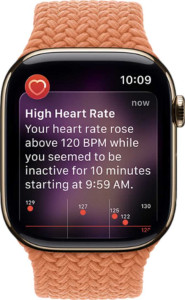
Apple Watch Series 11
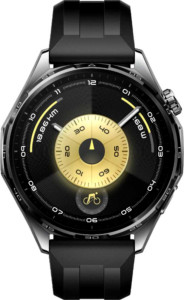
Huawei Watch GT 6

Apple Watch Series 11 Huawei Watch GT 6

Overview

When it comes to premium smartwatches, the Apple Watch Series 11 and the Huawei Watch GT 6 represent two very compelling but philosophically different approaches. Both share a strong sensor suite, sapphire glass displays, and robust activity tracking, yet they diverge sharply on key fronts like battery capacity, water protection, and ecosystem compatibility. This head-to-head comparison digs into the specs to help you decide which watch truly fits your lifestyle.

Common Features

  • Both watches feature an OLED/AMOLED display type.
  • Always-On Display is available on both watches.
  • The watch band is replaceable on both products.
  • Neither watch has branded damage-resistant glass.
  • Both watches are 46 mm in height.
  • Both watches have a display with touch screen support.
  • Both watches have a sapphire glass display.
  • Both watches monitor blood oxygenation levels.
  • A heart rate monitor is present on both watches.
  • Both watches have built-in GPS.
  • Both watches include an accelerometer, gyroscope, compass, barometer, and temperature sensor.
  • Sleep tracking is available on both watches.
  • Both watches track distance, steps taken, pace, and elevation.
  • Sleep reports are provided by both watches.
  • Both watches detect activities automatically and include a route tracker.
  • Both watches are compatible with iOS.
  • NFC is available on both watches.
  • Both watches support the Galileo satellite system.
  • Wireless charging is supported on both watches.
  • Neither watch has a solar power battery or a removable battery.
  • HRV tracking, VO2 max measurement, and resting heart rate monitoring are available on both watches.
  • Both watches support fast and slow heart rate notifications.
  • Both watches can be used to answer calls, control calls, locate the paired phone, and display notifications.
  • Activity reports, inactivity alerts, calorie tracking, goal setting, achievements, an exercise diary, and a free ad-free app are available on both watches.
  • Both watches have a battery level indicator, auto pause, passcode protection, and compatibility with smart scales and external heart rate monitors.
  • Neither watch is compatible with Windows, has an external memory slot, or includes a 3.5 mm audio jack.

Main Differences

  • Screen size is 1.96″ on Apple Watch Series 11 and 1.47″ on Huawei Watch GT 6.
  • Apple Watch Series 11 is water resistant, while Huawei Watch GT 6 is waterproof.
  • The Ingress Protection rating is IP68 on Apple Watch Series 11 and IP69 on Huawei Watch GT 6.
  • Pixel density is 330 ppi on Apple Watch Series 11 and 317 ppi on Huawei Watch GT 6.
  • Resolution is 416 x 496 px on Apple Watch Series 11 and 466 x 466 px on Huawei Watch GT 6.
  • Thickness is 9.7 mm on Apple Watch Series 11 and 11 mm on Huawei Watch GT 6.
  • Weight is 43.1 g on Apple Watch Series 11 and 51.3 g on Huawei Watch GT 6.
  • Width is 39 mm on Apple Watch Series 11 and 46 mm on Huawei Watch GT 6.
  • Volume is 17.4018 cm³ on Apple Watch Series 11 and 23.276 cm³ on Huawei Watch GT 6.
  • A stroke counter for swimming is available on Apple Watch Series 11 but not on Huawei Watch GT 6.
  • Diving design is present on Huawei Watch GT 6 but not on Apple Watch Series 11.
  • A cellular module is included in Apple Watch Series 11 but not in Huawei Watch GT 6.
  • Android compatibility is available on Huawei Watch GT 6 but not on Apple Watch Series 11.
  • Bluetooth version is 5.3 on Apple Watch Series 11 and 6.0 on Huawei Watch GT 6.
  • Wi-Fi support is present on Apple Watch Series 11 but not on Huawei Watch GT 6.
  • Battery power is 327 mAh on Apple Watch Series 11 and 867 mAh on Huawei Watch GT 6.
  • Readiness level tracking is available on Huawei Watch GT 6 but not on Apple Watch Series 11.
  • ECG technology is present on Apple Watch Series 11 but not on Huawei Watch GT 6.
  • Fall detection is available on Apple Watch Series 11 but not on Huawei Watch GT 6.
  • Coaching features are available on Huawei Watch GT 6 but not on Apple Watch Series 11.
  • Mac OS X compatibility is supported on Apple Watch Series 11 but not on Huawei Watch GT 6.
Specs Comparison
Apple Watch Series 11

Apple Watch Series 11

Huawei Watch GT 6

Huawei Watch GT 6

Design:
screen size 1.96" 1.47"
Display type OLED/AMOLED OLED/AMOLED
water resistance Water resistant Waterproof
Ingress Protection (IP) rating IP68 IP69
Always-On Display
pixel density 330 ppi 317 ppi
resolution 416 x 496 px 466 x 466 px
Watch band is replaceable
has branded damage-resistant glass
thickness 9.7 mm 11 mm
weight 43.1 g 51.3 g
height 46 mm 46 mm
width 39 mm 46 mm
Has a display
has a touch screen
Has sapphire glass display
volume 17.4018 cm³ 23.276 cm³
is designed for kids

Both watches share the same 46 mm height, OLED/AMOLED display technology, always-on display, sapphire glass, and replaceable bands — so the fundamentals are competitive. The real divergence lies in form factor and water resistance. The Apple Watch Series 11 uses a rectangular case with a 39 mm width, while the Huawei Watch GT 6 is nearly square at 46 mm wide, giving each a distinctly different wrist presence. Despite its larger 1.96″ screen, the Series 11 achieves a significantly smaller overall footprint — a volume of 17.4 cm³ versus the GT 6's 23.3 cm³ — which directly translates to a less bulky feel on the wrist.

Weight and thickness reinforce this gap. The Series 11 comes in at 43.1 g and just 9.7 mm thick, while the GT 6 weighs 51.3 g and is 11 mm thick — differences noticeable during extended daily wear, especially during sleep tracking or workouts. Pixel density slightly favors the Series 11 at 330 ppi versus 317 ppi, though both are sharp enough that this is unlikely to matter visually. The GT 6's square resolution of 466 × 466 px does cover more total pixels, but the practical sharpness advantage belongs to the Series 11.

The one area where the GT 6 pulls ahead is water resistance: its IP69 rating means it can withstand high-pressure, high-temperature water jets — a step above the Series 11's IP68, which covers immersion but not pressurized jets. For most users this distinction is minor, but it matters in specific environments like kitchens or outdoor work. Overall, the Apple Watch Series 11 holds a clear design edge for those who prioritize a slimmer, lighter, and less bulky watch with a larger screen; the GT 6 is the better pick only if maximum water protection is a priority.

Sensors:
Monitors blood oxygenation levels
Has a heart rate monitor
has GPS
has an accelerometer
Has a temperature sensor
has a compass
Has a barometer
has a gyroscope
Has a cadence sensor
Monitors perspiration

Across every sensor listed, the Apple Watch Series 11 and Huawei Watch GT 6 are in complete lockstep. Both carry the full suite of health and motion sensors you would expect from a premium smartwatch in this category: heart rate monitor, blood oxygen (SpO2), temperature sensor, GPS, accelerometer, gyroscope, compass, and barometer. This is a genuinely comprehensive lineup that covers cardiovascular monitoring, navigation, altitude tracking, and detailed motion analysis for workout logging.

The barometer and compass together enable meaningful outdoor activity support — trail elevation changes, heading data for hiking — while the combination of accelerometer and gyroscope underpins accurate step counting, sleep staging, and fall detection algorithms. The temperature sensor, present on both, supports cycle tracking and general wellness trends. Neither watch monitors perspiration or includes a cadence sensor, so cyclists who rely on pedal-stroke data will need a separate accessory regardless of which device they choose.

With zero differentiation across all ten data points, this category is a complete tie. Neither watch holds a sensor advantage over the other — the decision here will come down entirely to how each manufacturer's software and algorithms translate this shared hardware into actionable health insights, which falls outside the scope of the spec data provided.

Activity tracking:
Tracks your sleep
Tracks distance
Tracks steps taken
Measures pace
Provides sleep reports
Detects activities automatically
Has a route tracker
Tracks elevation
Has multi-sport mode
Has exercise tagging
Has a stroke counter for swimming
Tracks calorie intake
Designed for diving
Designed for golf

For everyday fitness tracking, these two watches are nearly indistinguishable on paper. Sleep tracking with reports, step counting, pace, distance, elevation, route tracking, automatic activity detection, multi-sport mode, exercise tagging, and calorie intake monitoring — all present on both. This is a well-rounded activity platform either way, covering the needs of runners, hikers, cyclists, and general fitness users without meaningful gaps.

The only two points of divergence are water-sport related, and they point in opposite directions. The Apple Watch Series 11 includes a stroke counter for swimming, which is a meaningful tool for pool swimmers wanting to track technique and efficiency — the GT 6 lacks this entirely. The Huawei Watch GT 6, on the other hand, is designed for diving, positioning it for users who need dedicated underwater activity support beyond casual swimming. The Series 11 is not designed for diving.

Which watch has the edge here depends entirely on your water sport of choice. Pool swimmers will find the Series 11's stroke counter more directly useful for structured training, while divers will want the GT 6's dedicated diving support. For everyone else, this category is effectively a tie — the shared feature set is extensive and evenly matched across all other tracked activities.

Connectivity:
has a cellular module
Is compatible with iOS
Is compatible with Android
Bluetooth version 5.3 6
supports Wi-Fi
supports ANT+
has NFC
supports Galileo

The most consequential split in this category comes down to two features that define each watch's ecosystem role. The Apple Watch Series 11 includes a cellular module, meaning it can make calls, stream music, and receive notifications independently of a paired phone — a significant functional advantage for users who want to leave their phone behind during runs or workouts. The Huawei Watch GT 6 has no cellular option, so it remains tethered to a smartphone for network-dependent tasks. Conversely, the GT 6 supports both iOS and Android, while the Series 11 is locked exclusively to iOS — a hard wall for anyone in the Android ecosystem.

On wireless connectivity, the Series 11 adds Wi-Fi support, which enables faster data syncing, software updates, and app downloads without needing Bluetooth proximity to a phone. The GT 6 omits Wi-Fi entirely. In the other direction, the GT 6 runs on Bluetooth 6 versus the Series 11's Bluetooth 5.3 — a newer standard that theoretically offers improved connection stability and efficiency, though real-world differences at this level are subtle for typical smartwatch use. Both watches share NFC for contactless payments and Galileo satellite support for improved GPS positioning accuracy.

Overall, the Apple Watch Series 11 holds a clear connectivity edge for iPhone users — cellular independence and Wi-Fi are genuinely impactful day-to-day capabilities. The Huawei Watch GT 6 is the only viable option for Android users given the Series 11's iOS exclusivity, and its newer Bluetooth version is a minor point in its favor. The right choice here is largely dictated by which phone you carry.

Battery:
battery power 327 mAh 867 mAh
has wireless charging
has a rechargeable battery
Has a solar power battery
has a removable battery

Raw battery capacity tells a stark story here. The Huawei Watch GT 6 packs 867 mAh compared to the Apple Watch Series 11's 327 mAh — a difference of nearly 2.7x. In smartwatch terms, battery capacity is one of the strongest predictors of how frequently you will need to reach for a charger, and a gap this wide is far from trivial. It reflects a fundamental design philosophy difference: the Series 11 prioritizes a slimmer, lighter form factor (as seen in the Design category) at the direct cost of battery volume, while the GT 6 trades some compactness for substantially more energy storage.

It is worth noting that raw mAh is not the only variable in real-world battery life — power efficiency of the processor, display-on time, cellular usage, and software optimization all play a role. The Series 11's cellular module and Wi-Fi radio, for instance, are known power consumers that the GT 6 does not have to contend with. Even accounting for those factors, a 540 mAh capacity advantage is too large to be fully offset by efficiency differences alone.

Both watches support wireless charging and have non-removable, rechargeable batteries — so the charging experience is comparable in method. But the Huawei Watch GT 6 holds an unambiguous advantage in this category. Users who dislike daily charging routines or want extended autonomy during travel or multi-day outdoor activities will find the GT 6's larger battery a meaningful practical benefit.

Features:
release date September 2025 September 2025
has HRV tracking
measures VO2 max
measures resting heart rate
has fast/slow heart rate notifications
shows readiness level
Can be used to answer calls
Locates your phone
Has call control
Has notifications
has irregular heart rate warnings
Has ECG technology
Has silent alarm
Has vibrating alerts
has fall detection
Has a stopwatch
Has smart alarm
has voice commands
Has a built-in camera remote control function
Acquires GPS faster
warranty period 1 years 1 years
number of microphones 1 1
has a front camera

The shared feature set here is extensive — HRV tracking, VO2 max, resting heart rate, irregular heart rate warnings, call answering, phone finder, notifications, voice commands, camera remote, stopwatch, silent and vibrating alerts all appear on both watches. For the vast majority of daily smartwatch interactions, users of either device will have a functionally equivalent experience.

Three features break the symmetry. The Apple Watch Series 11 adds ECG technology and fall detection — two capabilities with direct health and safety implications. ECG enables on-demand electrocardiogram readings that can flag conditions like atrial fibrillation, a clinically meaningful tool that goes well beyond standard heart rate monitoring. Fall detection automatically triggers an emergency alert if a hard fall is detected and the user is unresponsive, a feature particularly valued by older users or those in high-risk activities. The Huawei Watch GT 6 counters with a readiness level score, which aggregates recovery and wellness data to give users a daily gauge of how prepared their body is for exertion — useful for athletes managing training load, but a less critical omission than ECG or fall detection.

The Apple Watch Series 11 holds a clear advantage in this category. ECG and fall detection are high-value, health-focused differentiators that the GT 6 simply does not offer, and the readiness level feature on the GT 6 does not carry equivalent weight. For users who prioritize health monitoring depth and personal safety features, the Series 11's feature set is meaningfully stronger.

App & Software:
Provides activity reports
Has inactivity alerts
Counts how many calories you've burned
Has goal setting
Has achievements
Free app
Has exercise diary
Ad-free
Has coaching
Has temperature tracking
Has period notifications
Has voice feedback
Has music playback
Predicts ovulation
Predicts start date
Can be personalised
Has barcode scanner on app
Tracks water intake
Has weight tracking

At the app and software level, these two watches are remarkably well matched. Activity reports, inactivity alerts, calorie tracking, goal setting, achievements, exercise diary, temperature tracking, women's health features (period notifications, ovulation and start date prediction), voice feedback, music playback, water intake, weight tracking, and personalization — all present on both, and both apps are free and ad-free. For a category this broad, that degree of overlap is notable.

The single point of difference is coaching, which the Huawei Watch GT 6 offers and the Apple Watch Series 11 does not. In-app coaching typically means guided workout plans or real-time audio and visual cues that help users hit specific training targets — a meaningful addition for users who want structured guidance rather than just passive data logging. Its absence on the Series 11 side is the only gap in an otherwise identical feature sheet.

Given how closely aligned the two apps are, this category is nearly a tie, but the Huawei Watch GT 6 takes a narrow edge by virtue of its coaching feature. For users who rely on app-driven workout guidance, that addition has practical day-to-day value. For everyone else focused on tracking and reporting, both platforms deliver an equivalent software experience.

Miscellaneous:
has a battery level indicator
Has auto pause
Has passcode
Compatible with smart scales
Compatible with external heart rate monitors
Is compatible with Windows
has an external memory slot
Is compatible with Mac OS X
has a socket for a 3.5 mm audio jack

Most of the miscellaneous specs here are shared without exception: battery level indicator, auto pause, passcode protection, smart scale compatibility, and external heart rate monitor support all appear on both watches. Neither device offers an external memory slot, a 3.5 mm audio jack, or Windows compatibility — limitations that apply equally and are unlikely to be deciding factors for mainstream users.

The one distinction is Mac OS X compatibility. The Apple Watch Series 11 supports it; the Huawei Watch GT 6 does not. In practical terms, this means the Series 11 can sync and interact with a Mac directly — useful for users who manage health data or receive notifications across Apple devices. For the GT 6, desktop interaction is limited to non-Mac environments, though neither watch supports Windows, which somewhat narrows the real-world relevance of desktop compatibility overall.

This is a thin category with minimal differentiation, but the Apple Watch Series 11 takes a modest edge through its Mac OS X compatibility — a logical extension of its tighter Apple ecosystem integration. For users outside the Apple desktop ecosystem, this distinction carries no weight, and the two watches are otherwise evenly matched across every other data point in this group.

Comparison Summary & Verdict

After examining every specification, it is clear that both watches excel in different areas. The Apple Watch Series 11 stands out with its ECG technology, fall detection, cellular connectivity, Wi-Fi support, and tighter integration with Apple and Mac ecosystems, making it the stronger choice for iPhone users who want a safety-focused, always-connected wearable. The Huawei Watch GT 6, on the other hand, wins on battery life with its significantly larger 867 mAh cell, offers a higher IP69 waterproof rating with diving support, features Bluetooth 6.0, and is fully compatible with Android devices. Its added coaching features and readiness level tracking also make it a compelling pick for fitness-focused users. Your ideal choice ultimately depends on your smartphone ecosystem and what you value most between connectivity and endurance.

Apple Watch Series 11
Buy Apple Watch Series 11 if...

Buy the Apple Watch Series 11 if you are an iPhone user who needs cellular connectivity, ECG monitoring, fall detection, and seamless Mac OS X compatibility in a lighter, slimmer design.

Huawei Watch GT 6
Buy Huawei Watch GT 6 if...

Buy the Huawei Watch GT 6 if you prioritize longer battery life, a higher IP69 waterproof rating with diving support, Android compatibility, and built-in coaching features for your fitness routine.