Apple Watch Series 11
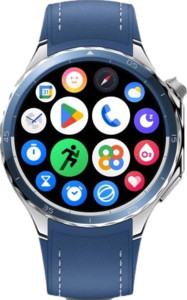
Oppo Watch X2

Apple Watch Series 11 Oppo Watch X2

Overview

Welcome to our in-depth specification comparison between the Apple Watch Series 11 and the Oppo Watch X2. These two smartwatches share a strong foundation of health and fitness tracking features, yet they take notably different approaches when it comes to battery life, design dimensions, and ecosystem compatibility. Whether you prioritize seamless iOS integration or extended endurance on a single charge, this side-by-side breakdown will help you find the right fit for your wrist and lifestyle.

Common Features

  • Both watches feature an OLED/AMOLED display type.
  • Both watches have a waterproof depth rating of 50 m.
  • Always-On Display is available on both watches.
  • The watch band is replaceable on both watches.
  • Branded damage-resistant glass is not present on either watch.
  • Both watches have a sapphire glass display.
  • Both watches have a touch screen.
  • Both watches monitor blood oxygenation levels.
  • Both watches include a heart rate monitor.
  • Both watches have GPS, an accelerometer, a temperature sensor, a compass, a barometer, and a gyroscope.
  • Both watches track sleep, distance, steps taken, pace, and elevation, and provide sleep reports.
  • Both watches detect activities automatically and include a route tracker.
  • Both watches are compatible with iOS and support Wi-Fi 4 (802.11n).
  • Neither watch supports ANT+.
  • Both watches have NFC and support Galileo.
  • Both watches have a rechargeable battery, no solar power battery, and no removable battery.
  • Both watches measure VO2 max and resting heart rate, and provide fast/slow heart rate notifications.
  • Neither watch shows a readiness level.
  • Both watches can be used to answer calls, locate your phone, control calls, and display notifications.
  • Both watches provide activity reports, inactivity alerts, calorie tracking, goal setting, achievements, an exercise diary, and are ad-free with a free app.
  • Neither watch is compatible with Windows, has an external memory slot, or has a 3.5 mm audio jack socket.
  • Both watches have a battery level indicator and a passcode feature.

Main Differences

  • Screen size is 1.96″ on Apple Watch Series 11 and 1.5″ on Oppo Watch X2.
  • Water resistance is rated as water resistant on Apple Watch Series 11 and waterproof on Oppo Watch X2.
  • Ingress Protection rating is IP68 on Apple Watch Series 11 and IP67 on Oppo Watch X2.
  • Pixel density is 330 ppi on Apple Watch Series 11 and 310 ppi on Oppo Watch X2.
  • Resolution is 416 x 496 px on Apple Watch Series 11 and 466 x 466 px on Oppo Watch X2.
  • Thickness is 9.7 mm on Apple Watch Series 11 and 11.8 mm on Oppo Watch X2.
  • Weight is 43.1 g on Apple Watch Series 11 and 49.7 g on Oppo Watch X2.
  • Height is 46 mm on Apple Watch Series 11 and 46.6 mm on Oppo Watch X2.
  • Width is 39 mm on Apple Watch Series 11 and 47.6 mm on Oppo Watch X2.
  • Maximum operating temperature is 35 °C on Apple Watch Series 11 and 70 °C on Oppo Watch X2.
  • Lowest potential operating temperature is 0 °C on Apple Watch Series 11 and -40 °C on Oppo Watch X2.
  • Multi-sport mode is available on Apple Watch Series 11 but not on Oppo Watch X2.
  • A cellular module is present on Apple Watch Series 11 but not on Oppo Watch X2.
  • Android compatibility is available on Oppo Watch X2 but not on Apple Watch Series 11.
  • Bluetooth version is 5.3 on Apple Watch Series 11 and 5.2 on Oppo Watch X2.
  • Battery life is 1 day on Apple Watch Series 11 and 5 days on Oppo Watch X2.
  • Battery power is 327 mAh on Apple Watch Series 11 and 648 mAh on Oppo Watch X2.
  • Charge time is 1.2 hours on Apple Watch Series 11 and 1.3 hours on Oppo Watch X2.
  • Battery life in power save mode is 38 hours on Apple Watch Series 11 and 384 hours on Oppo Watch X2.
  • Wireless charging is available on Apple Watch Series 11 but not on Oppo Watch X2.
  • HRV tracking is available on Apple Watch Series 11 but not on Oppo Watch X2.
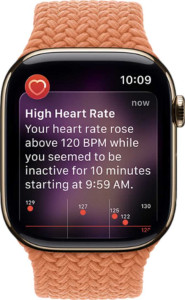
  • Irregular heart rate warnings are present on Apple Watch Series 11 but not on Oppo Watch X2.
  • Fall detection is available on Apple Watch Series 11 but not on Oppo Watch X2.
  • Internal storage is 64GB on Apple Watch Series 11 and 32GB on Oppo Watch X2.
  • Faster GPS acquisition is available on Oppo Watch X2 but not on Apple Watch Series 11.
  • Mac OS X compatibility is available on Apple Watch Series 11 but not on Oppo Watch X2.
Specs Comparison
Apple Watch Series 11

Apple Watch Series 11

Oppo Watch X2

Oppo Watch X2

Design:
screen size 1.96" 1.5"
Display type OLED/AMOLED OLED/AMOLED
water resistance Water resistant Waterproof
Ingress Protection (IP) rating IP68 IP67
waterproof depth rating 50 m 50 m
Always-On Display
pixel density 330 ppi 310 ppi
resolution 416 x 496 px 466 x 466 px
Watch band is replaceable
has branded damage-resistant glass
thickness 9.7 mm 11.8 mm
weight 43.1 g 49.7 g
height 46 mm 46.6 mm
width 39 mm 47.6 mm
maximum operating temperature 35 °C 70 °C
lowest potential operating temperature 0 °C -40 °C
Has a display
has a touch screen
Has sapphire glass display
volume 17.4018 cm³ 26.174288 cm³
is designed for kids

Both watches share a strong display foundation — OLED/AMOLED panels, always-on display support, sapphire glass protection, and touch interfaces — but their physical design philosophies diverge noticeably. The Apple Watch Series 11 sports a 1.96″ screen versus the Oppo Watch X2's 1.5″, and that gap is amplified by form factor: the Series 11 measures 46 × 39 mm with a rectangular shape, while the X2 is nearly square at 46.6 × 47.6 mm. Despite the X2's larger footprint, the Series 11 actually delivers a higher pixel density of 330 ppi versus 310 ppi, meaning its display is marginally sharper despite a different resolution and aspect ratio.

Where the Series 11 wins decisively on wearability is in its physical profile: at 9.7 mm thick and 43.1 g, it is meaningfully slimmer and lighter than the X2's 11.8 mm and 49.7 g. The volume difference — 17.4 cm³ versus 26.2 cm³ — underscores just how much more compact the Series 11 is on the wrist. For all-day and sleep tracking use cases, this distinction in bulk and weight matters in practice. The Series 11 also edges ahead on water resistance with an IP68 rating versus the X2's IP67, though both are rated to 50 m depth.

The one area where the Oppo Watch X2 holds a genuine and substantial advantage is its operating temperature range: -40 °C to 70 °C versus the Series 11's narrow 0 °C to 35 °C window. For users in extreme climates — whether cold-weather outdoor sports or hot industrial environments — this makes the X2 significantly more versatile. Overall, the Series 11 holds the design edge for typical everyday wearers prioritizing a lighter, slimmer, and sharper watch, while the X2 caters to those needing rugged environmental tolerance in a squarer, more substantial form.

Sensors:
Monitors blood oxygenation levels
Has a heart rate monitor
has GPS
has an accelerometer
Has a temperature sensor
has a compass
Has a barometer
has a gyroscope
Has a cadence sensor
Monitors perspiration

The sensor suites on these two watches are, point for point, identical across every tracked specification. Both carry the full core health stack — heart rate monitoring, blood oxygen (SpO2), and a temperature sensor — alongside a complete motion and navigation package: GPS, accelerometer, gyroscope, compass, and barometer. This level of sensor parity is notable, as it means neither watch has a measurable hardware advantage for the vast majority of fitness and health tracking use cases.

The practical implication of sharing this sensor set is that both watches are equally equipped for activities like running, hiking, and cycling, where GPS accuracy, elevation tracking via barometer, and motion detection via accelerometer and gyroscope all play a role. The absence of a cadence sensor and perspiration monitor on both devices is worth noting for athletes seeking advanced running metrics or hydration tracking — neither watch covers those bases.

This group is a clear tie. The sensor hardware, as specified, gives neither the Series 11 nor the X2 any advantage over the other. Differentiating factors between these two watches will need to come from other areas — software interpretation of sensor data, ecosystem integration, or additional feature groups.

Activity tracking:
Tracks your sleep
Tracks distance
Tracks steps taken
Measures pace
Provides sleep reports
Detects activities automatically
Has a route tracker
Tracks elevation
Has multi-sport mode
Has exercise tagging
Tracks calorie intake
Designed for diving
Designed for golf

Activity tracking coverage is broad and closely matched across both watches. Sleep tracking with reports, distance, steps, pace, elevation, route tracking, automatic activity detection, exercise tagging, and calorie intake monitoring are all present on both — a strong shared foundation that covers the needs of most everyday fitness users without any meaningful gap between the two.

The single differentiator in this category is multi-sport mode, which the Apple Watch Series 11 supports and the Oppo Watch X2 does not. In practice, this matters for users who regularly switch between different disciplines — triathletes, cross-trainers, or anyone who moves between running, cycling, swimming, and strength work in a single session. Multi-sport mode allows seamless transitions between tracked activities without stopping to manually switch profiles, preserving continuity of data across a workout. Without it, X2 users would need to manage activity changes manually, which is a friction point in mixed-discipline training contexts.

For general fitness users who stick to single-activity workouts, this gap is largely inconsequential. But for those with varied training routines, the Series 11 holds a clear edge in this group — multi-sport mode is the one feature that meaningfully separates the two where activity tracking is concerned.

Connectivity:
has a cellular module
Is compatible with iOS
Is compatible with Android
Bluetooth version 5.3 5.2
supports Wi-Fi
Wi-Fi version Wi-Fi 4 (802.11n) Wi-Fi 4 (802.11n)
supports ANT+
has NFC
supports Galileo

Connectivity is where these two watches diverge most sharply in terms of real-world use. The most consequential difference is cellular support: the Apple Watch Series 11 has it, the Oppo Watch X2 does not. Cellular capability means the Series 11 can make calls, stream music, receive notifications, and use data entirely independently of a paired phone — a meaningful freedom for runners, cyclists, or anyone who prefers to leave their phone behind. The X2, without a cellular module, remains tethered to a smartphone for live connectivity.

The platform compatibility story cuts the other way. The X2 works with both iOS and Android, while the Series 11 is locked to iOS only. This makes the X2 the more flexible choice for Android users — or households with mixed devices — whereas the Series 11 is a non-starter for anyone outside the Apple ecosystem. On the wireless side, both watches match up evenly: Bluetooth 5.2 vs 5.3 is a marginal real-world difference, and both share identical Wi-Fi 4, NFC, and Galileo satellite support.

Taken together, the Series 11 holds the connectivity edge for iOS users — cellular independence is a significant functional advantage that the X2 simply cannot match. However, for Android users, the X2 is the only viable option here, making platform compatibility the deciding factor before any other spec is even considered.

Battery:
battery life 1 days 5 days
battery power 327 mAh 648 mAh
charge time 1.2 hours 1.3 hours
battery life in power save mode 38 hours 384 hours
has wireless charging
has a rechargeable battery
Has a solar power battery
has a removable battery

Battery life is arguably the starkest performance gap between these two watches. The Apple Watch Series 11 delivers just 1 day of standard battery life from its 327 mAh cell, meaning a nightly charging routine is essentially mandatory. The Oppo Watch X2, by contrast, carries a 648 mAh battery rated for 5 days — nearly doubling both the physical capacity and the usable duration. For users who travel frequently, track sleep continuously, or simply dislike the discipline of daily charging, this gap has immediate practical consequences.

The power-save mode comparison is even more dramatic: the Series 11 extends to 38 hours in low-power mode, while the X2 stretches to an extraordinary 384 hours — over 16 days. This makes the X2 a genuinely viable option for extended off-grid use cases where charging access is limited. Charge times are nearly identical at 1.2 vs 1.3 hours, so neither watch has a meaningful advantage in how quickly it recovers from empty.

The one area where the Series 11 counters is wireless charging, which the X2 lacks — a convenience factor for users already embedded in a wireless charging ecosystem. That said, it does little to offset the fundamental battery life deficit. The Oppo Watch X2 wins this group decisively; unless wireless charging is a hard requirement, the X2's endurance advantage is too large to overlook.

Features:
release date September 2025 February 2025
has HRV tracking
measures VO2 max
measures resting heart rate
has fast/slow heart rate notifications
shows readiness level
Can be used to answer calls
Locates your phone
Has call control
Has notifications
has irregular heart rate warnings
Has ECG technology
Has silent alarm
Has vibrating alerts
has fall detection
Has a stopwatch
Has smart alarm
has voice commands
internal storage 64GB 32GB
Acquires GPS faster
warranty period 1 years 1 years
has a front camera

Across a wide feature set, these two watches share a strong common core — ECG, VO2 max, resting heart rate, call handling, notifications, voice commands, and vibrating alerts are all present on both. The meaningful differences, however, cluster around health depth and safety. The Series 11 adds HRV tracking and irregular heart rate warnings on top of the shared cardiac feature set, giving it a more comprehensive passive health monitoring profile. HRV in particular is increasingly valued as a recovery and stress indicator, and its absence on the X2 is a genuine gap for health-focused users.

Fall detection is another exclusive to the Series 11, and one with real-world safety implications — especially for older users or those engaging in high-impact activities. The Series 11 also ships with 64 GB of internal storage versus the X2's 32 GB, doubling the available space for music, apps, and cached data. The X2 counters with faster GPS acquisition, which translates to less standing-around time at the start of outdoor workouts waiting for a satellite lock — a genuine usability advantage for runners and cyclists who want to get moving quickly.

On balance, the Series 11 holds the edge in this group. Its advantages — HRV tracking, irregular heart rate warnings, fall detection, and double the storage — represent more substantive real-world capability gains than the X2's faster GPS fix. The X2's quicker satellite acquisition is a useful convenience, but it does not offset the Series 11's broader and deeper feature coverage.
App & Software:
Provides activity reports
Has inactivity alerts
Counts how many calories you've burned
Has goal setting
Has achievements
Free app
Has exercise diary
Ad-free
Has coaching
Has temperature tracking
Has music playback
Exports to email
Can be personalised
Has barcode scanner on app
Tracks water intake
Has weight tracking

On the app and software front, these two watches are in complete lockstep — every single tracked feature is identical across both. Activity reports, inactivity alerts, calorie counting, goal setting, achievements, exercise diary, temperature tracking, music playback, water intake, weight tracking, and personalization are all present on both. Equally, neither offers in-app coaching, email export, or a barcode scanner. Both companion apps are free and ad-free, removing any concern about paywalled features or disruptive monetization.

The depth of this shared feature set is actually meaningful for users. Covering everything from weight and water intake tracking to temperature monitoring and music playback means neither watch leaves obvious gaps in day-to-day health and lifestyle logging. The absence of coaching on both is the one shared limitation worth flagging for users who want guided workout plans or structured training programs built into their companion app.

This group is an unambiguous tie. There is no software or app feature within the provided data that distinguishes the Series 11 from the X2 in any direction. Users making a decision between these two watches should look to other specification groups — design, battery, connectivity, or health features — to find the differentiators that matter most to them.

Miscellaneous:
has a battery level indicator
Has passcode
Is compatible with Windows
has an external memory slot
Is compatible with Mac OS X
has a socket for a 3.5 mm audio jack

This specification group is lean, and most of it is shared ground. Both watches include a battery level indicator and passcode protection, neither supports Windows, and neither has an external memory slot or a 3.5 mm audio jack. The only point of divergence is Mac OS X compatibility: the Apple Watch Series 11 supports it, the Oppo Watch X2 does not.

In practice, Mac compatibility for the Series 11 reflects its tight integration within the Apple ecosystem — users managing or syncing their watch via a Mac have a supported path to do so. For the X2, the absence of Mac OS X support is unlikely to affect most users, but it does reinforce the pattern established in connectivity: the X2 is more at home in a non-Apple environment, while the Series 11 is built around Apple platforms end to end.

The Series 11 has a marginal edge here solely by virtue of its Mac compatibility — but the practical significance of this group as a whole is low. Neither watch introduces any surprising limitations or standout advantages beyond that single platform difference, making this one of the less decisive categories in the overall comparison.

Comparison Summary & Verdict

After examining every specification, it is clear that both watches serve distinct audiences. The Apple Watch Series 11 stands out with its slimmer, lighter build, cellular connectivity, wireless charging, HRV tracking, fall detection, and a generous 64GB of internal storage, making it the stronger choice for iPhone users who want a feature-rich health companion tightly integrated into the Apple ecosystem. The Oppo Watch X2, on the other hand, wins decisively on battery endurance — offering up to 5 days of standard use and an extraordinary 384 hours in power-save mode — alongside a wider operating temperature range and Android compatibility. If longevity between charges and Android pairing are your priorities, the Oppo Watch X2 is the practical pick; if advanced health monitoring and deep Apple integration matter more, the Apple Watch Series 11 is the clear answer.

Apple Watch Series 11
Buy Apple Watch Series 11 if...

Buy the Apple Watch Series 11 if you are an iPhone user who values a lighter, slimmer design with cellular connectivity, wireless charging, fall detection, HRV tracking, and 64GB of onboard storage.

Oppo Watch X2
Buy Oppo Watch X2 if...

Buy the Oppo Watch X2 if you use an Android smartphone and need exceptional battery life, with up to 5 days of regular use and 384 hours in power-save mode, plus a wider operating temperature range for extreme conditions.