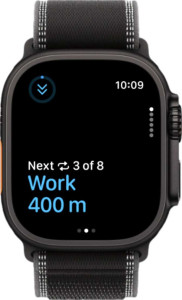
Apple Watch Ultra 3
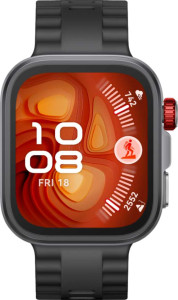
Huawei Watch Fit 4 Pro

Apple Watch Ultra 3 Huawei Watch Fit 4 Pro

Overview

Welcome to our in-depth specification comparison between the Apple Watch Ultra 3 and the Huawei Watch Fit 4 Pro. These two smartwatches represent very different philosophies: one built around deep ecosystem integration and rugged capability, the other focused on lightweight everyday fitness tracking with impressive endurance. From battery life and water resistance to sensors and connectivity, this comparison covers every key battleground to help you decide which watch truly fits your lifestyle.

Common Features

  • Both watches feature an OLED/AMOLED display type.
  • Both watches are waterproof.
  • Always-On Display is available on both watches.
  • The watch band is replaceable on both watches.
  • Branded damage-resistant glass is not present on either watch.
  • Both watches support a lowest operating temperature of -20 °C.
  • A touchscreen display is present on both watches.
  • Blood oxygenation level monitoring is available on both watches.
  • A heart rate monitor is present on both watches.
  • GPS is available on both watches.
  • An accelerometer is present on both watches.
  • A temperature sensor is available on both watches.
  • A compass is present on both watches.
  • A barometer is available on both watches.
  • A gyroscope is present on both watches.
  • Sleep tracking is available on both watches.
  • Both watches track distance, steps taken, pace, and elevation.
  • Automatic activity detection is available on both watches.
  • A route tracker is available on both watches.
  • Both watches provide sleep reports and activity reports.
  • NFC is available on both watches.
  • Galileo satellite system support is available on both watches.
  • ANT+ support is not available on either watch.
  • iOS compatibility is available on both watches.
  • Wireless charging is supported on both watches.
  • Neither watch has a solar power battery or a removable battery.
  • HRV tracking is available on both watches.
  • VO2 max measurement is available on both watches.
  • Resting heart rate measurement is available on both watches.
  • Fast and slow heart rate notifications are available on both watches.
  • Both watches can be used to answer calls and have call control.
  • Phone location and notifications are supported on both watches.
  • Inactivity alerts are available on both watches.
  • Calorie burn counting, goal setting, achievements, and an exercise diary are available on both watches.
  • The companion app is free and ad-free on both watches.
  • A battery level indicator is present on both watches.
  • Auto pause is supported on both watches.
  • A passcode feature is available on both watches.
  • Both watches are compatible with smart scales and external heart rate monitors.
  • Neither watch is compatible with Windows or Mac OS X.
  • Neither watch has an external memory slot.

Main Differences

  • Screen size is 1.98″ on Apple Watch Ultra 3 and 1.82″ on Huawei Watch Fit 4 Pro.
  • ATM rating is 10 ATM on Apple Watch Ultra 3 and 5 ATM on Huawei Watch Fit 4 Pro.
  • The IP rating is IPX6 on Apple Watch Ultra 3 and IP68 on Huawei Watch Fit 4 Pro.
  • Waterproof depth rating is 100 m on Apple Watch Ultra 3 and 50 m on Huawei Watch Fit 4 Pro.
  • Pixel density is 326 ppi on Apple Watch Ultra 3 and 347 ppi on Huawei Watch Fit 4 Pro.
  • Resolution is 422 x 514 px on Apple Watch Ultra 3 and 408 x 480 px on Huawei Watch Fit 4 Pro.
  • Thickness is 12 mm on Apple Watch Ultra 3 and 9.3 mm on Huawei Watch Fit 4 Pro.
  • Weight is 61.8 g on Apple Watch Ultra 3 and 30.4 g on Huawei Watch Fit 4 Pro.
  • Height is 49 mm on Apple Watch Ultra 3 and 44.5 mm on Huawei Watch Fit 4 Pro.
  • Width is 44 mm on Apple Watch Ultra 3 and 40 mm on Huawei Watch Fit 4 Pro.
  • Maximum operating temperature is 55 °C on Apple Watch Ultra 3 and 45 °C on Huawei Watch Fit 4 Pro.
  • Volume is 25.872 cm³ on Apple Watch Ultra 3 and 16.554 cm³ on Huawei Watch Fit 4 Pro.
  • A cadence sensor is present on Huawei Watch Fit 4 Pro but not available on Apple Watch Ultra 3.
  • Calorie intake tracking is available on Huawei Watch Fit 4 Pro but not on Apple Watch Ultra 3.
  • Golf activity design is present on Huawei Watch Fit 4 Pro but not on Apple Watch Ultra 3.
  • A cellular module is available on Apple Watch Ultra 3 but not on Huawei Watch Fit 4 Pro.
  • Android compatibility is available on Huawei Watch Fit 4 Pro but not on Apple Watch Ultra 3.
  • Bluetooth version is 5.3 on Apple Watch Ultra 3 and 5.2 on Huawei Watch Fit 4 Pro.
  • Wi-Fi support is available on Apple Watch Ultra 3 but not on Huawei Watch Fit 4 Pro.
  • Battery life is 1.75 days on Apple Watch Ultra 3 and 10 days on Huawei Watch Fit 4 Pro.
  • Charge time is 1.5 hours on Apple Watch Ultra 3 and 0.75 hours on Huawei Watch Fit 4 Pro.
  • Battery life in power save mode is 72 hours on Apple Watch Ultra 3 and 240 hours on Huawei Watch Fit 4 Pro.
  • Fall detection is available on Apple Watch Ultra 3 but not on Huawei Watch Fit 4 Pro.
  • Voice commands are supported on Apple Watch Ultra 3 but not on Huawei Watch Fit 4 Pro.
  • Internal storage is 64GB on Apple Watch Ultra 3 and 4GB on Huawei Watch Fit 4 Pro.
  • In-app coaching is available on Huawei Watch Fit 4 Pro but not on Apple Watch Ultra 3.
Specs Comparison
Apple Watch Ultra 3

Apple Watch Ultra 3

Huawei Watch Fit 4 Pro

Huawei Watch Fit 4 Pro

Design:
screen size 1.98" 1.82"
Display type OLED/AMOLED OLED/AMOLED
water resistance Waterproof Waterproof
ATM rating 10 ATM 5 ATM
Ingress Protection (IP) rating IPX6 IP68
waterproof depth rating 100 m 50 m
Always-On Display
pixel density 326 ppi 347 ppi
resolution 422 x 514 px 408 x 480 px
Watch band is replaceable
has branded damage-resistant glass
thickness 12 mm 9.3 mm
weight 61.8 g 30.4 g
height 49 mm 44.5 mm
width 44 mm 40 mm
maximum operating temperature 55 °C 45 °C
lowest potential operating temperature -20 °C -20 °C
Has a display
has a touch screen
Has sapphire glass display
volume 25.872 cm³ 16.554 cm³
is designed for kids

The most striking design contrast between the Apple Watch Ultra 3 and the Huawei Watch Fit 4 Pro is their physical footprint. The Ultra 3 is a notably larger and heavier watch — 49 × 44 mm at 61.8 g versus the Fit 4 Pro's 44.5 × 40 mm at just 30.4 g. That weight difference is substantial on the wrist: the Fit 4 Pro is essentially half the mass of the Ultra 3, which translates directly to all-day comfort, especially during sleep tracking or long runs. The Ultra 3 is also thicker at 12 mm compared to the Fit 4 Pro's slim 9.3 mm profile, making the Huawei a more discreet, everyday wear option.

On the display side, both watches use OLED/AMOLED panels with Always-On Display and sapphire glass — so neither has a meaningful edge in panel technology or durability. The Ultra 3 offers a larger raw canvas at 1.98″ with 422 × 514 px, while the Fit 4 Pro's 1.82″ screen at 408 × 480 px actually achieves a higher pixel density of 347 ppi versus 326 ppi. In practice, both are sharp enough that this difference is negligible, but the Ultra 3's larger screen is easier to read at a glance and accommodates more information per view.

Where the Ultra 3 pulls clearly ahead is ruggedness: its 10 ATM / 100 m water resistance rating doubles the Fit 4 Pro's 5 ATM / 50 m, and it operates in a wider temperature range up to 55 °C versus 45 °C. For serious outdoor athletes and divers, this is a meaningful advantage. Overall, the Fit 4 Pro wins on wearability and discretion thanks to its lighter, slimmer build, while the Ultra 3 holds a clear edge in size, screen real estate, and environmental resilience — making the right choice largely a question of intended use.

Sensors:
Monitors blood oxygenation levels
Has a heart rate monitor
has GPS
has an accelerometer
Has a temperature sensor
has a compass
Has a barometer
has a gyroscope
Has a cadence sensor
Monitors perspiration

The sensor suites on both watches share a remarkably strong foundation. Heart rate monitoring, SpO2, GPS, accelerometer, gyroscope, temperature, compass, and barometer are all present on both the Apple Watch Ultra 3 and the Huawei Watch Fit 4 Pro — a lineup that covers the vast majority of health tracking and outdoor navigation use cases. For most users, this overlap means both watches are equally capable of monitoring cardiovascular health, altitude changes, and precise location data during workouts.

The only differentiator in this group is the cadence sensor, which the Fit 4 Pro includes and the Ultra 3 does not. Cadence — measuring steps or pedal strokes per minute — is particularly valuable for runners optimizing their stride efficiency and cyclists tracking pedaling rhythm. Its absence on the Ultra 3 is a notable gap given its positioning as a high-performance sports watch.

Based strictly on the provided specs, the Huawei Watch Fit 4 Pro holds a narrow but concrete edge in this category, solely due to the inclusion of a cadence sensor. The Ultra 3 matches it across every other sensor listed, so this is not a sweeping advantage — but for athletes who specifically rely on cadence data, the Fit 4 Pro is the more complete package here.

Activity tracking:
Tracks your sleep
Tracks distance
Tracks steps taken
Measures pace
Provides sleep reports
Detects activities automatically
Has a route tracker
Tracks elevation
Has multi-sport mode
Has exercise tagging
Has a stroke counter for swimming
Tracks calorie intake
Designed for diving
Designed for golf

Activity tracking is an area of remarkable parity between the Apple Watch Ultra 3 and the Huawei Watch Fit 4 Pro. Both cover the full spectrum of core tracking features — sleep monitoring with reports, distance, steps, pace, elevation, route tracking, automatic activity detection, multi-sport mode, exercise tagging, swim stroke counting, and even diving support. For an athlete moving across disciplines, either watch delivers a genuinely comprehensive tracking experience.

The divergence comes down to two specific features. The Fit 4 Pro adds calorie intake tracking and a dedicated golf mode, neither of which the Ultra 3 supports in this data set. Calorie intake tracking is meaningful for users managing weight or nutrition goals, as it closes the loop between calories burned and consumed without needing a separate app. Golf mode, meanwhile, caters to a distinct recreational audience — typically offering course mapping and shot tracking — broadening the Fit 4 Pro's appeal beyond pure endurance or adventure sports.

On the strength of these provided specs, the Huawei Watch Fit 4 Pro edges ahead in this category. It matches the Ultra 3 across every shared feature while adding two practical capabilities that serve real, distinct user needs. The advantage is not dramatic for a dedicated runner or swimmer, but for a user seeking broader lifestyle and sport versatility, the Fit 4 Pro covers more ground.

Connectivity:
has a cellular module
Is compatible with iOS
Is compatible with Android
Bluetooth version 5.3 5.2
supports Wi-Fi
supports ANT+
has NFC
supports Galileo

Connectivity is where the gap between these two watches widens most significantly. The Apple Watch Ultra 3 includes a cellular module, meaning it can make calls, stream music, and receive notifications entirely independently of a paired phone — a critical advantage for athletes who venture far from their devices. The Huawei Watch Fit 4 Pro has no cellular capability, keeping it tethered to a smartphone for most of its connected features. Combined with the Ultra 3's Wi-Fi support — also absent on the Fit 4 Pro — Apple's watch is simply a more autonomous device.

Platform compatibility tells a different story. The Fit 4 Pro works with both iOS and Android, while the Ultra 3 is locked exclusively to iOS. This is a fundamental constraint: Android users are categorically excluded from the Ultra 3 ecosystem, whereas the Fit 4 Pro can serve virtually any smartphone user. On Bluetooth, both watches are close — version 5.3 on the Ultra 3 versus 5.2 on the Fit 4 Pro — a marginal difference that offers the Ultra 3 a slight edge in connection stability and efficiency, though unlikely to be perceptible in daily use. Both support NFC for contactless payments and Galileo satellite navigation.

Overall, the Apple Watch Ultra 3 holds a clear connectivity advantage for iPhone users, thanks to cellular independence and Wi-Fi support. However, that advantage is entirely contingent on ecosystem: for Android users, the Ultra 3 is simply not an option, making the Fit 4 Pro the only viable choice in this comparison regardless of its more limited connectivity stack.

Battery:
battery life 1.75 days 10 days
charge time 1.5 hours 0.75 hours
battery life in power save mode 72 hours 240 hours
has wireless charging
has a rechargeable battery
Has a solar power battery
has a removable battery

Battery life is arguably the most lopsided category in this entire comparison. The Huawei Watch Fit 4 Pro delivers a rated 10 days of standard use versus just 1.75 days for the Apple Watch Ultra 3 — meaning the Fit 4 Pro lasts nearly six times longer on a single charge. In practical terms, the Ultra 3 demands a nightly or every-other-night charging habit, while the Fit 4 Pro can comfortably go a week and a half without touching a charger. For travelers, multi-day expeditions, or users who simply dislike charging routines, this is a decisive real-world difference.

Power save mode extends the gap even further: the Fit 4 Pro reaches 240 hours (10 days) in reserve mode compared to the Ultra 3's 72 hours. This matters most in emergency or low-power scenarios where basic timekeeping and critical functions need to last. The Fit 4 Pro also charges faster, reaching full capacity in 45 minutes versus the Ultra 3's 1.5 hours — so even when it does need power, it's back on your wrist sooner. Both watches support wireless charging, keeping cable clutter out of the equation for either.

The Huawei Watch Fit 4 Pro wins this category decisively and without qualification. Every single battery metric — endurance, power save longevity, and charge speed — favors the Fit 4 Pro. The Ultra 3's shorter battery life is a known trade-off for its cellular connectivity, larger display, and feature density, but users who prioritize freedom from frequent charging will find the Fit 4 Pro significantly more convenient.

Features:
release date September 2025 May 2025
has HRV tracking
measures VO2 max
measures resting heart rate
has fast/slow heart rate notifications
Can be used to answer calls
Locates your phone
Has call control
Has notifications
has irregular heart rate warnings
Has ECG technology
Has silent alarm
Has vibrating alerts
has fall detection
Has a stopwatch
Has smart alarm
has voice commands
internal storage 64GB 4GB
Has a built-in camera remote control function
warranty period 1 years 1 years
number of microphones 1 1
has a front camera

Across the core feature set, these two watches are strikingly well-matched. Both offer ECG monitoring, HRV tracking, VO2 max measurement, irregular heart rate warnings, call handling, notifications, camera remote control, and the same single-microphone setup — a broad toolkit that covers health monitoring and smart convenience for either user. The shared warranty period of 1 year also means no advantage to either on after-purchase support.

The meaningful differences emerge in three areas. First, the Apple Watch Ultra 3 includes fall detection, an important safety feature for older users or those engaging in high-risk outdoor activities — the Fit 4 Pro lacks this entirely. Second, the Ultra 3 supports voice commands, enabling hands-free control during workouts or when the watch cannot be easily tapped; the Fit 4 Pro offers no equivalent. Third, and most practically significant, the Ultra 3 carries 64 GB of internal storage versus just 4 GB on the Fit 4 Pro — a 16x difference that allows the Ultra 3 to store music libraries, apps, and data locally on a scale the Fit 4 Pro simply cannot match.

The Apple Watch Ultra 3 holds a clear edge in this category. While the Fit 4 Pro is competitive across shared features, the Ultra 3's combination of fall detection, voice commands, and vastly superior internal storage gives it a broader, more capable feature profile — particularly for users who want to use their watch independently from a phone or rely on it in safety-critical situations.

App & Software:
Provides activity reports
Has inactivity alerts
Counts how many calories you've burned
Has goal setting
Has achievements
Free app
Has exercise diary
Ad-free
Has coaching
Has temperature tracking
Has period notifications
Supports routes
Has voice feedback
Has music playback
Displays fertile window notifications
Includes maps
Predicts ovulation
Predicts start date
Can be personalised
Has barcode scanner on app
Tracks water intake
Has weight tracking

Of all the comparison categories so far, App & Software is the closest to a dead heat. The feature lists for both the Apple Watch Ultra 3 and the Huawei Watch Fit 4 Pro are virtually identical: activity reports, inactivity alerts, calorie burn tracking, goal setting, achievements, exercise diary, temperature tracking, full reproductive health features (period notifications, fertile window, ovulation and start date prediction), route and map support, voice feedback, music playback, water intake, weight tracking, and personalization — all present on both, all ad-free with a free companion app.

The sole differentiator across this entire feature set is coaching, which the Fit 4 Pro supports and the Ultra 3 does not. In-app coaching typically means guided workout plans, real-time form or pace feedback, and structured training programs — functionality that adds genuine value for users who want their watch to do more than record activity and instead actively direct their training.

Given the near-total overlap, the Huawei Watch Fit 4 Pro takes a narrow edge here on the strength of its coaching support alone. For the majority of users, the software experience will feel essentially equivalent, but those specifically seeking guided training within the native app will find the Fit 4 Pro the more complete offering in this category.

Miscellaneous:
has a battery level indicator
Has auto pause
Has passcode
Compatible with smart scales
Compatible with external heart rate monitors
Is compatible with Windows
has an external memory slot
Is compatible with Mac OS X
has a socket for a 3.5 mm audio jack

The Miscellaneous category delivers the most straightforward verdict in this entire comparison: the Apple Watch Ultra 3 and the Huawei Watch Fit 4 Pro are in a complete tie. Every single spec in this group is identical across both devices — battery level indicator, auto pause, passcode protection, smart scale compatibility, and support for external heart rate monitors are all present on both watches, while Windows compatibility, Mac OS X compatibility, external memory slots, and 3.5 mm audio jacks are absent from both.

The shared support for external heart rate monitors and smart scales is worth noting as a practical positive for either user: both watches can integrate with a broader health ecosystem, pulling in data from chest straps or body composition scales to enrich their tracking picture. Similarly, passcode protection on both ensures that NFC payments and personal health data remain secured if the watch is removed from the wrist.

Based strictly on the provided data, this category is a dead heat. There is no differentiating feature in either direction, and no advantage can be assigned to either product here.

Comparison Summary & Verdict

After examining every specification, it is clear that both watches excel in distinct areas. The Apple Watch Ultra 3 stands out with its larger display, superior waterproof depth rating of 100 m, built-in cellular connectivity, Wi-Fi support, fall detection, voice commands, and a massive 64 GB of internal storage — making it the stronger choice for power users and outdoor adventurers within the Apple ecosystem. The Huawei Watch Fit 4 Pro, on the other hand, wins on battery life of up to 10 days, significantly lighter weight of 30.4 g, faster charging, higher pixel density, Android compatibility, and additional fitness features like calorie intake tracking and golf activity support. Choose the Apple Watch Ultra 3 if you need a feature-rich, rugged companion tightly integrated with iOS. Opt for the Huawei Watch Fit 4 Pro if long battery life, a lighter form factor, and cross-platform fitness tracking are your top priorities.

Apple Watch Ultra 3
Buy Apple Watch Ultra 3 if...

Buy the Apple Watch Ultra 3 if you are an iOS user who needs cellular connectivity, rugged water resistance down to 100 m, fall detection, voice commands, and ample 64 GB internal storage for an all-round capable smartwatch.

Huawei Watch Fit 4 Pro
Buy Huawei Watch Fit 4 Pro if...

Buy the Huawei Watch Fit 4 Pro if you prioritize an exceptionally long battery life of up to 10 days, a lighter and slimmer design, faster charging, and comprehensive fitness tracking with Android compatibility.