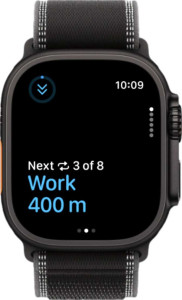
Apple Watch Ultra 3
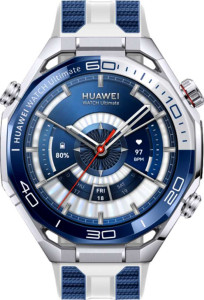
Huawei Watch Ultimate 2

Apple Watch Ultra 3 Huawei Watch Ultimate 2

Overview

When it comes to premium smartwatches built for the demands of serious athletes and adventurers, the Apple Watch Ultra 3 and the Huawei Watch Ultimate 2 stand as two of the most capable contenders on the market. In this detailed comparison, we put both watches side by side across key battlegrounds including battery endurance, design dimensions, sensor capabilities, and connectivity options to help you determine which flagship timepiece best fits your lifestyle.

Common Features

  • Both watches feature an OLED/AMOLED display type.
  • Both watches are waterproof with a 10 ATM rating.
  • Always-On Display is available on both watches.
  • The watch band is replaceable on both models.
  • Branded damage-resistant glass is not featured on either watch.
  • Both watches can operate at a lowest temperature of -20 °C.
  • Both watches monitor blood oxygenation levels.
  • Both watches include a heart rate monitor.
  • Both watches have built-in GPS.
  • Both watches include an accelerometer, gyroscope, compass, barometer, and temperature sensor.
  • Both watches track sleep and provide sleep reports.
  • Both watches track distance, steps taken, pace, elevation, and include a route tracker.
  • Automatic activity detection is available on both watches.
  • Both watches are compatible with iOS and support Wi-Fi.
  • NFC is supported on both watches.
  • Galileo satellite navigation is supported on both watches.
  • ANT+ connectivity is not supported on either watch.
  • Both watches support wireless charging and include a rechargeable, non-removable battery.
  • Solar power battery charging is not available on either watch.
  • Both watches offer HRV tracking, VO2 max measurement, resting heart rate measurement, and fast/slow heart rate notifications.
  • Both watches allow answering calls, have call control, phone locating, and push notifications.
  • Both watches provide activity reports, inactivity alerts, calorie burn counting, goal setting, achievements, an exercise diary, and a free ad-free companion app.
  • Both watches include a battery level indicator, auto pause, passcode protection, and compatibility with smart scales and external heart rate monitors.
  • Neither watch is compatible with Windows or Mac OS X, and neither has an external memory slot.

Main Differences

  • Screen size is 1.98″ on Apple Watch Ultra 3 and 1.5″ on Huawei Watch Ultimate 2.
  • The Ingress Protection rating is IPX6 on Apple Watch Ultra 3 and IP68 on Huawei Watch Ultimate 2.
  • Waterproof depth rating is 100 m on Apple Watch Ultra 3 and 150 m on Huawei Watch Ultimate 2.
  • Pixel density is 326 ppi on Apple Watch Ultra 3 and 311 ppi on Huawei Watch Ultimate 2.
  • Resolution is 422 x 514 px on Apple Watch Ultra 3 and 466 x 466 px on Huawei Watch Ultimate 2.
  • Thickness is 12 mm on Apple Watch Ultra 3 and 12.9 mm on Huawei Watch Ultimate 2.
  • Weight is 61.8 g on Apple Watch Ultra 3 and 80.5 g on Huawei Watch Ultimate 2.
  • Height is 49 mm on Apple Watch Ultra 3 and 48.5 mm on Huawei Watch Ultimate 2.
  • Width is 44 mm on Apple Watch Ultra 3 and 48.5 mm on Huawei Watch Ultimate 2.
  • Maximum operating temperature is 55 °C on Apple Watch Ultra 3 and 45 °C on Huawei Watch Ultimate 2.
  • Volume is 25.872 cm³ on Apple Watch Ultra 3 and 30.344025 cm³ on Huawei Watch Ultimate 2.
  • A cadence sensor is present on Huawei Watch Ultimate 2 but not available on Apple Watch Ultra 3.
  • Calorie intake tracking is available on Huawei Watch Ultimate 2 but not on Apple Watch Ultra 3.
  • Golf-specific features are present on Huawei Watch Ultimate 2 but not on Apple Watch Ultra 3.
  • A cellular module is included on Apple Watch Ultra 3 but not on Huawei Watch Ultimate 2.
  • Android compatibility is supported on Huawei Watch Ultimate 2 but not on Apple Watch Ultra 3.
  • Bluetooth version is 5.3 on Apple Watch Ultra 3 and 5.2 on Huawei Watch Ultimate 2.
  • Wi-Fi support is limited to Wi-Fi 4 (802.11n) on Apple Watch Ultra 3, while Huawei Watch Ultimate 2 supports Wi-Fi 6 (802.11ax), Wi-Fi 5 (802.11ac), and Wi-Fi 4 (802.11n).
  • Battery life is 1.75 days on Apple Watch Ultra 3 and 4.5 days on Huawei Watch Ultimate 2.
  • Charge time is 1.5 hours on Apple Watch Ultra 3 and 1 hour on Huawei Watch Ultimate 2.
  • Internal storage is 64 GB on Apple Watch Ultra 3 and 32 GB on Huawei Watch Ultimate 2.
  • In-app coaching is available on Huawei Watch Ultimate 2 but not on Apple Watch Ultra 3.
Specs Comparison
Apple Watch Ultra 3

Apple Watch Ultra 3

Huawei Watch Ultimate 2

Huawei Watch Ultimate 2

Design:
screen size 1.98" 1.5"
Display type OLED/AMOLED OLED/AMOLED
water resistance Waterproof Waterproof
ATM rating 10 ATM 10 ATM
Ingress Protection (IP) rating IPX6 IP68
waterproof depth rating 100 m 150 m
Always-On Display
pixel density 326 ppi 311 ppi
resolution 422 x 514 px 466 x 466 px
Watch band is replaceable
has branded damage-resistant glass
thickness 12 mm 12.9 mm
weight 61.8 g 80.5 g
height 49 mm 48.5 mm
width 44 mm 48.5 mm
maximum operating temperature 55 °C 45 °C
lowest potential operating temperature -20 °C -20 °C
Has a display
has a touch screen
Has sapphire glass display
volume 25.872 cm³ 30.344025 cm³
is designed for kids

The most immediately striking difference is screen size: the Apple Watch Ultra 3 features a noticeably larger 1.98″ display versus the Huawei Watch Ultimate 2's 1.5″ panel. Despite this, the Ultra 3 is actually the more compact and lighter watch overall — at 61.8 g and 12 mm thick with a volume of 25.87 cm³, it undercuts the Ultimate 2's 80.5 g, 12.9 mm thickness, and 30.34 cm³ volume. In real-world terms, a nearly 20-gram weight difference is very perceptible during extended wear, particularly during sleep tracking or all-day use. The Ultra 3's larger screen-to-body efficiency also means it delivers more visual real estate without a bulkier chassis.

On water resistance, the two watches diverge in a meaningful way. The Ultimate 2 holds an IP68 rating and a 150 m depth rating, compared to the Ultra 3's IPX6 and 100 m. IP68 certifies protection against both dust ingress and sustained water immersion, while IPX6 covers only water jets with no dust certification. For serious divers or those in dusty environments, the Ultimate 2's ruggedness edge is real. However, the Ultra 3 compensates with a broader thermal operating range, handling up to 55 °C versus the Ultimate 2's 45 °C ceiling — a meaningful advantage in hot climates or intense physical activity. Both watches share sapphire glass displays, OLED/AMOLED panels with Always-On Display, and replaceable bands.

Overall, the Apple Watch Ultra 3 holds the design edge for most users: it delivers a larger, slightly sharper display (326 ppi vs 311 ppi) in a significantly lighter and slimmer form factor, making it more comfortable for daily wear. The Huawei Watch Ultimate 2 counters with superior water and dust resistance and greater depth rating, giving it a clear advantage for diving or harsh outdoor environments specifically.

Sensors:
Monitors blood oxygenation levels
Has a heart rate monitor
has GPS
has an accelerometer
Has a temperature sensor
has a compass
Has a barometer
has a gyroscope
Has a cadence sensor

Across the core sensor suite, these two watches are remarkably well-matched. Both carry heart rate monitoring, blood oxygen tracking, GPS, accelerometer, gyroscope, barometer, compass, and temperature sensor — a comprehensive package that covers health tracking, navigation, and athletic performance monitoring without compromise on either side.

The sole differentiator in this group is the cadence sensor, which the Huawei Watch Ultimate 2 includes and the Apple Watch Ultra 3 does not. A dedicated cadence sensor measures steps per minute during running or cycling, giving athletes more granular feedback on their movement efficiency — a feature that matters particularly to serious runners and cyclists who use cadence as a core training metric.

For the vast majority of users, the sensor parity here is effectively a tie. However, for endurance athletes who specifically rely on cadence data as part of structured training, the Huawei Watch Ultimate 2 holds a narrow but meaningful edge in this group.

Activity tracking:
Tracks your sleep
Tracks distance
Tracks steps taken
Measures pace
Provides sleep reports
Detects activities automatically
Has a route tracker
Tracks elevation
Has multi-sport mode
Has exercise tagging
Has a stroke counter for swimming
Tracks calorie intake
Designed for diving
Designed for golf

Activity tracking is a near-complete tie between these two watches. Both cover the full spectrum of essentials — sleep tracking with reports, distance, steps, pace, elevation, route tracking, automatic activity detection, multi-sport mode, exercise tagging, swim stroke counting, and dedicated diving support. For most athletes and health-focused users, neither watch leaves a meaningful gap.

Where the Huawei Watch Ultimate 2 pulls ahead is in two specific additions: calorie intake tracking and golf mode. Calorie intake tracking enables nutritional logging directly on the watch, which matters to users managing diet alongside fitness goals — the Ultra 3 omits this entirely. Golf mode, meanwhile, is a niche but dedicated feature for on-course play, typically providing hole maps, shot tracking, and scoring. Neither of these is a trivial addition for their respective audiences.

For general sport and adventure use, the two watches are functionally equivalent. But the Huawei Watch Ultimate 2 holds the edge in this group by offering a broader activity scope — its inclusion of calorie intake tracking and golf support means it serves a wider range of lifestyle and sport use cases than the Ultra 3 based strictly on the provided data.

Connectivity:
has a cellular module
Is compatible with iOS
Is compatible with Android
Bluetooth version 5.3 5.2
supports Wi-Fi
Wi-Fi version Wi-Fi 4 (802.11n) Wi-Fi 6 (802.11ax), Wi-Fi 5 (802.11ac), Wi-Fi 4 (802.11n)
supports ANT+
has NFC
supports Galileo

The single biggest connectivity differentiator here is cellular support. The Apple Watch Ultra 3 includes a cellular module, meaning it can make calls, stream data, and receive notifications entirely independently of a smartphone. The Huawei Watch Ultimate 2 lacks this — it always needs a paired phone nearby for those functions. For users who want true standalone freedom during runs, hikes, or travel, this is a substantial practical gap.

Platform compatibility cuts the other way. The Ultra 3 is locked to iOS only, while the Ultimate 2 works with both iOS and Android — a significant flexibility advantage for Android users or households with mixed devices. On wireless standards, the Ultimate 2 supports Wi-Fi 6 (802.11ax) alongside older standards, versus the Ultra 3's Wi-Fi 4 (802.11n) ceiling. Wi-Fi 6 brings faster throughput and better performance in congested environments, which can matter for firmware updates and data syncing. Bluetooth versions are close — 5.3 on the Ultra 3 versus 5.2 on the Ultimate 2 — a marginal real-world difference. Both share NFC and Galileo satellite support.

There is no single winner here — the decision hinges entirely on the user's priorities. The Apple Watch Ultra 3 is the clear choice for those who want cellular independence and are already in the Apple ecosystem. The Huawei Watch Ultimate 2 wins on platform flexibility and Wi-Fi modernity, making it the more versatile option for Android users or those who do not require a standalone connection.

Battery:
battery life 1.75 days 4.5 days
charge time 1.5 hours 1 hours
has wireless charging
has a rechargeable battery
Has a solar power battery
has a removable battery

Battery life is where these two watches diverge most dramatically. The Huawei Watch Ultimate 2 is rated at 4.5 days per charge, compared to just 1.75 days for the Apple Watch Ultra 3. In practical terms, the Ultra 3 demands charging every other day at best — a routine that becomes a real inconvenience during multi-day trips, expeditions, or for users who rely on continuous sleep tracking. The Ultimate 2, by contrast, can comfortably cover a long weekend or short work trip without needing a charger.

Charging speed slightly favors the Ultimate 2 as well, reaching a full charge in 1 hour versus 1.5 hours for the Ultra 3. While neither is particularly slow, a 30-minute difference matters when you are topping up before heading out. Both watches support wireless charging and have non-removable, rechargeable batteries — so the charging experience is broadly similar in method, just not in duration or frequency.

The Huawei Watch Ultimate 2 wins this group decisively. Its battery life is more than twice that of the Ultra 3, and it also charges faster — a combination that meaningfully reduces the daily friction of ownership, particularly for users who prioritize extended outdoor use or uninterrupted sleep tracking.

Features:
release date September 2025 September 2025
has HRV tracking
measures VO2 max
measures resting heart rate
has fast/slow heart rate notifications
Can be used to answer calls
Locates your phone
Has call control
Has notifications
has irregular heart rate warnings
Has ECG technology
Has silent alarm
Has vibrating alerts
Has a stopwatch
has voice commands
RAM 2GB 2GB
internal storage 64GB 32GB
Has a built-in camera remote control function
Acquires GPS faster
warranty period 1 years 1 years

Rarely in a head-to-head comparison does a features group align this closely. Both watches offer an identical set of capabilities across health monitoring — including HRV, VO2 max, ECG, and irregular heart rate warnings — as well as smart features like call handling, voice commands, notifications, camera remote control, and fast GPS acquisition. Even RAM and warranty period are matched at 2 GB and 1 year respectively. For a user evaluating feature breadth, neither watch has a meaningful gap over the other.

The sole spec separating them is internal storage: the Apple Watch Ultra 3 provides 64 GB versus the Huawei Watch Ultimate 2's 32 GB. In practice, this matters most for users who store music, podcasts, or other media locally on the watch for offline playback during workouts — 64 GB offers substantially more headroom for that use case.

Based strictly on this group, the Apple Watch Ultra 3 holds a narrow edge purely by virtue of its 64 GB storage advantage. For users who do not store significant media on their watch, however, this group is effectively a dead heat.

App & Software:
Provides activity reports
Has inactivity alerts
Counts how many calories you've burned
Has goal setting
Has achievements
Free app
Has exercise diary
Ad-free
Has coaching
Has temperature tracking
Has period notifications
Supports routes
Has voice feedback
Has music playback
Displays fertile window notifications
Includes maps
Predicts ovulation
Predicts start date
Can be personalised
Has barcode scanner on app
Tracks water intake
Has weight tracking

Both the Apple Watch Ultra 3 and Huawei Watch Ultimate 2 offer a similar set of features in terms of apps and software. They both provide activity reports, inactivity alerts, calorie counting, goal setting, achievements, and a free app. Additionally, both models include an exercise diary, are ad-free, and support temperature tracking, period notifications, route tracking, and voice feedback. They also both offer music playback, fertile window notifications, maps, ovulation prediction, and the ability to personalize the device.

The key difference is that the Huawei Watch Ultimate 2 includes coaching functionality, which the Apple Watch Ultra 3 does not provide. Both devices do not feature a barcode scanner on the app, but they both track water intake and weight.

Overall, the software features of both watches are quite similar, with the Huawei Watch Ultimate 2 standing out slightly with its coaching functionality, while the Apple Watch Ultra 3 lacks this feature.

Miscellaneous:
has a battery level indicator
Has auto pause
Has passcode
Compatible with smart scales
Compatible with external heart rate monitors
Is compatible with Windows
has an external memory slot
Is compatible with Mac OS X
has a socket for a 3.5 mm audio jack

The Apple Watch Ultra 3 and Huawei Watch Ultimate 2 share identical features in this group. Both models have a battery level indicator, auto pause functionality, passcode protection, compatibility with smart scales and external heart rate monitors, and do not support external memory slots. They are both incompatible with Windows and Mac OS X. Additionally, neither product includes a socket for a 3.5 mm audio jack.

These specifications match exactly between the two devices, indicating that in terms of miscellaneous features, there are no differences between the Apple Watch Ultra 3 and Huawei Watch Ultimate 2.

Comparison Summary & Verdict

Both the Apple Watch Ultra 3 and the Huawei Watch Ultimate 2 are exceptional smartwatches that share a strong foundation: OLED displays, comprehensive health sensors, NFC, and robust activity tracking. However, their strengths diverge in meaningful ways. The Apple Watch Ultra 3 stands out with its larger screen, lighter 61.8 g build, greater internal storage of 64 GB, cellular connectivity, and a higher maximum operating temperature of 55 °C, making it the stronger choice for Apple ecosystem users who need an always-connected wrist companion. The Huawei Watch Ultimate 2, on the other hand, dominates in battery life at 4.5 days, deeper waterproofing at 150 m, faster 1-hour charging, broader Wi-Fi support, and additional features like cadence tracking, calorie intake logging, golf mode, and in-app coaching. If longevity, versatility, and Android compatibility are your priorities, the Huawei is the clear pick.

Apple Watch Ultra 3
Buy Apple Watch Ultra 3 if...

Buy the Apple Watch Ultra 3 if you are embedded in the Apple ecosystem and value a larger display, a lighter and more compact build, cellular connectivity, and greater onboard storage of 64 GB.

Huawei Watch Ultimate 2
Buy Huawei Watch Ultimate 2 if...

Buy the Huawei Watch Ultimate 2 if you prioritize a significantly longer battery life of 4.5 days, deeper waterproofing, faster charging, Android compatibility, and advanced tracking features like cadence monitoring, golf mode, and in-app coaching.