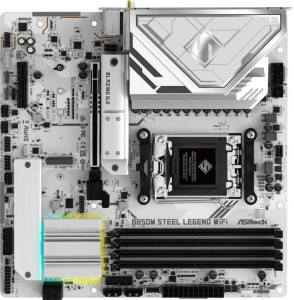
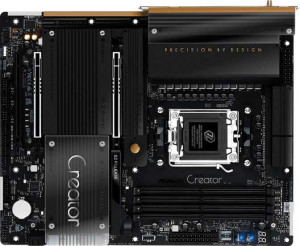
Both boards share the same AM5 socket, making them compatible with the same range of AMD Ryzen processors, and both offer Wi-Fi 7, Bluetooth 5.4, HDMI 2.1, dual BIOS, and a 3-year warranty. For most users, this common foundation means neither board leaves you wanting on connectivity or future-proofing at the platform level.
The most meaningful differences lie in chipset and form factor. The Steel Legend uses a B850 chipset in a Micro-ATX footprint (244 × 244 mm), while the Taichi Creator steps up to the X870 chipset in a full ATX layout (244 × 305 mm). The X870 chipset is AMD's higher-tier platform, typically unlocking more PCIe lanes, greater overclocking headroom, and additional I/O bandwidth — relevant if you plan to run multiple high-speed NVMe drives or GPU configurations simultaneously. The larger ATX size also means more physical room for VRM phases, expansion slots, and M.2 slots, which matters for demanding or expandable builds.
One practical edge goes to the Taichi Creator: it supports easy BIOS reset, while the Steel Legend does not — a small but real convenience advantage when troubleshooting or recovering from a failed overclock. Overall, the Taichi Creator holds a clear advantage for power users and enthusiast builders who need the headroom that X870 and full ATX provide, while the Steel Legend is the more compact, cost-tier-appropriate choice for mainstream builds where that extra platform headroom is unlikely to be utilized.