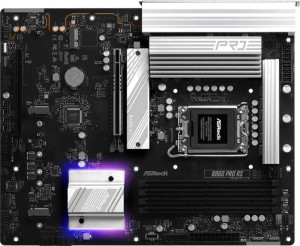
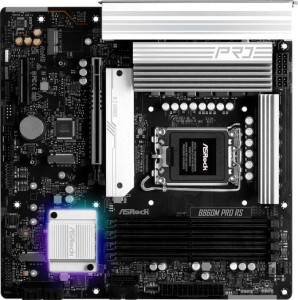
Both the ASRock B860 Pro RS and the B860M Pro RS are built on the same LGA 1851 socket and B860 chipset foundation, meaning they target the same generation of Intel processors and share an identical feature baseline in most respects: HDMI 2.1 output, dual BIOS support, RGB lighting, and a solid 3-year warranty. Neither board offers Wi-Fi or Bluetooth, so users requiring wireless connectivity will need to factor in the cost of an add-in card or adapter regardless of which model they choose.
The defining differentiator between these two boards is form factor. The Pro RS is a full-size ATX board measuring 305 × 254 mm, while the B860M Pro RS is a Micro-ATX board at a more compact 244 × 244 mm. In practical terms, this means the ATX model offers more physical space for additional PCIe slots, M.2 connectors, and power delivery components — all of which tend to scale with board size. The Micro-ATX variant, on the other hand, fits mid-tower and smaller cases, making it the right pick for space-constrained or compact desktop builds.
For users who prioritize expandability, multi-GPU potential, or simply want more headroom for future upgrades, the B860 Pro RS has a structural edge by virtue of its larger ATX footprint. However, if the build targets a smaller chassis or desk footprint matters, the B860M Pro RS delivers the same core platform capabilities in a tighter package with no functional penalty based on the specs provided. The choice here is almost entirely dictated by case compatibility and expansion needs rather than any meaningful performance difference.