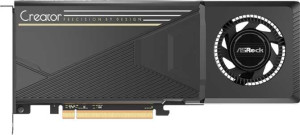
ASRock Radeon AI Pro R9700 Creator
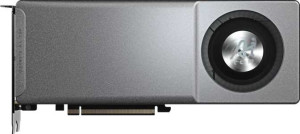
Gigabyte Radeon AI Pro R9700 AI Top

ASRock Radeon AI Pro R9700 Creator Gigabyte Radeon AI Pro R9700 AI Top

Overview

Welcome to this in-depth specification comparison between the ASRock Radeon AI Pro R9700 Creator and the Gigabyte Radeon AI Pro R9700 AI Top. Both cards are built on the same RDNA 4.0 architecture and share a remarkable amount of common ground, but they diverge in key areas that may matter to you: display output configuration, memory bandwidth, and physical dimensions. Read on to find out which of these two professional-grade cards is the right fit for your setup.

Common Features

  • Both products have a GPU clock speed of 1660 MHz.
  • Both products have a GPU turbo speed of 2920 MHz.
  • Both products deliver a pixel rate of 373.8 GPixel/s.
  • Both products offer a floating-point performance of 47.84 TFLOPS.
  • Both products have a texture rate of 747.5 GTexels/s.
  • Both products have a GPU memory speed of 2518 MHz.
  • Both products feature 4096 shading units.
  • Both products have 256 texture mapping units (TMUs).
  • Both products have an effective memory speed of 20100 MHz.
  • Both products include 32GB of VRAM.
  • Both products use GDDR6 memory.
  • Both products have a 256-bit memory bus width.
  • ECC memory support is available on both products.
  • Both products support DirectX 12 Ultimate.
  • Both products support OpenGL version 4.6.
  • Both products support OpenCL version 2.2.
  • Multi-display technology support is available on both products.
  • Ray tracing support is available on both products.
  • 3D support is available on both products.
  • FSR4 support is available on both products.
  • XeSS (XMX) support is not available on either product.
  • Neither product has USB-C ports.
  • Neither product has DVI outputs.
  • Neither product has mini DisplayPort outputs.
  • Both products are based on the RDNA 4.0 GPU architecture.
  • Both products have a Thermal Design Power (TDP) of 300W.
  • Both products use PCIe version 5.
  • Both products are manufactured on a 4 nm semiconductor process.
  • Both products have 53900 million transistors.
  • Air-water cooling is not available on either product.
  • Both products have a height of 111 mm.

Main Differences

  • Maximum memory bandwidth is 644.6 GB/s on ASRock Radeon AI Pro R9700 Creator and 640 GB/s on Gigabyte Radeon AI Pro R9700 AI Top.
  • An HDMI output is present on Gigabyte Radeon AI Pro R9700 AI Top but not available on ASRock Radeon AI Pro R9700 Creator.
  • DisplayPort outputs number 4 on ASRock Radeon AI Pro R9700 Creator and 3 on Gigabyte Radeon AI Pro R9700 AI Top.
  • Width is 271 mm on ASRock Radeon AI Pro R9700 Creator and 267 mm on Gigabyte Radeon AI Pro R9700 AI Top.
Specs Comparison
ASRock Radeon AI Pro R9700 Creator

ASRock Radeon AI Pro R9700 Creator

Gigabyte Radeon AI Pro R9700 AI Top

Gigabyte Radeon AI Pro R9700 AI Top

Performance:
GPU clock speed 1660 MHz 1660 MHz
GPU turbo 2920 MHz 2920 MHz
pixel rate 373.8 GPixel/s 373.8 GPixel/s
floating-point performance 47.84 TFLOPS 47.84 TFLOPS
texture rate 747.5 GTexels/s 747.5 GTexels/s
GPU memory speed 2518 MHz 2518 MHz
shading units 4096 4096
texture mapping units (TMUs) 256 256
render output units (ROPs) 128 128
Has Double Precision Floating Point (DPFP)

In terms of raw performance, the ASRock Radeon AI Pro R9700 Creator and the Gigabyte Radeon AI Pro R9700 AI Top are an exact match across every measurable metric in this category. Both cards share a base clock of 1660 MHz and a turbo clock of 2920 MHz, meaning neither has a factory overclock advantage out of the box. Their compute throughput is identical at 47.84 TFLOPS of floating-point performance — a figure that positions both cards solidly for demanding creative and AI-accelerated workloads.

Digging deeper into the rasterization pipeline, both GPUs feature the same 4096 shading units, 256 TMUs, and 128 ROPs, yielding identical texture and pixel fill rates of 747.5 GTexels/s and 373.8 GPixel/s respectively. These figures directly influence how quickly each card can handle complex geometry and high-resolution rendering. Memory bandwidth potential is also tied, with both running at 2518 MHz memory speed. Importantly, both support Double Precision Floating Point (DPFP), which is a meaningful asset for scientific, simulation, and professional compute tasks that rely on 64-bit precision rather than the 32-bit standard used in gaming.

The verdict for this group is a complete tie. There is no performance differentiation between the ASRock and Gigabyte variants based on the provided specs — every clock speed, throughput figure, and architectural unit count is identical. Buyers comparing these two cards on performance alone will find no winner here; the decision will ultimately rest on factors outside this group, such as cooling design, software features, or price.
Memory:
effective memory speed 20100 MHz 20100 MHz
maximum memory bandwidth 644.6 GB/s 640 GB/s
VRAM 32GB 32GB
GDDR version GDDR6 GDDR6
memory bus width 256-bit 256-bit
Supports ECC memory

Both cards arrive with a generous 32GB of GDDR6 memory across a 256-bit bus — a configuration that comfortably accommodates large AI models, high-resolution textures, and memory-intensive creative workloads where running out of VRAM is a genuine bottleneck on lesser cards. The effective memory speed is identical at 20100 MHz on both, and both support ECC (Error-Correcting Code) memory, which is a notable feature for professional users: ECC silently detects and corrects single-bit memory errors, making these cards significantly more reliable for mission-critical compute tasks like scientific simulation or unattended rendering jobs.

The only quantitative difference in this group is maximum memory bandwidth: the ASRock R9700 Creator edges ahead at 644.6 GB/s versus the Gigabyte R9700 AI Top's 640 GB/s. A gap of roughly 4.6 GB/s represents under a 1% difference — negligible in virtually any real-world workload. Memory bandwidth governs how quickly the GPU can feed data to its compute cores, so in theory a higher figure benefits bandwidth-bound tasks like large matrix operations or high-resolution texture streaming, but a sub-1% margin will never be perceptible in practice.

The ASRock R9700 Creator technically holds a marginal edge on paper due to its slightly higher peak bandwidth, but this group is functionally a tie. The shared foundation — 32GB capacity, identical speed, ECC support — is far more consequential than the fractional bandwidth difference. For professional buyers, the ECC support shared by both cards is arguably the headline takeaway, elevating them above consumer-grade alternatives for reliability-sensitive environments.

Features:
DirectX version DirectX 12 Ultimate DirectX 12 Ultimate
OpenGL version 4.6 4.6
OpenCL version 2.2 2.2
Supports multi-display technology
supports ray tracing
Supports 3D
has FSR4
has XeSS (XMX)
AMD SAM / Intel Resizable BAR AMD SAM AMD SAM
has LHR
has RGB lighting
supported displays 4 4

Feature parity is absolute between these two cards. Both support DirectX 12 Ultimate — the highest DirectX tier, which unlocks hardware-accelerated ray tracing, mesh shaders, and variable-rate shading in compatible titles and applications. Paired with ray tracing support and FSR4 (AMD's latest upscaling generation), both cards are equipped for modern rendering pipelines that demand both visual fidelity and performance efficiency. FSR4 in particular is meaningful for creative and gaming workloads alike, as it uses machine learning to reconstruct high-resolution frames from lower-resolution inputs, effectively boosting throughput without sacrificing perceptible image quality.

On the compute and professional side, shared OpenCL 2.2 compatibility ensures broad support for GPU-accelerated workflows in creative and scientific software. AMD SAM (Smart Access Memory) is present on both, allowing a compatible AMD CPU to access the full VRAM pool rather than a limited 256MB window — a tangible performance uplift in SAM-aware applications when paired with the right platform. Neither card carries an LHR (Lite Hash Rate) limiter, though this is largely a non-issue in professional contexts. The absence of RGB lighting on both is consistent with their workstation-oriented positioning.

With support for up to 4 simultaneous displays on each card, multi-monitor creative setups are well catered for. Across every feature listed, the ASRock R9700 Creator and Gigabyte R9700 AI Top are in complete lockstep — this group offers no basis for differentiation. Both deliver the same modern feature set, and the choice between them must rest entirely on other factors.

Ports:
has an HDMI output
DisplayPort outputs 4 3
USB-C ports 0 0
DVI outputs 0 0
mini DisplayPort outputs 0 0

This is the first group in the comparison where a genuine, practical difference emerges. The ASRock R9700 Creator opts for four full-size DisplayPort outputs and no HDMI, while the Gigabyte R9700 AI Top offers three DisplayPort outputs plus one HDMI. Since both cards support up to four simultaneous displays, the total output count is equal — but the composition of those outputs has real-world consequences depending on the user's monitor setup.

The ASRock's all-DisplayPort configuration is the more homogeneous choice, favoring users whose entire display ecosystem runs on DisplayPort — common in high-end professional monitor setups. The Gigabyte's inclusion of HDMI makes it more immediately plug-and-play with a broader range of devices: TVs, projectors, capture cards, and many consumer-grade monitors that ship with HDMI as their primary or only input. Users who need to connect a mix of DisplayPort and HDMI displays without reaching for an adapter will find the Gigabyte's layout more convenient. Conversely, users who need to drive four DisplayPort monitors simultaneously cannot do so with the Gigabyte — they would need an adapter for the fourth display.

The Gigabyte R9700 AI Top holds a practical edge here for most users. The HDMI port adds meaningful versatility without sacrificing total display count, making it the more flexible option out of the box. The ASRock R9700 Creator's four-DisplayPort layout is not without merit — it is arguably cleaner for a dedicated professional DisplayPort environment — but it requires an adapter in any scenario that involves an HDMI display, giving the Gigabyte the advantage in connectivity flexibility.

General info:
GPU architecture RDNA 4.0 RDNA 4.0
release date July 2025 July 2025
Thermal Design Power (TDP) 300W 300W
PCI Express (PCIe) version 5 5
semiconductor size 4 nm 4 nm
number of transistors 53900 million 53900 million
Has air-water cooling
width 271 mm 267 mm
height 111 mm 111 mm

At the architectural level, these two cards are built from the same foundation in every meaningful sense. Both are based on AMD's RDNA 4.0 architecture, fabbed on a 4 nm process with 53,900 million transistors — the die-level silicon is identical. A 300W TDP and PCIe 5.0 interface are shared across both, meaning power delivery requirements and motherboard compatibility considerations are exactly the same for either card. PCIe 5.0 also ensures the interface will not become a bandwidth bottleneck for the foreseeable future.

The only measurable divergence in this group is physical length: the ASRock R9700 Creator measures 271 mm wide versus the Gigabyte R9700 AI Top's 267 mm. That 4 mm difference is minor but not entirely irrelevant — in very tight small-form-factor or mid-tower cases where clearance is already marginal, every millimeter counts. Neither card uses air-water hybrid cooling, so both rely entirely on their respective air cooler designs, the quality of which falls outside the data provided here.

This group is effectively a tie, with the Gigabyte R9700 AI Top earning a negligible physical edge by virtue of being fractionally shorter. For the vast majority of builds, 4 mm will make no practical difference in fitment. The shared 4 nm process, transistor count, TDP, and PCIe generation confirm that any performance or efficiency differences between these cards do not originate at the hardware architecture level.

Comparison Summary & Verdict

Both the ASRock Radeon AI Pro R9700 Creator and the Gigabyte Radeon AI Pro R9700 AI Top are extremely well-matched cards, sharing identical GPU performance metrics, 32GB of GDDR6 VRAM, a 300W TDP, and a rich feature set including ray tracing and FSR4. The differences come down to connectivity and size. The ASRock Radeon AI Pro R9700 Creator offers a slightly higher maximum memory bandwidth of 644.6 GB/s and four DisplayPort outputs, making it a strong choice for multi-monitor DisplayPort setups. The Gigabyte Radeon AI Pro R9700 AI Top counters with a built-in HDMI output and a marginally more compact 267mm width, suiting users who need HDMI connectivity or have tighter case clearance.

ASRock Radeon AI Pro R9700 Creator
Buy ASRock Radeon AI Pro R9700 Creator if...

Buy the ASRock Radeon AI Pro R9700 Creator if you need four DisplayPort outputs for a multi-monitor setup and want the slightly higher maximum memory bandwidth of 644.6 GB/s.

Gigabyte Radeon AI Pro R9700 AI Top
Buy Gigabyte Radeon AI Pro R9700 AI Top if...

Buy the Gigabyte Radeon AI Pro R9700 AI Top if you require a built-in HDMI output for your display or need a marginally more compact card at 267mm in width.