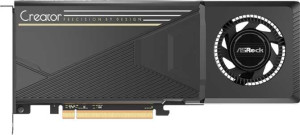
ASRock Radeon AI Pro R9700 Creator
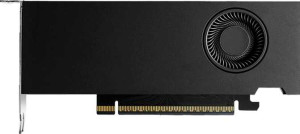
Nvidia RTX Pro 2000 Blackwell

ASRock Radeon AI Pro R9700 Creator Nvidia RTX Pro 2000 Blackwell

Common Features

  • Both products have Double Precision Floating Point (DPFP) support.
  • Both products support ECC memory.
  • Both products support DirectX 12 Ultimate.
  • Both products support OpenGL 4.6.
  • Both products support multi-display technology.
  • Both products support ray tracing.
  • Both products support 3D.
  • Both products do not have XeSS (XMX) support.
  • Both products do not have LHR.
  • Both products do not have RGB lighting.
  • Both products have PCI Express (PCIe) version 5.
  • Both products do not feature air-water cooling.
  • Both products have a DisplayPort output.
  • Both products have 4 mini DisplayPort outputs.
  • Both products have a thermal design power (TDP) rating.
  • Both products are based on different GPU architectures.
  • Both products have a semiconductor size in the 4 nm to 5 nm range.
  • Both products have a transistor count in the tens of billions.
  • Both products are designed with different dimensions.

Main Differences

  • GPU clock speed is 1660 MHz on ASRock Radeon AI Pro R9700 Creator and 790 MHz on Nvidia RTX Pro 2000 Blackwell.
  • GPU turbo is 2920 MHz on ASRock Radeon AI Pro R9700 Creator and 1950 MHz on Nvidia RTX Pro 2000 Blackwell.
  • Pixel rate is 373.8 GPixel/s on ASRock Radeon AI Pro R9700 Creator and 124.8 GPixel/s on Nvidia RTX Pro 2000 Blackwell.
  • Floating-point performance is 47.84 TFLOPS on ASRock Radeon AI Pro R9700 Creator and 16.97 TFLOPS on Nvidia RTX Pro 2000 Blackwell.
  • Texture rate is 747.5 GTexels/s on ASRock Radeon AI Pro R9700 Creator and 265.2 GTexels/s on Nvidia RTX Pro 2000 Blackwell.
  • GPU memory speed is 2518 MHz on ASRock Radeon AI Pro R9700 Creator and 1125 MHz on Nvidia RTX Pro 2000 Blackwell.
  • Shading units are 4096 on ASRock Radeon AI Pro R9700 Creator and 4352 on Nvidia RTX Pro 2000 Blackwell.
  • Texture mapping units (TMUs) are 256 on ASRock Radeon AI Pro R9700 Creator and 136 on Nvidia RTX Pro 2000 Blackwell.
  • Render output units (ROPs) are 128 on ASRock Radeon AI Pro R9700 Creator and 64 on Nvidia RTX Pro 2000 Blackwell.
  • Effective memory speed is 20100 MHz on ASRock Radeon AI Pro R9700 Creator and 18000 MHz on Nvidia RTX Pro 2000 Blackwell.
  • Maximum memory bandwidth is 644.6 GB/s on ASRock Radeon AI Pro R9700 Creator and 288 GB/s on Nvidia RTX Pro 2000 Blackwell.
  • VRAM is 32GB on ASRock Radeon AI Pro R9700 Creator and 16GB on Nvidia RTX Pro 2000 Blackwell.
  • GDDR version is GDDR6 on ASRock Radeon AI Pro R9700 Creator and GDDR7 on Nvidia RTX Pro 2000 Blackwell.
  • Memory bus width is 256-bit on ASRock Radeon AI Pro R9700 Creator and 128-bit on Nvidia RTX Pro 2000 Blackwell.
  • OpenCL version is 2.2 on ASRock Radeon AI Pro R9700 Creator and 3 on Nvidia RTX Pro 2000 Blackwell.
  • AMD SAM is supported on ASRock Radeon AI Pro R9700 Creator and Intel Resizable BAR is supported on Nvidia RTX Pro 2000 Blackwell.
  • DisplayPort outputs are 4 on ASRock Radeon AI Pro R9700 Creator and 0 on Nvidia RTX Pro 2000 Blackwell.
  • Mini DisplayPort outputs are 0 on ASRock Radeon AI Pro R9700 Creator and 4 on Nvidia RTX Pro 2000 Blackwell.
  • Thermal Design Power (TDP) is 300W on ASRock Radeon AI Pro R9700 Creator and 70W on Nvidia RTX Pro 2000 Blackwell.
  • Semiconductor size is 4 nm on ASRock Radeon AI Pro R9700 Creator and 5 nm on Nvidia RTX Pro 2000 Blackwell.
  • Number of transistors is 53900 million on ASRock Radeon AI Pro R9700 Creator and 21900 million on Nvidia RTX Pro 2000 Blackwell.
  • Width is 271 mm on ASRock Radeon AI Pro R9700 Creator and 167.6 mm on Nvidia RTX Pro 2000 Blackwell.
  • Height is 111 mm on ASRock Radeon AI Pro R9700 Creator and 68.6 mm on Nvidia RTX Pro 2000 Blackwell.
Specs Comparison
ASRock Radeon AI Pro R9700 Creator

ASRock Radeon AI Pro R9700 Creator

Nvidia RTX Pro 2000 Blackwell

Nvidia RTX Pro 2000 Blackwell

Performance:
GPU clock speed 1660 MHz 790 MHz
GPU turbo 2920 MHz 1950 MHz
pixel rate 373.8 GPixel/s 124.8 GPixel/s
floating-point performance 47.84 TFLOPS 16.97 TFLOPS
texture rate 747.5 GTexels/s 265.2 GTexels/s
GPU memory speed 2518 MHz 1125 MHz
shading units 4096 4352
texture mapping units (TMUs) 256 136
render output units (ROPs) 128 64
Has Double Precision Floating Point (DPFP)

The ASRock Radeon AI Pro R9700 Creator and Nvidia RTX Pro 2000 Blackwell differ significantly in several key performance specifications. Starting with the GPU clock speed, the R9700 Creator operates at a higher base speed of 1660 MHz compared to the RTX Pro 2000 Blackwell's 790 MHz. However, the turbo boost of the R9700 Creator reaches 2920 MHz, significantly outperforming the Blackwell's 1950 MHz. This suggests a more robust overall clock performance from the R9700 Creator.

Looking at other metrics, the R9700 Creator also outshines the Blackwell in terms of pixel rate, with a value of 373.8 GPixel/s, nearly three times higher than the Blackwell's 124.8 GPixel/s. The R9700 Creator's texture rate of 747.5 GTexels/s also greatly surpasses the Blackwell’s 265.2 GTexels/s. Additionally, the R9700 Creator boasts a significantly faster GPU memory speed of 2518 MHz, whereas the Blackwell's memory speed is just 1125 MHz. These differences suggest that the R9700 Creator excels in texture handling and overall graphical throughput.

When it comes to floating-point performance, the R9700 Creator offers a substantial 47.84 TFLOPS, nearly triple the Blackwell’s 16.97 TFLOPS. The R9700 Creator also has more shading units, with 4096 versus the Blackwell's 4352, and more render output units (128 vs 64), which indicates better overall processing capability in handling complex scenes. The R9700 Creator has 256 texture mapping units, while the Blackwell only has 136. Both cards support Double Precision Floating Point (DPFP), showing they are equally capable in high-precision computations.

Memory:
effective memory speed 20100 MHz 18000 MHz
maximum memory bandwidth 644.6 GB/s 288 GB/s
VRAM 32GB 16GB
GDDR version GDDR6 GDDR7
memory bus width 256-bit 128-bit
Supports ECC memory

The ASRock Radeon AI Pro R9700 Creator and Nvidia RTX Pro 2000 Blackwell differ in several memory-related specifications. The R9700 Creator is equipped with 32GB of VRAM, double the 16GB found in the Blackwell. This gives the R9700 Creator a clear advantage in terms of memory capacity, allowing for better handling of larger datasets and more demanding workloads.

In terms of memory speed, the R9700 Creator has an effective memory speed of 20100 MHz, which is significantly faster than the Blackwell’s 18000 MHz. This translates to faster memory access and potentially improved performance in memory-intensive tasks. Additionally, the R9700 Creator supports a much higher maximum memory bandwidth of 644.6 GB/s, compared to the Blackwell’s 288 GB/s, which further suggests greater memory throughput in the R9700 Creator.

Both products support ECC (Error-Correcting Code) memory, ensuring stability and data integrity during intensive computational tasks. The R9700 Creator features a 256-bit memory bus width, while the Blackwell has a narrower 128-bit memory bus width. The wider bus width in the R9700 Creator allows for more data to be transferred simultaneously, contributing to its superior memory performance.

Features:
DirectX version DirectX 12 Ultimate DirectX 12 Ultimate
OpenGL version 4.6 4.6
OpenCL version 2.2 3
Supports multi-display technology
supports ray tracing
Supports 3D
has XeSS (XMX)
AMD SAM / Intel Resizable BAR AMD SAM Intel Resizable BAR
has LHR
has RGB lighting
supported displays 4 4

Both the ASRock Radeon AI Pro R9700 Creator and Nvidia RTX Pro 2000 Blackwell support DirectX 12 Ultimate, OpenGL 4.6, and ray tracing, indicating a similar level of support for modern graphical features. The R9700 Creator uses OpenCL version 2.2, while the Blackwell uses OpenCL 3, providing a slightly newer version for the Blackwell in terms of open-source computing capabilities.

Both cards support multi-display technology and 3D rendering, which is typical for high-end graphics cards. The R9700 Creator utilizes AMD SAM (Smart Access Memory) for better memory utilization, while the Blackwell uses Intel Resizable BAR, a similar technology but from a different manufacturer.

Neither card has XeSS (XMX) support, RGB lighting, or LHR (Lite Hash Rate), indicating a focus on performance over aesthetics or cryptocurrency mining limitations. Both products support up to four displays, offering strong multi-monitor setup potential.

Ports:
has an HDMI output
DisplayPort outputs 4 0
USB-C ports 0 0
DVI outputs 0 0
mini DisplayPort outputs 0 4

Both the ASRock Radeon AI Pro R9700 Creator and Nvidia RTX Pro 2000 Blackwell lack HDMI outputs, meaning neither card offers this popular connection type. However, they differ in their DisplayPort and mini DisplayPort outputs. The R9700 Creator offers four DisplayPort outputs, while the Blackwell has none. Instead, the Blackwell features four mini DisplayPort outputs, while the R9700 Creator has none.

Neither card includes USB-C or DVI outputs, so there is no support for these types of connections on either product. In summary, the R9700 Creator is focused on providing multiple DisplayPort outputs, while the Blackwell focuses on mini DisplayPort, offering a different approach to display connectivity.

General info:
GPU architecture RDNA 4.0 Blackwell
release date July 2025 August 2025
Thermal Design Power (TDP) 300W 70W
PCI Express (PCIe) version 5 5
semiconductor size 4 nm 5 nm
number of transistors 53900 million 21900 million
Has air-water cooling
width 271 mm 167.6 mm
height 111 mm 68.6 mm

The ASRock Radeon AI Pro R9700 Creator and Nvidia RTX Pro 2000 Blackwell differ significantly in several key specifications. The R9700 Creator features a more advanced GPU architecture, RDNA 4.0, compared to the Blackwell’s Blackwell architecture. In terms of thermal design power (TDP), the R9700 Creator has a much higher TDP of 300W, while the Blackwell has a much lower 70W TDP, suggesting the R9700 Creator is designed for higher power consumption and performance.

Both cards use PCIe version 5, providing similar bandwidth capabilities for data transfer. The R9700 Creator is built using a smaller 4 nm semiconductor size, whereas the Blackwell uses a 5 nm semiconductor, giving the R9700 Creator a slight edge in terms of transistor density. This is reflected in their transistor counts, with the R9700 Creator having 53,900 million transistors compared to the Blackwell's 21,900 million.

In terms of physical dimensions, the R9700 Creator is larger, measuring 271 mm in width and 111 mm in height, while the Blackwell is smaller at 167.6 mm in width and 68.6 mm in height. Both cards lack air-water cooling, which is typical for these kinds of GPUs, and neither has additional cooling systems specified.

Comparison Summary

This is a specification comparison between ASRock Radeon AI Pro R9700 Creator and Nvidia RTX Pro 2000 Blackwell. Both products support DirectX 12 Ultimate and multi-display technology, and both lack RGB lighting and XeSS (XMX) support. However, there are notable differences: GPU clock speed is 1660 MHz on ASRock and 790 MHz on Nvidia, while floating-point performance is 47.84 TFLOPS on ASRock and 16.97 TFLOPS on Nvidia. The VRAM is 32GB on ASRock and 16GB on Nvidia, and the maximum memory bandwidth is 644.6 GB/s on ASRock compared to 288 GB/s on Nvidia.