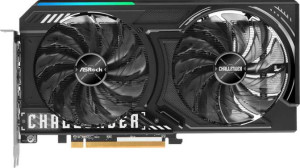
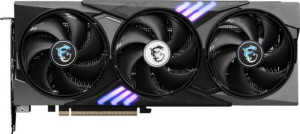
Both cards share an identical 128-bit memory bus, which makes the differences in memory technology and capacity all the more consequential. The RTX 5060 Ti uses GDDR7 with an effective speed of 28000 MHz, yielding 448 GB/s of bandwidth, while the RX 7650 GRE relies on GDDR6 at 18000 MHz for 288 GB/s. That is a 55% bandwidth advantage for the MSI card — a meaningful gap when both GPUs are constrained to the same bus width. In texture streaming, high-resolution asset loading, and scenarios where the GPU is repeatedly reading large data sets, the faster GDDR7 subsystem allows the RTX 5060 Ti to keep its shaders fed with far less latency-induced stalling.
Capacity tells an equally important story. 16GB of VRAM on the RTX 5060 Ti versus 8GB on the RX 7650 GRE is a doubling that carries real long-term relevance. Modern titles at 4K with high texture packs, AI workloads, and video editing pipelines are increasingly pushing past the 8GB threshold. A card sitting at 8GB can suffer significant performance drops the moment VRAM overflows to system memory, a scenario the 16GB RTX 5060 Ti is far better positioned to avoid.
With advantages in memory generation, bandwidth, and capacity all pointing the same direction, the RTX 5060 Ti holds a commanding lead in this group. The RX 7650 GRE's ECC support offers no differentiating edge here since both cards share that feature. For users who prioritize future-proofing, high-resolution textures, or memory-intensive creative workloads, the MSI card's memory subsystem is clearly superior.