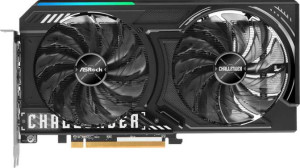
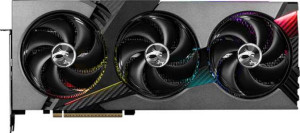
At first glance, the feature sets of these two cards look nearly identical — both support DirectX 12 Ultimate, ray tracing, multi-display output up to 4 screens, and 3D rendering. That shared foundation means neither card is at a disadvantage for baseline compatibility with modern games and APIs. The one area where the specs meaningfully diverge, however, is significant: the RTX 5060 Ti supports DLSS, while the RX 7650 GRE does not. DLSS is NVIDIA′s AI-driven upscaling technology, and in supported titles it allows the GPU to render at a lower internal resolution and reconstruct a higher-quality image — effectively boosting frame rates with minimal visual penalty. For a user who plays DLSS-compatible games, this is a tangible in-game advantage that no driver update can bring to the RX 7650 GRE.
The RX 7650 GRE counters with AMD SAM (Smart Access Memory), which enables a Ryzen CPU to access the full GPU VRAM pool directly, potentially improving performance in compatible AMD platform configurations. The RTX 5060 Ti offers the equivalent via Intel Resizable BAR, which functions similarly but is oriented toward Intel CPU pairings. Both are platform-dependent optimizations rather than universal advantages, so their real-world impact depends entirely on the user′s CPU ecosystem. A minor but worth-noting difference is the OpenCL 3 support on the RTX 5060 Ti versus OpenCL 2.2 on the RX 7650 GRE, which may matter for compute workloads that leverage newer OpenCL features, though game users will rarely notice.
On features, the RTX 5060 Ti holds the edge, and DLSS is the reason. In a group where nearly everything else is matched, the presence of a mature AI upscaling solution that actively improves playable frame rates in hundreds of supported titles is a concrete, user-facing advantage. The RX 7650 GRE′s feature set is complete and modern, but it lacks an equivalent counterpart to DLSS based solely on the provided data.