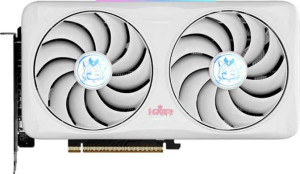
ASRock Radeon RX 7700 Challenger
Maxsun GeForce RTX 5060 Ti iCraft OC AIGAX2 8GB

ASRock Radeon RX 7700 Challenger Maxsun GeForce RTX 5060 Ti iCraft OC AIGAX2 8GB

Common Features

  • Both products have Double Precision Floating Point (DPFP) support.
  • Both products support ECC memory.
  • Both products support DirectX version 12 Ultimate.
  • Both products support OpenGL version 4.6.
  • Both products support multi-display technology.
  • Both products support ray tracing.
  • Both products support 3D.
  • Both products have RGB lighting.
  • Both products have an HDMI output.
  • Both products have 1 HDMI port.
  • Both products have 3 DisplayPort outputs.
  • Both products do not have XeSS (XMX) support.
  • Both products do not have LHR.
  • Both products use a 5 nm semiconductor size.
  • Both products do not feature air-water cooling.
  • Both products have PCI Express version 4.
  • Both products have an HDMI version of 2.1.
  • Both products have a maximum memory bandwidth.
  • Both products have a GPU clock speed.

Main Differences

  • GPU clock speed is 1900 MHz on ASRock Radeon RX 7700 Challenger and 2407 MHz on Maxsun GeForce RTX 5060 Ti iCraft OC AIGAX2 8GB.
  • GPU turbo is 2459 MHz on ASRock Radeon RX 7700 Challenger and 2632 MHz on Maxsun GeForce RTX 5060 Ti iCraft OC AIGAX2 8GB.
  • Pixel rate is 236.1 GPixel/s on ASRock Radeon RX 7700 Challenger and 126.3 GPixel/s on Maxsun GeForce RTX 5060 Ti iCraft OC AIGAX2 8GB.
  • Floating-point performance is 25.18 TFLOPS on ASRock Radeon RX 7700 Challenger and 24.26 TFLOPS on Maxsun GeForce RTX 5060 Ti iCraft OC AIGAX2 8GB.
  • Texture rate is 393.4 GTexels/s on ASRock Radeon RX 7700 Challenger and 379 GTexels/s on Maxsun GeForce RTX 5060 Ti iCraft OC AIGAX2 8GB.
  • GPU memory speed is 2430 MHz on ASRock Radeon RX 7700 Challenger and 1750 MHz on Maxsun GeForce RTX 5060 Ti iCraft OC AIGAX2 8GB.
  • Shading units are 2560 on ASRock Radeon RX 7700 Challenger and 4608 on Maxsun GeForce RTX 5060 Ti iCraft OC AIGAX2 8GB.
  • Texture mapping units (TMUs) are 160 on ASRock Radeon RX 7700 Challenger and 144 on Maxsun GeForce RTX 5060 Ti iCraft OC AIGAX2 8GB.
  • Render output units (ROPs) are 96 on ASRock Radeon RX 7700 Challenger and 48 on Maxsun GeForce RTX 5060 Ti iCraft OC AIGAX2 8GB.
  • Effective memory speed is 19500 MHz on ASRock Radeon RX 7700 Challenger and 28000 MHz on Maxsun GeForce RTX 5060 Ti iCraft OC AIGAX2 8GB.
  • Maximum memory bandwidth is 622 GB/s on ASRock Radeon RX 7700 Challenger and 448 GB/s on Maxsun GeForce RTX 5060 Ti iCraft OC AIGAX2 8GB.
  • VRAM is 16GB on ASRock Radeon RX 7700 Challenger and 8GB on Maxsun GeForce RTX 5060 Ti iCraft OC AIGAX2 8GB.
  • GDDR version is GDDR6 on ASRock Radeon RX 7700 Challenger and GDDR7 on Maxsun GeForce RTX 5060 Ti iCraft OC AIGAX2 8GB.
  • Memory bus width is 256-bit on ASRock Radeon RX 7700 Challenger and 128-bit on Maxsun GeForce RTX 5060 Ti iCraft OC AIGAX2 8GB.
  • OpenCL version is 2.2 on ASRock Radeon RX 7700 Challenger and 3 on Maxsun GeForce RTX 5060 Ti iCraft OC AIGAX2 8GB.
  • DLSS is not supported on ASRock Radeon RX 7700 Challenger but is supported on Maxsun GeForce RTX 5060 Ti iCraft OC AIGAX2 8GB.
  • AMD SAM is supported on ASRock Radeon RX 7700 Challenger while Intel Resizable BAR is supported on Maxsun GeForce RTX 5060 Ti iCraft OC AIGAX2 8GB.
  • HDMI version is 2.1 on ASRock Radeon RX 7700 Challenger and 2.1b on Maxsun GeForce RTX 5060 Ti iCraft OC AIGAX2 8GB.
  • GPU architecture is RDNA 3.0 on ASRock Radeon RX 7700 Challenger and Blackwell on Maxsun GeForce RTX 5060 Ti iCraft OC AIGAX2 8GB.
  • Thermal Design Power (TDP) is 200W on ASRock Radeon RX 7700 Challenger and 180W on Maxsun GeForce RTX 5060 Ti iCraft OC AIGAX2 8GB.
  • PCI Express (PCIe) version is 4 on ASRock Radeon RX 7700 Challenger and 5 on Maxsun GeForce RTX 5060 Ti iCraft OC AIGAX2 8GB.
Specs Comparison
ASRock Radeon RX 7700 Challenger

ASRock Radeon RX 7700 Challenger

Maxsun GeForce RTX 5060 Ti iCraft OC AIGAX2 8GB

Maxsun GeForce RTX 5060 Ti iCraft OC AIGAX2 8GB

Performance:
GPU clock speed 1900 MHz 2407 MHz
GPU turbo 2459 MHz 2632 MHz
pixel rate 236.1 GPixel/s 126.3 GPixel/s
floating-point performance 25.18 TFLOPS 24.26 TFLOPS
texture rate 393.4 GTexels/s 379 GTexels/s
GPU memory speed 2430 MHz 1750 MHz
shading units 2560 4608
texture mapping units (TMUs) 160 144
render output units (ROPs) 96 48
Has Double Precision Floating Point (DPFP)

The ASRock Radeon RX 7700 Challenger and Maxsun GeForce RTX 5060 Ti iCraft OC AIGAX2 8GB offer different performance characteristics. The Radeon RX 7700 Challenger features a GPU clock speed of 1900 MHz, which is lower than the RTX 5060 Ti's 2407 MHz, but it can turbo boost up to 2459 MHz, while the RTX 5060 Ti can boost to 2632 MHz. The RX 7700 has a higher pixel rate of 236.1 GPixel/s compared to the RTX 5060 Ti's 126.3 GPixel/s, which may contribute to better image rendering capabilities in certain workloads. On the other hand, the RTX 5060 Ti has a slightly higher floating-point performance at 24.26 TFLOPS, compared to the RX 7700’s 25.18 TFLOPS, showing a small edge in raw computation capability for the latter.

In terms of texture rate, the RX 7700 delivers 393.4 GTexels/s, surpassing the RTX 5060 Ti's 379 GTexels/s, which could suggest slightly better texture handling on the RX 7700 in certain scenarios. The GPU memory speeds also differ, with the RX 7700 clocked at 2430 MHz, which is much faster than the RTX 5060 Ti's 1750 MHz. This could result in faster data access and processing for the RX 7700. Regarding core architecture, the RX 7700 has 2560 shading units and 160 TMUs, while the RTX 5060 Ti has a significantly higher 4608 shading units and 144 TMUs. The higher shading unit count in the RTX 5060 Ti could allow for better parallel processing performance in certain tasks, though the RX 7700 compensates with a larger number of texture mapping units.

The two cards differ in ROP count as well; the RX 7700 has 96 ROPs, whereas the RTX 5060 Ti has only 48. This means that the RX 7700 may have an advantage in handling pixel output, leading to better performance in high-resolution rendering. Both cards support Double Precision Floating Point (DPFP), meaning they are capable of high-precision calculations for specific workloads, though this feature is not expected to have a major impact on general gaming performance.

Memory:
effective memory speed 19500 MHz 28000 MHz
maximum memory bandwidth 622 GB/s 448 GB/s
VRAM 16GB 8GB
GDDR version GDDR6 GDDR7
memory bus width 256-bit 128-bit
Supports ECC memory

The ASRock Radeon RX 7700 Challenger and Maxsun GeForce RTX 5060 Ti iCraft OC AIGAX2 8GB both feature different memory configurations. The RX 7700 is equipped with 16GB of GDDR6 VRAM, while the RTX 5060 Ti comes with 8GB of GDDR7 VRAM, offering a notable difference in total memory capacity. The effective memory speed of the RX 7700 is 19500 MHz, which is lower than the RTX 5060 Ti's 28000 MHz, indicating a faster memory speed for the RTX 5060 Ti.

The maximum memory bandwidth for the RX 7700 is 622 GB/s, which is significantly higher than the RTX 5060 Ti's 448 GB/s, meaning the RX 7700 has a better theoretical capacity for data transfer. Additionally, the RX 7700 has a wider memory bus at 256-bit, compared to the RTX 5060 Ti's 128-bit, which contributes to the RX 7700's higher bandwidth. Both cards support ECC (Error-Correcting Code) memory, ensuring higher reliability in memory operations.

Overall, the RX 7700 offers a larger memory capacity and better bandwidth due to its wider memory bus, while the RTX 5060 Ti benefits from faster memory speeds and a more advanced GDDR7 type. Both cards support ECC memory, ensuring error correction for increased reliability.

Features:
DirectX version DirectX 12 Ultimate DirectX 12 Ultimate
OpenGL version 4.6 4.6
OpenCL version 2.2 3
Supports multi-display technology
supports ray tracing
Supports 3D
supports DLSS
has XeSS (XMX)
AMD SAM / Intel Resizable BAR AMD SAM Intel Resizable BAR
has LHR
has RGB lighting
supported displays 4 4

The ASRock Radeon RX 7700 Challenger and Maxsun GeForce RTX 5060 Ti iCraft OC AIGAX2 8GB share some similarities in their features but also have a few differences. Both cards support DirectX 12 Ultimate, OpenGL 4.6, and ray tracing, providing compatibility with modern graphics technologies. They also both support multi-display technology and 3D, making them suitable for immersive multi-monitor setups or VR experiences. In terms of OpenCL support, the RX 7700 supports version 2.2, while the RTX 5060 Ti supports a more recent 3.0 version, which could provide advantages in certain workloads that leverage OpenCL.

Regarding additional technologies, the RX 7700 does not support DLSS (Deep Learning Super Sampling), whereas the RTX 5060 Ti supports DLSS, which may offer better performance in supported games by using AI upscaling. The RX 7700 also supports AMD's Smart Access Memory (SAM), while the RTX 5060 Ti supports Intel’s Resizable BAR, a feature that can improve data transfer between the CPU and GPU in systems with compatible hardware.

Both cards have RGB lighting and support up to 4 displays, adding visual customization and ample multi-monitor support. Neither product has XeSS (XMX) or LHR (Lite Hash Rate), which may be relevant for certain workloads like cryptocurrency mining. Overall, the RX 7700 and RTX 5060 Ti are similarly equipped in many areas, with the main differences being in the OpenCL version, DLSS support, and the Smart Access Memory vs. Resizable BAR feature.

Ports:
has an HDMI output
HDMI ports 1 1
HDMI version HDMI 2.1 HDMI 2.1b
DisplayPort outputs 3 3
USB-C ports 0 0
DVI outputs 0 0
mini DisplayPort outputs 0 0

The ASRock Radeon RX 7700 Challenger and Maxsun GeForce RTX 5060 Ti iCraft OC AIGAX2 8GB both offer similar port configurations but with slight differences. Both cards feature 1 HDMI output with HDMI 2.1 support, although the RX 7700 uses HDMI 2.1, while the RTX 5060 Ti uses the slightly newer HDMI 2.1b version. Both cards also include 3 DisplayPort outputs, but neither has USB-C, DVI, or mini DisplayPort outputs.

In terms of HDMI support, both products are capable of high-quality video output, with the RX 7700 supporting HDMI 2.1 and the RTX 5060 Ti supporting HDMI 2.1b, a small distinction in versioning. The similarity in the number of DisplayPort outputs (3) ensures that both cards can drive multiple displays without issue. The absence of USB-C, DVI, and mini DisplayPort outputs on both cards means that users won’t have additional options for connecting newer devices or legacy monitors.

Overall, the port configurations of the RX 7700 and RTX 5060 Ti are quite similar, with both offering essential outputs for modern setups. The main difference lies in the HDMI version, with the RTX 5060 Ti featuring HDMI 2.1b, while the RX 7700 sticks with HDMI 2.1.

General info:
GPU architecture RDNA 3.0 Blackwell
release date September 2025 May 2025
Thermal Design Power (TDP) 200W 180W
PCI Express (PCIe) version 4 5
semiconductor size 5 nm 5 nm
number of transistors 28100 million 21900 million
Has air-water cooling
width 267 mm 247 mm
height 130 mm 134 mm

The ASRock Radeon RX 7700 Challenger and Maxsun GeForce RTX 5060 Ti iCraft OC AIGAX2 8GB feature different specifications in terms of GPU architecture, power consumption, and physical dimensions. The RX 7700 uses the RDNA 3.0 architecture, while the RTX 5060 Ti utilizes the Blackwell architecture. Both cards are built using a 5 nm semiconductor process, ensuring modern efficiency and performance at a smaller scale.

In terms of power, the RX 7700 has a Thermal Design Power (TDP) of 200W, which is higher than the RTX 5060 Ti's 180W TDP, indicating that the RX 7700 might require slightly more power under load. The PCIe version also differs between the two cards: the RX 7700 supports PCIe 4.0, while the RTX 5060 Ti supports PCIe 5.0, offering faster data transfer speeds, although both versions are backwards compatible.

When it comes to physical size, the RX 7700 is 267 mm in length and 130 mm in height, while the RTX 5060 Ti is slightly smaller at 247 mm in length and 134 mm in height. Both cards do not feature air-water cooling, indicating reliance on traditional air-based cooling solutions. The number of transistors differs as well, with the RX 7700 housing 28,100 million transistors, compared to the RTX 5060 Ti’s 21,900 million transistors, reflecting a more complex architecture in the RX 7700.

Comparison Summary

This is a specification comparison between ASRock Radeon RX 7700 Challenger and Maxsun GeForce RTX 5060 Ti iCraft OC AIGAX2 8GB. Both products share support for DirectX 12 Ultimate, OpenGL version 4.6, multi-display technology, and ray tracing. The ASRock Radeon RX 7700 Challenger has a 1900 MHz GPU clock speed and 16GB VRAM, while the Maxsun GeForce RTX 5060 Ti iCraft OC AIGAX2 8GB features a 2407 MHz GPU clock speed and 8GB VRAM. Additionally, the Maxsun model supports DLSS and Intel Resizable BAR, which are not available on the ASRock model. The ASRock card has a 256-bit memory bus width and a 200W TDP, compared to the Maxsun's 128-bit memory bus width and 180W TDP.